Medically Reviewed
Dr. Jose Rossello, MD, PhD, MHCM
Preventive Medicine & Public Health Specialist
Last Reviewed: April 23, 2026
Spices do more than add flavor to meals. They bring health benefits, variety, and excitement to everyday cooking. The right spices can transform simple ingredients into nutritious meals while supporting overall wellness through natural compounds and antioxidants.
Many home cooks feel overwhelmed when trying to build a spice collection. Store shelves offer hundreds of options, making it hard to know where to start. The good news is that a healthy kitchen only needs a core group of versatile spices that work across different types of dishes.
These essential spices for cooking[1] serve as the foundation for seasoning everything from vegetables to proteins. Learning which spices to keep on hand and how to use them makes healthy cooking easier and more enjoyable. This guide breaks down the seven most important spices that deserve a spot in every kitchen.
Table of Contents
Key Takeaways
- Seven core spices provide the foundation for healthy and flavorful cooking in any kitchen
- Proper storage and organization help spices maintain their potency and effectiveness
- Understanding how to use essential spices opens up creative possibilities for nutritious meals
The Power of Spices in a Healthy Diet
Spices deliver substantial health benefits while transforming meals with minimal effort. These kitchen staples pack concentrated nutrients, fight inflammation, and add depth to dishes without contributing unwanted calories or sodium.
Nutritional Benefits of Spices
Spices contain surprisingly high levels of vitamins and minerals despite being used in small amounts. Cumin provides nearly 20 percent of daily iron needs[2] in just one teaspoon, making it valuable for people with iron deficiency.
Cinnamon delivers manganese and calcium while turmeric offers iron and manganese. Ginger provides potassium, magnesium, and copper.
Many spices also contain plant compounds that support health in ways beyond basic nutrition. Cardamom supplies compounds that may help regulate blood pressure. Nutmeg contains minerals that support bone health and nervous system function.
The concentrated nature of spices means even a small pinch adds nutritional value to meals. Unlike many flavor enhancers, they contribute beneficial compounds rather than empty calories.
Spices add flavor to food without adding extra calories[3], making them ideal for people managing their weight. A teaspoon of most ground spices contains fewer than 10 calories.
Salt, sugar, and fat are common ways to boost taste, but they come with health drawbacks. Spices offer an alternative that satisfies taste buds while supporting wellness goals.
Cumin brings earthy warmth to vegetables and grains. Cinnamon adds sweetness to foods without sugar. Ginger provides a spicy kick that enhances marinades and dressings.
The strong flavors in spices mean recipes need less salt and fat to taste good. This helps reduce sodium intake and keeps dishes lighter while maintaining satisfaction.
Antioxidants and Anti-Inflammatory Properties
Spices are rich in antioxidants[4] that protect cells from oxidative stress. These compounds neutralize free radicals that can damage tissues and contribute to chronic diseases.
Turmeric contains curcumin, a powerful anti-inflammatory compound. Studies show it may help prevent conditions like Alzheimer’s disease and certain cancers. When combined with black pepper, turmeric’s antioxidant effects intensify significantly.
Cinnamon ranks among the strongest antioxidant spices available. Its anti-inflammatory properties may protect against heart disease and help regulate blood sugar levels.
Ginger contains gingerol, which reduces inflammation in joints and muscles. This makes it useful for people dealing with osteoarthritis or exercise-related soreness.
The antioxidants in spices work together with those found in fruits and vegetables to create a comprehensive defense system against cellular damage.
Common Misconceptions About Spices
Many people believe spices lose their health benefits during cooking, but heat typically doesn’t destroy their beneficial compounds. Some antioxidants actually become more available when heated.
Another misconception is that dried spices are less healthy than fresh herbs and spices. While fresh options contain more moisture and volatile oils, dried versions concentrate many beneficial compounds. Both forms offer value.
Some assume spicy heat indicates health benefits, but not all beneficial spices are hot. Cinnamon and nutmeg provide substantial wellness advantages without any burning sensation.
People often think pre-ground spices work just as well as freshly ground versions. However, whole spices retain their properties longer. Grinding them fresh preserves more of their essential oils and active compounds.
The idea that spices only serve as flavor additions underestimates their role. Research shows they function as therapeutic foods with measurable health effects when consumed regularly.
Essential Spice Versus Herb: Understanding the Difference
Spices and herbs[5] come from different parts of plants and require different processing methods. Spices typically deliver stronger flavors because they contain more essential oils, while herbs offer fresh, green notes to dishes.
Definition and Sources of Spices
Spices are made from the aromatic seeds, bark, flowers, and roots[5] of plants that have been dried and crushed. Cinnamon comes from tree bark, while black pepper develops from dried peppercorns. Turmeric grows underground as a root that gets ground into powder.
These plant parts go through a drying process that concentrates their flavors. The crushing or grinding releases essential oils trapped inside. Spices tend to be stronger in flavor than herbs because these plant parts naturally contain higher concentrations of aromatic compounds.
Most spices originate from tropical regions where the climate supports the growth of these flavor-rich plants. They have been used since prehistoric times and were once so valuable that black pepper served as currency.
Key Differences Between Herbs and Spices
Herbs are leaves from plants, and most come from herbaceous plants that lack woody stems. Basil, cilantro, and parsley all qualify as herbs because they consist of aromatic leaves. A few herbs like bay leaf come from woody plants, but they still use only the leaf portion.
The main distinction between herbs and spices[6] relates to which part of the plant gets used. Herbs always come from leaves. Spices come from everything else—bark, seeds, roots, or flowers.
Fresh herbs contain more water and deliver brighter, more delicate flavors. Dried herbs and spices have concentrated flavors because the drying process removes moisture. Herbs and spices both add flavor without adding salt or calories to meals.
How to Use Fresh Herbs Versus Dried Spices
Fresh herbs work best when added near the end of cooking to preserve their delicate flavors and bright colors. Basil, cilantro, and parsley lose their appeal when cooked too long. Sprinkle them on finished dishes or stir them in during the last few minutes.
Dried herbs and spices need time to release their flavors into food. Add them earlier in the cooking process—at least 15 to 20 minutes before serving. The heat and moisture help extract the essential oils locked inside the dried plant material.
One tablespoon of fresh herbs equals about one teaspoon of dried herbs. Fresh herbs contain more water, so cooks need roughly three times as much to match the flavor intensity. Store dried herbs and spices in cool, dark places to maintain their potency for up to a year.
The 7 Must-Have Spices Every Healthy Kitchen Needs
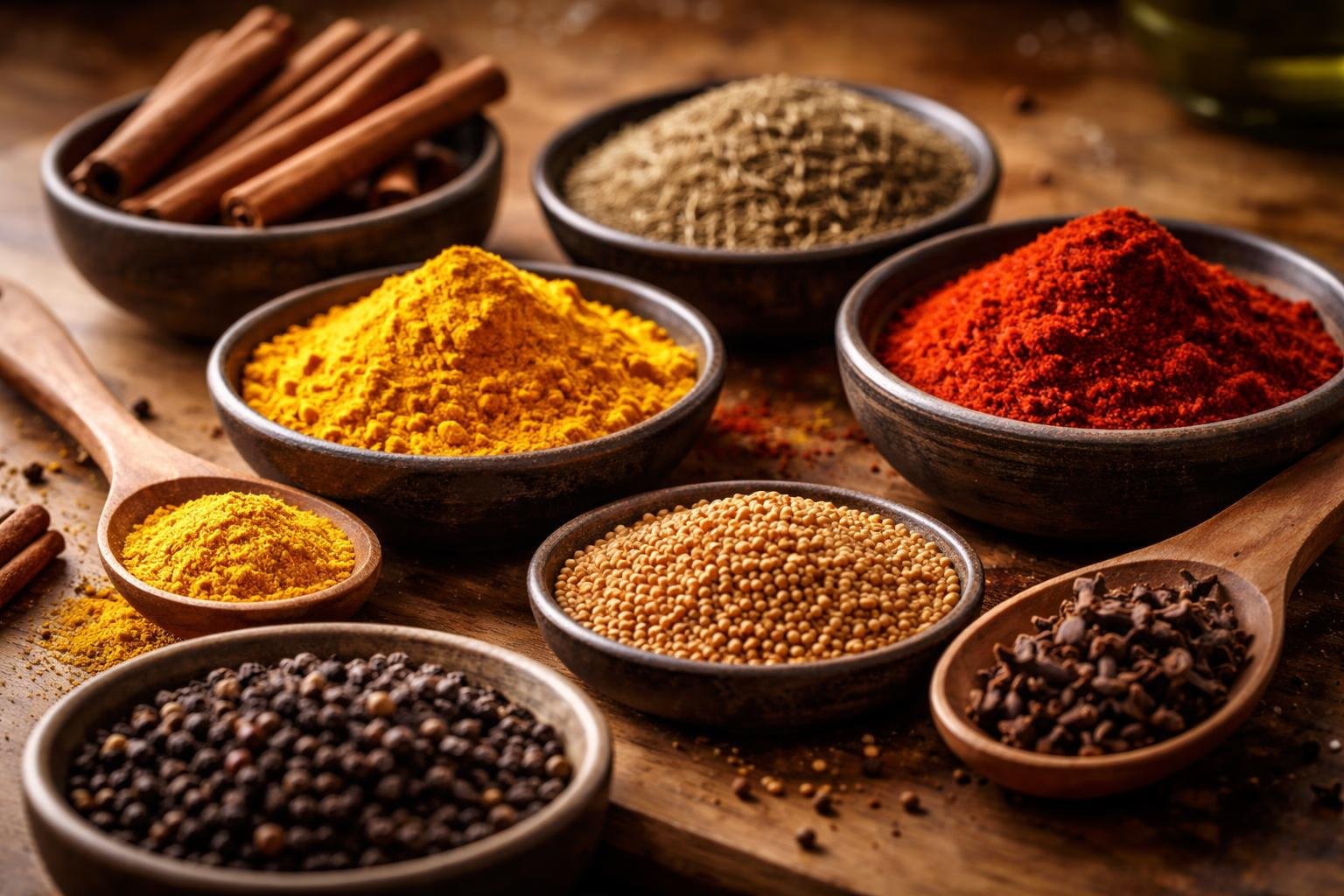
These seven essential spices deliver both flavor and health benefits that make them worth keeping on hand. Each one brings unique compounds that support the body while transforming ordinary meals into something special.
Black Pepper: The Universal Enhancer
Black pepper does more than add a sharp kick to food. The active compound piperine helps the body absorb nutrients more effectively, especially curcumin from turmeric. This makes black peppercorns a smart pairing with other spices.
Fresh-ground black pepper provides stronger flavor and more piperine than pre-ground versions. A simple twist over meals adds antioxidant support and may help with digestion. Some research suggests piperine can boost nutrient absorption[7] significantly.
The spice works well in both savory and sweet dishes. It pairs naturally with eggs, vegetables, soups, and even fruit. A quality pepper grinder keeps the flavor fresh and potent for daily use.
Cumin: Earthy and Versatile
Cumin brings a warm, earthy taste that anchors many global cuisines. The spice contains iron and other minerals that support steady energy levels throughout the day.
Digestive benefits make cumin especially valuable. It helps the body produce enzymes that break down food more efficiently. This can reduce bloating and discomfort after meals.
Toasting whole cumin seeds before grinding releases deeper flavors. Ground cumin works well in:
- Soups and stews
- Roasted vegetables
- Egg dishes
- Lentils and beans
- Rice and grain bowls
The spice also carries antioxidants that help calm inflammation. Some studies show it may help the body process carbohydrates more smoothly, leading to better blood sugar balance.
Cinnamon: Sweet, Warm, and Healing
Cinnamon adds natural sweetness without sugar. Just a quarter to one teaspoon daily can help reduce blood sugar spikes after meals and support healthier cholesterol levels.
Two main types exist: Ceylon and Cassia. Ceylon cinnamon contains much less coumarin, a compound that can be harmful in large amounts. This makes it the better choice for daily use[7].
The spice fits into meals throughout the day. Stir it into oatmeal, coffee, or yogurt. Dust it over roasted sweet potatoes or carrots. Add it to smoothies for warmth and subtle sweetness.
Cinnamon delivers antioxidants and mild anti-inflammatory benefits. People taking blood thinners or diabetes medication should check with a doctor before using large amounts regularly.
Turmeric: The Golden Anti-Inflammatory
Turmeric stands out for its bright yellow color and powerful health properties. The key compound curcumin fights inflammation and protects cells with antioxidant activity.
The body absorbs curcumin poorly on its own. Adding black pepper and a small amount of fat helps significantly. Mix turmeric into:
- Smoothies with coconut milk
- Soups with olive oil
- Golden milk with black pepper
- Curries and rice dishes
A small pinch to one teaspoon daily provides benefits without overwhelming food flavors. The spice supports joint health, circulation, and digestion when used regularly.
Fresh turmeric root offers stronger flavor than ground spices, though both work well. People on blood thinners or who are pregnant should consult a doctor before taking high-dose supplements.
Paprika: Color, Flavor, and Health
Paprika ranges from sweet to smoky to hot depending on the variety. The spice comes from dried ground peppers and adds vibrant red color to dishes.
Sweet paprika works well as an everyday seasoning. Smoked paprika brings depth to vegetable dishes, beans, and marinades. Hot paprika adds gentle heat without the intensity of cayenne.
The spice contains vitamin A, vitamin E, and carotenoids that support eye health and immune function. It also provides antioxidants that help protect cells from damage.
Paprika loses potency quickly when exposed to light and heat. Store it in a cool, dark place and replace it every six months for best flavor. Sprinkle it over roasted vegetables, eggs, hummus, or deviled eggs for both color and taste.
Oregano: Mediterranean Essence
Oregano delivers more than pizza flavor. The herb contains carvacrol and other compounds that help fight unwanted microbes and support a healthy gut.
Antioxidant power makes oregano one of the most beneficial herbs to use daily. It helps calm inflammation and may ease digestion. The spice adds savory depth that reduces the need for excess salt.
Fresh and dried oregano both work well, though dried oregano has a more concentrated flavor. Add it to:
- Salad dressings
- Roasted vegetables
- Eggs and omelets
- Tomato-based sauces
- Olive oil for dipping
The herb provides vitamin K and manganese in small amounts. Using oregano regularly[7] offers an easy way to support immune health while making food taste better.
Ginger: Zest and Wellness
Ginger brings a warming, slightly spicy flavor that works in both sweet and savory dishes. Fresh ginger root and ground ginger both offer health benefits, though fresh contains more active compounds.
The spice soothes the stomach and eases nausea effectively. It helps with digestion, reduces inflammation, and may calm sore muscles after exercise. A thin slice or one teaspoon of grated root daily provides steady benefits.
Fresh ginger works best in stir-fries, teas, and soups. Peel and grate it, or slice it thin for steeping. Ground ginger fits well in baking, smoothies, and spice blends.
Ginger also supports immune function during cold seasons. People on blood thinners or who are pregnant should check with a doctor before using large amounts regularly.
Creative Ways to Use the 7 Essential Spices
These seven spices work best when cooks understand how to layer flavors and combine them in everyday meals. Simple techniques like toasting whole spices or creating custom blends can transform basic ingredients into restaurant-quality dishes.
Incorporating Spices Into Everyday Cooking
Home cooks can start by adding spices at different stages of cooking to build complex flavors. Toasting whole cumin or coriander seeds in a dry pan for 30 seconds releases their oils and deepens their taste. Ground spices work best when added to hot oil at the beginning of cooking, which helps bloom their flavors.
A simple approach involves keeping spice blends ready for quick meals. Mixing paprika, garlic powder, and black pepper creates an all-purpose seasoning for vegetables and proteins. Cinnamon adds warmth to morning oatmeal or coffee, while turmeric blends into scrambled eggs or rice for color and health benefits.
Cooks should add delicate spices like paprika toward the end of cooking to prevent bitterness. Cayenne pepper requires careful measurement since a small amount goes far. Using spices in everyday meals[8] becomes easier with practice and experimentation.
Recipes and Simple Ideas for Each Spice
Cumin pairs well with beans, lentils, and roasted carrots. A quick recipe combines one teaspoon of cumin with olive oil and lemon juice for a salad dressing.
Paprika enhances chicken, potatoes, and deviled eggs. Sprinkle it over roasted chickpeas with olive oil for a crunchy snack.
Turmeric works in rice dishes, soups, and smoothies. Mix half a teaspoon into coconut milk with honey for golden milk.
Cinnamon complements sweet potatoes, apples, and yogurt. Add a pinch to chili or meat sauces for depth.
Black pepper improves nearly everything from strawberries to chocolate. Crack fresh peppercorns over pasta or grilled vegetables.
Garlic powder seasons pizza, popcorn, and bread. Combine it with butter and herbs for garlic bread spread.
Cayenne pepper spices up chocolate desserts, roasted nuts, and mayo-based sauces. A tiny pinch brightens fruit like mango or pineapple.
Using Spices in Curries, Stews, and Marinades
Curry dishes rely on building spice layers for authentic flavor. A basic curry starts with heating oil, then adding cumin seeds until they sizzle. Garlic powder, turmeric, and paprika go in next, followed by liquids like coconut milk or tomato sauce. Curry powder itself contains multiple spices including cumin, coriander, and turmeric, making it a shortcut for weeknight curries.
Stews benefit from whole black peppercorns and bay leaves added early in the cooking process. Paprika gives beef stew its rich color, while cayenne adds subtle heat. The long cooking time in stews allows spices to mellow and blend together.
Marinades need both oil and acid to carry spice flavors into meat or vegetables. A simple marinade combines olive oil, black pepper, garlic powder, and paprika with lemon juice or vinegar. Meats should sit in spiced marinades for at least 30 minutes, though overnight works better for tougher cuts. Vegetable marinades require only 15 to 20 minutes since they absorb flavors faster.
Optimal Storage and Shelf Life of Spices
Proper storage methods can extend the life of spices by years, while poor conditions can destroy their flavor in months. Understanding how to identify when spices have lost their potency helps cooks maintain a quality spice collection.
How to Store Spices for Freshness
Storing spices correctly[9] requires three main protections: blocking light, controlling temperature, and preventing moisture exposure. Airtight containers made of glass or metal work best because they seal out humidity and air. Plastic containers can work but may absorb oils and odors over time.
The spice cabinet should be located away from the stove, oven, or dishwasher. Heat accelerates the breakdown of aromatic compounds that give spices their flavor. A cool, dark pantry or cupboard maintains stability better than storage near cooking areas.
Light degrades spices quickly, so dark glass jars or opaque containers offer better protection than clear ones. Spices stored in direct sunlight or under bright kitchen lights lose potency within weeks. Labeling containers with purchase dates helps track freshness and rotation.
Signs of Spice Degradation and When to Replace
The most reliable test for spice freshness involves crushing a small amount between the fingers and smelling it. Fresh spices release strong, vibrant aromas immediately. Spices that smell weak, musty, or like nothing at all have lost their essential oils and should be replaced.
Visual changes also indicate degradation. Faded colors suggest exposure to light or age. Clumping means moisture has entered the container. Ground spices that have hardened into solid blocks are no longer usable.
Common shelf life guidelines:
- Ground spices: 1 year
- Dried herbs: 1 year
- Whole spices: 2 years
- Seeds: 2-3 years
These timelines assume proper storage conditions[10]. Spices stored poorly may degrade much faster.
Whole Spices Versus Ground: Longevity and Flavor
Whole spices maintain their potency significantly longer than ground versions because their protective outer layer keeps volatile oils sealed inside. Grinding releases these aromatic compounds immediately, which then begin evaporating and oxidizing.
Buying whole spices and grinding them just before use delivers maximum flavor. A basic spice grinder or mortar and pestle makes fresh grinding simple. Whole peppercorns, cumin seeds, and coriander seeds stay fresh for years when stored properly.
The convenience of pre-ground spices comes with a trade-off in flavor intensity. Ground spices lose their punch within months of opening. Cooks who use spices frequently may prefer ground versions for everyday cooking, while keeping whole spices for recipes where flavor impact matters most.
Building a Well-Organized and Reliable Spice System
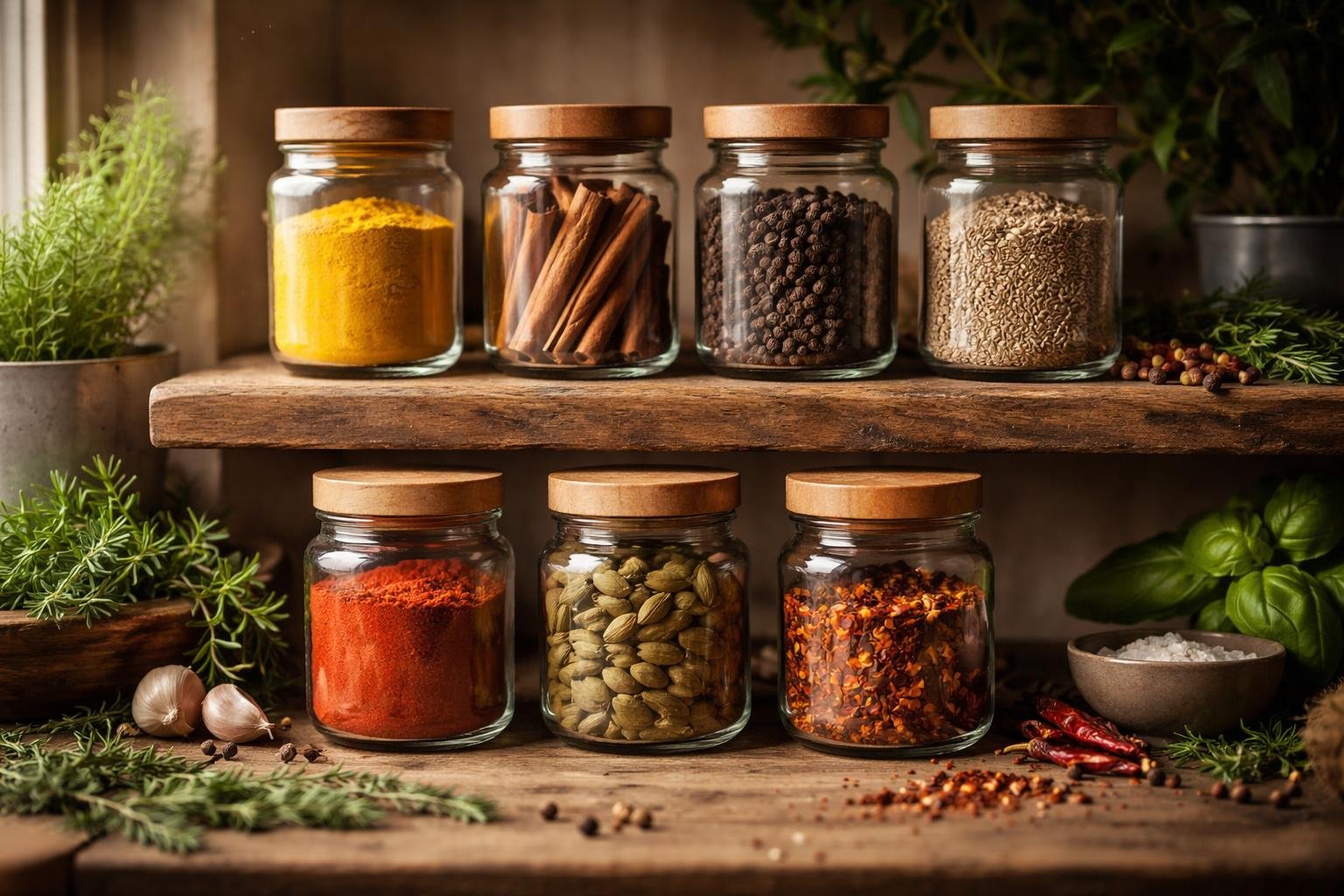
A functional spice setup requires proper storage conditions and quality sourcing to maintain potency over time. The right containers and organization method prevent waste while trusted suppliers deliver spices worth keeping.
Organizing Your Spice Cabinet
Opaque, airtight containers retain spice potency[11] 2x longer than clear jars. Light exposure breaks down essential oils in turmeric, paprika, and other ground spices within weeks.
Transfer spices from original packaging into small glass or metal containers with tight-fitting lids. Label each container with the purchase date and spice name.
Store containers in a cool, dark cabinet away from the stove. Heat and humidity from cooking accelerate degradation. Ground spices in humid climates absorb moisture after just two or three jar openings, leading to clumping and faster oxidation.
Group spices by use frequency rather than alphabetically. Place everyday seasonings like cumin and paprika at eye level. Store specialty spices used monthly or less on higher or lower shelves.
Buy ground spices in 2-4 oz quantities. Smaller amounts get used while still fresh instead of sitting for months past peak flavor.
Recommended Brands and Sourcing High-Quality Spices
Diaspora Co focuses on single-origin spices with transparent farmer partnerships. Their turmeric and black pepper demonstrate noticeable aroma compared to grocery store versions.
Burlap & Barrel sources rare varieties directly from farming cooperatives. They offer detailed tasting notes and harvest dates on each product.
The Spice House provides both whole and ground options with frequent restocking. Their cinnamon and cumin maintain strong scent profiles for months after opening.
Spicewalla sells restaurant-quality spices in home-friendly sizes. Their tin packaging blocks light better than plastic bags.
Look for suppliers listing harvest dates or packaging dates rather than vague “best by” windows. Fresh spices should smell potent when the container opens. Avoid bulk bins in stores where spices sit exposed to air and light for unknown periods.
Expanding Beyond the Basics
Once core spices see regular use, add ingredients that match actual cooking patterns. Someone who makes Indian food weekly benefits from adding fenugreek and mustard seeds. A person cooking Mexican dishes often needs Mexican oregano and ancho chili powder.
Spice blends save time but check ingredient lists first. Many contain anti-caking agents or excess salt. Quality blends from specialty suppliers use pure spices without fillers.
Elevate Your Health for Just $29.99/Month
Join the Precision Wellness Subscription at My Healing 365 and get discounted services, priority coaching access, virtual care, and exclusive wellness resources to support your physical, emotional, and hormonal health.
Join for $29.99/MonthPurchase whole spices like cinnamon sticks and coriander seeds for recipes requiring longer cooking times. Whole forms last 2-4 years versus 6 months for ground versions. Toast and grind small amounts as needed.
Build a spice collection gradually based on recipes already in rotation. Buying unfamiliar spices before having a use plan leads to waste and cluttered storage.
Frequently Asked Questions
The right spices can transform everyday meals while offering real health benefits, but knowing how to choose, store, and use them makes all the difference in creating flavorful dishes that support wellness.
Which spices are most useful for building a healthy, versatile everyday cooking routine?
Black pepper, garlic powder, turmeric, ginger, cinnamon, cumin, and paprika form a strong foundation for most cooking styles. These spices work across different cuisines and pair well with vegetables, proteins, and grains.
Black pepper and garlic powder are considered basics found in most kitchens[12] because they enhance nearly any savory dish. Turmeric and ginger add depth to curries and stews while providing anti-inflammatory properties. Cinnamon works in both sweet and savory applications, from oatmeal to roasted vegetables.
Cumin brings earthy warmth to beans, rice, and roasted vegetables. Paprika offers mild flavor and vibrant color without overwhelming other ingredients.
How should essential spices be stored to preserve freshness, flavor, and potency?
Spices should be kept in airtight containers away from heat, light, and moisture. A cool, dark cupboard or drawer works better than storage near the stove or in direct sunlight.
Glass jars with tight-fitting lids protect spices from air exposure. Clear containers should be stored in dark spaces since light degrades essential oils that give spices their flavor and aroma.
Whole spices last longer than ground versions because their protective outer layer keeps oils intact. Grinding whole spices as needed provides the strongest flavor and longest shelf life.
What are the health benefits of common culinary spices, and what does evidence suggest?
Turmeric may help improve heart health and prevent long-term memory loss[13], though more research is needed. The compound curcumin in turmeric has shown anti-inflammatory effects in studies.
Ginger contains gingerol, which can help with nausea and digestion[13]. It has been used for centuries as a digestive aid and may support immune function.
Black pepper is high in antioxidants and may have anti-inflammatory properties. Cinnamon can help regulate blood sugar levels in some people. Garlic may boost the immune system and improve cholesterol levels[13] while providing nutrition with few calories.
How can you tell when a spice is stale, and when should it be replaced?
Stale spices lose their aroma and appear faded in color. A simple smell test reveals whether a spice still has potency—it should smell strong and distinct when the container is opened.
Ground spices typically stay fresh for one to two years. Whole spices can last three to four years when stored properly. Writing purchase dates on containers helps track freshness.
Clumped or hardened spices indicate moisture exposure and should be replaced. Even if a spice is not expired, weak aroma means it will not add much flavor to food.
What are the best ways to use spices to reduce added salt and sugar without losing flavor?
Spices add complexity that makes food taste satisfying without relying on salt or sugar. Garlic powder, onion powder, and smoked paprika create savory depth that reduces the need for extra sodium.
Cinnamon, nutmeg, and ginger bring natural sweetness to dishes without added sugar. These spices work well in breakfast foods like oatmeal and yogurt.
Toasting spices in a dry pan before use releases their essential oils and intensifies flavor. This technique makes small amounts of spice go further. Layering multiple spices creates fuller flavor profiles that satisfy the palate better than salt alone.
Where can you buy high-quality spices on a budget, and what should you look for on labels?
Ethnic grocery stores and bulk food sections offer fresher spices at lower prices than pre-packaged supermarket brands. These sources typically have higher turnover, which means fresher products.
Labels should list only the spice itself without fillers, anti-caking agents, or excessive salt. Organic certification is not always necessary, but it ensures no synthetic pesticides were used.
Buying whole spices instead of ground versions saves money since they last longer and retain flavor better. A basic spice grinder or mortar and pestle makes grinding at home easy. Purchasing smaller quantities more frequently ensures better freshness than buying large containers that sit unused for months.
Post Views: 2
References
- 7 Essential Spices for Cooking Every Home Cook Needs (2026). https://www.yolkandwhim.com/blog/7-essential-spices-every-home-cook-should-master Accessed April 24, 2026
- Top 7 Healthy Spices That Are Good For Your Health + [INFOGRAPHIC]. https://www.thehealthycuisine.com/spices-health-benefits/ Accessed April 24, 2026
- 7 Healthy Spices to Make Food Taste Great. https://www.builtlean.com/healthy-spices/ Accessed April 24, 2026
- Spices are rich in antioxidants. https://www.thehealthycurisine.com/spices-health-benefits/ Accessed April 24, 2026
- What’s the Difference Between an Herb and a Spice?. https://www.britannica.com/story/whats-the-difference-between-an-herb-and-a-spice Accessed April 24, 2026
- What is the Difference Between Spices and Herbs?. https://www.almanac.com/what-difference-between-spices-and-herbs Accessed April 24, 2026
- The 7 Healthiest Spices You Must Have in Your Kitchen. https://naturehealth.beehiiv.com/p/the-7-healthiest-spices-you-must-have-in-your-kitchen Accessed April 24, 2026
- 7 Ways To Incorporate Spices In Everyday Meals. https://infiniteflavors.blog/ways-to-incorporate-spices-in-everyday-meals/ Accessed April 24, 2026
- 7 Best Practices for Storing Herbs and Spices That Preserve Flavor Potency. https://www.farmstandapp.com/67748/7-best-practices-for-storing-herbs-and-spices/ Accessed April 24, 2026
- How to Store Spices for Longer Shelf Life – Pro Kitchen Tips. https://recipespalette.com/how-to-store-spices-for-longer-shelf-life/ Accessed April 24, 2026
- Black Pepper Isn’t the Anchor Spice. https://spice.alibaba.com/spice-basics/best-spices-to-have-on-hand Accessed April 24, 2026
- Essential Spices for Every Kitchen: Your Guide to Flavorful Cooking. https://homefavorites.net/what-spices-should-every-kitchen-have/ Accessed April 24, 2026
- 7 Healthy Seasonings Every Kitchen Needs. https://www.healthbenefitstimes.com/7-healthy-seasonings-every-kitchen-needs/ Accessed April 24, 2026























