Medically Reviewed
Dr. Jose Rossello, MD, PhD, MHCM
Preventive Medicine & Public Health Specialist
Last Reviewed: May 5, 2026
You work hard at the gym, but progress seems to stall. Many people struggle to see results even when they put in consistent effort. The problem often comes from common workout mistakes that undermine gains.
Small errors in training approach, form, nutrition, and recovery can prevent muscle growth and strength improvements. These issues range from how someone lifts weights to how they eat and sleep. Training mistakes can stall progress or lead to injury[1] when left unchecked.
Understanding these pitfalls helps people adjust their routines for better results. The following sections explain specific mistakes and provide practical solutions to get back on track.
Table of Contents
1) Skipping progressive overload and tracking weights/reps
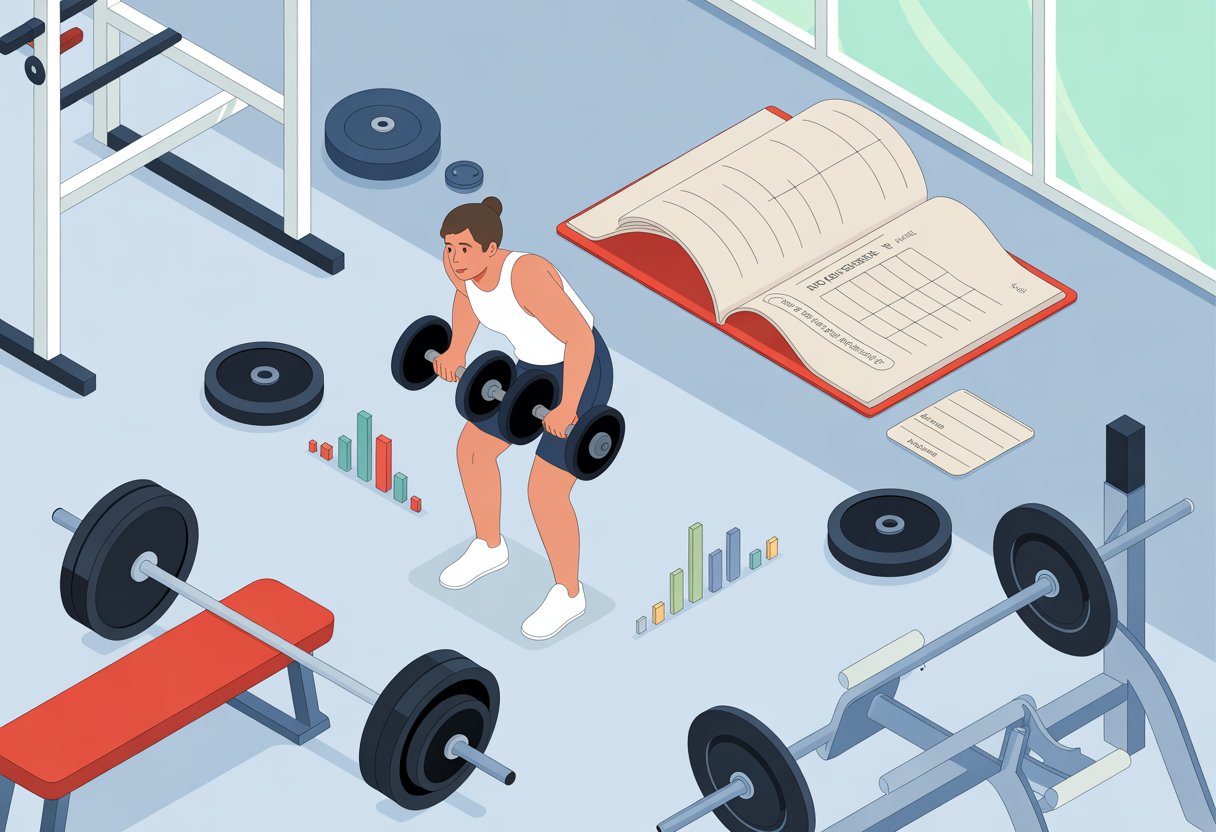
Many people go to the gym and lift the same weights week after week. They wonder why their muscles stop growing after a few months.
The body adapts to stress quickly. When someone lifts the same weight for the same reps every workout, their muscles have no reason to get bigger or stronger.
Progressive overload[2] means gradually increasing the demands on the body. This can happen through adding weight, doing more reps, or increasing total volume over time.
Without tracking workouts, most people can’t remember what they lifted last week. They guess at weights and end up repeating the same performance without improvement.
Keeping a simple log of exercises, weights, and reps solves this problem. Each workout becomes an opportunity to do slightly more than last time. Even small increases add up to major gains over months.
The fix is straightforward. People should write down their lifts and aim to beat their previous numbers. Adding just five pounds to a lift or completing one extra rep counts as progress.
2) Overusing poor exercise form on compound lifts (e.g., rounded-back deadlifts)
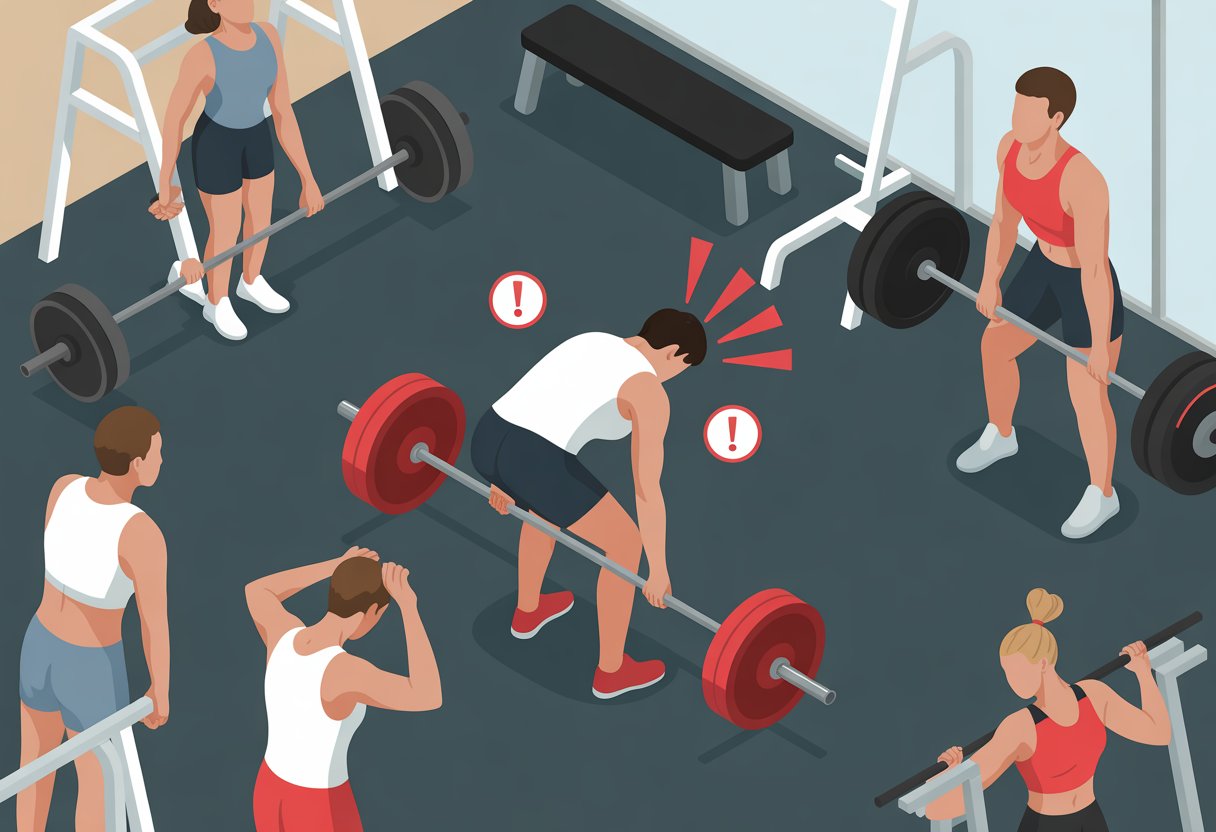
Poor form on compound lifts creates serious problems for people trying to build strength. These exercises work multiple muscle groups at once, which makes them effective but also risky when done wrong.
Bad deadlift form[3] shows up in several ways. A rounded back puts excessive stress on the spine instead of keeping it neutral. Many lifters also bend their arms during the pull or let their knees cave inward.
The stance matters too. Standing too wide or too narrow changes which muscles do the work. Some people forget to brace their core before lifting, which removes a key layer of protection for the lower back.
Using poor workout form[4] repeatedly reinforces bad movement patterns. The body learns these incorrect positions, making them harder to fix later. This prevents proper muscle activation and limits strength gains.
Lifting heavy weight with bad technique increases injury risk significantly. A person might feel fine initially, but the damage builds over time. The spine, joints, and connective tissues take unnecessary wear that could be avoided with proper form.
3) Relying on cardio-only sessions while neglecting resistance training

Many people focus only on running, cycling, or other cardio activities and skip strength training entirely. While cardio offers important benefits like better heart health and mood support, doing only cardio can create problems[5].
The body needs both types of exercise to develop properly. Cardio alone can lead to muscle loss over time. When someone loses muscle, their metabolism slows down, making it harder to maintain a healthy weight.
Research shows that combining resistance training with cardio improves fat loss and preserves muscle better than cardio alone[6]. Without strength work, progress eventually stalls.
Cardio-only routines also increase the risk of overuse injuries. The same movements repeated too often can wear down joints and connective tissue. Resistance training strengthens these areas and helps prevent injury.
Adding just two or three strength sessions per week makes a big difference. This doesn’t require a gym membership. Bodyweight exercises, resistance bands, or free weights all work well. The key is challenging the muscles in ways that cardio cannot.
4) Undereating for recovery—insufficient protein and calories
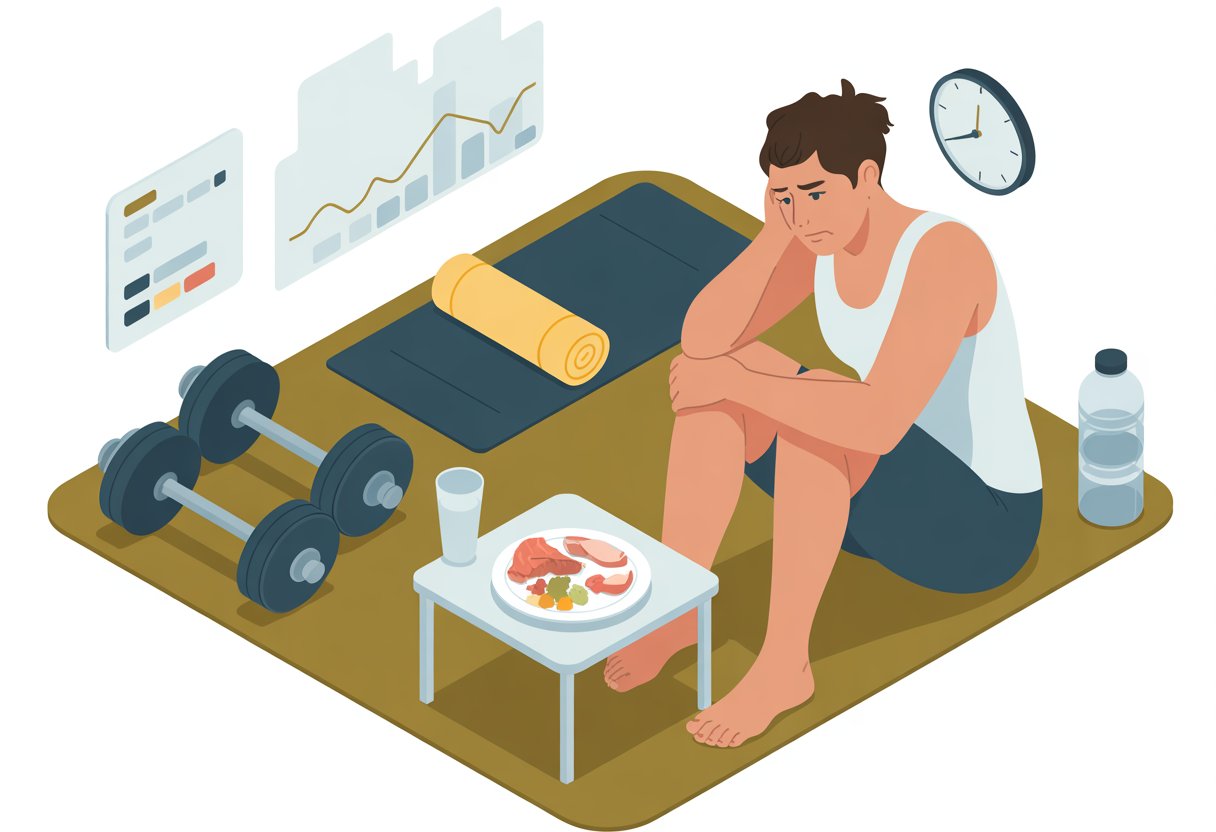
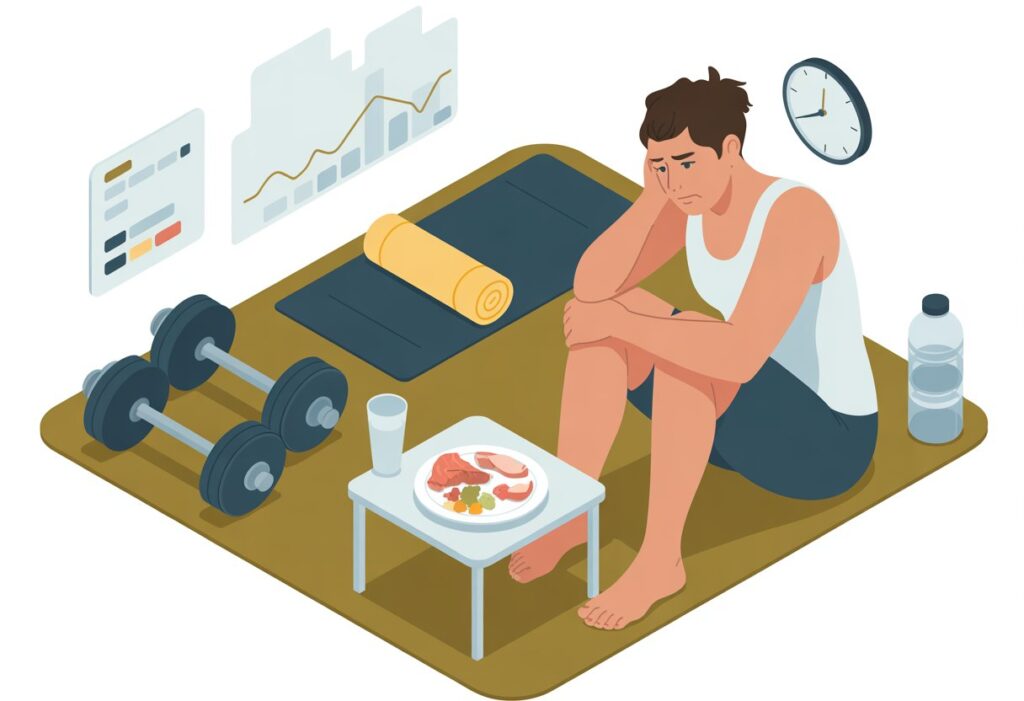
Many people accidentally fall into the trap of overtraining while undereating[7]. They push hard in the gym but don’t fuel their bodies enough to recover and grow.
The body needs adequate calories to repair muscle tissue after exercise. When someone eats too little, their body doesn’t have the energy it needs to rebuild stronger muscles. This slows down progress and can even lead to muscle loss.
Protein plays a key role in muscle repair. Without enough protein, the body cannot properly fix the tiny tears that happen during workouts. Most active people need around 0.7 to 1 gram of protein per pound of body weight each day.
Skipping meals or cutting calories too low creates a problem. The body starts breaking down muscle for energy instead of building it up. This defeats the entire purpose of working out.
Nutrition supports recovery, muscle repair, and overall performance[8]. People who want to see results need to eat enough food to match their training intensity. This means getting both sufficient calories and enough protein throughout the day.
5) Inconsistent sleep and recovery scheduling disrupting progress
Sleep patterns directly affect workout results. When people go to bed at different times each night, their body struggles to recover properly from exercise.
Erratic sleep schedules disrupt circadian rhythms[9], which reduces how well muscles repair themselves. The body needs consistent rest periods to build strength and endurance.
Many exercisers focus only on their gym time. They ignore the hours spent sleeping and recovering between workouts.
Quality sleep helps muscles develop and repairs tissue damage from training. Without enough rest, the body cannot adapt to the stress of exercise. This means all that hard work in the gym gets wasted.
A regular sleep schedule supports better recovery. Going to bed and waking up at the same times helps the body know when to repair itself.
Rest days matter just as much as workout days. Limiting high-intensity training to alternate days[9] gives muscles time to rebuild stronger. Skipping recovery periods leads to fatigue, poor performance, and increased injury risk.
How Execution Errors Affect Your Fitness Goals
Poor form during exercises and skipping recovery time create major roadblocks that prevent people from reaching their fitness targets. These execution errors lead to weaker muscles, slower progress, and a higher chance of getting hurt.
Impact of Improper Technique
Using bad form during workouts reduces how well exercises work. When someone performs a squat with their knees caving inward, they miss out on properly engaging their glutes and quadriceps. The weight gets distributed incorrectly across the joints.
Improper technique also increases injury risk significantly. A person who rounds their back during deadlifts puts extreme pressure on their spine discs. This can lead to herniated discs or chronic lower back pain that sidelines them for weeks or months.
Training with poor form[1] reduces the effectiveness of each rep. The targeted muscles don’t receive adequate stimulus to grow stronger. Instead, other muscles compensate and take over the movement.
Bad execution creates muscle imbalances over time. If someone always leans to one side during overhead presses, one shoulder develops more than the other. These imbalances make future injuries more likely and limit overall strength gains.
Overlooking Recovery and Its Consequences
Muscles grow and get stronger during rest periods, not during the actual workout. When someone skips recovery days, their muscles never get the chance to repair the tiny tears from training. This stops progress completely.
Inadequate rest leads to overtraining syndrome. The body starts breaking down more tissue than it builds. Energy levels drop, performance decreases, and motivation disappears.
Key recovery mistakes include:
- Sleeping less than 7 hours per night
- Training the same muscle groups on consecutive days
- Not taking full rest days each week
- Ignoring proper nutrition after workouts
Poor recovery also weakens the immune system. Someone who constantly trains without rest becomes sick more often. These illnesses force them to miss workouts anyway, creating even more setbacks in their fitness journey.
Creating a Sustainable Workout Routine
Finding the right balance between pushing hard enough to see results and allowing adequate recovery determines whether a fitness plan lasts months or fails within weeks. Too much training without proper rest leads to burnout, while inconsistent effort prevents progress.
Balancing Intensity and Volume
Training intensity refers to how hard someone works during exercise, while volume measures the total amount of work completed through sets, reps, and sessions per week. Most people make progress by gradually increasing one variable at a time rather than both simultaneously.
A beginner might start with three full-body workouts per week, performing two to three sets of eight to twelve reps per exercise at moderate intensity. As strength improves, they can add one set per exercise or increase weight by five to ten percent.
Key considerations for balance:
- Rest at least 48 hours between training the same muscle groups
- Limit high-intensity sessions to two to three times per week
- Include one to two lower-intensity recovery days with walking or light activity
- Adjust volume based on sleep quality and energy levels
Repeating the same workout intensity[10] day after day prevents the body from adapting properly and limits results.
Recognizing Signs of Overtraining
Overtraining occurs when workout stress exceeds the body’s ability to recover. Early detection prevents minor fatigue from becoming a serious setback that requires weeks or months away from the gym.
Elevate Your Health for Just $29.99/Month
Join the Precision Wellness Subscription at My Healing 365 and get discounted services, priority coaching access, virtual care, and exclusive wellness resources to support your physical, emotional, and hormonal health.
Join for $29.99/MonthCommon overtraining symptoms include:
- Persistent muscle soreness lasting more than 72 hours
- Decreased performance despite consistent effort
- Trouble sleeping or feeling unrested after full nights of sleep
- Increased resting heart rate by five to ten beats per minute
- Frequent illnesses or infections
- Loss of motivation or enjoyment in workouts
Athletes experiencing three or more symptoms should reduce training volume by 30 to 50 percent for one week. They should prioritize sleep, aim for seven to nine hours nightly, and increase protein intake to support recovery. Ignoring these warning signs[1] can lead to injury and force extended breaks from training.
Frequently Asked Questions
Many people struggle with the same workout problems that prevent them from getting stronger or building muscle. Understanding these specific issues helps fix what’s holding progress back.
What are the most common training mistakes that slow down muscle growth and strength gains?
The biggest mistake is skipping progressive overload and failing to track weights and reps. Without gradually increasing the load or volume over time, muscles have no reason to adapt and grow stronger.
Many lifters also rely too heavily on cardio-only sessions while neglecting resistance training. Cardio burns calories but doesn’t provide the mechanical tension needed to build muscle tissue.
Another common training mistake[11] is using the same weights and rep schemes week after week. The body adapts quickly to familiar stress and stops making changes when the challenge remains constant.
How can poor exercise form and technique derail progress and increase injury risk?
Using poor form on compound lifts significantly limits muscle activation and increases the chance of getting hurt. Rounded-back deadlifts, for example, shift stress from the target muscles to the spine and surrounding connective tissue.
Bad technique also means the intended muscles don’t receive enough tension to grow. When someone uses momentum or compensatory movement patterns, secondary muscles take over the work.
Workout mistakes related to form[1] can lead to chronic pain and long-term injuries that force extended breaks from training. These setbacks erase months of hard work.
Why does inadequate recovery and sleep prevent noticeable improvements in fitness?
Muscles don’t grow during workouts. They grow during rest periods when the body repairs damaged tissue and builds it back stronger.
Inconsistent sleep and recovery scheduling disrupts this rebuilding process. Poor sleep reduces protein synthesis, lowers testosterone levels, and increases cortisol, which breaks down muscle tissue.
Getting less than seven hours of sleep per night also impairs workout performance the next day. Strength, focus, and coordination all decline when someone trains on insufficient rest.
How do inconsistent programming and lack of progressive overload stall results over time?
Without a structured plan, most people end up doing random exercises with random weights. This approach doesn’t create the steady progression needed for adaptation.
Progressive overload requires tracking performance and intentionally adding small amounts of stress each week. This might mean adding five pounds to the bar, doing one more rep, or reducing rest time between sets.
When someone trains without this systematic approach, they hit a plateau within weeks. The body only changes when it faces new challenges that exceed previous demands.
What role do nutrition and insufficient protein intake play in underwhelming workout outcomes?
Undereating for recovery creates a major barrier to muscle growth and performance gains. The body needs sufficient calories and protein to rebuild tissue damaged during training.
Insufficient protein intake prevents muscles from recovering fully between sessions. Most people need at least 0.7 to 1 gram of protein per pound of body weight daily to support muscle repair.
Nutrition mistakes[12] also include eating too few total calories when trying to build muscle. Without an energy surplus, the body prioritizes basic functions over building new tissue.
How can training intensity, volume, and frequency be balanced to avoid plateaus and burnout?
Finding the right balance between these three variables determines whether someone makes progress or spins their wheels. Too much volume without adequate intensity fails to trigger adaptation, while too much intensity without enough volume limits total muscle growth.
Training frequency needs to match recovery ability. Hitting the same muscle groups too often doesn’t allow enough repair time, while training them too infrequently wastes potential growth opportunities.
Most people see best results training each major muscle group two to three times per week with moderate to high intensity. This schedule provides enough stimulus and recovery time for consistent gains.
Training mistakes that sabotage progress[13] often involve doing too much junk volume with low effort rather than focusing on quality sets. A few hard sets beat many easy sets every time.
Post Views: 7
References
- mensfitness.com. https://www.mensfitness.com/training/training-solutions-for-common-gym-mistakes Accessed May 6, 2026
- Progressive Overload 101: What It Is, How It Works, and How to Apply It. https://www.muscleandstrength.com/articles/progressive-overload-the-complete-guide Accessed May 6, 2026
- Bad Deadlift Form: Avoid these 4 Major Issues. https://www.inspireusafoundation.org/bad-deadlift-form/ Accessed May 6, 2026
- Workout Form Guide: How to Lift Safer and More Effectively. https://www.gymaholic.co/articles/how-to-improve-workout-form Accessed May 6, 2026
- Is It Bad to Do Only Cardio? An Expert Explains the Pitfalls—and What to Do Instead. https://www.eatthis.com/downsides-of-only-doing-cardio-workouts/ Accessed May 6, 2026
- 10 Cardio Mistakes That Are Slowing Your Progress. https://www.boxrox.com/10-cardio-mistakes-that-are-slowing-your-progress/ Accessed May 6, 2026
- How to Recover from Overtraining and Undereating: 13 Essentials. https://drlauryn.com/wellness-knowledge/how-to-recover-from-overtraining-and-undereating-13-essentials/ Accessed May 6, 2026
- 5 Nutritional Mistakes That Are Killing Your Gains. https://www.boxrox.com/5-nutritional-mistakes-that-are-killing-your-gains/ Accessed May 6, 2026
- Tracking Recovery: The Science of Sleep and Rest Periods. https://wangconnection.com/tracking-recovery-the-science-of-sleep-and-rest-periods/ Accessed May 6, 2026
- Repeating the same workout intensity. https://www.verywellfit.com/how-to-avoid-the-5-biggest-workout-mistakes-3495983 Accessed May 6, 2026
- 5 Workout Mistakes Killing Your Progress – T NATION by BIOTEST. https://archive.t-nation.com/training/workout-mistakes-that-stop-gains/ Accessed May 6, 2026
- Why You’re Not Seeing Results: 5 Common Fitness Mistakes and How to Fix Them. https://www.trainerize.me/articles/5-common-fitness-mistakes-and-how-to-fix-them/ Accessed May 6, 2026
- 5 Training Mistakes That Are Sabotaging Your Progress. https://www.muscleandfitness.com/workouts/workout-tips/5-training-mistakes-are-sabotaging-your-progress/ Accessed May 6, 2026
























