
Medically Reviewed
Dr. Jose Rossello, MD, PhD, MHCM
Preventive Medicine & Public Health Specialist
Last Reviewed: May 8, 2026
Many people believe building muscle requires youth, perfect genetics, or hours at the gym. The truth is simpler and more encouraging. Your body can build muscle at any age and any size when you follow proven training and nutrition strategies.

The process works the same whether you’re 25 or 75, 120 pounds or 250 pounds. Muscles respond to resistance by growing stronger and larger. While age does affect how quickly muscles grow, you can build muscle at any age[1] through consistent effort and smart choices.
This guide breaks down the science of muscle building into clear, practical steps. You’ll learn how to train effectively, eat for growth, recover properly, and adjust your approach as your body changes over time.
Table of Contents
Key Takeaways
The Biology of Muscle and Strength

Muscle tissue operates through specific biological processes that enable growth, repair, and adaptation. These processes remain active throughout life, though they change with age in ways that affect how quickly people can build muscle and maintain strength.
Understanding Skeletal Muscle
Skeletal muscle attaches to bones and allows voluntary movement. It consists of bundles of muscle fibers containing myofibrils—threadlike structures packed with proteins called actin and myosin.
These proteins interact through a mechanism where they pull against each other to create contraction and generate force. Each muscle fiber functions as a complete unit capable of responding to stress and rebuilding stronger.
Skeletal muscle acts as a metabolic powerhouse[1] beyond just movement. It regulates glucose levels, stores energy, and produces signaling molecules called myokines that influence immune function and brain health. This makes muscle tissue essential for overall health, not just physical performance.
How Muscles Grow and Repair
Muscle hypertrophy occurs when muscle fibers increase in size through three key stimuli: mechanical tension, muscle damage, and metabolic stress. Mechanical tension happens when muscles work under load, signaling the body to reinforce fibers for future demands.
At the microscopic level, training creates tiny tears in muscle fibers. The body repairs these tears through muscle protein synthesis—the process of building new proteins to reconstruct and enlarge the fibers. A cellular pathway called mTOR detects signals from nutrients and exercise, then activates this protein synthesis.
Research shows that consuming 1.6 to 2.2 grams of protein per kilogram of body weight daily supports optimal muscle growth. The amino acid leucine particularly activates the mTOR pathway, making protein timing and quality important factors in recovery.
Age-Related Changes in Muscle
After age 40, a process called sarcopenia begins, where muscle mass gradually declines. This happens partly due to decreasing hormone levels, reduced physical activity, and slower protein synthesis rates.
Old and young people build muscle in the same way[3], though older adults typically need more recovery time between training sessions. Studies demonstrate that people in their 60s, 70s, and beyond can still increase muscle mass and strength through resistance training.
The body retains its capacity for muscle growth at every age when given proper stimulus and nutrition. While younger individuals may tolerate higher training volumes, older adults achieve similar results with careful progression and adequate rest.
Principles of Effective Muscle Building

Building muscle requires following specific training principles that work regardless of age or current fitness level. Understanding how to progressively challenge muscles, select appropriate exercises, and structure training sessions creates the foundation for consistent strength gains.
Progressive Overload Explained
Progressive overload means gradually increasing the demands placed on muscles during training. This principle drives muscle growth by forcing muscle fibers to adapt and grow stronger over time.
The most common methods include adding weight to exercises, performing more repetitions with the same weight, or increasing training volume through additional sets. Research shows that when people increase reps or increase load[4], both approaches produce similar muscle growth results.
A practical approach starts with choosing a weight that allows 8-12 repetitions per set. Once someone can complete 12 reps comfortably, they should add a small amount of weight and drop back to 8 reps. This cycle continues week after week.
The body needs this constant challenge to keep building new muscle tissue. Without progressive overload, muscles adapt to the current workload and growth plateaus.
Optimizing Resistance and Strength Training
Training intensity and volume both play critical roles in muscle development. Studies indicate that 10-20 sets per muscle group per week produces optimal results for most people, though individual needs vary.
Moderate loads using 5-15 repetitions per set work best for most exercises and individuals. Going too heavy increases joint stress and requires more sets, while going too light makes it harder to reach true muscle fatigue on compound movements.
Training each muscle group at least twice per week appears beneficial when total weekly volume exceeds 8-10 sets. Someone doing 16 sets for chest would see better results splitting this into two sessions rather than completing all sets in one day.
Beginners should focus on learning proper movement patterns before worrying about volume. The first few months should emphasize technique over pushing for maximum sets or weight.
Compound Versus Isolation Exercises
Compound exercises involve multiple joints and muscle groups working together. Examples include squats, deadlifts, bench presses, and pull-ups. These movements build overall strength and mass efficiently.
Isolation exercises target single muscle groups through one joint. Bicep curls, leg extensions, and lateral raises fall into this category. They help develop specific muscles that need extra attention.
Most programs should include 2-4 exercises per muscle group weekly. A balanced chest routine might combine flat barbell pressing, incline work, and fly movements. Back training benefits from pull-ups, rows, and deadlifts with strict form.
Changing exercises every week actually reduces muscle growth compared to keeping the same movements for longer periods. People should stick with exercises that produce good pumps, soreness, and steady progress while keeping joints healthy. Only when an exercise becomes boring or causes joint pain should they swap it for another effective option.
Exercise Strategies for Every Age Group
Your body’s ability to build and maintain muscle changes throughout life, but strength training remains effective at every stage. The key differences lie in recovery time, exercise intensity, and specific goals for each age group.
Muscle Building in Youth and Teens
Young people have naturally high growth hormone levels and fast muscle recovery. This makes the teen years and early twenties an ideal time to build a strong foundation of muscle mass.
Teens should focus on learning proper form before adding heavy weights. Bodyweight exercises like push-ups, pull-ups, and squats work well for building initial strength. As technique improves, they can add resistance training two to three times per week.
Key priorities for youth:
- Master movement patterns
- Build consistent exercise habits
- Allow adequate rest between sessions
- Focus on full-body workouts
Young athletes can handle higher training volumes than older adults. Their bodies recover faster, letting them train more frequently. However, they still need rest days to prevent overuse injuries and allow muscles to grow.
Maximizing Gains in Adulthood
Adults between 20 and 40 experience peak muscle-building potential when they follow age-appropriate fitness routines[5]. This stage allows for the most aggressive strength training programs.
Progressive overload becomes critical during these years. This means gradually increasing weight, repetitions, or training volume over time. Adults should aim for three to five strength sessions weekly, targeting all major muscle groups.
Effective training splits include:
- Upper/lower body splits
- Push/pull/legs routines
- Full-body workouts three times weekly
Nutrition plays a bigger role as metabolism begins to slow. Adults need about 0.7 to 1 gram of protein per pound of body weight daily to support muscle growth. Sleep becomes equally important, with seven to nine hours needed for optimal muscle recovery.
Maintaining and Rebuilding Muscle Over 40
Age-related muscle loss, called sarcopenia, typically begins around age 40. Adults lose about 3 to 8 percent of muscle mass per decade after this point. Strength training becomes essential to maintain muscle mass and prevent this decline.
People over 40 need longer recovery periods between intense workouts. Exercise recommendations for this age group[6] emphasize consistency over intensity. Two to three strength sessions per week, combined with flexibility work, produce the best results.
Training adjustments after 40:
- Extend warm-up periods
- Reduce training volume slightly
- Increase rest days between sessions
- Add mobility and balance work
- Focus on compound movements
Protein needs actually increase with age to combat muscle loss. Older adults should consume protein at each meal rather than loading it into one sitting. Resistance training remains the most effective way to build muscle at any age, even for those who have never lifted weights before.
Essential Strength and Resistance Training Methods
Different training tools work specific muscles in unique ways, and choosing the right method depends on access to equipment, fitness level, and personal goals. Each approach builds strength effectively when performed consistently with proper form.
Bodyweight and Functional Movements
Bodyweight exercises require no equipment and can be done anywhere, making them ideal for beginners or people who prefer home workouts. Push-ups strengthen the chest, shoulders, and triceps while engaging the core for stability. Squats target the quadriceps, hamstrings, and glutes, building lower body power needed for daily activities like climbing stairs or lifting objects.
Lunges improve balance and work each leg independently, which helps correct strength imbalances. These movements qualify as functional movements because they mimic real-world actions the body performs regularly.
Bodyweight exercises allow for easy progression. A person can start with knee push-ups and advance to standard pushups, then elevate the feet for increased difficulty. Adding rotations during exercises like lunges engages the core and improves coordination.
These movements build a foundation of strength that translates directly to everyday tasks and reduces injury risk during other physical activities.
Free Weights: Dumbbells and Barbells
Free weights challenge stabilizer muscles because the lifter must control the weight path without machine guidance. Dumbbells work well for unilateral training, where each side of the body works independently to prevent one side from compensating for the other.
Key exercises include dumbbell rows for back strength, overhead press for shoulders, and bench press for chest development. Barbells allow heavier loads than dumbbells, making them effective for building maximum strength through exercises like deadlifts and barbell squats.
The ACSM’s updated resistance training guidelines[7] recommend lifting heavier loads at 80% of one-repetition maximum for 2-3 sets per exercise when the goal is strength development. Free weights require proper form to prevent injury, especially as weights increase.
Beginners should start with lighter weights to master movement patterns before adding significant load. Many people find free weights more engaging than machines because each rep requires full-body awareness and control.
Machines and Resistance Bands
Weight machines guide the movement path, which helps beginners learn proper form and reduces injury risk. They allow exercisers to isolate specific muscles without needing to stabilize the weight. Machines work well for people recovering from injuries or those who need extra support during exercises.
Resistance bands provide variable resistance that increases as the band stretches. They’re portable, affordable, and joint-friendly because they don’t rely on gravity. Research shows that nontraditional training tools like elastic bands[7] produce marked benefits in strength and physical function.
Bands work effectively for exercises like rows, chest presses, and leg extensions. They’re particularly useful for adding resistance to bodyweight movements or for people who travel frequently. The constant tension from bands keeps muscles engaged throughout the entire range of motion.
Both machines and bands suit people of all fitness levels and body sizes. They offer safe alternatives when free weights feel intimidating or inaccessible.
Designing a Balanced Workout Routine
A well-designed workout routine balances exercise frequency with adequate recovery, uses appropriate rep ranges for specific goals, and includes methods to track improvements over time. Understanding how to structure training sessions and monitor effort helps people build strength safely and consistently.
Frequency, Sets, and Rep Ranges
Most people should aim to work each muscle group two to three times per week[8] for optimal strength gains. Beginners can start with full-body workouts twice weekly, allowing 48 hours between sessions.
Each exercise should include one to three sets. Beginners typically perform 12 to 15 repetitions per set to learn proper form and build foundational strength. As someone becomes more comfortable, they can add weight and reduce repetitions to eight to 12 reps for muscle building or five to eight reps for maximum strength.
The total weekly volume matters more than any single session. Someone training three days weekly might do three sets per exercise, while someone training twice weekly could increase to four sets. This approach ensures muscles receive enough stimulus regardless of schedule constraints.
Rest Between Sets and Sessions
Rest between sets depends on the exercise intensity and training goal. Lighter weights with higher repetitions require 30 to 60 seconds of rest. Heavier weights with lower repetitions need two to three minutes for full recovery.
Rest days allow muscles to repair and grow stronger. Taking at least one rest day every seven to 10 days[8] prevents overtraining and reduces injury risk. These days can include complete rest or active recovery like walking, gentle stretching, or restorative yoga.
Active recovery keeps blood flowing to muscles without creating additional stress. A 20 to 30 minute walk or light stretching session helps reduce soreness while supporting the recovery process.
Tracking Progress and Perceived Effort
A workout log records exercises, weights, sets, and repetitions from each session. This written record reveals patterns and shows when to increase difficulty. Someone who completes all planned repetitions with good form for two consecutive workouts should add weight or reps.
Perceived effort measures how hard an exercise feels on a scale of one to 10. A rating of seven or eight indicates appropriate difficulty for most training sessions. Ratings below five suggest the need for more challenge, while consistent nines or 10s may signal overtraining.
Progress appears in multiple forms beyond weight increases. Completing more repetitions, feeling less fatigued, or maintaining better form throughout a set all indicate improvement. Tracking these details helps maintain motivation during plateaus.
Optimizing Nutrition for Muscle Growth

Building muscle requires more than just lifting weights. The body needs specific nutrients in the right amounts and at strategic times to repair muscle tissue and support growth.
How Much Protein Do You Need?
Protein intake stands as the most important factor for muscle protein synthesis. Research shows that people should aim for 1.6 to 2.2 grams of protein per kilogram of body weight each day when trying to build muscle.
For a 150-pound person, this equals about 109 to 150 grams of protein daily. Athletes and older adults may need amounts on the higher end of this range to maximize muscle recovery and growth.
Quality protein sources include:
- Whey protein (fast-absorbing, ideal post-workout)
- Greek yogurt (high protein, contains probiotics)
- Chicken and lean beef
- Fish rich in omega-3 fatty acids
- Plant-based protein powder (pea, soy, or rice protein)
- Eggs and egg whites
The body can only use about 20 to 40 grams of protein per meal for muscle building. Spreading protein intake across four to five meals helps maintain steady muscle protein synthesis throughout the day.
The Role of Carbohydrates and Fats
Carbohydrates fuel workouts and help muscles recover by replenishing glycogen stores. People focused on muscle gain need adequate calories[9] from both carbs and fats to support growth.
Someone building muscle should eat enough calories to create a small surplus of 200 to 500 calories above their maintenance level. Carbohydrates should make up 45 to 60 percent of total daily calories, while healthy fats should account for 20 to 35 percent.
Healthy fats support hormone production and reduce inflammation. Foods rich in omega-3 fatty acids like salmon, walnuts, and flaxseeds help with muscle recovery. Fat-soluble nutrients like vitamin D also play a role in muscle function and strength.
Best Foods and Timing for Muscle Gains
Nutrient-dense, high-protein muscle-building foods[10] paired with proper timing optimize results. Eating protein within two hours after training helps maximize muscle repair and growth.
Top muscle-building foods:
- Lean meats (chicken, turkey, lean beef)
- Fatty fish (salmon, tuna, mackerel)
- Eggs and dairy products
- Legumes and beans
- Nuts and seeds
- Whole grains (oats, quinoa, brown rice)
- Fruits and vegetables for vitamins and minerals
Pre-workout meals should combine protein with carbohydrates about two to three hours before training. Post-workout nutrition should include both protein and carbs within 30 to 60 minutes after finishing. A simple option is whey protein with a banana or Greek yogurt with berries.
Eating protein before bed also supports overnight muscle recovery. Casein protein or cottage cheese works well as a slow-digesting option that provides amino acids while sleeping.
Evidence-Based Supplements for Building Muscle

A few key supplements have solid research backing their ability to support muscle growth and recovery. Creatine monohydrate helps increase strength and power output, while protein powders make it easier to meet daily protein needs. Certain vitamins and fatty acids also play important roles in muscle function and overall performance.
Creatine Monohydrate and Strength
Creatine monohydrate stands out as one of the most researched and effective supplements for building muscle. It works by increasing the body’s energy reserves, allowing muscles to push harder and complete more reps during workouts.
Research shows that creatine provides a 3-pound boost in lean mass[11] over 8-12 weeks when combined with resistance training. The supplement also pulls water into muscle cells, which contributes to a fuller appearance and supports the muscle-building process.
Daily dosage: 5 grams per day saturates muscles and maintains optimal levels.
The powder form remains the most stable and cost-effective option. Gummy versions often contain little to no active creatine by the time they reach consumers due to breakdown during storage. Recent studies confirm that creatine does not cause hair loss, despite older concerns about DHT levels.
Protein Powders: Whey and Plant-Based Options
Protein powder helps people meet their daily protein requirements when whole food sources fall short. Both whey and plant-based options support muscle growth effectively when total protein intake reaches adequate levels.
The key factor is total daily protein intake relative to body weight. Someone eating below 0.55 grams of protein per pound of body weight can gain 1-2 pounds of lean mass over three months by adding one to two scoops of protein powder daily. Each scoop should contain around 30 grams of protein.
Whey protein comes from cow’s milk and digests quickly. Plant-based protein powder works just as well for long-term muscle growth when consumed as part of a varied diet with sufficient total protein. Both types earn similar effectiveness ratings when used correctly.
Omega-3s, Vitamin D, and Other Supportive Nutrients
Several vitamins and fatty acids support muscle function without directly building muscle tissue. These nutrients help create the right conditions for growth and recovery.
Omega-3 fatty acids can increase muscle strength in older adults experiencing age-related muscle loss, though they show limited benefits for healthy individuals. These fats also reduce inflammation and support recovery after intense training sessions.
Elevate Your Health for Just $29.99/Month
Join the Precision Wellness Subscription at My Healing 365 and get discounted services, priority coaching access, virtual care, and exclusive wellness resources to support your physical, emotional, and hormonal health.
Join for $29.99/MonthVitamin D plays a role in muscle function and protein synthesis. Many people have low vitamin D levels, especially those who live in areas with limited sunlight or spend most time indoors. Testing vitamin D levels helps determine if supplementation makes sense.
Neither omega-3s nor vitamin D will produce dramatic muscle gains on their own. They work best as part of a complete nutrition plan that includes adequate protein and calories for muscle growth.
Mastering Recovery for Sustainable Progress
Recovery determines how quickly muscles repair and grow stronger after workouts. Smart recovery practices reduce injury risk while improving performance over time.
Active Recovery Techniques
Active recovery involves low-intensity movement that promotes blood flow without adding stress to tired muscles. Light activities like walking, swimming, or gentle yoga help remove waste products from muscle tissue faster than complete rest.
People can include 20 to 30 minutes of easy movement on rest days between intense training sessions. This approach keeps the body moving while allowing damaged muscle fibers to heal. Activities should feel easy and never cause additional soreness or fatigue.
Foam rolling and stretching also support building a personalized recovery plan[12] by releasing muscle tension. These techniques improve flexibility and reduce stiffness without requiring a full workout. The key is choosing activities that feel restorative rather than challenging.
The Importance of Sleep
Sleep triggers the release of growth hormone, which repairs and builds muscle tissue. Most adults need seven to nine hours of quality sleep each night for optimal muscle recovery.
Poor sleep disrupts this process and leaves muscles weaker. It also increases inflammation throughout the body and slows healing. Athletes who sleep less than six hours consistently show decreased strength and endurance.
Creating a consistent bedtime routine helps improve sleep quality. People should keep their bedroom cool, dark, and quiet. Avoiding screens for one hour before bed also supports deeper, more restorative sleep cycles.
Nutrition and Hydration for Healing
Protein provides the building blocks muscles need to repair after training. Adults should consume 0.7 to 1 gram of protein per pound of body weight daily, spread across multiple meals.
Anti-inflammatory foods speed recovery by reducing muscle soreness and swelling. These include:
- Fatty fish like salmon and sardines
- Berries and cherries
- Leafy greens and cruciferous vegetables
- Nuts and seeds
- Turmeric and ginger
Proper hydration transports nutrients to muscles and removes metabolic waste. People should drink water consistently throughout the day rather than waiting until they feel thirsty. A good target is half an ounce to one ounce of water per pound of body weight daily, adjusted for activity level and climate.
Adapting Workouts for Different Body Sizes, Abilities, and Ages
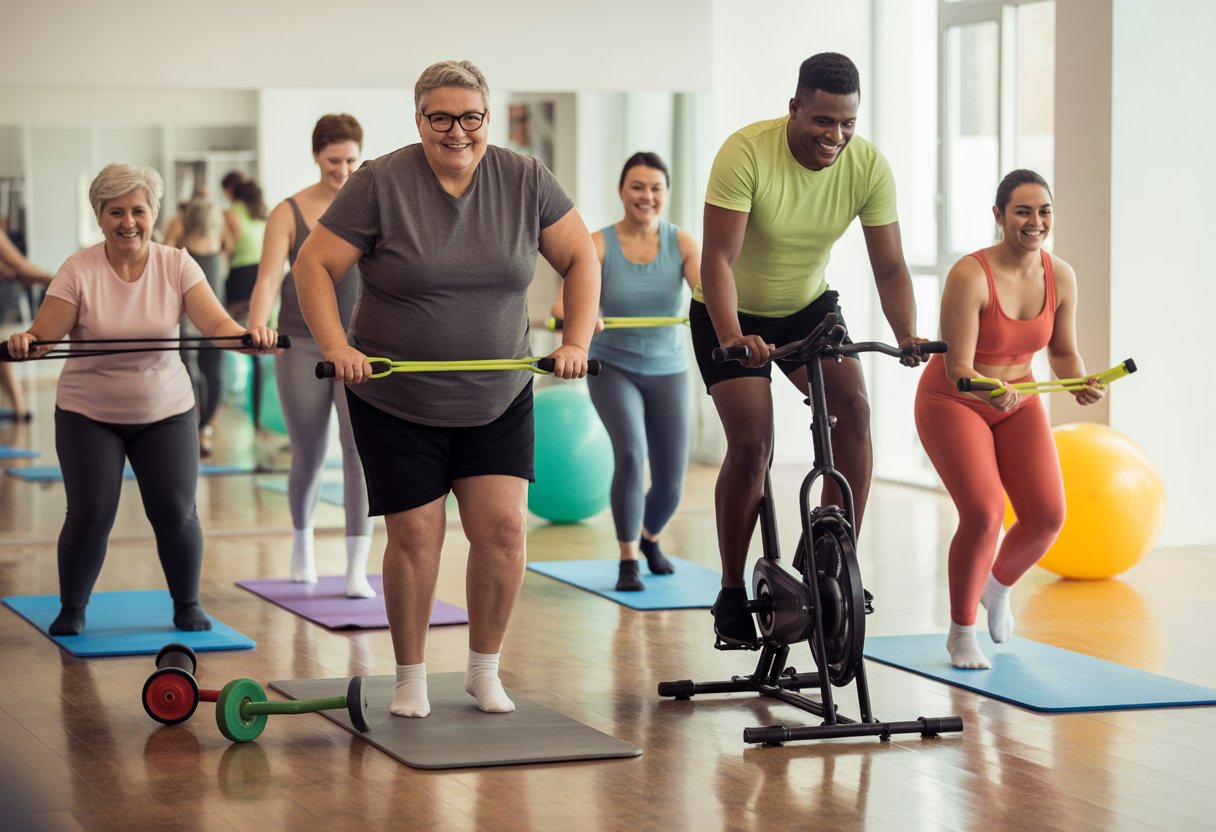
Exercise programs need adjustments based on individual physical characteristics and life stages. Modifying workouts to match fitness levels[13] ensures people can build functional strength safely while supporting metabolic health.
Modifying Exercises for Accessibility
Standard exercises don’t work for every body type or ability level. People in larger bodies may need to adjust movement patterns for comfort and effectiveness.
Chair-supported squats replace traditional squats when balance is a concern. Wall push-ups substitute for floor push-ups when someone lacks upper body strength. Resistance bands offer an alternative to weights for those who cannot lift heavy objects safely.
Inclusive fitness resources for different body sizes[14] emphasize listening to one’s body rather than forcing standard movements. Props like yoga blocks, stability balls, and foam wedges help modify positions.
Common Exercise Modifications:
- Squats: Use a chair for support or reduce depth
- Planks: Perform on knees or against a wall
- Lunges: Hold onto a stable surface or reduce range of motion
- Burpees: Remove the jump and perform step-backs instead
Addressing Mobility and Joint Health
Joint pain and limited mobility require specific exercise adaptations. Low-impact activities protect joints while still building strength and improving insulin sensitivity.
Water-based exercises reduce stress on joints by up to 90 percent. Swimming and water aerobics provide resistance without the impact of land-based training. Seated workouts allow people with severe mobility limitations to maintain muscle mass.
Range of motion exercises should precede strength training. Gentle stretching and controlled movements prepare joints for activity. People with arthritis benefit from exercise during times when pain and stiffness are lowest.
Joint-Friendly Exercise Options:
| Activity Type | Benefits | Best For |
|---|---|---|
| Swimming | Full-body workout, zero impact | Arthritis, back pain |
| Cycling | Cardiovascular fitness, low impact | Knee issues, weight concerns |
| Tai Chi | Balance, flexibility, gentle movement | Older adults, beginners |
| Resistance bands | Adjustable resistance, portable | Limited mobility, home workouts |
Safety Considerations Across Lifespans
Exercise needs change throughout different age groups[15] and require age-appropriate modifications. Young adults can typically handle higher intensity and heavier loads than older individuals.
Adults over 50 should prioritize balance training to prevent falls. Bone density decreases with age, making weight-bearing exercises essential but requiring careful progression. Heart rate monitoring becomes more important as cardiovascular changes occur.
Warm-up periods should extend with age. A 10-minute warm-up helps older adults prepare their bodies for activity. Cool-down periods allow heart rate and blood pressure to return to normal gradually.
People with chronic conditions need medical clearance before starting new programs. Diabetes, heart disease, and osteoporosis each require specific exercise considerations. Working with qualified professionals ensures exercises support rather than harm metabolic health.
Long-Term Strategies for Functional Strength and Health
Staying strong over time requires building daily habits, protecting against muscle loss, and connecting strength work to overall health. These approaches help people maintain muscle mass and physical ability throughout their lives.
Building Habits for Consistency
Regular strength training becomes easier when it fits naturally into daily routines. People who exercise at the same time each day are more likely to stick with their programs long-term.
Starting with two or three sessions per week provides enough stimulus for muscle growth without overwhelming beginners. Each session should last 30 to 45 minutes and include exercises for major muscle groups.
Tracking workouts in a notebook or app helps people see progress over time. Writing down weights, repetitions, and how exercises felt creates a record that shows improvement. This visible progress motivates continued effort.
Simple habits that support consistency include:
- Laying out workout clothes the night before
- Scheduling exercise sessions like any other appointment
- Choosing a gym or workout space close to home or work
- Finding a training partner for accountability
Preventing and Managing Muscle Loss
Adults lose about 3 to 8 percent of muscle mass each decade after age 30. This loss speeds up after age 60, affecting strength, balance, and metabolic health.
Strength training enhances long-term health[16] by stimulating muscle protein synthesis. Lifting weights two to three times weekly can slow or reverse age-related muscle loss. The key is progressive overload, which means gradually increasing weight, repetitions, or difficulty over time.
Protein intake becomes more important with age. Adults over 50 need about 1.0 to 1.2 grams of protein per kilogram of body weight daily to maintain muscle mass. Spreading protein across meals helps the body use it more efficiently.
Quality sleep allows muscles to recover and grow. Adults need seven to nine hours of sleep each night for optimal recovery.
Integrating Muscle Building Into Overall Well-Being
Building muscle supports more than just physical appearance. It improves bone density, helps control blood sugar, and increases daily energy expenditure.
Functional exercises[17] prepare the body for real-world activities like carrying groceries, climbing stairs, and playing with children or grandchildren. Movements like squats, lunges, pushes, and pulls translate directly to daily tasks.
Combining strength work with cardiovascular exercise creates balanced fitness. Walking, swimming, or cycling on non-lifting days keeps the heart healthy while allowing muscles to recover. This combination supports both functional strength and heart health.
Mental health improves through regular exercise as well. Physical activity reduces stress, improves mood, and helps people sleep better. These benefits create a positive cycle where feeling good mentally makes it easier to maintain physical habits.
Frequently Asked Questions
Starting a strength program raises practical questions about safety, scheduling, and results. The answers depend on individual circumstances, but research and expert guidance provide clear starting points for building strength at any fitness level.
What are the safest strength-training exercises for complete beginners?
Beginners should start with bodyweight exercises that use natural movement patterns. These include squats, wall push-ups, modified planks, and assisted lunges. These movements teach proper form without requiring equipment or heavy loads.
Resistance training machines work equally well as free weights[2] for muscle building. Machines guide movement patterns and reduce injury risk for those learning basic exercises. They provide a stable way to build initial strength before progressing to free weights.
Starting with resistance bands offers another safe option. Bands provide adjustable resistance that matches current strength levels. They also reduce stress on joints compared to weights.
The key is choosing exercises that feel stable and controlled. Beginners should focus on learning proper form with lighter resistance before adding more weight or complexity.
How many days per week should I train to build strength without overtraining?
One strength session per week helps most people make progress, especially those currently inactive. Two to three sessions weekly is optimal for health benefits and represents what only 15 percent of people achieve[2].
Rest days between sessions allow muscles to recover and grow stronger. Training the same muscle groups on consecutive days increases injury risk without providing additional benefits.
Four or more weekly sessions work for those pursuing specific performance goals. However, this level of training requires careful planning to avoid overtraining. Most people building general strength and health do not need this volume.
Signs of overtraining include persistent fatigue, declining performance, and increased injury rates. These indicate the body needs more recovery time between sessions.
How can I modify workouts for joint pain, limited mobility, or past injuries?
Joint pain often responds well to reduced range of motion exercises. Someone with shoulder pain might perform partial push-ups or wall push-ups instead of full floor push-ups. This builds strength while avoiding painful positions.
Water-based exercises reduce joint stress through buoyancy. Pool exercises allow people with arthritis or joint issues to build strength with minimal discomfort. The water provides natural resistance while supporting body weight.
Seated exercises work well for those with balance issues or lower body limitations. Seated shoulder presses, bicep curls, and core rotations build upper body strength safely. Chair-based workouts eliminate fall risk while still providing effective resistance training.
Past injuries may require permanent modifications or temporary adjustments during healing. Working with a physical therapist helps identify safe movement patterns. They can design programs that build strength around limitations rather than through them.
What should I eat to support muscle growth and recovery while managing body weight?
Protein needs increase with activity level and age[2]. Active adults over 30 typically need 0.75 to 1 gram of protein per pound of body weight daily. This equals about four to eight palm-sized portions of protein-rich foods throughout the day.
Eating enough total calories matters as much as protein intake. Too few calories prevent muscle growth and can cause muscle loss even with strength training. A moderate calorie intake supports muscle building while avoiding excess fat gain.
Timing protein around workouts helps but does not require precision. Consuming protein within three hours before or after training provides what muscles need. Someone who ate lunch an hour before working out does not need an immediate post-workout shake.
Plant and animal proteins both support muscle growth effectively. Plant-based eaters might increase protein intake by about 10 percent to account for lower absorption rates. However, this small difference only matters for competitive athletes, not general fitness seekers.
How do I track strength progress if I do not have access to heavy weights or a gym?
Bodyweight exercise progression provides clear strength markers. Advancing from wall push-ups to knee push-ups to full push-ups demonstrates measurable improvement. Moving from assisted to unassisted squats shows leg strength gains.
Increasing repetitions with the same resistance indicates strength growth. Someone who could only do 5 squats initially but now completes 15 has built significant strength. Tracking reps over time creates a simple progress record.
Adding complexity to exercises challenges muscles in new ways. Progressing from a standard plank to a single-leg plank increases difficulty without equipment. Single-leg squats require more strength than regular squats.
Functional improvements in daily life reflect real strength gains. Carrying groceries more easily, climbing stairs without fatigue, or getting up from the floor effortlessly all indicate progress. These practical measures matter more than gym numbers for most people.
How long does it typically take to see noticeable strength and body-composition changes?
Strength improvements often appear within two to four weeks of consistent training. Early gains come primarily from neuromuscular adaptations as the nervous system learns to recruit muscle fibers more efficiently. These improvements happen before visible muscle growth occurs.
Visible muscle changes typically take six to eight weeks of regular training. Body composition shifts become noticeable around the same timeframe. Fat loss combined with muscle gain creates visible changes in how clothes fit and body shape.
Age affects the timeline but does not prevent progress. Building muscle remains possible at any age[1] despite slower rates in older adults. Older individuals might need a few extra weeks to see the same changes younger people experience.
Consistency matters more than intensity for long-term results. Regular moderate training produces better outcomes than sporadic intense sessions. Missing occasional workouts does not derail progress as long as the overall pattern remains consistent.
Post Views: 6
References
- The Science Behind Building Muscle at Any Age. https://www.sciencenewstoday.org/the-science-behind-building-muscle-at-any-age Accessed May 10, 2026
- How to Build Muscle Strength, Size, and Power. https://www.precisionnutrition.com/build-muscle-strength-size-power Accessed May 10, 2026
- The Biology of How Muscles Change With Age. https://www.healthywomen.org/your-health/menopause-aging-well/how-muscles-change-with-age Accessed May 10, 2026
- How To Build Muscle: Hypertrophy Explained By 7 Elite Scientists. https://builtwithscience.com/fitness-tips/how-to-build-muscle/ Accessed May 10, 2026
- Transform Your Workouts with Age-Specific Fitness Strategies for Every Stage of Life. https://dailyburn.com/life/health/age-specific-fitness/ Accessed May 10, 2026
- Just a moment…. https://www.forhers.com/blog/recommended-exercise-by-age Accessed May 10, 2026
- Just a moment…. https://www.acsm.org/resistance-training-guidelines-update-2026/ Accessed May 10, 2026
- The Best Weekly Workout Plan: Here’s How Often to Strength Train, Do Cardio, and Rest. https://www.self.com/story/heres-what-a-perfect-week-of-working-out-looks-like Accessed May 10, 2026
- Optimal Nutrition for Muscle Gain: A Guide. https://www.americansportandfitness.com/blogs/fitness-blog/optimal-nutrition-for-muscle-gain-a-guide Accessed May 10, 2026
- Just a moment…. https://draxe.com/nutrition/muscle-building-foods/ Accessed May 10, 2026
- Best Muscle Mass Building Supplement: Evidence-Based Tier List. https://builtwithscience.com/supplements/best-muscle-mass-building-supplement/ Accessed May 10, 2026
- Mastering the Art of Recovery from The Gym. https://foundryfit.com/mastering-the-art-of-recovery-from-the-gym/ Accessed May 10, 2026
- Modify Workouts To Your Fitness Level. https://fitbodybootcamp.com/blog/workout-modifications-for-every-fitness-level/ Accessed May 10, 2026
- Inclusive fitness resources for all body sizes and abilities. https://nutritionbycarrie.com/2022/05/inclusive-fitness-resources.html/ Accessed May 10, 2026
- Fitness for All: Tailoring Exercise for Different Age Groups. https://www.kreedon.com/fitness-for-all-age-groups Accessed May 10, 2026
- How Strength Training Enhances Long-Term Health and Wellbeing. https://www.pritikin.com/your-health/how-strength-training-enhances-long-term-health-and-wellbeing.html Accessed May 10, 2026
- Functional exercises. https://www.womenshealthmag.com/uk/fitness/strength-training/a65058057/functional-exercises-lifelong-strength/ Accessed May 10, 2026
























