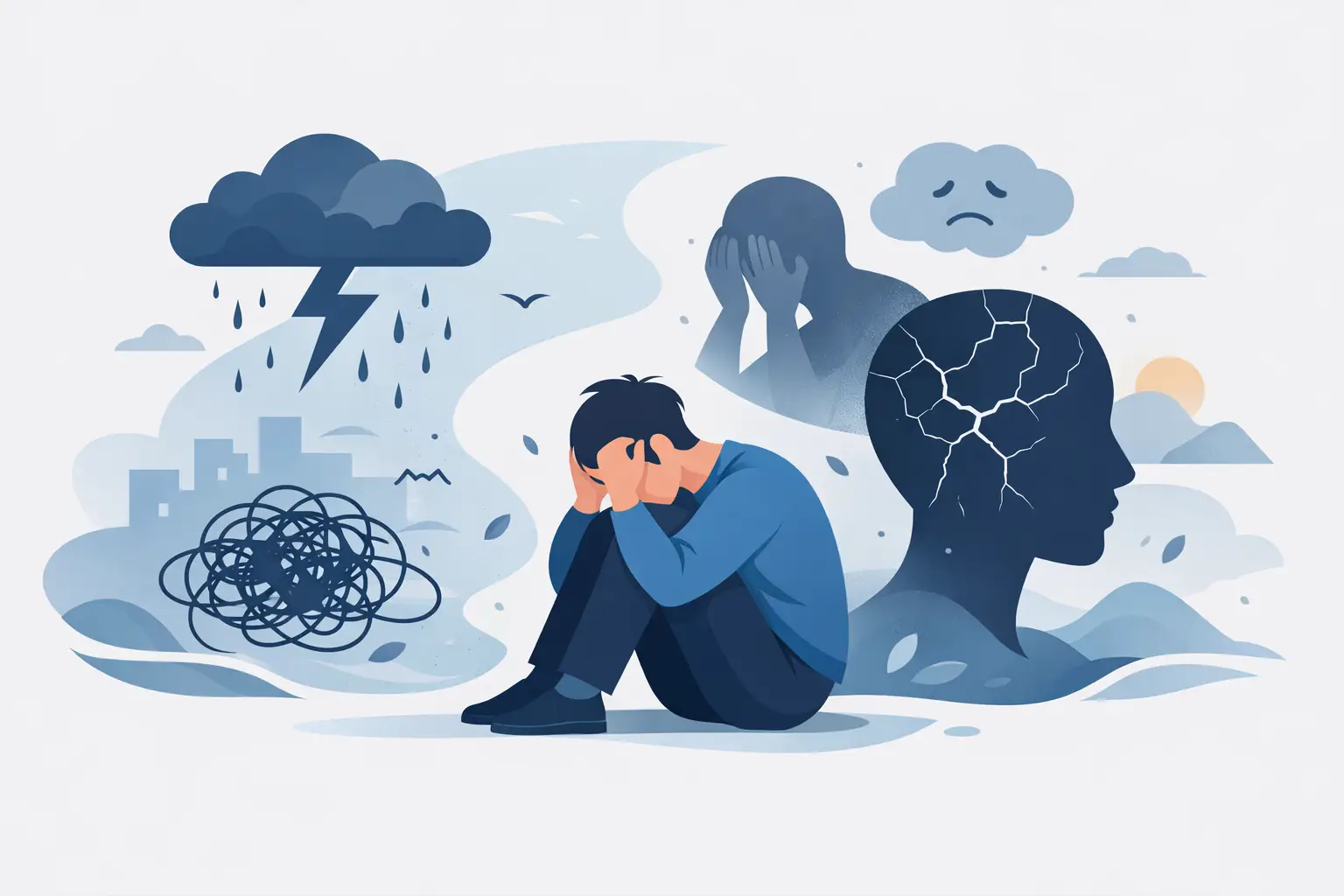
Some people ask, is anxiety and depression mental health, when what they really mean is: What am I feeling, and does it count as something I should take seriously? That question matters. If you have been pushing through stress, low mood, panic, poor sleep, or constant worry, it can be hard to tell whether it is just a rough season or a real mental health concern.
The short answer is yes. Anxiety and depression are mental health conditions. They affect how you think, feel, sleep, function, and respond to daily life. They are common, medically recognized, and treatable. They are not a character flaw, and they are not something you have to simply outlast on your own.
Table of Contents
Is anxiety and depression mental health, or something else?
Anxiety and depression fall under the umbrella of mental health because mental health includes emotional, psychological, and behavioral well-being. It covers how you handle stress, relate to others, make decisions, and move through everyday life.
That does not mean every anxious thought equals an anxiety disorder, or every sad week means clinical depression. Mental health exists on a spectrum. Most people feel stress, grief, fear, or exhaustion at times. The difference is usually in the intensity, frequency, and impact. When symptoms linger, feel overwhelming, or begin interfering with work, relationships, sleep, focus, or self-care, they may point to a diagnosable condition rather than a passing mood.
This is where many adults get stuck. They tell themselves they are just tired, just busy, just burned out, just dealing with a lot. Sometimes that is partly true. But ongoing anxiety and depression often hide inside those explanations.
What anxiety can look like in real life
Anxiety is more than being a worrier. It can show up as racing thoughts before bed, a pounding heart during normal tasks, stomach issues, irritability, restlessness, or a sense that something bad is about to happen even when you cannot explain why.
For some people, anxiety is constant and low-grade. For others, it comes in spikes, such as panic attacks, social anxiety, or intense fear around work, health, travel, or family responsibilities. You might look fully functional on the outside while feeling mentally exhausted inside.
It also has a way of affecting the body. Trouble sleeping, headaches, muscle tension, jaw clenching, nausea, and feeling on edge all day are common. That is one reason people do not always recognize it as a mental health issue at first. They feel physical symptoms first and emotional symptoms second.
What depression can look like beyond sadness
Depression is often misunderstood as constant crying or obvious despair. Sometimes it does look like that. But often it is quieter.
Depression can feel like emotional numbness, low motivation, mental fog, guilt, hopelessness, or losing interest in things you usually care about. It can also look like oversleeping, insomnia, appetite changes, low energy, pulling away from people, or struggling to get through basic tasks.
A person with depression may still go to work, answer texts, take care of the kids, and keep up appearances. That does not mean they are fine. It may mean they are using every bit of energy they have to keep going.
One of the hardest parts of depression is that it often tells you not to seek help. It can make support feel unnecessary, embarrassing, or too hard to start. That is part of the condition, not proof that you should ignore it.
Anxiety and depression often overlap
If you are wondering whether your experience fits one condition or the other, the answer may be both. Anxiety and depression frequently happen together.
You might feel wired and worn out at the same time. You may overthink everything but still struggle to care about anything. You may have trouble falling asleep because of anxious thoughts, then wake up feeling flat, heavy, and disconnected. This overlap is common, and it is one reason self-diagnosing can get confusing.
A licensed provider looks at the full picture, not just one symptom. That includes mood, stress level, sleep, energy, thought patterns, daily functioning, and how long symptoms have been going on.
When normal stress becomes a mental health concern
Life changes can trigger real symptoms. A breakup, grief, a move, job pressure, parenting stress, caregiving, or hormonal shifts can all affect mental health. That does not make your experience less valid. It also does not mean you have to wait until things get worse before getting support.
A useful question is not whether you are struggling enough. It is whether your symptoms are affecting your quality of life.
If worry is constant, sleep is off, motivation has dropped, or getting through the day feels harder than it should, it is worth paying attention. Early support can prevent symptoms from becoming more severe.
Is anxiety and depression mental health if symptoms come and go?
Yes. Symptoms do not have to be dramatic or constant to matter. Many people live in cycles. They have a few manageable weeks, then a crash. They feel okay during the day and overwhelmed at night. They function well at work but fall apart when they are alone.
Mental health conditions are not always linear. Stress, hormones, life events, and sleep patterns can all shift symptoms. What matters is the pattern over time and the impact on your daily life.
This is another reason care should be simple to access. When people have to wait weeks for an appointment or rearrange work and family schedules to get help, they often delay treatment. Convenient online care can reduce that friction and make it easier to act when symptoms start affecting your life.
What treatment can involve
Treatment for anxiety and depression is not one-size-fits-all. That is actually good news, because different people need different kinds of support.
For some, treatment may include medication. For others, it may focus on symptom tracking, provider guidance, behavioral strategies, sleep support, and regular follow-up. Many people benefit from a combination approach. The goal is not to numb your emotions. It is to reduce the intensity of symptoms so you can think more clearly, function more easily, and feel more like yourself.
Good care should feel personalized, not generic. It should account for your symptoms, health history, lifestyle, and goals. If privacy, speed, and convenience matter to you, telehealth can make that process more approachable. Services like My Healing 365 are built for adults who want discreet access to licensed providers, treatment plans tailored to their symptoms, and ongoing support without the delays and hassle of traditional visits.
What getting help online can do well
Online mental health treatment is a strong option for many adults, especially if your biggest barriers are time, stigma, transportation, or not wanting to sit in a waiting room.
A telehealth model works well when you want straightforward access to a licensed provider, secure communication, and a care plan you can follow from home. It can be especially helpful for busy professionals, parents, and anyone managing symptoms while trying to keep up with everyday responsibilities.
That said, it depends on your needs. Online care is not the right fit for every situation. If someone is in immediate danger, having thoughts of self-harm, or experiencing a severe psychiatric crisis, emergency or in-person care is the right next step.
Signs it may be time to reach out
You do not need to wait for a breaking point. If your symptoms have been present for more than a couple of weeks, are getting harder to manage, or are disrupting your sleep, focus, relationships, or routines, that is enough reason to check in with a provider.
Elevate Your Health for Just $29.99/Month
Join the Precision Wellness Subscription at My Healing 365 and get discounted services, priority coaching access, virtual care, and exclusive wellness resources to support your physical, emotional, and hormonal health.
Join for $29.99/MonthIt is also worth reaching out if you keep wondering whether what you are feeling is normal. That uncertainty alone can be exhausting. A professional assessment can give you clarity, and clarity often brings relief.
There is no prize for waiting until things feel unbearable. The earlier you recognize anxiety and depression as mental health concerns, the sooner you can start feeling supported.
If you have been asking yourself whether this counts, whether it is serious enough, or whether you should just keep pushing through, take that question seriously. You do not have to go through it alone, and getting care can be much simpler than you think.























