
Disclosure: This site contains some affiliate links. We might receive a small commission at no additional cost to you.
Medically Reviewed
Dr. Jose Rossello, MD, PhD, MHCM
Preventive Medicine & Public Health Specialist
Last Reviewed: May 21, 2026
A ferritin result that reads below normal is one of the more clinically significant findings that can come up on routine bloodwork — but it is also one of the more nuanced. Ferritin is not just an iron-storage protein; it also behaves as what scientists call an acute-phase reactant, meaning inflammation can artificially push ferritin upward even when your true iron stores are depleted. Understanding this context helps you have a more informed conversation with your clinician. This article covers what ferritin measures, what low levels mean, and the right questions to ask.
Table of Contents
What ferritin actually measures
Ferritin is a protein found inside cells throughout the body — primarily in the liver, spleen, and bone marrow — where it stores iron in a safe, accessible form. The body draws on these iron stores when dietary intake is insufficient or demand is high.
A small amount of ferritin circulates in the bloodstream, and this is what a ferritin blood test measures. Under normal circumstances, the serum ferritin level reflects how much iron is stored in the body: when stores are full, ferritin is higher; when stores are depleted, ferritin falls.
Iron is essential for making hemoglobin — the protein in red blood cells that carries oxygen. When iron stores fall low enough, the bone marrow cannot make enough hemoglobin, and iron deficiency anemia develops. But ferritin can be low before anemia appears — meaning low ferritin without anemia (iron deficiency without anemia) is real and can cause symptoms.
Important nuance: ferritin is also an acute-phase reactant. During inflammation, infection, chronic illness, or malignancy, the body produces more ferritin as part of an immune response — even if iron stores are actually low. This means:
- A low ferritin almost always indicates true iron deficiency
- But a normal or high ferritin does not always rule out iron deficiency if inflammation is present
This is why clinicians sometimes order additional iron tests — serum iron, TIBC (total iron-binding capacity), and transferrin saturation — to get a fuller picture, particularly in people with chronic inflammatory conditions, as noted in NIH StatPearls[1].
What the numbers generally mean
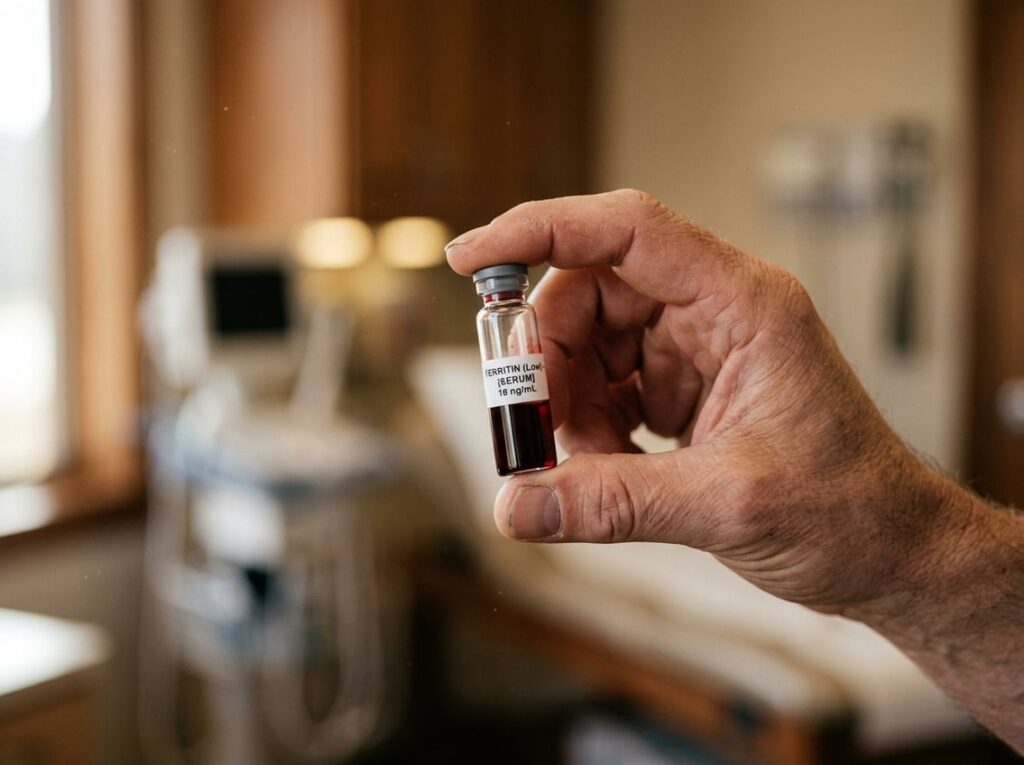
Ferritin reference ranges vary by laboratory and also by sex and age.
Mayo Clinic[2] notes that the generally accepted lower limit of normal for ferritin is around 12–15 ng/mL in adults, but emerging clinical thinking — including updated guidance discussed in Mayo Clinic professional resources — suggests that symptoms of iron deficiency can occur at ferritin levels well above these traditional cutoffs. Some clinicians treat symptoms consistent with iron deficiency when ferritin is below 30 or even 50 ng/mL in certain populations, particularly those with heavy menstrual bleeding.
Because ferritin is an acute-phase reactant, PMC research from the National Library of Medicine[3] emphasizes that it can be elevated in inflammation even when actual iron stores are being depleted — a condition called the “anemia of inflammation” or “anemia of chronic disease.” In this setting, ferritin may appear normal when iron is genuinely unavailable to the bone marrow.
Why guidelines pay attention
Iron deficiency is the most common nutritional deficiency worldwide and one of the most common causes of anemia. Professional societies including the American Society of Hematology (ASH)[4] and the American Gastroenterological Association (AGA)[5] have developed guidance on identifying and managing iron deficiency, with particular attention to:
- Iron deficiency anemia in women. Premenopausal women are at significantly higher risk due to menstrual blood loss. Pregnancy further increases iron demand dramatically.
- Gastrointestinal blood loss. In men and postmenopausal women, iron deficiency should prompt investigation for GI blood loss (ulcers, colorectal polyps, cancer, inflammatory bowel disease) — this is considered a red flag that needs workup.
- Malabsorption. Celiac disease and inflammatory bowel disease impair iron absorption in the small intestine.
- Fatigue and quality of life. Iron deficiency without anemia can cause fatigue, impaired exercise tolerance, restless leg syndrome, and cognitive symptoms — even before hemoglobin falls below the normal range.
- Ferritin as a screening test. Ferritin is the most sensitive blood marker for depleted iron stores when inflammation is not present; it falls before hemoglobin does.
Common drivers at the population level
Mayo Clinic[6] identifies the most common causes of iron deficiency:
- Inadequate dietary intake. Vegetarian and vegan diets may be lower in heme iron (from meat), which is more bioavailable than plant-based non-heme iron. Strict low-calorie diets may also provide insufficient iron.
- Menstrual blood loss. Heavy periods are among the most common causes of iron deficiency in premenopausal women.
- Pregnancy and breastfeeding. Iron demand increases substantially during pregnancy; many people do not get enough iron from diet alone.
- GI blood loss. Occult (hidden) blood loss from peptic ulcers, gastritis, colorectal polyps, or cancer can slowly deplete iron stores without visible symptoms.
- Malabsorption. Celiac disease, inflammatory bowel disease, gastric bypass surgery, and other GI conditions reduce iron absorption.
- Frequent blood donation. Regular donors may develop iron deficiency if dietary intake does not keep pace.
- Chronic kidney disease. Poor iron absorption combined with blood loss through dialysis contributes to iron deficiency in this population.
- Exercise. Endurance athletes can lose iron through sweat and GI microbleeding; foot-strike hemolysis (breakdown of red blood cells during running) also contributes.
- Frequent use of NSAIDs or aspirin. These can cause microscopic GI bleeding over time.
What follow-up evaluation may be considered
When ferritin comes back low, typical next steps include:
- Complete blood count (CBC). Checks for anemia (low hemoglobin), and the CBC provides important information about red blood cell size and shape — microcytic (small) red cells suggest iron deficiency.
- Full iron studies. Serum iron, TIBC, and transferrin saturation help distinguish true iron deficiency from other patterns, including the anemia of inflammation.
- C-reactive protein (CRP). Because ferritin is an acute-phase reactant, a CRP test can flag whether inflammation might be affecting the ferritin reading.
- Dietary and menstrual history. Understanding dietary iron intake and the pattern of menstrual bleeding is essential context.
- GI evaluation. In men of any age and postmenopausal women, unexplained iron deficiency should prompt consideration of GI evaluation to exclude a bleeding source. The AGA recommends colonoscopy and upper endoscopy in these populations when the cause is not clear.
- Celiac disease testing. A tissue transglutaminase antibody (tTG-IgA) test can screen for celiac disease if malabsorption is suspected.
- Thyroid function. Hypothyroidism can affect iron absorption and should be on the differential.
- Monitoring response to treatment. If supplementation or dietary change is initiated, follow-up labs (ferritin, CBC) after 2–3 months assess response.
Lifestyle and prevention factors evidence supports
- Dietary iron optimization. Heme iron (red meat, poultry, seafood) is absorbed more efficiently than non-heme iron (beans, lentils, spinach, fortified cereals). Combining non-heme iron sources with vitamin C significantly enhances absorption.
- Vitamin C timing. Eating citrus, bell peppers, strawberries, or other vitamin C-rich foods alongside iron-rich plant foods improves non-heme iron uptake substantially.
- Avoiding iron absorption inhibitors with meals. Coffee, tea, calcium supplements, and high-phytate foods (bran, whole grains consumed in large amounts) can inhibit iron absorption when consumed at the same time as iron-rich foods or supplements. Spacing them apart helps.
- Addressing the root cause. If heavy menstrual bleeding is the driver, discussing that directly with a clinician (and considering gynecologic evaluation) is important. If GI blood loss is the cause, finding and treating the source is the priority — iron replacement alone treats the symptom, not the problem.
- Supplementation when indicated. Oral iron supplements (ferrous sulfate, ferrous gluconate, ferrous bisglycinate) can restore stores, though they take months to fully replenish. Side effects like constipation and nausea are common. IV iron is an option when oral supplementation fails or is not tolerated.
- Cooking in cast iron. A modest amount of evidence suggests that cooking acidic foods in cast iron cookware increases dietary iron content — a low-effort addition for some.
Questions to bring to your appointment
- What is my ferritin level, and is there reason to think inflammation might be affecting the reading?
- Should we also check my complete blood count and iron studies to get a more complete picture?
- Is my hemoglobin in a normal range, or do I already have anemia?
- Given my age and sex, what is most likely causing my iron to be low?
- For unexplained iron deficiency — especially if I am a man or postmenopausal woman — should we evaluate for GI blood loss?
- Is there any reason to test for celiac disease or other malabsorption?
- What dietary changes might help raise my iron level?
- If supplementation is recommended, what form, dose, and timing would work best — and what side effects should I expect?
- How long will it typically take for my ferritin to normalize?
- When should I recheck labs to assess improvement?
- What symptoms of iron deficiency should I be tracking?
- Are there any symptoms — like very heavy periods, blood in stool, or persistent fatigue — that I should make sure to tell you about right now?
Red flags warranting prompter follow-up
Schedule a timely appointment (within a few weeks) if:
- Iron deficiency is newly found in a man or postmenopausal woman with no obvious explanation — this warrants GI evaluation to exclude a bleeding source
- You notice blood in your stool (bright red or black/tarry), which can indicate GI bleeding
- Fatigue is severe enough to significantly impair daily life
- You have unexplained weight loss or change in bowel habits alongside the low ferritin
Seek urgent or emergency care if:
- There is visible, significant blood loss (heavy rectal bleeding, hematemesis)
- Severe shortness of breath or chest pain — significant anemia can strain the heart
- Fainting or near-fainting episodes
Key takeaways
- Ferritin is the most sensitive marker for depleted iron stores — a low ferritin almost always means iron deficiency, even before anemia develops.
- Ferritin is also an acute-phase reactant: inflammation can normalize or elevate ferritin even when iron stores are actually low. Complement ferritin with full iron studies and CRP in people with chronic illness.
- Common causes include inadequate dietary intake, heavy menstrual periods, GI blood loss, pregnancy, and malabsorption conditions.
- Unexplained iron deficiency in men or postmenopausal women should prompt evaluation for a GI source of blood loss.
- Vitamin C with iron-rich plant foods, avoiding absorption inhibitors around meals, and treating the root cause are the evidence-supported approaches.
- Full iron repletion through supplements typically takes several months; follow-up labs confirm the response.
Disclaimer
This content is for general educational purposes only and is not medical advice. It does not create a doctor-patient relationship. Always talk to your licensed healthcare professional about your specific situation.
Post Views: 9
Elevate Your Health for Just $29.99/Month
Join the Precision Wellness Subscription at My Healing 365 and get discounted services, priority coaching access, virtual care, and exclusive wellness resources to support your physical, emotional, and hormonal health.
Join for $29.99/MonthDisclosure: This site contains some affiliate links. We might receive a small commission at no additional cost to you.
Medically Reviewed
Dr. Jose Rossello, MD, PhD, MHCM
Preventive Medicine & Public Health Specialist
Last Reviewed: May 21, 2026
A ferritin result that reads below normal is one of the more clinically significant findings that can come up on routine bloodwork — but it is also one of the more nuanced. Ferritin is not just an iron-storage protein; it also behaves as what scientists call an acute-phase reactant, meaning inflammation can artificially push ferritin upward even when your true iron stores are depleted. Understanding this context helps you have a more informed conversation with your clinician. This article covers what ferritin measures, what low levels mean, and the right questions to ask.
What ferritin actually measures
Ferritin is a protein found inside cells throughout the body — primarily in the liver, spleen, and bone marrow — where it stores iron in a safe, accessible form. The body draws on these iron stores when dietary intake is insufficient or demand is high.
A small amount of ferritin circulates in the bloodstream, and this is what a ferritin blood test measures. Under normal circumstances, the serum ferritin level reflects how much iron is stored in the body: when stores are full, ferritin is higher; when stores are depleted, ferritin falls.
Iron is essential for making hemoglobin — the protein in red blood cells that carries oxygen. When iron stores fall low enough, the bone marrow cannot make enough hemoglobin, and iron deficiency anemia develops. But ferritin can be low before anemia appears — meaning low ferritin without anemia (iron deficiency without anemia) is real and can cause symptoms.
Important nuance: ferritin is also an acute-phase reactant. During inflammation, infection, chronic illness, or malignancy, the body produces more ferritin as part of an immune response — even if iron stores are actually low. This means:
- A low ferritin almost always indicates true iron deficiency
- But a normal or high ferritin does not always rule out iron deficiency if inflammation is present
This is why clinicians sometimes order additional iron tests — serum iron, TIBC (total iron-binding capacity), and transferrin saturation — to get a fuller picture, particularly in people with chronic inflammatory conditions, as noted in NIH StatPearls[1].
What the numbers generally mean
Ferritin reference ranges vary by laboratory and also by sex and age.
Mayo Clinic[2] notes that the generally accepted lower limit of normal for ferritin is around 12–15 ng/mL in adults, but emerging clinical thinking — including updated guidance discussed in Mayo Clinic professional resources — suggests that symptoms of iron deficiency can occur at ferritin levels well above these traditional cutoffs. Some clinicians treat symptoms consistent with iron deficiency when ferritin is below 30 or even 50 ng/mL in certain populations, particularly those with heavy menstrual bleeding.
Because ferritin is an acute-phase reactant, PMC research from the National Library of Medicine[3] emphasizes that it can be elevated in inflammation even when actual iron stores are being depleted — a condition called the “anemia of inflammation” or “anemia of chronic disease.” In this setting, ferritin may appear normal when iron is genuinely unavailable to the bone marrow.
Why guidelines pay attention
Iron deficiency is the most common nutritional deficiency worldwide and one of the most common causes of anemia. Professional societies including the American Society of Hematology (ASH)[4] and the American Gastroenterological Association (AGA)[5] have developed guidance on identifying and managing iron deficiency, with particular attention to:
- Iron deficiency anemia in women. Premenopausal women are at significantly higher risk due to menstrual blood loss. Pregnancy further increases iron demand dramatically.
- Gastrointestinal blood loss. In men and postmenopausal women, iron deficiency should prompt investigation for GI blood loss (ulcers, colorectal polyps, cancer, inflammatory bowel disease) — this is considered a red flag that needs workup.
- Malabsorption. Celiac disease and inflammatory bowel disease impair iron absorption in the small intestine.
- Fatigue and quality of life. Iron deficiency without anemia can cause fatigue, impaired exercise tolerance, restless leg syndrome, and cognitive symptoms — even before hemoglobin falls below the normal range.
- Ferritin as a screening test. Ferritin is the most sensitive blood marker for depleted iron stores when inflammation is not present; it falls before hemoglobin does.
Common drivers at the population level
Mayo Clinic[6] identifies the most common causes of iron deficiency:
- Inadequate dietary intake. Vegetarian and vegan diets may be lower in heme iron (from meat), which is more bioavailable than plant-based non-heme iron. Strict low-calorie diets may also provide insufficient iron.
- Menstrual blood loss. Heavy periods are among the most common causes of iron deficiency in premenopausal women.
- Pregnancy and breastfeeding. Iron demand increases substantially during pregnancy; many people do not get enough iron from diet alone.
- GI blood loss. Occult (hidden) blood loss from peptic ulcers, gastritis, colorectal polyps, or cancer can slowly deplete iron stores without visible symptoms.
- Malabsorption. Celiac disease, inflammatory bowel disease, gastric bypass surgery, and other GI conditions reduce iron absorption.
- Frequent blood donation. Regular donors may develop iron deficiency if dietary intake does not keep pace.
- Chronic kidney disease. Poor iron absorption combined with blood loss through dialysis contributes to iron deficiency in this population.
- Exercise. Endurance athletes can lose iron through sweat and GI microbleeding; foot-strike hemolysis (breakdown of red blood cells during running) also contributes.
- Frequent use of NSAIDs or aspirin. These can cause microscopic GI bleeding over time.
What follow-up evaluation may be considered
When ferritin comes back low, typical next steps include:
- Complete blood count (CBC). Checks for anemia (low hemoglobin), and the CBC provides important information about red blood cell size and shape — microcytic (small) red cells suggest iron deficiency.
- Full iron studies. Serum iron, TIBC, and transferrin saturation help distinguish true iron deficiency from other patterns, including the anemia of inflammation.
- C-reactive protein (CRP). Because ferritin is an acute-phase reactant, a CRP test can flag whether inflammation might be affecting the ferritin reading.
- Dietary and menstrual history. Understanding dietary iron intake and the pattern of menstrual bleeding is essential context.
- GI evaluation. In men of any age and postmenopausal women, unexplained iron deficiency should prompt consideration of GI evaluation to exclude a bleeding source. The AGA recommends colonoscopy and upper endoscopy in these populations when the cause is not clear.
- Celiac disease testing. A tissue transglutaminase antibody (tTG-IgA) test can screen for celiac disease if malabsorption is suspected.
- Thyroid function. Hypothyroidism can affect iron absorption and should be on the differential.
- Monitoring response to treatment. If supplementation or dietary change is initiated, follow-up labs (ferritin, CBC) after 2–3 months assess response.
Lifestyle and prevention factors evidence supports
- Dietary iron optimization. Heme iron (red meat, poultry, seafood) is absorbed more efficiently than non-heme iron (beans, lentils, spinach, fortified cereals). Combining non-heme iron sources with vitamin C significantly enhances absorption.
- Vitamin C timing. Eating citrus, bell peppers, strawberries, or other vitamin C-rich foods alongside iron-rich plant foods improves non-heme iron uptake substantially.
- Avoiding iron absorption inhibitors with meals. Coffee, tea, calcium supplements, and high-phytate foods (bran, whole grains consumed in large amounts) can inhibit iron absorption when consumed at the same time as iron-rich foods or supplements. Spacing them apart helps.
- Addressing the root cause. If heavy menstrual bleeding is the driver, discussing that directly with a clinician (and considering gynecologic evaluation) is important. If GI blood loss is the cause, finding and treating the source is the priority — iron replacement alone treats the symptom, not the problem.
- Supplementation when indicated. Oral iron supplements (ferrous sulfate, ferrous gluconate, ferrous bisglycinate) can restore stores, though they take months to fully replenish. Side effects like constipation and nausea are common. IV iron is an option when oral supplementation fails or is not tolerated.
- Cooking in cast iron. A modest amount of evidence suggests that cooking acidic foods in cast iron cookware increases dietary iron content — a low-effort addition for some.
Questions to bring to your appointment
- What is my ferritin level, and is there reason to think inflammation might be affecting the reading?
- Should we also check my complete blood count and iron studies to get a more complete picture?
- Is my hemoglobin in a normal range, or do I already have anemia?
- Given my age and sex, what is most likely causing my iron to be low?
- For unexplained iron deficiency — especially if I am a man or postmenopausal woman — should we evaluate for GI blood loss?
- Is there any reason to test for celiac disease or other malabsorption?
- What dietary changes might help raise my iron level?
- If supplementation is recommended, what form, dose, and timing would work best — and what side effects should I expect?
- How long will it typically take for my ferritin to normalize?
- When should I recheck labs to assess improvement?
- What symptoms of iron deficiency should I be tracking?
- Are there any symptoms — like very heavy periods, blood in stool, or persistent fatigue — that I should make sure to tell you about right now?
Red flags warranting prompter follow-up
Schedule a timely appointment (within a few weeks) if:
- Iron deficiency is newly found in a man or postmenopausal woman with no obvious explanation — this warrants GI evaluation to exclude a bleeding source
- You notice blood in your stool (bright red or black/tarry), which can indicate GI bleeding
- Fatigue is severe enough to significantly impair daily life
- You have unexplained weight loss or change in bowel habits alongside the low ferritin
Seek urgent or emergency care if:
- There is visible, significant blood loss (heavy rectal bleeding, hematemesis)
- Severe shortness of breath or chest pain — significant anemia can strain the heart
- Fainting or near-fainting episodes
Key takeaways
- Ferritin is the most sensitive marker for depleted iron stores — a low ferritin almost always means iron deficiency, even before anemia develops.
- Ferritin is also an acute-phase reactant: inflammation can normalize or elevate ferritin even when iron stores are actually low. Complement ferritin with full iron studies and CRP in people with chronic illness.
- Common causes include inadequate dietary intake, heavy menstrual periods, GI blood loss, pregnancy, and malabsorption conditions.
- Unexplained iron deficiency in men or postmenopausal women should prompt evaluation for a GI source of blood loss.
- Vitamin C with iron-rich plant foods, avoiding absorption inhibitors around meals, and treating the root cause are the evidence-supported approaches.
- Full iron repletion through supplements typically takes several months; follow-up labs confirm the response.
Disclaimer
This content is for general educational purposes only and is not medical advice. It does not create a doctor-patient relationship. Always talk to your licensed healthcare professional about your specific situation.
Post Views: 9
























