Disclosure: This site contains some affiliate links. We might receive a small commission at no additional cost to you.
Medically Reviewed
Dr. Jose Rossello, MD, PhD, MHCM
Preventive Medicine & Public Health Specialist
Last Reviewed: May 23, 2026
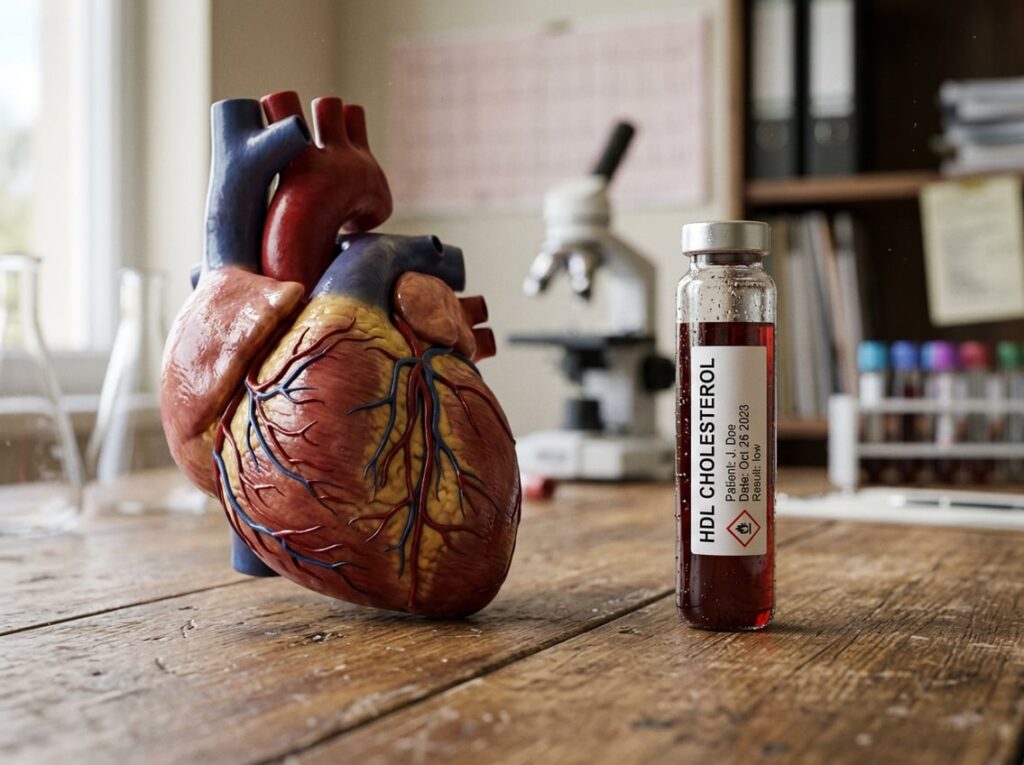
HDL cholesterol — often called “good cholesterol” — is the one number on your lipid panel that you actually want to be high. When it comes back low, it is worth understanding what that means for your cardiovascular health and what factors might be driving it down. But the science of HDL is also more nuanced than headlines suggest: raising HDL with medication has not proven to be a reliable strategy, while lifestyle-based approaches that raise HDL appear to work partly because they improve the whole metabolic picture. This article covers what you need to know and the right questions to ask.
Table of Contents
What HDL cholesterol actually measures
HDL stands for high-density lipoprotein. It is a particle that circulates in the bloodstream and transports cholesterol from tissues and arterial walls back to the liver for removal. Think of it as a collection and delivery service for excess cholesterol.
The reason HDL is considered protective is that this reverse cholesterol transport process — removing cholesterol from arterial walls — opposes the process of atherosclerotic plaque buildup. Higher circulating HDL is associated in large observational studies with lower rates of heart attack and stroke.
However, the picture is more complex than “more HDL = less heart disease.” Some people have naturally very high HDL due to genetic variants that actually impair its function, and paradoxically these individuals can be at higher cardiovascular risk. Very high HDL (above 80–100 mg/dL) may not provide the expected protection and can sometimes reflect underlying pathology. Most importantly, clinical trials that attempted to raise HDL with medications (like niacin or CETP inhibitors) did not reduce cardiovascular events — a finding that has shifted how guideline bodies think about HDL.
The American Heart Association[1] now notes that HDL is not currently a treatment target for lowering cardiovascular risk, but it remains a useful part of the overall cardiovascular risk picture.
What the numbers generally mean
Reference ranges for HDL differ by sex, as Cleveland Clinic[2] and Mayo Clinic[3] describe:
An HDL at or above 60 mg/dL has traditionally been associated with reduced cardiovascular risk and was once considered a “negative risk factor” (meaning it could partially offset other risk factors). An HDL below 40 mg/dL in men or below 50 mg/dL in women is considered low and is a component of metabolic syndrome — a cluster of cardiovascular and metabolic risk factors.
It is important to interpret HDL in the context of the full lipid panel. Low HDL often travels with high triglycerides and sometimes with elevated LDL — a pattern sometimes called atherogenic dyslipidemia that is particularly concerning from a cardiovascular standpoint.
The 2026 ACC/AHA dyslipidemia guideline update[4] frames low HDL as a “risk-enhancing factor” — something that can inform the overall cardiovascular risk conversation even though it is not itself a treatment target.
Why guidelines pay attention
The ACC/AHA cholesterol guidelines[5] and clinical practice recognize low HDL as important for several reasons:
- Association with cardiovascular disease. Large population studies consistently find that lower HDL is associated with higher rates of heart attack and stroke, independent of LDL levels.
- Component of metabolic syndrome. Low HDL is one of the five criteria for metabolic syndrome (along with high triglycerides, elevated blood glucose, high blood pressure, and increased waist circumference). Metabolic syndrome is a significant cardiovascular risk multiplier.
- Risk-enhancing factor. In the 2018 and 2026 ACC/AHA frameworks, low HDL (particularly when combined with high triglycerides) can inform decisions about cardiovascular risk management even in people whose LDL appears borderline.
- Signal of insulin resistance. Low HDL frequently reflects underlying insulin resistance, excess abdominal fat, or a diet high in refined carbohydrates — all of which contribute independently to cardiovascular risk.
The guideline perspective has evolved: rather than targeting HDL as a number to raise, clinicians now look at low HDL as a signal to address the underlying metabolic picture — which, when improved, tends to raise HDL as a byproduct.
Common drivers at the population level

Lifestyle factors:
- Physical inactivity. Regular aerobic exercise is one of the most reliable ways to raise HDL. Even modest increases in activity can produce measurable HDL improvements.
- Smoking and tobacco use. Nicotine directly suppresses HDL production. All forms of tobacco — including e-cigarettes — have this effect.
- Diet high in refined carbohydrates and added sugars. A dietary pattern heavy in white bread, sweets, and sugary drinks raises triglycerides and lowers HDL simultaneously.
- Trans fats. Although largely removed from the food supply in the U.S., trans fats directly lower HDL and raise LDL. Partially hydrogenated oils in some imported or older products still carry this risk.
- Excess body weight. Particularly abdominal obesity is associated with lower HDL; weight loss consistently raises it.
Medical conditions:
- Type 2 diabetes and insulin resistance. These conditions impair HDL metabolism and lower HDL levels.
- Metabolic syndrome. Low HDL is both a cause and component of this cluster of conditions.
- Hypothyroidism. Underactive thyroid can lower HDL; treating hypothyroidism often improves the lipid profile.
- Kidney disease. Chronic kidney disease is associated with a less favorable lipid profile, including lower HDL.
Medications:
- Beta-blockers, certain diuretics, and some hormonal medications can lower HDL.
- Anabolic steroids significantly suppress HDL.
Genetics:
- Familial combined hyperlipidemia, apolipoprotein A-I deficiency, and Tangier disease are genetic conditions associated with very low HDL. These are less common but important to identify.
What follow-up evaluation may be considered
Low HDL rarely requires extensive additional workup on its own, but it typically prompts evaluation of:
- Full lipid panel context. Is the low HDL accompanied by high triglycerides? This pattern (low HDL + high triglycerides) is particularly associated with insulin resistance and metabolic syndrome and warrants focused evaluation.
- Fasting glucose and/or A1C. Because low HDL and insulin resistance/diabetes often co-occur, assessing blood glucose is standard.
- Blood pressure and waist circumference. To screen for metabolic syndrome.
- Thyroid function. TSH is often checked since hypothyroidism can lower HDL.
- Non-HDL cholesterol. This is total cholesterol minus HDL, and it captures all the atherogenic particles including LDL and VLDL. Non-HDL cholesterol is increasingly preferred over LDL alone as a risk marker.
- ApoB (apolipoprotein B). A measure of the total number of atherogenic particles that may better reflect cardiovascular risk when HDL is low and triglycerides are high.
- Lp(a) testing. If overall cardiovascular risk is being reassessed, Lp(a) is worth measuring at least once in adulthood per the 2026 ACC/AHA guideline.
- Assessment for secondary causes. If HDL is very low without obvious lifestyle explanation, genetic conditions and medications should be reviewed.
Lifestyle and prevention factors evidence supports
While no medication has been reliably shown to reduce cardiovascular events by raising HDL, lifestyle changes that raise HDL do appear to reduce overall cardiovascular risk — likely because they address the underlying metabolic abnormality rather than just the HDL number.
Evidence-supported approaches from the AHA[6], Mayo Clinic[3], and Cleveland Clinic[2]:
- Regular aerobic exercise. One of the most effective HDL-raising lifestyle interventions. Even 60 minutes of moderate-intensity exercise per week (brisk walking, cycling, swimming) can raise HDL meaningfully. More is generally better for this purpose.
- Smoking cessation. Quitting smoking is associated with substantial increases in HDL, especially in women.
- Weight loss. In people with overweight or obesity, losing weight (even 5–10% of body weight) consistently raises HDL.
- Reducing refined carbohydrates and added sugars. This dietary shift lowers triglycerides and, as a consequence, tends to raise HDL. Swapping sugary drinks for water is among the highest-impact single dietary changes.
- Moderate alcohol consumption. Light-to-moderate alcohol consumption has been associated with higher HDL in observational studies. However, this is a complicated topic — alcohol carries significant health risks at any level, and using alcohol specifically to raise HDL is not a strategy most clinicians endorse.
- Healthy fat intake. Replacing saturated fat with monounsaturated or polyunsaturated fat (olive oil, avocados, nuts, fatty fish) supports favorable lipid profiles, including modest HDL improvement.
- Omega-3 fatty acids. High-dose fish oil reduces triglycerides substantially, which tends to indirectly support HDL levels; effects on HDL itself are modest.
- Avoiding trans fats. Even small amounts of trans fats suppress HDL.
- Treating underlying conditions. Addressing insulin resistance, diabetes, hypothyroidism, or metabolic syndrome directly improves HDL.
Questions to bring to your appointment
- What is my HDL level, and how does it compare to the range that concerns you from a cardiovascular standpoint?
- What do the rest of my lipid panel results — LDL, triglycerides, total cholesterol — look like alongside my HDL?
- Does my low HDL, combined with my other values, suggest metabolic syndrome or insulin resistance?
- Should we check my fasting glucose or A1C to look for blood sugar problems that might be connected?
- Is my thyroid function worth checking given my lipid profile?
- What is my overall cardiovascular risk estimate when you factor in my blood pressure, age, and other risk factors?
- Which lifestyle changes would have the biggest impact on raising my HDL and improving my overall lipid profile?
- Is there a role for checking non-HDL cholesterol or ApoB for a more complete picture of my cardiovascular risk?
- Are any of my current medications affecting my HDL?
- Is there a family history screening test (like Lp(a) or genetic testing) that would be appropriate given my numbers?
- What would need to happen for you to consider referring me to a lipid specialist?
- How often should I retest my lipid panel to track whether my efforts are working?
Red flags warranting prompter follow-up
Low HDL alone is generally not an emergency, but seek prompter evaluation if:
- Your HDL is extremely low (below 25 mg/dL) — this may suggest a genetic condition requiring specialized evaluation
- You develop symptoms of cardiovascular disease: chest discomfort, shortness of breath, jaw or arm pain, or stroke symptoms (facial drooping, arm weakness, speech difficulty — call 911 immediately)
- Your triglycerides are very high (above 500 mg/dL) alongside low HDL — this combination raises pancreatitis risk and may warrant urgent management
- New or worsening symptoms develop that you believe may be related to your heart or metabolic health
Key takeaways
- HDL is the “good cholesterol” particle that carries cholesterol away from arterial walls to the liver. Higher HDL is associated with lower cardiovascular risk, but HDL is not currently a direct treatment target.
- Low HDL (below 40 mg/dL in men, below 50 mg/dL in women) is a risk-enhancing factor and often signals insulin resistance, metabolic syndrome, or poor lifestyle patterns.
- Low HDL + high triglycerides is a particularly concerning combination, often reflecting underlying insulin resistance.
- Lifestyle changes — exercise, smoking cessation, weight loss, reducing refined carbohydrates, and replacing unhealthy fats — reliably raise HDL while addressing the broader metabolic picture.
- Medications that raise HDL have not been shown to reduce cardiovascular events, so treatment focuses on managing overall risk, not HDL alone.
- Non-HDL cholesterol and ApoB may provide better cardiovascular risk information than HDL in isolation.
Disclaimer
This content is for general educational purposes only and is not medical advice. It does not create a doctor-patient relationship. Always talk to your licensed healthcare professional about your specific situation.
Post Views: 4
Elevate Your Health for Just $29.99/Month
Join the Precision Wellness Subscription at My Healing 365 and get discounted services, priority coaching access, virtual care, and exclusive wellness resources to support your physical, emotional, and hormonal health.
Join for $29.99/MonthDisclosure: This site contains some affiliate links. We might receive a small commission at no additional cost to you.
Medically Reviewed
Dr. Jose Rossello, MD, PhD, MHCM
Preventive Medicine & Public Health Specialist
Last Reviewed: May 23, 2026
HDL cholesterol — often called “good cholesterol” — is the one number on your lipid panel that you actually want to be high. When it comes back low, it is worth understanding what that means for your cardiovascular health and what factors might be driving it down. But the science of HDL is also more nuanced than headlines suggest: raising HDL with medication has not proven to be a reliable strategy, while lifestyle-based approaches that raise HDL appear to work partly because they improve the whole metabolic picture. This article covers what you need to know and the right questions to ask.
What HDL cholesterol actually measures
HDL stands for high-density lipoprotein. It is a particle that circulates in the bloodstream and transports cholesterol from tissues and arterial walls back to the liver for removal. Think of it as a collection and delivery service for excess cholesterol.
The reason HDL is considered protective is that this reverse cholesterol transport process — removing cholesterol from arterial walls — opposes the process of atherosclerotic plaque buildup. Higher circulating HDL is associated in large observational studies with lower rates of heart attack and stroke.
However, the picture is more complex than “more HDL = less heart disease.” Some people have naturally very high HDL due to genetic variants that actually impair its function, and paradoxically these individuals can be at higher cardiovascular risk. Very high HDL (above 80–100 mg/dL) may not provide the expected protection and can sometimes reflect underlying pathology. Most importantly, clinical trials that attempted to raise HDL with medications (like niacin or CETP inhibitors) did not reduce cardiovascular events — a finding that has shifted how guideline bodies think about HDL.
The American Heart Association[1] now notes that HDL is not currently a treatment target for lowering cardiovascular risk, but it remains a useful part of the overall cardiovascular risk picture.
What the numbers generally mean
Reference ranges for HDL differ by sex, as Cleveland Clinic[2] and Mayo Clinic[3] describe:
An HDL at or above 60 mg/dL has traditionally been associated with reduced cardiovascular risk and was once considered a “negative risk factor” (meaning it could partially offset other risk factors). An HDL below 40 mg/dL in men or below 50 mg/dL in women is considered low and is a component of metabolic syndrome — a cluster of cardiovascular and metabolic risk factors.
It is important to interpret HDL in the context of the full lipid panel. Low HDL often travels with high triglycerides and sometimes with elevated LDL — a pattern sometimes called atherogenic dyslipidemia that is particularly concerning from a cardiovascular standpoint.
The 2026 ACC/AHA dyslipidemia guideline update[4] frames low HDL as a “risk-enhancing factor” — something that can inform the overall cardiovascular risk conversation even though it is not itself a treatment target.
Why guidelines pay attention
The ACC/AHA cholesterol guidelines[5] and clinical practice recognize low HDL as important for several reasons:
- Association with cardiovascular disease. Large population studies consistently find that lower HDL is associated with higher rates of heart attack and stroke, independent of LDL levels.
- Component of metabolic syndrome. Low HDL is one of the five criteria for metabolic syndrome (along with high triglycerides, elevated blood glucose, high blood pressure, and increased waist circumference). Metabolic syndrome is a significant cardiovascular risk multiplier.
- Risk-enhancing factor. In the 2018 and 2026 ACC/AHA frameworks, low HDL (particularly when combined with high triglycerides) can inform decisions about cardiovascular risk management even in people whose LDL appears borderline.
- Signal of insulin resistance. Low HDL frequently reflects underlying insulin resistance, excess abdominal fat, or a diet high in refined carbohydrates — all of which contribute independently to cardiovascular risk.
The guideline perspective has evolved: rather than targeting HDL as a number to raise, clinicians now look at low HDL as a signal to address the underlying metabolic picture — which, when improved, tends to raise HDL as a byproduct.
Common drivers at the population level
Lifestyle factors:
- Physical inactivity. Regular aerobic exercise is one of the most reliable ways to raise HDL. Even modest increases in activity can produce measurable HDL improvements.
- Smoking and tobacco use. Nicotine directly suppresses HDL production. All forms of tobacco — including e-cigarettes — have this effect.
- Diet high in refined carbohydrates and added sugars. A dietary pattern heavy in white bread, sweets, and sugary drinks raises triglycerides and lowers HDL simultaneously.
- Trans fats. Although largely removed from the food supply in the U.S., trans fats directly lower HDL and raise LDL. Partially hydrogenated oils in some imported or older products still carry this risk.
- Excess body weight. Particularly abdominal obesity is associated with lower HDL; weight loss consistently raises it.
Medical conditions:
- Type 2 diabetes and insulin resistance. These conditions impair HDL metabolism and lower HDL levels.
- Metabolic syndrome. Low HDL is both a cause and component of this cluster of conditions.
- Hypothyroidism. Underactive thyroid can lower HDL; treating hypothyroidism often improves the lipid profile.
- Kidney disease. Chronic kidney disease is associated with a less favorable lipid profile, including lower HDL.
Medications:
- Beta-blockers, certain diuretics, and some hormonal medications can lower HDL.
- Anabolic steroids significantly suppress HDL.
Genetics:
- Familial combined hyperlipidemia, apolipoprotein A-I deficiency, and Tangier disease are genetic conditions associated with very low HDL. These are less common but important to identify.
What follow-up evaluation may be considered
Low HDL rarely requires extensive additional workup on its own, but it typically prompts evaluation of:
- Full lipid panel context. Is the low HDL accompanied by high triglycerides? This pattern (low HDL + high triglycerides) is particularly associated with insulin resistance and metabolic syndrome and warrants focused evaluation.
- Fasting glucose and/or A1C. Because low HDL and insulin resistance/diabetes often co-occur, assessing blood glucose is standard.
- Blood pressure and waist circumference. To screen for metabolic syndrome.
- Thyroid function. TSH is often checked since hypothyroidism can lower HDL.
- Non-HDL cholesterol. This is total cholesterol minus HDL, and it captures all the atherogenic particles including LDL and VLDL. Non-HDL cholesterol is increasingly preferred over LDL alone as a risk marker.
- ApoB (apolipoprotein B). A measure of the total number of atherogenic particles that may better reflect cardiovascular risk when HDL is low and triglycerides are high.
- Lp(a) testing. If overall cardiovascular risk is being reassessed, Lp(a) is worth measuring at least once in adulthood per the 2026 ACC/AHA guideline.
- Assessment for secondary causes. If HDL is very low without obvious lifestyle explanation, genetic conditions and medications should be reviewed.
Lifestyle and prevention factors evidence supports
While no medication has been reliably shown to reduce cardiovascular events by raising HDL, lifestyle changes that raise HDL do appear to reduce overall cardiovascular risk — likely because they address the underlying metabolic abnormality rather than just the HDL number.
Evidence-supported approaches from the AHA[6], Mayo Clinic[3], and Cleveland Clinic[2]:
- Regular aerobic exercise. One of the most effective HDL-raising lifestyle interventions. Even 60 minutes of moderate-intensity exercise per week (brisk walking, cycling, swimming) can raise HDL meaningfully. More is generally better for this purpose.
- Smoking cessation. Quitting smoking is associated with substantial increases in HDL, especially in women.
- Weight loss. In people with overweight or obesity, losing weight (even 5–10% of body weight) consistently raises HDL.
- Reducing refined carbohydrates and added sugars. This dietary shift lowers triglycerides and, as a consequence, tends to raise HDL. Swapping sugary drinks for water is among the highest-impact single dietary changes.
- Moderate alcohol consumption. Light-to-moderate alcohol consumption has been associated with higher HDL in observational studies. However, this is a complicated topic — alcohol carries significant health risks at any level, and using alcohol specifically to raise HDL is not a strategy most clinicians endorse.
- Healthy fat intake. Replacing saturated fat with monounsaturated or polyunsaturated fat (olive oil, avocados, nuts, fatty fish) supports favorable lipid profiles, including modest HDL improvement.
- Omega-3 fatty acids. High-dose fish oil reduces triglycerides substantially, which tends to indirectly support HDL levels; effects on HDL itself are modest.
- Avoiding trans fats. Even small amounts of trans fats suppress HDL.
- Treating underlying conditions. Addressing insulin resistance, diabetes, hypothyroidism, or metabolic syndrome directly improves HDL.
Questions to bring to your appointment
- What is my HDL level, and how does it compare to the range that concerns you from a cardiovascular standpoint?
- What do the rest of my lipid panel results — LDL, triglycerides, total cholesterol — look like alongside my HDL?
- Does my low HDL, combined with my other values, suggest metabolic syndrome or insulin resistance?
- Should we check my fasting glucose or A1C to look for blood sugar problems that might be connected?
- Is my thyroid function worth checking given my lipid profile?
- What is my overall cardiovascular risk estimate when you factor in my blood pressure, age, and other risk factors?
- Which lifestyle changes would have the biggest impact on raising my HDL and improving my overall lipid profile?
- Is there a role for checking non-HDL cholesterol or ApoB for a more complete picture of my cardiovascular risk?
- Are any of my current medications affecting my HDL?
- Is there a family history screening test (like Lp(a) or genetic testing) that would be appropriate given my numbers?
- What would need to happen for you to consider referring me to a lipid specialist?
- How often should I retest my lipid panel to track whether my efforts are working?
Red flags warranting prompter follow-up
Low HDL alone is generally not an emergency, but seek prompter evaluation if:
- Your HDL is extremely low (below 25 mg/dL) — this may suggest a genetic condition requiring specialized evaluation
- You develop symptoms of cardiovascular disease: chest discomfort, shortness of breath, jaw or arm pain, or stroke symptoms (facial drooping, arm weakness, speech difficulty — call 911 immediately)
- Your triglycerides are very high (above 500 mg/dL) alongside low HDL — this combination raises pancreatitis risk and may warrant urgent management
- New or worsening symptoms develop that you believe may be related to your heart or metabolic health
Key takeaways
- HDL is the “good cholesterol” particle that carries cholesterol away from arterial walls to the liver. Higher HDL is associated with lower cardiovascular risk, but HDL is not currently a direct treatment target.
- Low HDL (below 40 mg/dL in men, below 50 mg/dL in women) is a risk-enhancing factor and often signals insulin resistance, metabolic syndrome, or poor lifestyle patterns.
- Low HDL + high triglycerides is a particularly concerning combination, often reflecting underlying insulin resistance.
- Lifestyle changes — exercise, smoking cessation, weight loss, reducing refined carbohydrates, and replacing unhealthy fats — reliably raise HDL while addressing the broader metabolic picture.
- Medications that raise HDL have not been shown to reduce cardiovascular events, so treatment focuses on managing overall risk, not HDL alone.
- Non-HDL cholesterol and ApoB may provide better cardiovascular risk information than HDL in isolation.
Disclaimer
This content is for general educational purposes only and is not medical advice. It does not create a doctor-patient relationship. Always talk to your licensed healthcare professional about your specific situation.
Post Views: 4