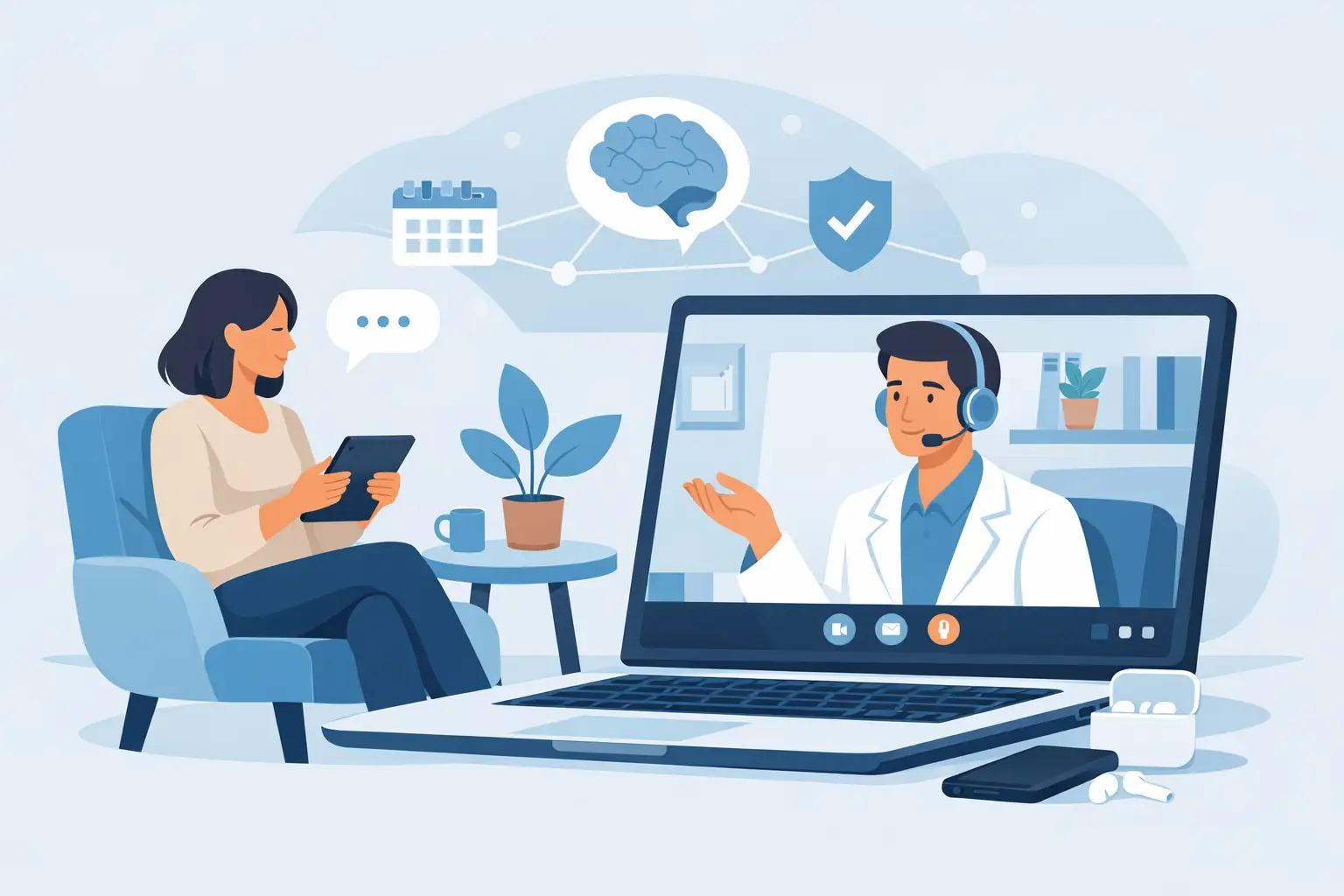
Needing mental health support is hard enough. Figuring out the logistics should not make it harder. If you have been wondering how online psychiatry appointments work, the short answer is this: you complete a secure intake, connect with a licensed provider remotely, talk through your symptoms and history, and receive a treatment plan that may include medication, follow-up care, and ongoing support.
For many adults, that simpler process is the point. There is no commute, no waiting room, and far less disruption to work, parenting, or daily life. You can get care from home, ask questions in a more private setting, and often start much faster than you could with a traditional office visit.
Table of Contents
How online psychiatry appointments work from start to finish
Online psychiatry is still psychiatry. The difference is how you access it. Instead of sitting in a clinic, you use a secure digital platform on your phone or computer to meet with a licensed provider.
Most appointments start with an intake form. You will usually answer questions about your symptoms, medical history, current medications, sleep patterns, stress levels, and any major life changes that may be affecting your mental health. This helps your provider understand the full picture before the visit begins.
After that, you are matched or scheduled with a licensed psychiatric provider. Depending on the platform, your first visit may happen by video, phone, or another secure telehealth format allowed in your state. During that appointment, the provider evaluates what you are experiencing, how long it has been going on, and how much it is affecting your daily life.
If treatment is appropriate, your provider may recommend a personalized care plan. That might include medication, guidance on symptom management, follow-up appointments, and check-ins through secure messaging. Some people need short-term support during a stressful season. Others benefit from ongoing care for anxiety, depression, sleep-related symptoms, or emotional distress tied to major life events.
What happens during your first online psychiatry visit
The first appointment is usually a conversation, not a test. Your provider is there to listen, assess, and help you understand your options.
Expect questions about your mood, focus, sleep, appetite, energy, and stress. You may also be asked whether you have tried therapy or medication before, whether you have any side effects from current prescriptions, and whether your symptoms are affecting work, relationships, or routine responsibilities.
This part matters because mental health symptoms can overlap. Trouble sleeping might be connected to anxiety, depression, stress, or another health issue. Feeling emotionally flat might point to depression, burnout, medication effects, or a recent life event. A good online psychiatric evaluation is not about rushing to a label. It is about understanding patterns and deciding what kind of support fits best.
If medication is discussed, your provider should explain why they are recommending it, what benefits to expect, possible side effects, and how follow-up will work. If medication is not the right first step, they may suggest monitoring symptoms, adding non-medication strategies, or adjusting the care plan over time.
What online psychiatry can treat
Virtual psychiatry can help with many common mental health concerns. Adults often seek care for anxiety, depression, panic symptoms, sleep disruption, irritability, mood changes, and stress that feels too heavy to manage alone.
It can also be a practical option when life changes hit hard. Divorce, grief, job loss, caregiving strain, postpartum emotional changes, and relationship stress can all affect mental health in ways that deserve real support. You do not need to wait until things feel severe to talk to a provider.
That said, online psychiatry is not the right fit for every situation. If someone is in immediate danger, having a medical emergency, or experiencing symptoms that require urgent in-person evaluation, emergency care is the safer choice. A credible telehealth provider will be clear about those limits.
How prescriptions and treatment plans work online
One of the biggest questions people have is whether an online psychiatrist or psychiatric provider can prescribe medication. In many cases, yes. Licensed providers can prescribe appropriate medications through telehealth, depending on clinical judgment, state regulations, and the type of medication being considered.
The process is not automatic. A provider evaluates your symptoms, reviews your health history, and decides whether medication makes sense for your situation. If it does, the prescription is sent to a pharmacy for pickup or fulfillment, depending on the service model.
Treatment usually involves more than a prescription alone. The best online psychiatry care includes follow-up, symptom tracking, and room to adjust your plan if needed. Mental health treatment can take time. Some medications start helping within a few weeks, while others need dose changes or careful monitoring before you know whether they are a good fit.
Elevate Your Health for Just $29.99/Month
Join the Precision Wellness Subscription at My Healing 365 and get discounted services, priority coaching access, virtual care, and exclusive wellness resources to support your physical, emotional, and hormonal health.
Join for $29.99/MonthThis is where digital care can be especially useful. When secure messaging, treatment guides, and scheduled follow-ups are built into the experience, it becomes easier to ask questions early instead of waiting until the next office opening.
Benefits of online psychiatry for busy adults
Convenience is the obvious benefit, but it is not the only one. For a lot of people, online psychiatry lowers the friction that keeps them from getting care in the first place.
You can book without rearranging your whole day. You can talk to a provider from a private room instead of a crowded waiting area. You may be able to start sooner, which matters when symptoms are already affecting your sleep, focus, patience, or relationships.
Privacy also matters. Some adults avoid treatment because they do not want to explain repeated appointments to coworkers, family members, or anyone else. Virtual care gives people more control over when and how they get help.
Cost can be another factor. Traditional psychiatric care can involve long wait times, separate visit fees, and limited follow-up. A digital model with transparent pricing and ongoing support can feel more manageable, especially if you want a simpler path to treatment. That is part of why services like My Healing 365 appeal to people who want licensed care without the usual delays and barriers.
What online psychiatry does not replace
Online care is effective for many people, but it is not identical to every form of in-person treatment. Some mental health conditions are more complex and may require hands-on assessment, coordinated specialty care, or local crisis support.
It also depends on what you want. If you strongly prefer face-to-face interaction, need intensive therapy services, or feel more comfortable with an established local clinic, in-person care may still be the better fit. Telehealth is not better in every scenario. It is often better for access, speed, and convenience.
The most useful question is not whether online psychiatry replaces traditional care. It is whether it gives you a realistic, safe, and sustainable way to start getting help.
How to prepare for an online psychiatry appointment
A little preparation can make the visit more productive. Before your appointment, try to think through what has been bothering you most. Is it anxious thoughts that will not stop, low mood that lingers, trouble sleeping, or feeling unlike yourself after a major life change?
It also helps to note when symptoms started, what makes them worse, and whether you have tried anything already. If you take medications or supplements, have those details ready. During the appointment, be as honest as you can. You do not need the perfect words. Clear, simple descriptions are enough.
Choose a quiet, private place if possible. Make sure your phone or device is charged and your internet connection is stable. These small details can help the conversation feel less stressful.
Is online psychiatry right for you?
If you want support but keep putting it off because the process feels overwhelming, online psychiatry may be a good place to start. It is designed to remove common barriers: time, travel, privacy concerns, and long waits.
It can be especially helpful if your symptoms are affecting daily life but you still want care to feel approachable and manageable. You do not have to be in crisis to deserve treatment. And you do not have to go through it alone just because your schedule is full or getting to a clinic feels like one more thing you cannot handle.
The right provider will make the process feel clear, respectful, and grounded in real clinical care. That matters. Mental health treatment should feel accessible without feeling casual.
Getting help online is still getting real help. If you have been waiting for a simpler way to begin, this may be the step that makes care finally feel possible.

























