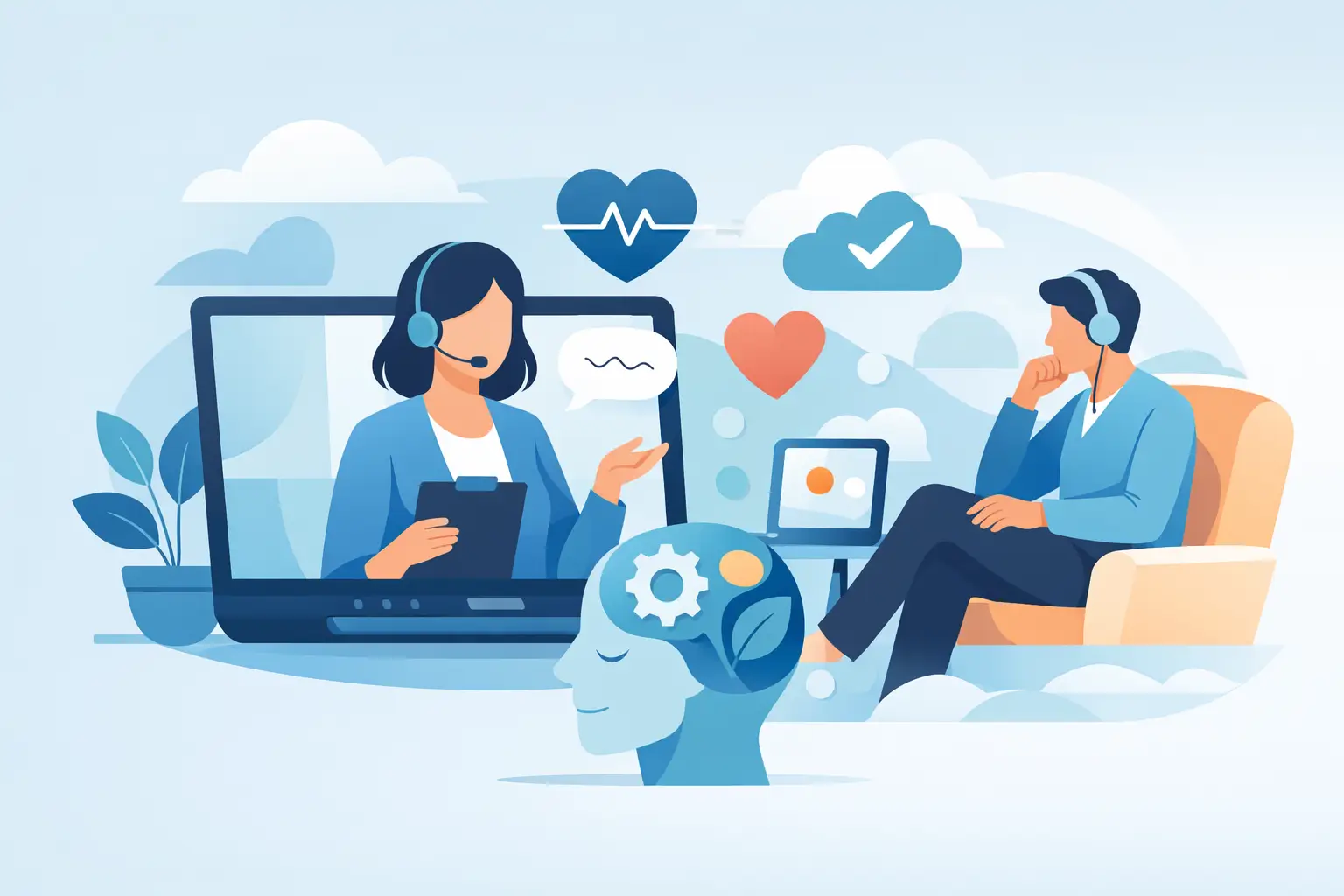
Some people put off getting help for months because the hard part is not admitting something feels off. It is finding time, dealing with the wait, and figuring out where to start. This guide to virtual mental health treatment is for that moment – when you want real support, but you need it to fit your life.
Virtual mental health care has become a practical option for adults dealing with anxiety, depression, sleep disruption, stress after major life changes, and other emotional challenges. Instead of rearranging your week around office visits, you can connect with a licensed provider online, complete an intake from home, and get a treatment plan built around your symptoms and goals. For many people, that lower-friction path is the difference between thinking about care and actually starting it.
Table of Contents
What virtual mental health treatment actually means
Virtual mental health treatment is mental health care delivered through a secure online platform. Depending on the service, that can include a medical intake, provider review, diagnosis when appropriate, prescription treatment, follow-up care, and ongoing messaging support. Some platforms also provide treatment guides and educational tools so you are not left guessing what happens next.
The biggest misconception is that online care is somehow less real than in-person care. In practice, the quality depends less on the screen and more on the clinical model behind it. Licensed providers, evidence-based treatment, secure communication, and a clear follow-up process matter far more than whether you are sitting in a waiting room.
That said, virtual care is not a perfect fit for every situation. If someone is in crisis, having thoughts of self-harm, or needs emergency psychiatric support, urgent in-person care is the safer choice. Online treatment works best when you need timely, structured help for ongoing symptoms and want a more convenient way to stay engaged.
Who this guide to virtual mental health treatment is for
If you have been feeling persistently anxious, low, overwhelmed, emotionally flat, irritable, or unable to sleep well, virtual care may be worth considering. It can also help when a specific life event has changed your baseline – a breakup, grief, job stress, burnout, parenthood, caregiving pressure, or a move that has left you feeling unsteady.
Many adults choose online treatment because their symptoms are real, but their schedules are packed. Working professionals may not be able to step away for daytime appointments. Parents may not have reliable child care. Others simply want privacy and do not want to explain repeated office visits to employers, family members, or anyone else.
The appeal is not just convenience. It is consistency. When care is easier to access, it is easier to stay with it long enough to see progress.
How online mental health treatment usually works
Most virtual mental health services follow a similar path. You start by answering questions about your symptoms, medical history, current medications, and treatment goals. This intake helps a licensed provider understand what you are experiencing and whether online treatment is clinically appropriate.
From there, your provider reviews your information and recommends a treatment plan. That may include medication, behavior-based guidance, ongoing check-ins, or a mix of approaches. If medication is part of the plan, it should be based on your symptoms, health history, and safety considerations – not a one-size-fits-all formula.
The follow-up process is where good platforms stand out. Mental health treatment often needs adjustment. A medication may help one symptom quickly but take longer for another. Side effects may need monitoring. Your stressors may change. Access to provider messaging and clear treatment guidance can make the process feel far less overwhelming.
What conditions can be treated virtually?
A strong virtual program can support a range of common mental health concerns. Anxiety and depression are among the most common reasons people seek online care, but they are not the only ones. Sleep-related issues, emotional distress tied to major life changes, and stress that is starting to affect work, relationships, or daily functioning can also be addressed in a virtual setting.
There is some nuance here. Sleep issues, for example, may be linked to anxiety, depression, hormonal changes, lifestyle strain, or another medical concern. Low mood can sometimes show up as fatigue, irritability, or lack of motivation rather than obvious sadness. A good provider does not just match a symptom to a medication. They look at the broader picture.
That whole-person view matters, especially for people whose mental health concerns overlap with physical health, sleep, or lifestyle stress. In those cases, care feels more useful when it is built around the person, not just the label.
The benefits of virtual care – and the trade-offs
The biggest benefit is speed. Traditional mental health care can involve long wait times, limited local options, and repeated scheduling hurdles. Virtual platforms often reduce those barriers, which means you can start the process sooner.
Privacy is another major reason people choose online treatment. Completing your intake from home, messaging a provider securely, and managing your care digitally can feel more comfortable than sitting in a waiting room or making multiple phone calls during the workday.
Affordability also matters. For people paying out of pocket, a lower starting price can make treatment feel reachable instead of aspirational. When care is simpler to begin and maintain, people are more likely to stay engaged.
Still, there are trade-offs. Some people prefer face-to-face conversation and feel more connected in person. Others have complex psychiatric needs that require a higher level of monitoring. Virtual care can be excellent for many common conditions, but the best fit depends on symptom severity, medical history, and personal preference.
How to choose the right virtual mental health provider
Start with clinical credibility. You want licensed providers, a secure platform, and treatment plans grounded in evidence-based care. If medication is offered, the process should include medical screening, symptom review, and follow-up rather than a quick prescription with little oversight.
Next, look at the care experience. Can you message your provider? Are there structured check-ins? Do you get guidance that helps you understand your treatment plan? Convenience is not just about signing up fast. It is about being supported after you start.
It also helps to look for symptom-specific care. Anxiety, depression, stress-related insomnia, and emotional distress do not always need the same approach. A service that tailors treatment to what you are actually dealing with is more likely to feel relevant and effective.
For many adults, the best option is one that makes care feel manageable. My Healing 365 is built around that idea, with licensed-provider access, personalized plans, ongoing messaging, and digital treatment support designed to remove common barriers to care.
What to expect after you start treatment
Relief is not always immediate, and that does not mean the plan is failing. Some medications take time to show full benefit. Some people notice better sleep first, while others notice fewer racing thoughts or a steadier mood. Progress can come in small but meaningful shifts, like feeling less reactive, more focused, or more able to handle daily tasks.
Elevate Your Health for Just $29.99/Month
Join the Precision Wellness Subscription at My Healing 365 and get discounted services, priority coaching access, virtual care, and exclusive wellness resources to support your physical, emotional, and hormonal health.
Join for $29.99/MonthIt is also normal to need adjustments. Mental health treatment is often a process of refining what works best for your body, your symptoms, and your routine. That is why follow-up matters so much. The goal is not just access to a prescription. The goal is supported care that evolves with you.
If you are considering virtual treatment, try to be honest in your intake and specific about what is affecting your life. Mention sleep changes, appetite shifts, panic symptoms, low motivation, trouble concentrating, and recent stressors. The clearer the picture, the more useful your treatment plan can be.
When virtual care can be a strong first step
A lot of people wait until things feel unbearable before they seek help. They tell themselves they should be able to push through, that they are just tired, or that everyone feels this way sometimes. But if your symptoms are affecting your work, relationships, rest, or ability to feel like yourself, that is enough reason to get support.
Virtual mental health treatment can be a strong first step because it removes so many of the usual delays. You do not have to commute, sit on a waitlist for months, or make your life look less busy before you qualify for care. You can start from where you are, even if where you are is exhausted, stretched thin, and unsure what kind of help you need.
You do not have to have the perfect words for what you are feeling. You just have to be willing to begin.























