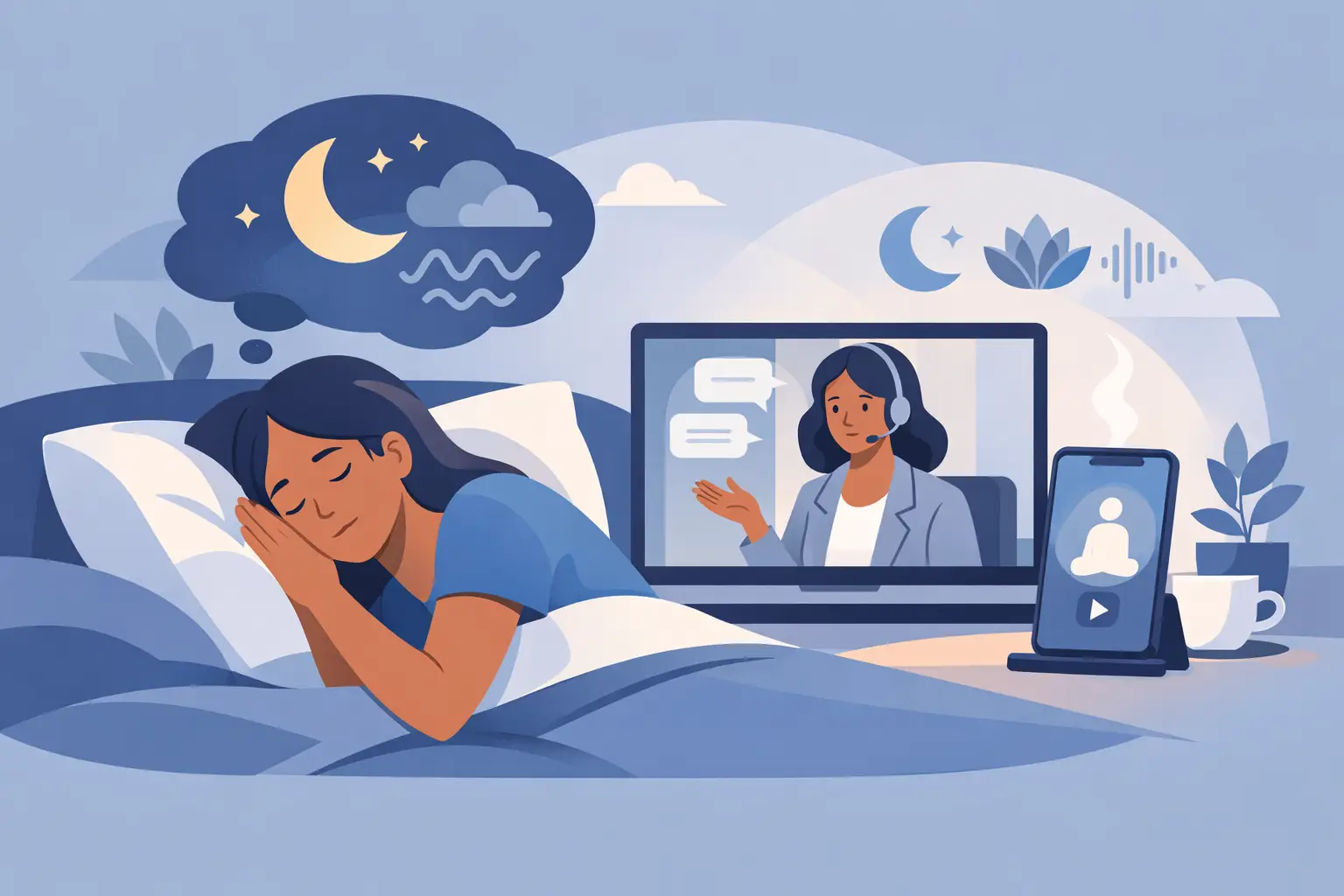
You finally get into bed, turn off the light, and then your brain gets louder. Your body feels tired, but your thoughts start scanning for problems, replaying the day, or worrying about whether you will sleep at all. That loop is exactly why sleep anxiety treatment online has become such a practical option for people who need support without adding more stress to their schedule.
When anxiety and sleep problems feed each other, it can start to feel like nights are something to survive instead of something that restores you. The good news is that this pattern is treatable. And for many adults, getting care online makes it easier to start quickly, privately, and with less friction.
Table of Contents
What sleep anxiety can actually feel like
Sleep anxiety is more than having an occasional restless night. It often shows up as a sense of dread around bedtime, racing thoughts once you lie down, physical tension that makes it hard to relax, or panic about not getting enough sleep before work, parenting, or other responsibilities the next day.
Sometimes the anxiety starts before bed. You may notice yourself checking the clock, calculating how many hours are left, or trying so hard to sleep that sleep becomes harder. Other times, it appears in the middle of the night when you wake up and cannot settle back down.
For some people, the main issue is generalized anxiety that spills into sleep. For others, the sleep problem comes first, and then worry about sleep becomes its own source of distress. That distinction matters because treatment is rarely one-size-fits-all.
Why online care works for sleep-related anxiety
If you are already exhausted, the last thing you may want is another complicated healthcare process. Sleep anxiety treatment online can reduce many of the barriers that keep people stuck, especially if you have a full schedule or want a more discreet way to get help.
Online treatment makes it possible to connect with a licensed provider from home, describe what your nights have actually been like, and receive a plan based on your symptoms. That may include support for anxiety itself, help with sleep-related behaviors, medication when appropriate, ongoing check-ins, or a combination of approaches.
The convenience matters, but so does privacy. Many people put off treatment because they do not want to explain missed work, commute to an office, or sit in a waiting room while already feeling overwhelmed. Digital care lowers that threshold. When getting help feels simpler, it becomes more likely that people will begin.
What to expect from sleep anxiety treatment online
A good online treatment experience should feel clear, personalized, and medically grounded. It usually begins with an intake process where you share your symptoms, health history, current stressors, and sleep concerns. From there, a licensed provider reviews your information and helps determine what kind of care fits best.
That plan may focus on anxiety management, sleep stabilization, or both. If your provider believes medication could help, they may recommend clinically proven options based on your symptoms and medical history. If medication is not the best fit, behavioral strategies and structured support can still make a meaningful difference.
Ongoing access also matters. Sleep and anxiety symptoms can shift from week to week, especially during stressful periods, major life changes, or burnout. A model that includes follow-up care and provider messaging can make treatment feel less like a one-time appointment and more like real support.
The best treatment plan depends on what is driving the problem
Not every person with bedtime anxiety needs the same solution. If your thoughts race because of work stress, parenting overload, grief, or a recent life change, your treatment may center on calming the nervous system and reducing anxious thought patterns. If your sleep has been disrupted for months and the fear of staying awake has taken over, the focus may need to include the habits and associations that keep the cycle going.
This is where online care can be especially helpful. A licensed provider can look at the full picture instead of treating sleep as an isolated complaint. That means asking whether anxiety is primary, whether depression or panic is involved, whether your symptoms are linked to a life event, and whether medication or therapy-based support would be useful.
There are trade-offs, of course. Online care is highly convenient, but it still depends on honest symptom reporting and follow-through. And if someone has severe psychiatric symptoms, complex medical concerns, or signs of another sleep disorder, they may need additional in-person evaluation. Good telehealth care should recognize those limits rather than overpromise.
Signs it may be time to seek sleep anxiety treatment online
A rough week does not always mean you need treatment. But if sleep anxiety is becoming a pattern, it is worth paying attention. Many people wait until they are completely depleted before asking for help.
Treatment may be a smart next step if you dread bedtime, lose sleep because of racing thoughts, feel anxious about not sleeping, or notice your mood and functioning slipping during the day. It can also help if you have started relying on alcohol, inconsistent sleep aids, or avoidance habits just to get through the night.
Another sign is when the problem starts shrinking your life. Maybe you cancel plans because you are so tired, struggle to focus at work, or become more irritable with people you care about. Sleep anxiety is not just a night problem. It can affect your energy, patience, concentration, and emotional stability all day long.
What effective online treatment should include
The most helpful care is not generic reassurance. It should give you a real path forward. In practice, that usually means a combination of clinical evaluation, a personalized treatment plan, easy communication, and enough flexibility to adjust as your symptoms change.
Elevate Your Health for Just $29.99/Month
Join the Precision Wellness Subscription at My Healing 365 and get discounted services, priority coaching access, virtual care, and exclusive wellness resources to support your physical, emotional, and hormonal health.
Join for $29.99/MonthIf medication is part of your plan, it should be chosen thoughtfully and monitored by a licensed provider. If your care centers more on non-medication support, you should still have clear guidance on what to do between appointments. That can include treatment-specific education, strategies for winding down, and tools to interrupt the panic-sleep cycle before it escalates.
The structure matters because anxious nights can make people feel powerless. A plan restores some sense of control. You are no longer guessing your way through another bad night. You are following a process with clinical support behind it.
Why speed and simplicity matter more than people admit
When sleep and anxiety are tangled together, people often tell themselves they should wait it out. But poor sleep tends to make anxiety louder, and anxiety tends to make sleep worse. Delaying treatment can allow that cycle to harden.
That is one reason fast access matters. Being able to start care online, often without the delays of traditional scheduling, can make the difference between getting support now and putting it off for another month. For busy adults, that kind of simplicity is not a luxury. It is often the only reason treatment becomes realistic.
Affordable entry points matter too. Mental health care feels more reachable when the path is straightforward and the cost is clear upfront. A service like My Healing 365 is built around that kind of low-friction access, with licensed-provider care, private digital communication, and treatment plans designed to meet people where they are.
What improvement can look like
Treatment does not always mean you instantly fall asleep the first night. More often, progress starts with less dread around bedtime, fewer spiraling thoughts, and a growing sense that sleep is possible again. You may notice that waking up at night feels less catastrophic, or that your body settles faster than it used to.
Over time, better sleep can improve more than your nights. Many people feel steadier during the day, less reactive, and more able to handle stress once the sleep-anxiety loop starts loosening. That is part of why treating this issue matters. Sleep is not separate from mental health. It is one of the foundations of it.
If your nights have started to feel tense, unpredictable, or emotionally draining, you do not have to keep pushing through on your own. The right support can help you feel safer in your own routine again, one calmer night at a time.

























