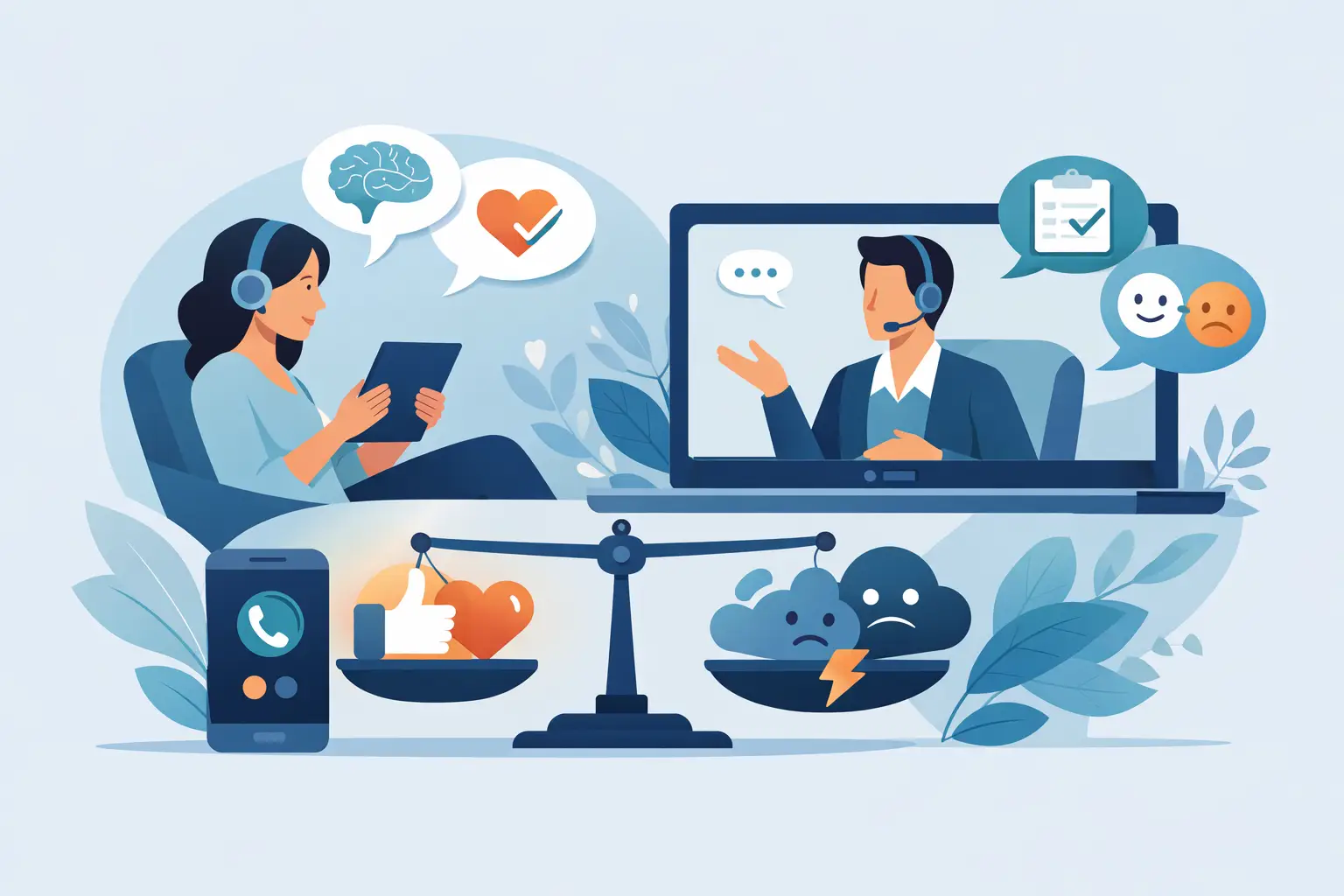
Some people know they need support long before they ask for it. What stops them is rarely a lack of motivation – it is the wait, the cost, the awkward scheduling, or the idea of sitting in a waiting room and explaining everything from scratch. That is why so many people now ask, is online mental health treatment effective?
For many adults, the answer is yes. Online mental health treatment can be highly effective for common concerns like anxiety, depression, stress, sleep-related issues, and emotional strain during major life changes. But like any kind of care, the real answer depends on what you are dealing with, what kind of treatment you need, and whether the service is built around licensed providers, clear treatment plans, and ongoing support.
Table of Contents
Is online mental health treatment effective for most people?
For many people, virtual care works not because it is trendy, but because it removes barriers that often delay treatment. When care is easier to start and easier to continue, people are more likely to follow through. That matters in mental health, where consistency often shapes results.
Research over the last several years has shown that telehealth can be effective for many mild to moderate mental health conditions. That includes treatment for anxiety and depression, along with medication management and structured follow-up. In many cases, outcomes from online care are similar to in-person care, especially when treatment includes regular check-ins and a strong provider relationship.
That does not mean every online program is equally helpful. A rushed questionnaire without real clinical oversight is not the same as care from a licensed provider who reviews symptoms, builds a personalized plan, and adjusts treatment over time. The quality of the platform matters as much as the convenience.
Why online treatment works so well for many adults
A big reason online care helps is simple: it fits real life. If you are juggling work, parenting, commuting, or a major personal transition, making time for in-person care can feel like one more impossible task. Virtual treatment lowers that friction.
Privacy also matters more than many people admit. Some people avoid mental health treatment because they do not want to be seen walking into a clinic or sitting in a waiting room. Online care gives them a more discreet way to start. That sense of control can make it easier to take the first step.
There is also the speed factor. Traditional mental health care can involve long waits, multiple referrals, and limited appointment availability. Online care often shortens that gap. When someone is struggling with panic, low mood, racing thoughts, or poor sleep, faster access can make a real difference.
Another overlooked benefit is communication. Many people find it easier to open up through digital messaging or video than in a formal office setting. They feel less pressure, more time to think, and more freedom to ask questions as they come up. That can lead to more honest conversations and better follow-through.
What kinds of concerns respond well to online care?
Online mental health treatment is often a strong fit for people dealing with anxiety, depression, chronic stress, sleep disruption, burnout, and emotional distress related to grief, divorce, career change, caregiving, or other major life events. These concerns are common, and they often respond well to structured support, medication when appropriate, and regular provider contact.
For example, someone with anxiety may benefit from a treatment plan that includes symptom tracking, a clinically appropriate medication, and the ability to message a provider when side effects or new stressors show up. Someone dealing with depression may need a similar mix of monitoring, treatment adjustments, and clear guidance without having to wait weeks for another appointment.
Sleep concerns also fit this model well in many cases. Trouble falling asleep, staying asleep, or calming an overactive mind at night can be tied to stress, anxiety, and mood symptoms. Online care can help connect those dots and treat the bigger picture instead of addressing sleep as a stand-alone issue.
When online mental health treatment may not be enough
This is where nuance matters. Online treatment is effective for many people, but it is not the right solution for every situation.
If someone is in immediate crisis, having suicidal thoughts, experiencing psychosis, or dealing with symptoms that require urgent in-person evaluation, online care alone may not be appropriate. Higher-acuity conditions may need emergency support, in-person psychiatric care, or a more intensive treatment setting.
There are also cases where people simply prefer face-to-face interaction, and that preference can affect how engaged they feel. Treatment works better when the format feels comfortable enough for someone to be honest and consistent. If video visits or messaging feel too distant, in-person care may still be the better fit.
The goal is not to force every person into one model. It is to match the level and format of care to the person in front of it.
Elevate Your Health for Just $29.99/Month
Join the Precision Wellness Subscription at My Healing 365 and get discounted services, priority coaching access, virtual care, and exclusive wellness resources to support your physical, emotional, and hormonal health.
Join for $29.99/MonthWhat makes online mental health treatment effective?
Not all online services are built the same. If you are trying to figure out whether a platform is worth your time, look beyond convenience alone.
The most effective online mental health care usually includes licensed providers, a clear evaluation process, personalized treatment planning, ongoing follow-up, and evidence-based options. That may include clinically proven medication when appropriate, practical treatment guidance, and easy ways to stay in touch between formal appointments.
Consistency is a major part of success. Mental health symptoms often change over time. A treatment plan should be able to change with them. When a platform offers ongoing support instead of a one-time visit, it becomes easier to track progress, manage side effects, and adjust care before small issues turn into bigger setbacks.
Ease of use matters too. If care is hard to access, people are more likely to stop engaging. A simple digital experience, secure communication, and direct provider access can make treatment feel manageable instead of overwhelming.
The trade-off: convenience versus complexity
The biggest strength of online care is accessibility, but accessibility is not the same as one-size-fits-all medicine. The more straightforward the concern, the more likely virtual treatment can meet the need well. Mild to moderate anxiety, depression, stress-related sleep disruption, and emotional overwhelm are often good examples.
As symptoms become more severe, layered, or hard to assess remotely, the picture gets more complicated. Someone with multiple diagnoses, medication-resistant symptoms, or serious safety concerns may need more intensive evaluation than a digital-first model can provide.
That does not make online treatment weak. It just means good care should know its limits. The best telehealth services do not overpromise. They make it easier to get the right level of help, and they recognize when another setting may be more appropriate.
How to tell if online treatment is a good fit for you
If your symptoms are affecting your daily life, but you are still able to function and communicate clearly about what you are experiencing, online care may be a strong place to start. It can be especially helpful if you have been putting off treatment because of time, privacy concerns, cost, or the stress of navigating traditional healthcare systems.
It may also be a good fit if you want structured support without adding more disruption to your life. Many adults do better when treatment feels simple, private, and easy to continue. That includes people who prefer messaging, want straightforward medication support, or need guidance during a difficult period without rearranging their entire schedule.
A service like My Healing 365 is designed around that reality – licensed providers, individualized treatment, secure online access, and support that meets you where you are. For people who want care that is both credible and convenient, that model can remove a lot of the friction that keeps treatment out of reach.
So, is online mental health treatment effective?
Yes, for many people it is. Online mental health treatment can be effective, practical, and genuinely life-changing when it is delivered by licensed professionals and matched to the right type of need. It works especially well for common concerns like anxiety, depression, stress, and sleep-related symptoms, where timely access and ongoing support often matter just as much as the setting itself.
The better question may be whether it helps you get care sooner, stay engaged longer, and feel supported in a way you can actually maintain. If the answer is yes, that is not a compromise. That is treatment becoming more usable.
You do not have to wait until things get worse to seek help. If support feels overdue, starting with a simple, private option can be a strong first move.

























