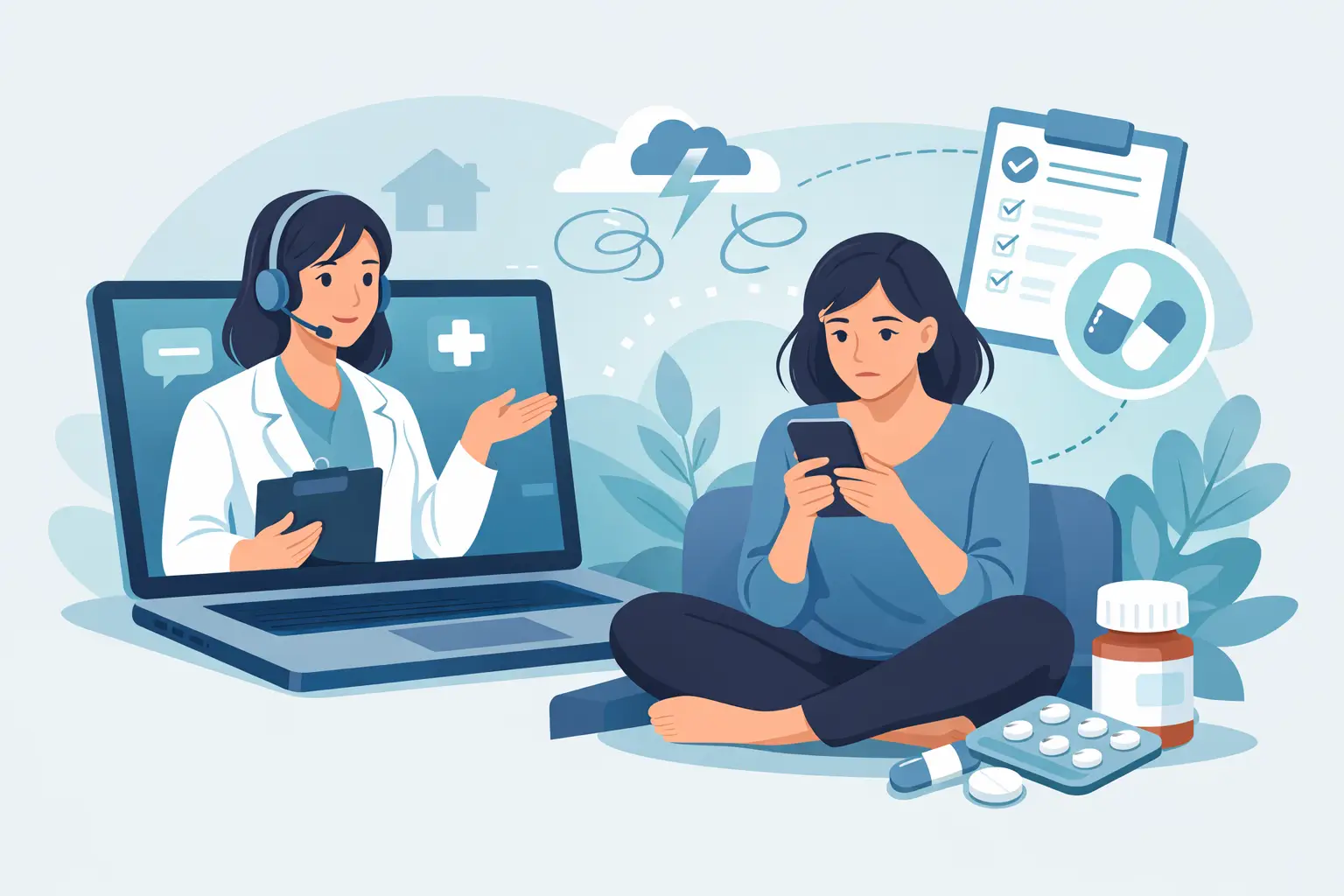
If your anxiety is making everyday things feel harder – sleep, work, driving, even answering a text – you may be wondering whether getting help has to mean finding time for an in-person appointment. For many adults, the first practical question is simple: can telehealth prescribe anxiety medication? In many cases, yes, but the answer depends on your symptoms, your medical history, the type of medication being considered, and the laws in your state.
Telehealth has made mental health care easier to reach, especially for people who want privacy, faster access, and support that fits into real life. That does not mean every medication can be prescribed instantly or that every anxiety symptom should be treated the same way. Good online care is still medical care. It starts with a proper evaluation, a licensed provider, and a treatment plan built around what you are actually experiencing.
Table of Contents
Can telehealth prescribe anxiety medication legally?
In many parts of the United States, licensed medical providers can prescribe anxiety medication through telehealth after evaluating you online. That evaluation may happen through a video visit, a secure intake form, messaging, or a combination of these, depending on the platform and the provider’s clinical judgment.
What matters most is not whether the appointment happens online or in person. What matters is whether the provider is licensed to treat patients in your state and whether they have enough information to make a safe prescribing decision. A legitimate telehealth service will ask about your symptoms, health history, current medications, allergies, past mental health treatment, and any signs that point to a more urgent issue.
There are also medication-specific rules. Some anxiety medications are easier to prescribe online than others because of how they are regulated and how they affect safety, dependence risk, and monitoring needs. That is why two people with similar anxiety symptoms may walk away with very different treatment plans.
What anxiety medications can telehealth providers prescribe?
Telehealth providers commonly prescribe several non-controlled medications used to treat anxiety. These may include SSRIs such as sertraline or escitalopram, and SNRIs such as venlafaxine or duloxetine. These medications are often used for generalized anxiety, panic symptoms, and anxiety that overlaps with depression. They are not quick fixes, but they can be effective when paired with follow-up care and enough time to work.
Some providers may also prescribe medications like buspirone or hydroxyzine, depending on your symptoms and treatment goals. These options can make sense for certain patients, especially when the goal is to reduce anxiety without using medications that carry a higher risk of dependence.
The more complicated category is benzodiazepines, such as Xanax, Ativan, or Klonopin. These medications can help in specific situations, but they are controlled substances and come with more caution. Telehealth rules around controlled medications can vary, and many online mental health platforms choose not to prescribe them at all. That is not a sign of lower-quality care. In many cases, it reflects a safer, more sustainable treatment model.
If you are looking for help online, it is worth knowing this upfront. Telehealth can absolutely support anxiety treatment, but the medication offered may not be the exact one you had in mind.
Why some anxiety medications are harder to get online
Anxiety is not one single condition. For some people, it shows up as constant worry and muscle tension. For others, it feels like panic attacks, insomnia, racing thoughts, chest tightness, or fear that will not let up. Because the symptoms vary, the best medication choice can vary too.
Controlled medications require extra caution because they may cause sedation, interact with other substances, or lead to misuse and dependence. A provider may also worry that a medication could mask a different issue, especially if symptoms involve trauma, bipolar disorder, substance use, or suicidal thoughts. In those cases, an online provider may recommend a different medication, closer monitoring, therapy, or even in-person care.
This is one of the biggest trade-offs in telehealth. It offers speed and convenience, but it still has to work within safe prescribing standards. The right provider will not rush that decision just to make the process feel easy.
What to expect during an online anxiety evaluation
A strong telehealth experience should feel clear and structured, not rushed. Most anxiety treatment starts with questions about what you are feeling, how long it has been happening, and how much it is affecting your day-to-day life. You may be asked whether you are having panic attacks, trouble sleeping, irritability, restlessness, difficulty focusing, or physical symptoms like nausea or a racing heart.
Your provider will also want to know about your medical history, previous medications, therapy experience, and whether you use alcohol, cannabis, or other substances. This is not about judgment. It is how they figure out what is safe and likely to help.
If medication is appropriate, your provider may explain the options, possible side effects, how long it may take to notice improvement, and when to follow up. That follow-up matters. Anxiety medication is rarely a one-and-done decision. Dosing may need adjustment, side effects may need monitoring, and your symptoms may change over time.
For many people, the best part of telehealth is the continuity. Being able to message a licensed provider, ask questions, and get support without rearranging your entire schedule can make treatment easier to stick with.
When telehealth for anxiety makes sense
Online anxiety care can be a very good fit if your symptoms are affecting your quality of life but you are still able to engage safely in virtual treatment. It is especially helpful for adults who have delayed care because they are busy, overwhelmed, embarrassed, or simply tired of long wait times.
Telehealth can also work well if you want a private starting point. For some people, logging in from home feels much more manageable than walking into a clinic and explaining how bad things have gotten. That lower barrier can make the difference between continuing to struggle alone and finally getting support.
Elevate Your Health for Just $29.99/Month
Join the Precision Wellness Subscription at My Healing 365 and get discounted services, priority coaching access, virtual care, and exclusive wellness resources to support your physical, emotional, and hormonal health.
Join for $29.99/MonthServices like My Healing 365 are built around that reality, offering licensed-provider access, secure digital communication, and treatment plans that are easier to start and maintain.
When online care may not be enough
Telehealth is useful, but it is not the answer for every situation. If you are having thoughts of harming yourself, feeling out of touch with reality, experiencing severe substance withdrawal, or dealing with symptoms that feel medically urgent, you need immediate in-person help.
There are also times when a provider may decide that your anxiety needs a more complex workup before prescribing anything online. That might happen if symptoms could be related to a heart condition, thyroid problem, medication interaction, or another mental health diagnosis. In those cases, being told to seek in-person care is not a dead end. It is part of safe treatment.
Can telehealth prescribe anxiety medication and still feel personal?
Yes – when the care model is built well. The fear some people have is that online mental health treatment will feel cold, automated, or overly generic. That can happen with low-quality services. But thoughtful telehealth care can still feel personal because the provider is looking at your symptoms, your history, and your response over time.
The real advantage is not that telehealth replaces human care. It removes some of the friction that keeps people from getting it. No commute. No waiting room. No needing to explain time off work. Just a private, secure way to connect with a licensed provider and start figuring out what support makes sense.
If your anxiety has been building and you keep telling yourself to push through, this may be the moment to stop carrying it alone. Online treatment is not about taking shortcuts with your mental health. It is about making real care easier to reach, so getting help feels possible now, not someday.

























