Trade the tricorn hats, bonnets and homespun shirts for flip flops, sneakers and soccer jerseys, and the intrepid revolutionaries of 1776 would have looked a lot like the people of 2026. But their sense of embodiment and experience of health was markedly different from Americans today.
It goes deeper than not having aspirin, toothpaste or air conditioning, or not knowing about germs and penicillin. What was happening in their gut and mouth and on their skin was a world away from today. Chronic bodily states of indigestion, itchy skin, flatulence and slow-healing wounds were common and accommodated.
The American colonists were friends with affliction and shared their suffering socially, in writing and conversation. Ben Franklin, no stranger to suffering, wrote that “We are first mov’d by Pain, and the whole succeeding Course of our Lives is but one continu’d Series of Action with a view to be freed from it.”
Acute illnesses like smallpox, typhoid, dysentery, yellow fever and diptheria shadowed every ache and cough. But the everyday diminishment of vitality, mobility and equanimity defined life in 1776. Illness was pervasive. Rich or poor, free or enslaved, everyone was at risk.
Since I was a child, I’ve been fascinated with bodies and what it felt like to be in someone else’s skin. Now that I am a medical historian, I am lucky to be a Smithsonian curator with access to a large collection of medical instruments that figuratively put some flesh on the descriptions in old letters and medical journals about rheum, dyspepsia and other then-common conditions.
Although embodied experience varied in different localities around the Atlantic Basin by climate, legal status, race and other vulnerabilities, the instruments used on those bodies capture general notions of physical well-being. A lot is missing from our connection to people in the past when all we use are words.

Smithsonian’s National Museum of American History, Division of Medicine and Science
Table of Contents
Human bodies were like animals’
The few medical instruments of the revolutionary era were heavy in the hand, awkward in use and imprecise to maneuver. They also tell a story of tolerance for pain and discomfort that is both disquieting and fascinating.
The design and materials of devices such as bone saws, fleams and scarifacators – used to bleed veins and skin surfaces – illustrate the close affinity of humans with other animals. The same scalpel or bone saw that cut a human also cleft sheep, horses, pigs and other animals in distress.
The veil between species was thin. In 1776, people lived closely with their animals. They brought them into the house in bad weather or spent nights on straw in the shed with them – exclusive of genteel families, that is.

PATSTOCK/Moment via Getty Images
Cleanliness often took the form of river bathing, intended to invigorate rather than for sanitary purposes. In place of bathing, people changed clothes. The result was a menu of skin complaints – fungal, bacterial and otherwise.
Lice abounded. Bed bugs interrupted sleep. Scabies, ringworm, rashes from numerous unknown sources and unwashed skin was wrapped in clothing of stiff linen, smelly woolens or coarse calico. The byproduct was irritated, itchy skin with the discomfort of scratches, scabs and the stink that accompanied it.
Because infancy was risky, some colonial families and midwives followed tough love and tried to “harden” the child with cold water immersion and weaning. Many Indigenous women, on the other hand, nursed their infants until they were three or four years old. One in three colonist babies did not live to their second birthday.
Tools to purge ill humors
If a person did survive to adulthood, there was a good chance they would live to 55 or 60, barring accidents or childbirth complications.
There were few professional doctors, so healthcare came from midwives, bonesetters who also cut hair and removed cataracts, ministers, and community members, including apothecaries and plantation root doctors who were knowledgeable about plants. Although Pennsylvania Hospital in Philadelphia had been established as the first American hospital 25 years earlier, institutions for care were few at the time of the revolution.
European colonists commonly believed that the balance of humors – yellow and black biles, blood and phlegm – circulating through one’s body was important for health. Belief in the efficacy of bloodletting was well-established and undisputed until well into the 1800s.
Doctors, following accepted practice, would likely have bled or purged an ill person for humoral balance. Surgeons washed their bloody hands in contaminated water and dried them on their equally bloody apron or clothes, unaware of germs.

Smithsonian’s National Museum of American History, Division of Medicine and Science
When fluid accumulated from infection, a practitioner might use a small sharp spear nested in a metal tube, called a trocar and cannula. The pair were pushed into the body wherever swelling threatened a patient’s health, or exploration of an inner cavity was warranted. Then the doctor removed the perforating trocar, with its triangular shaped head, and left the cannula in place, as a conduit for fluids going in or coming out.
Desperate patients drank liquor to escape the procedure in this pre-anaesthesia era. Community care by family, friends and experienced elders was often more effective and safer than a trained physician.
Elevate Your Health for Just $29.99/Month
Join the Precision Wellness Subscription at My Healing 365 and get discounted services, priority coaching access, virtual care, and exclusive wellness resources to support your physical, emotional, and hormonal health.
Join for $29.99/MonthA mouthful of troubles
Low-level scurvy, caused by lack of vitamin C, was common, thanks to diets containing few vegetables and fruits. Mild scurvy caused bleeding gums, tooth loss and foul-smelling breath.
Home manuals offering advice for health, domestic activities and marriage included many recipes for mouth wash. Ingredients often included tobacco ash, alum, sage, clove and sometimes charcoal. Charcoal also doubled for polishing teeth.

Smithsonian’s National Museum of American History, Division of Medicine and Science
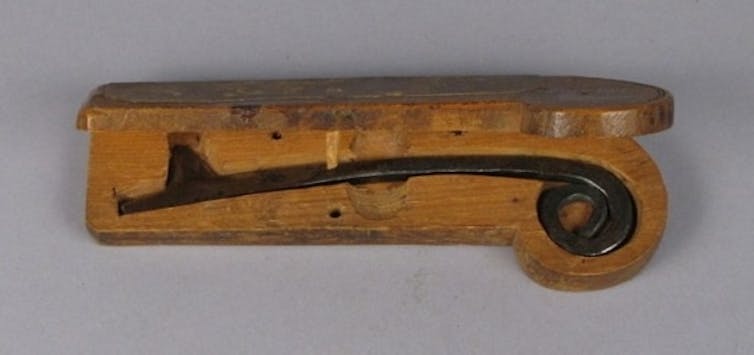
To pull a cracked or decayed tooth, a practitioner might yank it with the claw of a tooth key, painful but quicker than slippery fingers or forceps.
Without a reliable way to keep food fresh, many meals included sour milk and meat that was beginning to rot – what colonists called “high.” Spoiled food meant dyspepsia – otherwise known as indigestion – and loose bowels.
People commonly used tobacco to treat many ailments, including indigestion, respiratory problems, pain and loathsome mouth afflictions. They also turned to laudanum, from opium, as well as the poisons mercury and antimony.
A life of daily discomfort
Retrospective diagnosis is always flawed but the Revolutionary generation experienced ailments that sound similar to diabetes, arthritis, cancer, anemia, rabies, the common cold and tuberculosis. There were no effective treatments or consistent diagnosis for any of these.
Some explanations of bodily difference were obviously wrong, such as physician and signer of the Declaration of Independence Benjamin Rush’s conviction that the dark skin of African Americans was a disease, derived from leprosy. Common wisdom also held that birthmarks were caused by the mother’s experience during pregnancy.
Bodily experiences that made sense in 1776 are often inscrutable to people today. Feelings are fleeting and words inadequate. Without considering objects, understanding history is incomplete, leaving people today disconnected from those who lived it.
We can’t directly know each colonist’s individual self. But knowing their material world through medical objects of their time allows us to visit and appreciate how they managed to cut through distractions of the body and bequeath to us those groundbreaking, enduring self-evident truths.

























