• Twenty47HealthNews
  • Health & Wellness
  • Disclaimer
    • Terms of Use
    • Privacy Policy
    • DMCA Notice
  • Twenty47HealthNews
  • Health & Wellness
  • Disclaimer
    • Terms of Use
    • Privacy Policy
    • DMCA Notice
24/7 Health News
No Result
View All Result
Struggling with energy, weight, or blood sugar?
Get personalized medical & wellness support at My Healing 365.
Book Your Wellness Strategy Session
Home Article

How to avoid tick bites in your yard or while hiking in the woods, and what to do if one starts feasting on you

July 16, 2026
in Article
How to avoid tick bites in your yard or while hiking in the woods, and what to do if one starts feasting on you

Ticks are small, and you might not notice when they bite, but the diseases they carry can dramatically harm your health.

Each year, deer ticks alone cause an estimated 476,000 new U.S. cases of Lyme disease, which can do long-term damage to a person’s joints, heart and nervous system. You may be hearing about the lone star tick, as well – it can trigger Alpha Gal syndrome, which can leave infected people allergic to red meat and its byproducts, including certain vaccines, medications and products with gelatin.

Several other tick-borne illnesses, including Heartland virus disease, Powassan virus disease, babesiosis and anaplasmosis, can cause serious health problems and, in severe cases, even death.

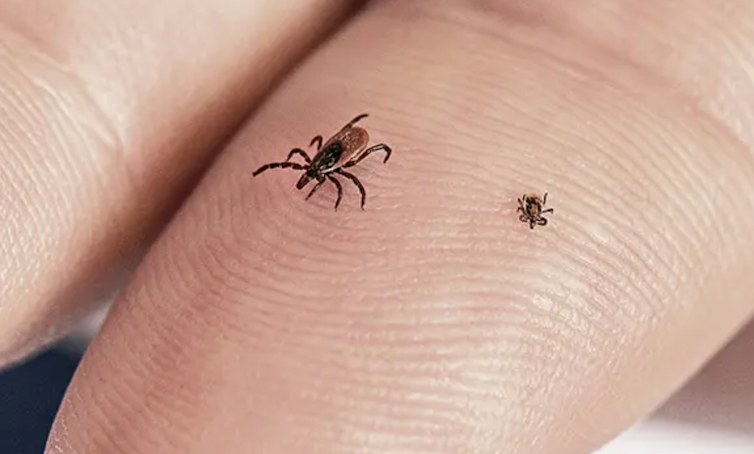
Two small ticks, one barely a dot, sit on a human finger.

Ticks can be tiny. An adult deer tick is on the left and a nymph of the same species is on the right, both sitting on an adult’s finger.
CDC

2026 has been a tough year, with emergency room visits linked to tick bites running high going into summer.

So how can you avoid getting bitten, and what preventive measures actually work? I’m the co-director of the Tick-Borne Disease Center at Binghamton University. Here are some of the questions my team hears – and some advice:

Table of Contents

  • 1. Why should I worry about ticks, and how do I know if I’ve been infected?
  • 2. What can I do to keep ticks away?
  • 3. What can I do to keep ticks out of my yard?
  • 4. If I find a tick on me, what should I do?

1. Why should I worry about ticks, and how do I know if I’ve been infected?

Ticks can really pack a punch when it comes to how sick they make you. Lyme disease and anaplasmosis, both caused by bacteria that deer ticks can carry, are the most common tick-borne diseases we see in the U.S.

About 70% to 80% of people with Lyme disease will see a rash develop that often looks like a bull’s-eye, and they’ll experience flu-like symptoms, such as a fever, chills, body aches and fatigue. Antibiotics can control the infection, but only if the disease is quickly treated.

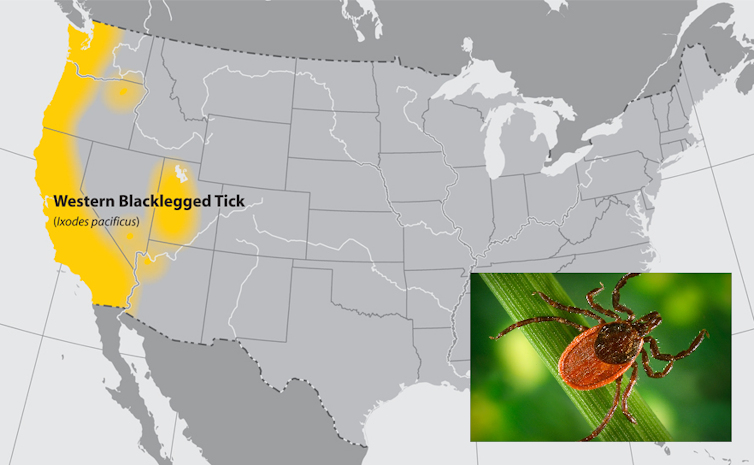
A map showing the estimated range of the tick

The black-legged tick, also known as the deer tick, is a major spreader of Lyme disease, as well as anaplasmosis, babesiosis, ehrlichiosis and Powassan virus disease. The American West has its own blacklegged tick, found primarily in California and the coastal mountains.
CDC
The western black-legged tick, also known as a deer tick, is a relative of the deer ticks common to the eastern U.S.

As Lyme disease progresses, a patient can get severe headaches; Bell’s Palsy, involving loss of muscle tone or droop in one or both sides of the face; severe arthritis; heart palpitations; and episodes of dizziness or shortness of breath. Some people who are diagnosed with acute Lyme disease and treated still develop chronic symptoms.

Anaplasmosis symptoms can be similar to those of Lyme disease, including fever, headache, fatigue, lethargy, nausea, vomiting and diarrhea. A rash is very uncommon for anaplasmosis infections, however. Severe cases can cause tingling sensations in the hands and feet, and without treatment the disease can progress to respiratory or kidney failure.

A woman's arm has a rash in the shape of a bulls-eye, with a large red spot and ring surrounding it.

An erythematous rash, in the bull’s-eye shape, is an indicator of Lyme disease, but not everyone gets the rash, and other tick diseases lack similar telltale signs.
James Gathany/Flickr creative commons, CC BY

Infection with a tick-borne disease can result in debilitating fatigue and chronic pain. Patients often miss work and have trouble keeping up with daily tasks in their everyday lives while they’re fighting off an infection.

Avoiding a tick bite in the first place is the best way to prevent infection.

2. What can I do to keep ticks away?

Ticks typically hang out low to the ground, often on the tips of grass blades or vegetation. They are attracted to your thermal signature – the heat your body produces – and the carbon dioxide from your breathing, which tells them that you have blood they want to feed on.

As you walk by, they’ll reach out and grab onto your clothing or shoes or backpack. This is called “questing.” They typically crawl around on your skin for a little while, around 30 minutes to an hour, before deciding to bite. When they do bite, their saliva, which can carry disease-causing bacteria, parasites or viruses, connects with your blood.

A tick on a leaf blade with its arms outstretched to grab onto passing animals, or humans.

This Rocky Mountain wood tick exhibits questing behavior, where it waves outstretched arms from a grass-blade to latch onto passing animals or humans. It can transmit Rocky Mountain spotted fever, Colorado tick fever and tularemia.
CDC

Ticks can be hard to spot. Deer ticks, for example, can range from the size of a pinhead as larvae to a poppy seed in the nymph stage, to a sesame seed as adults. Only 30% to 50% of Lyme disease patients remember having a tick bite at all.

However, ticks need moisture to survive, so they thrive in environments that retain a lot of moisture – think wooded areas. To keep ticks off, you can:

  • Wear long sleeves and long pants when you’re in tick habitat. Ticks don’t bite through clothing, and less skin exposure means fewer places for them to attach.

  • Wear light colors so you can spot ticks when they get on your clothes.

A tick with a star on its back and a map showing its reach in much of the eastern half of the U.S. and Midwest.

The lone star tick has gotten a lot of attention lately for its ability to cause a red meat allergy in humans. The tick can also carry other viruses, including those that causes ehrlichiosis, Heartland virus and tularemia.
CDC
  • Wear a repellent, but make sure it will work on ticks. Many bug sprays don’t. DEET is one chemical that has been shown to deter ticks.

  • Use sprays that kill ticks on contact. Permethrin is a spray that works on clothing and gear to keep ticks from grabbing you, but do not put it directly on your skin! The concentration in sprays can cause burning and tingling, and it can harm cats. This is what I use to treat my clothing when I’m doing research in tick-infested areas. After collecting over 7,500 ticks for my research, I have been bitten only once.

A map and image of a tick with a yellow necklace.

The American dog tick can transmit tularemia and Rocky Mountain spotted fever. Another species of American dog tick has established itself in California, Oregon, Washington and Idaho.
CDC
  • Change your clothes after outdoor activities, including gardening and hiking, and put the clothes in the dryer on high heat for about 20 minutes. Without moisture, ticks cannot survive.

  • Do tick checks! If you find a tick before it bites you, it’s not a risk to you. Be sure to check in and around your hair, ears, belly button, groin area, behind the knees and armpits. Take a shower after outdoor activity – it will also be easier to spot ticks.

  • Check your pets for ticks, as well. It takes time for disease transmission to occur, so the faster you remove a tick, the better. I take my dog hiking in the woods every day, and I keep a lint roller in the car to run over her and me to pick up ticks that may be crawling on us before getting back in the car.

3. What can I do to keep ticks out of my yard?

Ticks like areas that retain moisture, such as leaf litter and overgrowth. Keeping your lawn mowed, gardens maintained and removing leaf litter can reduce tick habitats.

Creating a wood chip “buffer zone” between manicured lawn and overgrowth or woods can help, particularly if you use cedar chips. Keeping gardens, play sets and other areas where people hang out away from wilder areas can also limit exposure.

[embedded content]
Tips for keeping your yard tick-free, from the Lake County Illinois Health Department.

Yard sprays, such as bifenthrin and permethrin, can help to reduce tick populations in your yard, but it’s recommended to hire a licensed professional to do this. Typically, perimeters and shady areas would be sprayed, while generally open, sunny lawns don’t need treatment.

Elevate Your Health for Just $29.99/Month

Join the Precision Wellness Subscription at My Healing 365 and get discounted services, priority coaching access, virtual care, and exclusive wellness resources to support your physical, emotional, and hormonal health.

Join for $29.99/Month

We all love our bird feeders, but the farther they are from the house, the better. Bird feeders can attract rodents, which often serve as reservoirs for the pathogens that ticks pick up and can transmit to you.

4. If I find a tick on me, what should I do?

The first thing you want to do is remove the tick. Use fine-tipped tweezers and grab as close to its head and your skin as you can and pull up. Do not use Vaseline, essential oils or dish soap. Deer ticks secrete a gluelike enzyme when they feed, so if they’re in that stage of feeding, they cannot back out and may regurgitate, which can speed up disease transmission.

A microscope view of a tick's mouth is pretty scary

A close-up of a tick’s mouth shows the barbs that enter the skin to help the tick hang on.
National Institute of Allergy and Infectious Diseases

Clean the bite site as you would any other cut. If you can, save the tick so you can identify the species. This will help you know what signs or symptoms to look for. Different tick species carry different diseases. The American dog tick doesn’t carry Lyme disease, for example, though it can cause other health problems.

If you start to feel off, see your doctor and mention that you’ve recently had a tick bite. Many tick-borne diseases have very generalizable symptoms that can feel like the flu, and not all infections have telltale signs like a rash. Your doctor can run tests and figure out the right course of treatment.


ShareTweetSharePin
Next Post
Our sensitive teen daughter’s self-worth is tested by social media and peers. What should we do? | Leading questions

Our sensitive teen daughter’s self-worth is tested by social media and peers. What should we do? | Leading questions

Most Read

What causes stuttering? A speech pathology researcher explains the science and the misconceptions around this speech disorder

What causes stuttering? A speech pathology researcher explains the science and the misconceptions around this speech disorder

December 15, 2022
In war-torn Iran, air pollution from burning oil depots and bombed buildings unleashes invisible health threats

In war-torn cities, air pollution from burning oil depots and bombed buildings unleashes invisible health threats

March 25, 2026
3 women stroke prevention

Silent Stroke Symptoms in Women: What You Might Be Overlooking

February 27, 2026
morning back pain

Morning Again Ache Trigger Is Not the Mattress

October 11, 2021
lower back pain relief exercises

5 decrease again ache aid workouts

October 11, 2021

4 steps to building a healthier relationship with your phone

January 28, 2025

Why Circadian Rhythms Matter for Your Health

July 30, 2024
bleeding in gum

When The Bleeding in gum Is Severe ?

October 11, 2021
Good Night Sleep

6 Causes of Good Evening Sleep

October 11, 2021
3 years after legalization, we have shockingly little information about how it changed cannabis use and health harms

3 years after legalization, we have shockingly little information about how it changed cannabis use and health harms

October 15, 2021
Nasal vaccines promise to stop the COVID-19 virus before it gets to the lungs – an immunologist explains how they work

Nasal vaccines promise to stop the COVID-19 virus before it gets to the lungs – an immunologist explains how they work

December 14, 2022
Kick up your heels – ballroom dancing offers benefits to the aging brain and could help stave off dementia

Kick up your heels – ballroom dancing offers benefits to the aging brain and could help stave off dementia

January 3, 2023
Socialising, work, exercise: what makes a good day and is there a ‘formula’ for making it better?

Socialising, work, exercise: what makes a good day and is there a ‘formula’ for making it better?

April 12, 2026
Biden is getting prostate cancer treatment, but that’s not the best choice for all men − a cancer researcher describes how she helped her father decide

Biden is getting prostate cancer treatment, but that’s not the best choice for all men − a cancer researcher describes how she helped her father decide

May 20, 2025
Ten small changes you can make today to prevent weight gain

Ten small changes you can make today to prevent weight gain

October 12, 2021

COVID vaccines: how one can pace up rollout in poorer international locations

October 5, 2021
GLP-1 drugs may fight addiction across every major substance, according to a study of 600,000 people

GLP-1 drugs may fight addiction across every major substance, according to a study of 600,000 people

March 6, 2026

Multiple sclerosis: the link with earlier infection just got stronger – new study

October 12, 2021
Support and collaboration with health-care providers can help people make health decisions

Support and collaboration with health-care providers can help people make health decisions

December 16, 2021
Greece to make COVID vaccines mandatory for over-60s, but do vaccine mandates work?

Greece to make COVID vaccines mandatory for over-60s, but do vaccine mandates work?

December 1, 2021
Five ways to avoid pain and injury when starting a new exercise regime

Five ways to avoid pain and injury when starting a new exercise regime

December 30, 2022

This Simple Hygiene Habit Could Cut Your Risk of Stroke, New Research Reveals

February 1, 2025

Maximize Your Performance – Sync with Your Circadian Rhythms

August 9, 2024
woman covered with white blanket

Exploring the Impact of Sleep Patterns on Mental Health

August 4, 2024
Six ways to improve your cat’s one wild and precious life

Six ways to improve your cat’s one wild and precious life

June 6, 2026
Four ways to avoid gaining weight over the festive period – but also why you shouldn’t fret about it too much

Four ways to avoid gaining weight over the festive period – but also why you shouldn’t fret about it too much

December 22, 2022
GPs don’t give useful weight-loss advice – new study

GPs don’t give useful weight-loss advice – new study

December 16, 2022
As viral infections skyrocket, masks are still a tried-and-true way to help keep yourself and others safe

As viral infections skyrocket, masks are still a tried-and-true way to help keep yourself and others safe

December 14, 2022
You’ve reached your weight loss goal on GLP-1 medications – what now?

You’ve reached your weight loss goal on GLP-1 medications – what now?

February 5, 2026
How to protect your well-being, survive the stress of the holiday season and still keep your cheer

How to protect your well-being, survive the stress of the holiday season and still keep your cheer

December 21, 2025

Ready to take control of your health?

Get a personalized plan for your weight, energy, hormones, and blood sugar with My Healing 365.

Book Your Session Now – Limited Weekly Spots
  • Twenty47HealthNews
  • Health & Wellness
  • Disclaimer

© 2020 DAILY HEALTH NEWS

  • Twenty47HealthNews
  • Health & Wellness
  • Disclaimer
    • Terms of Use
    • Privacy Policy
    • DMCA Notice

© 2020 DAILY HEALTH NEWS