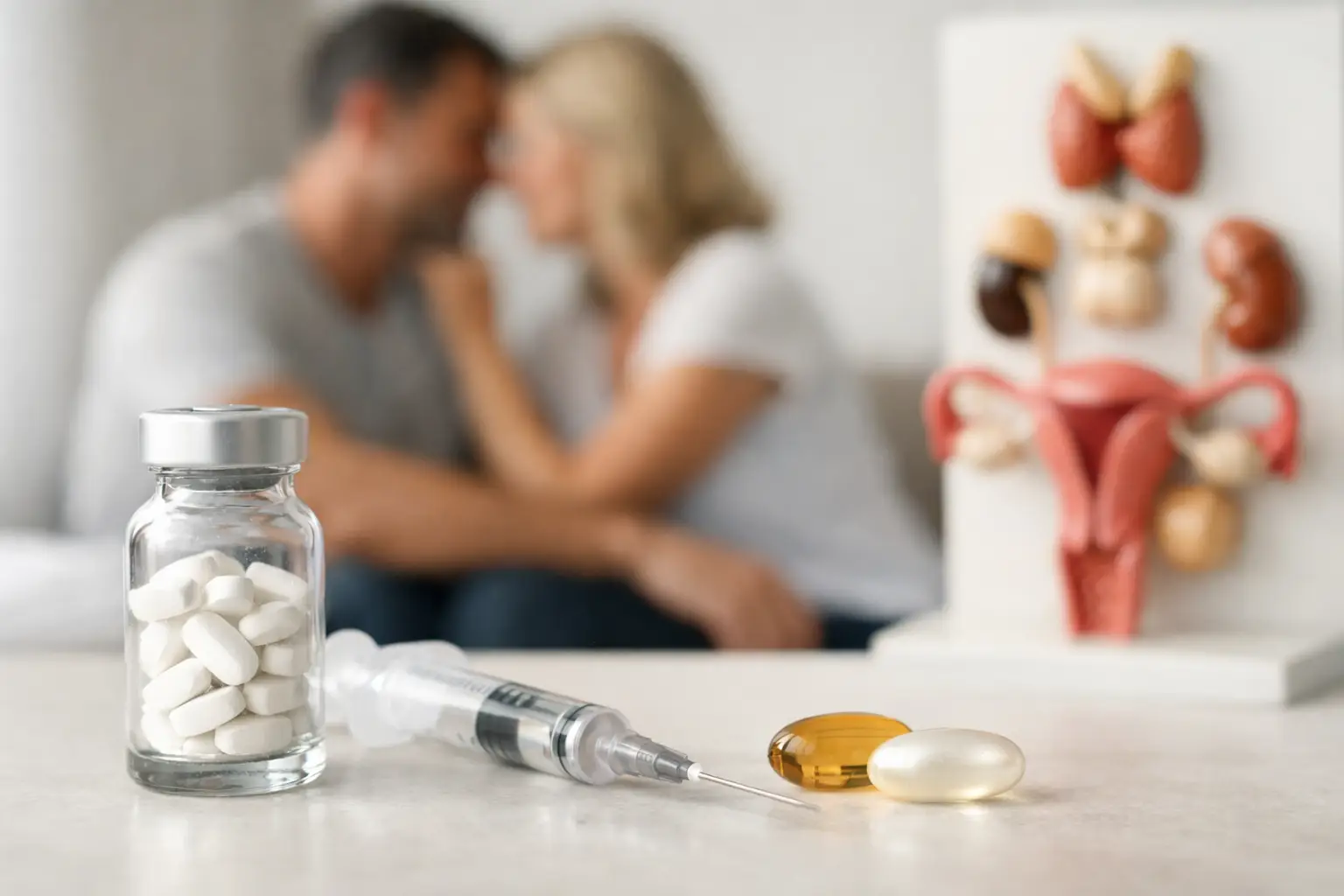
A lower sex drive can feel surprisingly personal. You may still love your partner, want closeness, and remember feeling confident in your body, yet desire feels distant or unpredictable. Hormone therapy for libido may be worth exploring when hormonal shifts are contributing to that change, especially when low desire appears alongside fatigue, disrupted sleep, mood changes, hot flashes, vaginal discomfort, or changes in sexual performance.
Libido is not a measure of your relationship, your attractiveness, or your effort. It is influenced by your physical health, emotional well-being, medications, stress level, life stage, and hormones. The goal of personalized care is not to force a certain version of sexuality. It is to identify what may be getting in the way of feeling comfortable, connected, and like yourself.
Table of Contents
When hormones may be affecting your libido
Hormones help regulate energy, mood, sleep, blood flow, arousal, and sexual response. When levels change, desire can change with them. This is common during perimenopause and menopause, but it can also happen after childbirth, during periods of high stress, with certain medical conditions, or as testosterone levels decline with age.
For women, falling estrogen can contribute to vaginal dryness, irritation, discomfort with sex, and changes in arousal. When intimacy becomes uncomfortable, it makes sense that desire may follow. Some women also experience shifts in testosterone, which can play a role in sexual interest, energy, and overall well-being.
For men, low testosterone may contribute to reduced sexual desire, fewer spontaneous erections, lower energy, depressed mood, reduced muscle mass, or difficulty focusing. These symptoms are not always caused by testosterone alone, but they deserve a thoughtful medical evaluation rather than being brushed aside as an inevitable part of aging.
Hormones are only one piece of the picture. Relationship concerns, anxiety, depression, alcohol use, chronic pain, sleep apnea, diabetes, thyroid conditions, and medications such as certain antidepressants can also affect libido. Good care starts by looking at the full story.
How hormone therapy for libido works
Hormone therapy is not a one-size-fits-all prescription. It is a medical approach designed to address confirmed or strongly suspected hormonal contributors to symptoms. Your clinician considers your health history, current symptoms, goals, medications, and appropriate lab work before recommending a treatment plan.
For women in menopause, estrogen therapy may help reduce vaginal dryness and painful sex while improving other symptoms such as hot flashes and sleep disruption. Estrogen can be delivered in several forms, including topical vaginal options and systemic treatments. The right approach depends on whether symptoms are primarily localized, such as dryness and discomfort, or part of broader menopausal changes.
Testosterone-based care may be considered for eligible men with symptoms and clinically appropriate findings. When treatment is prescribed, ongoing monitoring matters. The aim is to bring levels into an appropriate range and evaluate how you feel over time, not to chase an arbitrarily high number.
Some women may also benefit from carefully evaluated testosterone support in select circumstances. This should always be guided by a qualified medical professional, since the potential benefits, dosing approach, side effects, and suitability differ from person to person.
The most meaningful outcome is not simply a lab result. It is whether you are experiencing improvements that matter in daily life: more energy, better sleep, improved comfort, a steadier mood, greater confidence, and a renewed ability to enjoy intimacy.
Elevate Your Health for Just $29.99/Month
Join the Precision Wellness Subscription at My Healing 365 and get discounted services, priority coaching access, virtual care, and exclusive wellness resources to support your physical, emotional, and hormonal health.
Join for $29.99/MonthWhat treatment cannot promise
Even when hormones are part of the issue, therapy is not an instant switch for desire. Libido is complex, and treatment may improve physical comfort, energy, and arousal without resolving every emotional, relational, or situational factor.
That does not make treatment unsuccessful. It means the best plan may include more than medication. Sleep support, stress management, counseling, pelvic floor care, nutrition, movement, and open communication with a partner can all support sexual wellness. A personalized plan leaves room for those realities.
What a personalized evaluation should include
A quality hormone consultation should feel like a conversation, not a quick transaction. You should have space to discuss changes in desire, sexual comfort, erections, sleep, mood, weight, energy, menstrual history when relevant, and the medications or supplements you currently use.
Your clinician may recommend lab testing when it is clinically appropriate, but symptoms and medical history matter just as much as numbers. Hormone levels naturally fluctuate, and a single test does not explain every concern. The most useful evaluation connects your results with how you are actually feeling.
Be direct about your goals. Perhaps you want sex to feel comfortable again after menopause. Maybe you miss your energy and confidence. Or you may be concerned about reduced desire and performance that developed gradually over time. Honest details help your care team create a plan that is both safer and more relevant.
Safety, side effects, and who needs extra caution
Hormone therapy can be life-changing for the right person, but it is not right for everyone. Your clinician should review your personal and family medical history, including any history of hormone-sensitive cancers, blood clots, cardiovascular disease, liver disease, unexplained vaginal bleeding, fertility goals, prostate concerns, or untreated sleep apnea.
Side effects vary by medication and delivery method. Estrogen therapy may involve breast tenderness, spotting, bloating, or headaches for some patients. Testosterone therapy can cause acne, fluid retention, changes in red blood cell counts, or other effects that require follow-up. Dosing and monitoring are not extras – they are central to responsible treatment.
Avoid taking hormones obtained without a prescription or using someone else’s medication. What worked for a friend, partner, or social media personality may not be safe or effective for you. Personalized medical oversight gives you a clearer path to adjust treatment when your body or circumstances change.
Why ongoing care makes a difference
Hormone care works best as a process. Your provider can assess whether symptoms are improving, review possible side effects, adjust treatment when appropriate, and help you understand which changes may be coming from hormones versus other areas of health.
Telehealth can make that process more accessible. Instead of putting off a conversation because of travel, long waits, or discomfort discussing intimate symptoms face-to-face, you can meet with a licensed clinician from home and continue care through a secure patient portal. For many adults, that privacy and convenience makes it easier to stay consistent with follow-up.
At My Healing 365, hormone care is designed around the bigger picture of how you want to feel. Low libido may be the symptom that brings you in, but the right conversation can also address sleep, mood, energy, confidence, and the everyday habits that support lasting vitality.
Questions to ask before starting treatment
Before moving forward, ask what hormone or hormones are being considered, why they fit your symptoms, and what alternatives may be available. You should also understand how the medication is taken, when you may notice changes, which side effects require a call to your provider, and how often you will need follow-up or lab monitoring.
It is also reasonable to ask whether another condition could be contributing to low desire. A provider who welcomes that question is more likely to help you make a well-informed decision. Your care should never feel rushed, shaming, or built around a promise that sounds too good to be true.
Low libido does not have to be a silent burden you simply accept. With a careful evaluation and a personalized plan, hormone therapy may help restore the physical comfort, energy, and confidence that make connection feel possible again. The next step can be as simple as giving yourself permission to ask for support.

























