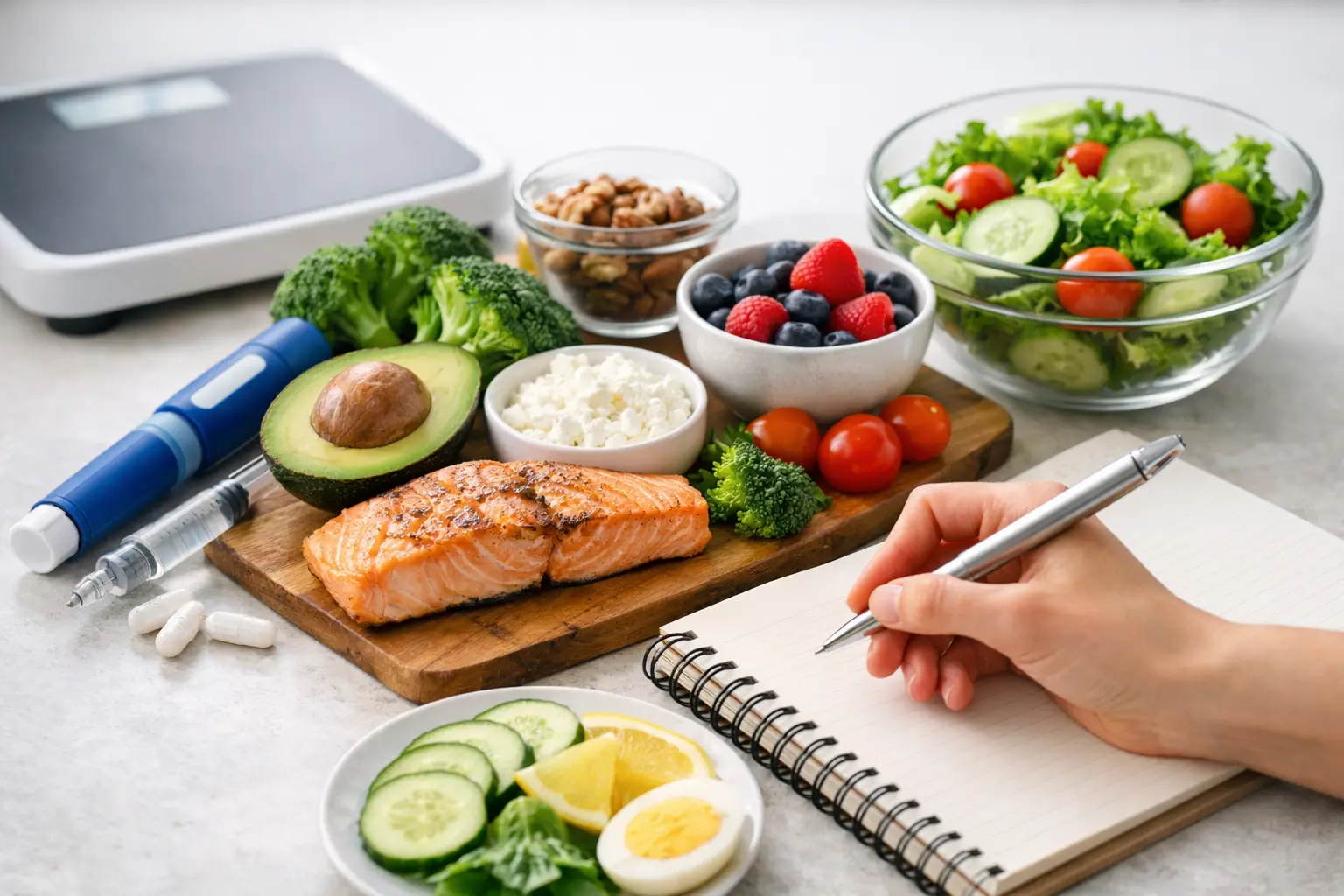
A GLP-1 medication can make a familiar dinner suddenly feel like too much food. That change can be a powerful advantage for fat loss, but it also creates a new challenge: when appetite is lower, every bite needs to work harder for your energy, muscle, hydration, and long-term results. This GLP-1 nutrition planning guide is built around that reality.
Medications such as semaglutide and tirzepatide can help reduce hunger, improve fullness, and support metabolic health under medical guidance. They are not a replacement for nutrition. The goal is not to eat as little as possible. The goal is to build an eating pattern that feels manageable, protects lean muscle, and helps you feel better while your body composition changes.
Table of Contents
Start With the Priorities That Matter Most
Many people begin GLP-1 treatment focused entirely on the scale. Weight loss may be an important goal, but the quality of that weight loss matters. Eating too little protein, skipping fluids, or relying on snack foods because they are easy can leave you tired, constipated, and less likely to maintain muscle.
A strong plan starts with three priorities: protein at regular intervals, fluids throughout the day, and nutrient-dense foods in portions your body tolerates. The right details depend on your starting weight, activity level, medical history, medications, and treatment dose. Your provider or health coach can help turn these principles into targets that fit your life.
Protein Comes First, Not Last
Protein deserves a place at the beginning of every meal because it supports lean tissue during weight loss, recovery from training, and day-to-day satiety. Waiting until the end of the day to “catch up” is difficult when your appetite is already low.
Aim to include a protein source at breakfast, lunch, dinner, and, if needed, a small snack. Options may include eggs, Greek yogurt, cottage cheese, chicken, fish, lean meat, tofu, tempeh, edamame, or a protein shake. If a full meal feels unappealing, a smaller protein-forward option is often more useful than forcing a large plate.
Your ideal protein intake is individual. Someone lifting weights regularly or working to preserve muscle during significant weight loss may need a different plan than someone with kidney disease or other medical considerations. This is one reason provider-guided treatment matters.
Hydration Is Part of the Treatment Plan
Reduced hunger can also mean reduced thirst. Dehydration may worsen fatigue, headaches, constipation, and nausea, especially during dose changes. Keep water visible and easy to reach, and take small, frequent sips rather than trying to drink a large amount at once.
Plain water is a solid foundation. Unsweetened tea, flavored water without excess sugar, broth, and electrolyte beverages may also have a place, particularly if nausea makes plain water difficult. If you have heart, kidney, or blood pressure conditions, ask your clinician before dramatically increasing fluid or electrolyte intake.
Build Smaller Meals That Still Deliver Nutrition
The best GLP-1 meals are not necessarily large, elaborate, or perfectly portioned. They are tolerable, repeatable, and nutritionally useful. A smaller meal with protein, fiber-rich produce, and a satisfying carbohydrate or healthy fat often works better than a heavy restaurant-style plate.
Try a simple meal structure: begin with protein, add colorful produce when tolerated, then include a modest portion of starch or fat based on your energy needs. For example, that could look like salmon with roasted vegetables and potatoes, turkey chili with beans, or Greek yogurt with berries and chia seeds.
Fiber supports digestive health and can help with fullness, but increasing it too quickly may worsen bloating or constipation. Start where you are, then gradually add foods such as berries, beans, lentils, vegetables, oats, chia, and whole grains. Hydration needs to rise alongside fiber for many people.
Choose Foods That Are Easier on a Sensitive Stomach
Nausea, early fullness, reflux, and constipation are among the side effects some patients experience with GLP-1 medications. Food choices and timing can make a meaningful difference.
On days when your stomach feels unsettled, choose simpler, lower-fat foods in small portions. Lean protein, soup, yogurt, eggs, rice, toast, bananas, applesauce, and cooked vegetables may feel easier than fried foods, creamy sauces, oversized salads, or very spicy meals. Eat slowly and stop before you feel overly full.
High-fat meals are not inherently bad, but they can be harder to tolerate when gastric emptying is slowed. This is a trade-off, not a universal rule. Avocado, olive oil, nuts, and salmon can be valuable foods, yet smaller portions may work better than eating several high-fat items in one meal.
Plan Around Your Injection and Your Real Schedule
There is no single mandatory meal schedule for every GLP-1 patient. Some people feel best with three modest meals. Others do better with two meals and a protein-rich snack. Consistency matters more than forcing a schedule that does not suit your appetite or workday.
Pay attention to the day after your injection and the days when symptoms are strongest. If nausea tends to show up then, keep easy foods ready before you need them. Stock the refrigerator with prepared protein, yogurt, fruit, soup, and convenient vegetables. A short grocery plan can prevent the common pattern of skipping meals all day and then eating whatever is easiest at night.
Alcohol deserves extra thought. It can contribute to dehydration, disrupt sleep, lower food quality decisions, and irritate the stomach. It may also be inappropriate for some people based on their medical history or other medications. Discuss your individual situation with your prescribing clinician.
Protect Muscle While You Lose Fat
GLP-1 treatment can support meaningful fat loss, but it does not automatically preserve muscle. Protein intake and resistance training are the two most practical tools for helping your body hold onto lean mass.
You do not need to become a competitive lifter. A progressive routine that challenges major muscle groups two or three times a week can be a strong starting point if your clinician says exercise is appropriate. Walking, cycling, and other cardiovascular movement support health too, but resistance work adds a specific muscle-preserving benefit.
Recovery also counts. Under-eating, poor sleep, and intense exercise can work against each other. If you are exhausted, dizzy, or unable to complete normal workouts, your plan may need more food, more fluids, an adjusted training load, or a conversation with your provider.
What to Limit Without Creating Food Rules
Extreme restriction tends to backfire. Rather than labeling foods as completely off-limits, identify the patterns that make you feel worse or slow your progress. For many people, those include frequent sugary drinks, alcohol-heavy weekends, large fried meals, grazing on ultra-processed snacks, and eating quickly past fullness.
The goal is flexibility with awareness. A meal out can fit into a GLP-1 plan. Consider sharing an entree, ordering protein and vegetables first, and taking home what you do not want to finish. You are not failing if you leave food on the plate. You are responding to fullness, which is one of the treatment’s intended effects.
Elevate Your Health for Just $29.99/Month
Join the Precision Wellness Subscription at My Healing 365 and get discounted services, priority coaching access, virtual care, and exclusive wellness resources to support your physical, emotional, and hormonal health.
Join for $29.99/MonthWhen to Contact Your Provider
Mild digestive symptoms can occur, particularly as dosing changes, but severe or persistent symptoms deserve medical attention. Contact your prescribing provider if you cannot keep fluids down, have ongoing vomiting, severe abdominal pain, signs of dehydration, or symptoms that are disrupting daily life. Do not change your dose or stop prescribed medication without guidance unless you are directed to seek urgent care.
Your clinician should also know about other medications, supplements, and health conditions. Diabetes medications, blood pressure medications, digestive conditions, kidney concerns, pregnancy plans, and a history of certain endocrine conditions can all affect whether a GLP-1 medication and nutrition strategy are appropriate.
Can I use a protein shake on a GLP-1?
Yes, for many patients, a protein shake is a convenient way to meet nutrition needs when a solid meal feels difficult. Look for an option with meaningful protein and limited added sugar, and use it as a tool rather than your entire eating plan. Your provider can help you choose an approach that fits your health needs.
Should I skip meals if I am not hungry?
Occasionally eating less is not necessarily a problem, but routinely skipping meals can make it harder to meet protein, fluid, fiber, and micronutrient needs. Small meals or snacks are often a better solution than trying to force a large meal later.
Do I need supplements?
Not everyone does. Supplements can be useful when lab work, dietary intake, or a clinician identifies a specific need, but they are not a substitute for a balanced food pattern. Avoid adding multiple products without discussing them with your care team.
At My Healing 365, medically guided GLP-1 care can be paired with the practical support needed to make treatment sustainable. The most effective nutrition plan is the one you can follow through busy weeks, low-appetite days, social meals, and changing goals. Start small, notice what your body is telling you, and let your provider help you adjust before minor challenges become reasons to quit.























