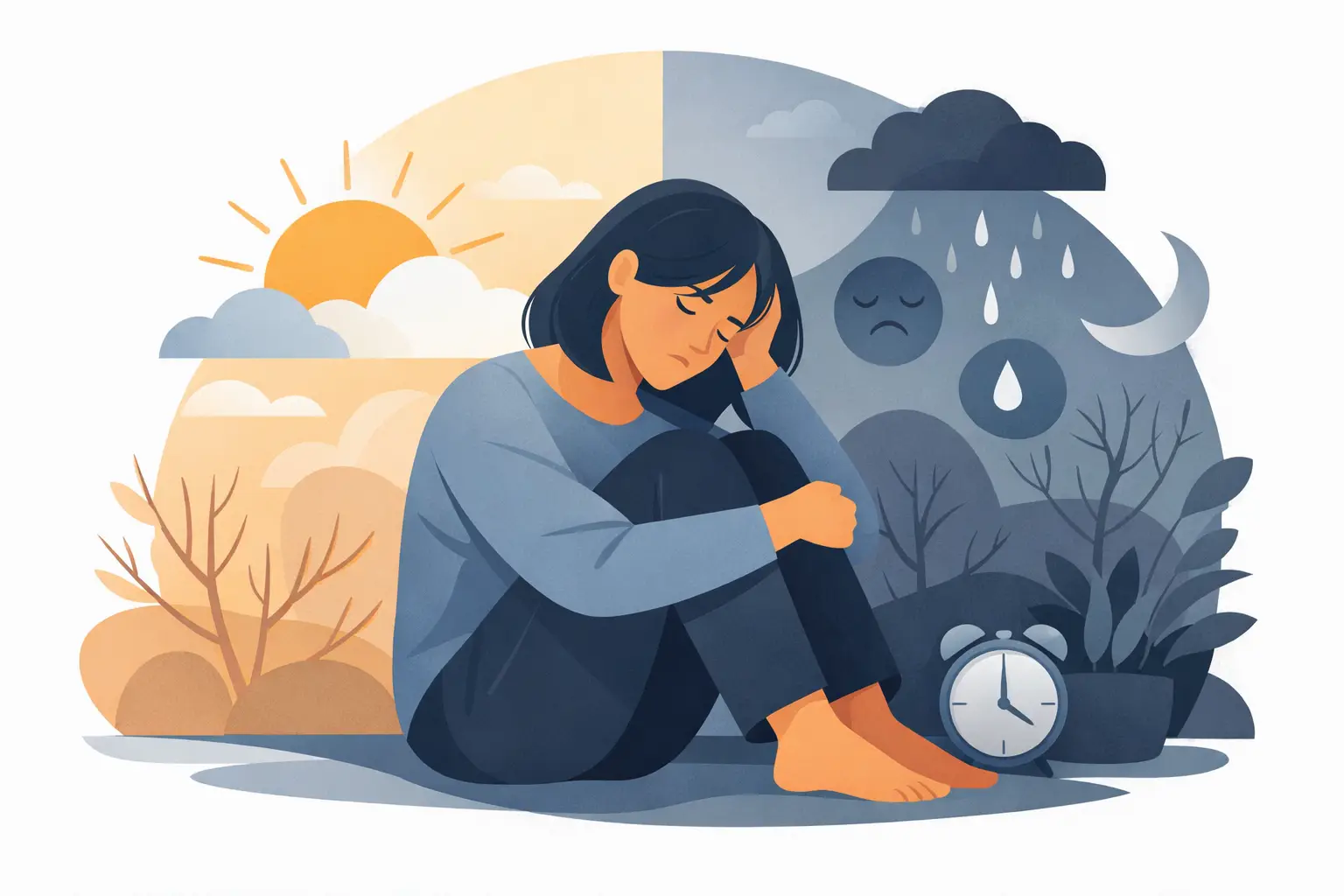
The first cold, dark week of the year can make almost anyone want to stay under the covers. But when low mood, exhaustion, sleep changes, and withdrawal keep returning during the same season, it may be more than a temporary slump. Learning to recognize seasonal depression can help you respond earlier, before symptoms begin affecting your work, relationships, and daily life.
Seasonal depression is treatable, and needing support is not a personal failure. You do not have to wait until you feel completely overwhelmed to talk with a licensed provider.
Table of Contents
What seasonal depression can look like
Seasonal depression, clinically known as seasonal affective disorder or SAD, is a pattern of depression that appears and improves around particular times of year. For many people, symptoms begin in fall or winter and ease in spring or summer. Less commonly, people experience a summer pattern, with symptoms that appear during warmer, brighter months.
The timing matters. A few difficult days after a schedule change, holiday stress, or poor sleep do not necessarily point to seasonal depression. A provider looks for a recurring pattern, usually across more than one season, along with symptoms that meaningfully affect how you feel and function.
Winter-pattern symptoms can include feeling sad, numb, hopeless, or unusually irritable for much of the day. You may lose interest in things that usually give you a lift, including hobbies, social plans, exercise, or intimacy. Getting out of bed can feel far harder than usual, even after a full night of sleep.
Changes in energy and appetite are common, too. Some people sleep longer, crave carbohydrates, gain weight, or feel mentally slowed down. Others notice trouble concentrating, lower motivation, and a growing urge to isolate. These experiences are real health symptoms, not a lack of discipline.
How to recognize seasonal depression versus a winter slump
A winter slump may leave you feeling less enthusiastic on gray days, but you can still meet your responsibilities and enjoy parts of your routine. Seasonal depression tends to be more persistent and disruptive. The difference is often not one symptom. It is the pattern, intensity, and impact.
Consider what has changed from your usual baseline. Are you calling out of work, falling behind on everyday tasks, avoiding people you care about, or losing interest in nearly everything? Has your mood been low most days for at least two weeks? Are sleep and eating changes making you feel less like yourself? Those are useful signals to take seriously.
It can also help to look back at prior years. If you notice that the same symptoms arrive around October or November, then begin lifting as the days get longer, write that down. A simple note in your phone about mood, sleep, energy, appetite, and activity can give a provider a clearer picture of what is happening.
Seasonal changes are not the only possible explanation. Burnout, grief, anxiety, medical conditions, medication effects, thyroid concerns, and major life stress can all affect mood and energy. That is why self-diagnosing is not the goal. Recognition is the first step toward getting the right evaluation and care.
Signs that deserve prompt attention
Depression can sometimes include thoughts of death, self-harm, or feeling that others would be better off without you. If you are in immediate danger or think you may act on those thoughts, call or text 988 in the US for the Suicide & Crisis Lifeline, call 911, or go to the nearest emergency room.
Even without an immediate crisis, reach out promptly if symptoms are escalating, you cannot manage daily responsibilities, or you are using alcohol or drugs to get through the day. Fast support can make a meaningful difference.
Why symptoms may show up with the seasons
Researchers do not point to one single cause of seasonal depression. Shorter daylight hours may affect the body clock that helps regulate sleep, alertness, and mood. Reduced exposure to natural light may also influence brain chemicals involved in emotional regulation. Holiday pressure, disrupted routines, financial stress, and less time outdoors can add to the burden.
This does not mean everyone who lives through winter will develop depression. Personal history, family history, other mental health conditions, life circumstances, and biology all play a role. The same season can feel restorative to one person and genuinely difficult to another.
Elevate Your Health for Just $29.99/Month
Join the Precision Wellness Subscription at My Healing 365 and get discounted services, priority coaching access, virtual care, and exclusive wellness resources to support your physical, emotional, and hormonal health.
Join for $29.99/MonthA summer pattern can look different. Some people experience insomnia, restlessness, anxiety, reduced appetite, and agitation during hot or highly scheduled months. If your mood worsens reliably in summer, it still deserves a professional conversation.
Small steps that can support your mood
Lifestyle changes are not a replacement for professional treatment when depression is present, but they can support your care plan. Start with what feels realistic rather than trying to overhaul your life during a low-energy season.
Try to keep wake times and bedtimes relatively consistent, including on weekends. Open blinds soon after waking and spend time outside during daylight when you can, even if the weather is not ideal. Gentle movement, such as a walk, stretching, or a short workout, can help with energy and sleep over time.
Regular meals and staying connected matter, too. It may feel easier to cancel plans, but a brief call, coffee with a friend, or working near another person can interrupt isolation. If social gatherings feel draining, choose lower-pressure connection rather than forcing yourself into a packed calendar.
Some people benefit from a light therapy box, but it is worth discussing first with a licensed provider, especially if you have bipolar disorder, eye conditions, take medications that increase light sensitivity, or have had periods of mania or hypomania. The right approach depends on your health history.
When online mental health care may help
If seasonal symptoms are making daily life harder, an online appointment can be a private, practical place to start. A licensed provider can ask about the timing of your symptoms, your sleep, medical history, current medications, stressors, and any history of depression or bipolar disorder. They can also help rule out concerns that may need additional medical evaluation.
Treatment is individualized. Depending on your needs, it may include therapy recommendations, practical routine changes, medication when clinically appropriate, or a combination of approaches. Medication is not the right choice for every person, and it should be decided with licensed medical oversight. If you already take medication, do not stop or change it on your own because the season has changed.
For busy adults, virtual care can remove some common barriers: no commute, less time away from work or family, and the option to communicate from a place where you feel comfortable. Through My Healing 365, eligible patients can connect online with licensed providers, receive a personalized treatment plan, and use ongoing messaging support without waiting for a traditional office visit.
Give the pattern the attention it deserves
You do not need to prove that you are struggling “enough” before asking for help. If a season repeatedly makes your world feel smaller, your energy disappears, or everyday life becomes harder to manage, that pattern is worth discussing.
Start by naming what has changed and choosing one next step, whether that is tracking symptoms, telling someone you trust, or scheduling care. Relief often begins with being honest about what this season is asking of you.

























