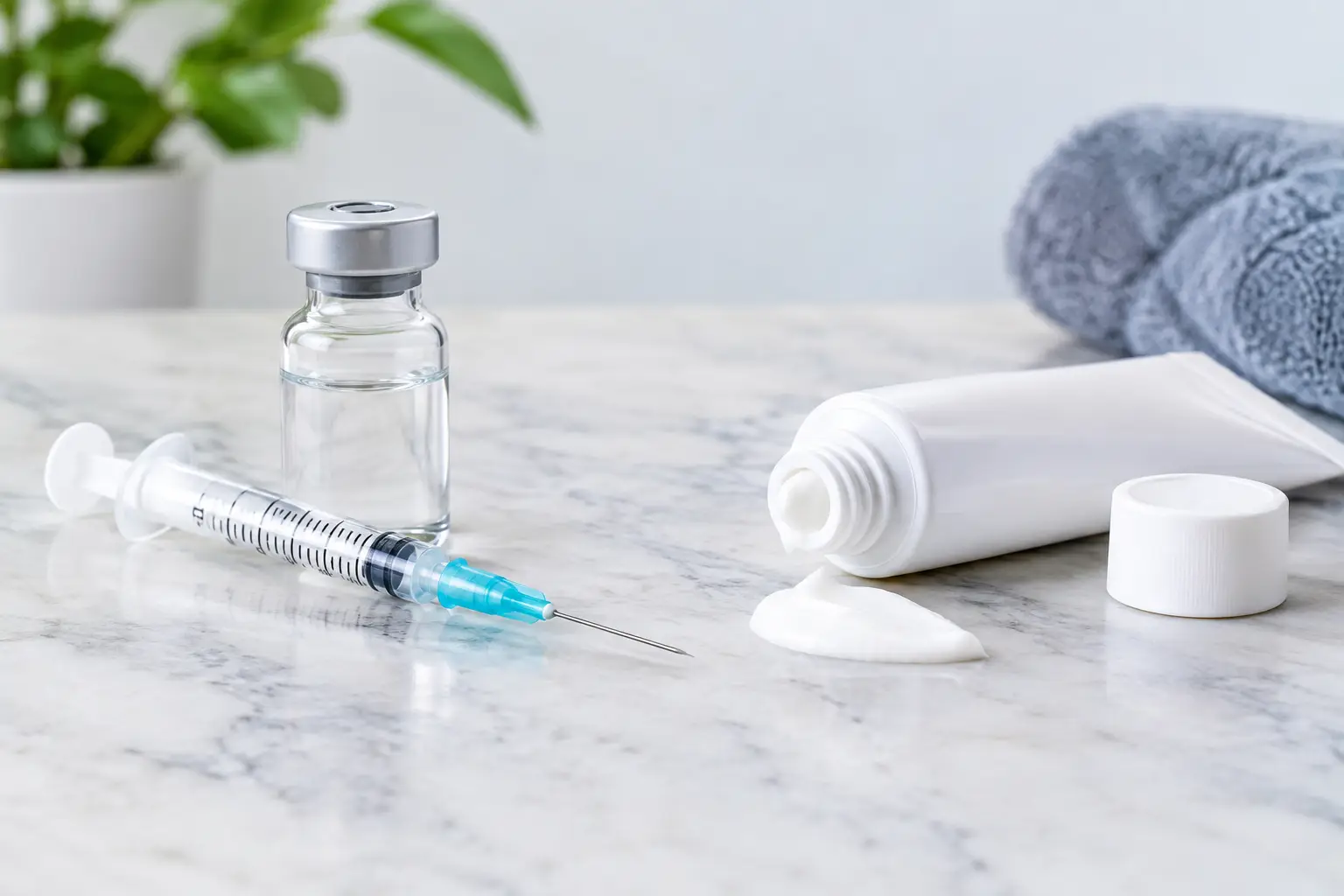
A treatment choice can feel surprisingly personal when low testosterone is affecting your energy, drive, body composition, mood, or intimacy. With testosterone injections versus cream, the better option is rarely about what is “best” in general. It is about what fits your symptoms, lab results, health history, goals, and daily life – with a clinician guiding every step.
Testosterone therapy can help the right patient restore hormonal balance and feel more like themselves again. But the delivery method matters. Injections and topical creams each offer real advantages, along with practical trade-offs that deserve an honest conversation before treatment begins.
Table of Contents
Testosterone Injections Versus Cream: The Core Difference
Testosterone injections deliver the medication beneath the skin or into a muscle, depending on the prescription and clinical plan. Because the dose enters the body directly, injections avoid the variable skin absorption that can occur with topical products. Many patients use them weekly or more often in smaller doses, though schedules vary.
Testosterone cream is applied to the skin, commonly on areas such as the upper arms, shoulders, or other clinician-directed sites. The hormone absorbs gradually through the skin and enters the bloodstream over time. It is typically used daily, making it feel more like a familiar self-care routine for people who prefer not to use needles.
Both routes can be effective when treatment is medically appropriate and dosing is personalized. The decision often comes down to consistency, comfort, absorption, side-effect profile, and how easily the treatment fits into your routine.
Why Some Patients Prefer Injections
For many men with clinically low testosterone, injections offer reliable delivery and a straightforward dosing plan. They can be especially appealing when a patient wants to avoid concerns about whether a topical medication is absorbing consistently through their skin.
Injections may also be a convenient choice for people who would rather treat once or twice a week than remember a daily application. With appropriate instruction, many patients can administer prescribed injections at home. Telehealth support and refill coordination can make follow-up care feel more accessible without losing the value of medical oversight.
The trade-off is that injections are not completely hands-off. You need to be comfortable with needles, safe storage, proper technique, and following the prescribed schedule. Some people experience soreness, redness, or minor discomfort at the injection site.
Another consideration is how testosterone levels may fluctuate with certain injection schedules. A larger dose given less often may create higher levels shortly after the injection and lower levels before the next one. Some patients notice changes in energy, mood, libido, or physical symptoms across that cycle. A clinician may adjust the dose or frequency to support steadier results.
When Testosterone Cream May Be a Better Fit
Cream can be a comfortable option for patients who strongly prefer to avoid injections. Daily application allows for a routine that may feel simple and familiar, particularly for adults already using skincare products or other daily medications.
Topical treatment may also provide steadier day-to-day hormone exposure for some people, since it is used every day rather than in larger intermittent doses. However, that benefit depends on consistent application and predictable absorption. Skin thickness, sweating, bathing, application technique, and the specific formulation can all affect how much medication reaches the bloodstream.
Cream requires attention to safety around others. Testosterone can transfer through skin-to-skin contact before the application site is fully dry or covered. This is especially relevant for partners, children, and pets. Your clinician and pharmacist should explain exactly where to apply it, how long to allow it to dry, when to wash your hands, and how to reduce transfer risk.
Daily use is also a commitment. Missing applications can affect hormone levels and symptom control. For some patients, that is easy to manage. For others, a weekly injection is more realistic than adding another step to a busy morning.
Absorption and Results Are Individual
A common question is whether injections work better than cream. Neither route automatically produces better outcomes for every person. What matters is reaching an appropriate hormone level safely, monitoring your response, and adjusting treatment when needed.
Some patients absorb topical testosterone very well and experience meaningful improvements in energy, sexual wellness, strength, and overall well-being. Others may have inconsistent levels despite using the product correctly. In those cases, a clinician might discuss a different topical formulation, an injection plan, or whether another factor is contributing to persistent symptoms.
Injections tend to offer more predictable absorption because they do not rely on the skin. Still, predictable delivery does not mean one fixed dose will work forever. Weight changes, health conditions, other medications, stress, sleep, and aging can all influence how you feel and how your body responds.
Symptoms matter, but they are only part of the picture. Low energy, lower libido, depressed mood, poor sleep, and difficulty maintaining muscle can overlap with thyroid concerns, menopause, anxiety, medication effects, nutritional deficiencies, and other health issues. A thoughtful evaluation helps ensure treatment is addressing the right problem.
Considerations for Women Seeking Testosterone Support
Testosterone is often discussed in men’s health, but women can also experience symptoms related to hormonal shifts, especially during perimenopause and menopause. Changes in libido, sexual responsiveness, energy, strength, and overall vitality may warrant a broader hormone conversation with a qualified clinician.
Women generally require far lower testosterone doses than men. That makes precision especially important, regardless of whether treatment is topical or injectable. Too much testosterone can lead to unwanted effects such as acne, oily skin, increased facial or body hair, scalp hair thinning, voice changes, or changes in mood. Some effects may not fully reverse, so careful dosing and regular follow-up are essential.
For women, a cream may offer an appealing way to use very small, tailored doses. Injections may be considered in certain individualized care plans, but the choice should never be based on convenience alone. Your clinician should review your symptoms, reproductive and menopause history, medications, cardiovascular risk factors, and treatment goals before recommending a route.
Safety, Monitoring, and the Value of Follow-Up
Testosterone therapy is not a one-time prescription. It is an ongoing medical relationship built around safety, symptom relief, and measurable progress. Before starting, clinicians may evaluate hormone levels and review your personal and family health history. Depending on your situation, follow-up may include lab work and conversations about sleep, mood, sexual function, body changes, and side effects.
Testosterone can affect red blood cell levels and may not be appropriate for everyone. A history of certain prostate or breast cancers, pregnancy, fertility goals, untreated sleep apnea, blood-clotting concerns, or significant cardiovascular risk may change the conversation. Do not start, stop, or switch hormone therapy without medical guidance.
Be open about fertility plans as well. External testosterone can reduce sperm production in men, which may be a major concern for anyone hoping to conceive. There may be other approaches a clinician can discuss depending on your goals.
Elevate Your Health for Just $29.99/Month
Join the Precision Wellness Subscription at My Healing 365 and get discounted services, priority coaching access, virtual care, and exclusive wellness resources to support your physical, emotional, and hormonal health.
Join for $29.99/MonthHow to Choose the Right Delivery Method
Start with the treatment plan you can follow consistently. If needles make you anxious or you value a daily ritual, cream may be a better match. If you want less frequent dosing, have concerns about topical transfer, or need more predictable absorption, injections may make more sense.
Cost, insurance coverage, pharmacy access, and the exact formulation can also influence the decision. Do not assume that one option is always easier or more affordable. Ask what your prescription includes, how refills work, how to store it, and what follow-up testing is recommended.
At My Healing 365, hormone care is approached as part of your broader well-being – not just a number on a lab report. The goal is to help you build a medically guided plan that supports your energy, confidence, intimacy, and quality of life in a way that feels sustainable.
The right choice is the one you can use safely, consistently, and confidently while staying connected to a clinician who listens to how you feel. A personalized conversation can turn a frustrating set of symptoms into a clear next step toward feeling balanced, energized, and more at home in your body.

























