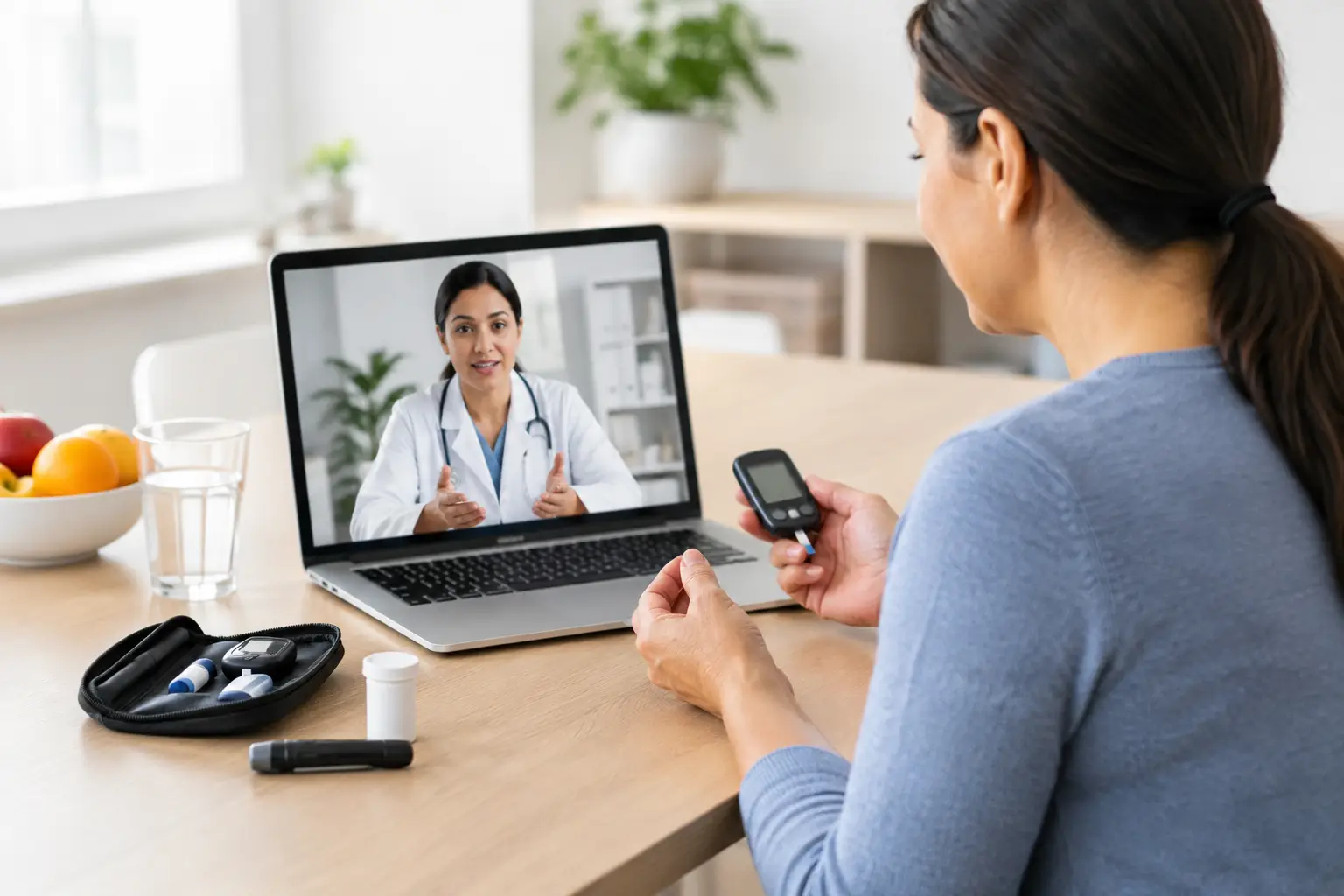
Blood sugar management rarely fits neatly into a once-a-year appointment. Meals, activity, stress, illness, sleep, medications, and changing routines can all affect your readings between visits. A telehealth diabetes management program gives you a structured way to stay connected with a licensed clinician, review what is changing, and make informed next steps without adding another trip to a clinic.
For many adults, the value is not simply convenience. It is continuity. Diabetes care works best when someone is looking at the full picture over time: your lab results, home glucose readings, prescriptions, other health conditions, goals, and the obstacles that make a plan difficult to follow.
Table of Contents
What a Telehealth Diabetes Management Program Can Include
Telehealth diabetes care is not a single service. The right program should begin with an assessment of your current health and develop into an ongoing plan that reflects the type of diabetes you have, your treatment regimen, and your risk factors.
Your clinician may review your medical history, current medications, glucose patterns, recent laboratory work, blood pressure, weight changes, nutrition habits, activity level, and symptoms. This helps identify whether your current plan is working and where additional support may be needed. For example, a person with type 2 diabetes who is seeing higher morning readings may need a different discussion than someone whose readings drop during exercise.
Ongoing care can include prescription refills, medication reviews, ordering or reviewing appropriate lab work, preventive screening reminders, and education about monitoring at home. It may also include coordination with local specialists when your needs go beyond routine primary care.
A virtual program cannot replace every aspect of in-person medicine. You may still need local lab testing, foot exams, retinal eye exams, vaccines, or an in-person evaluation for certain symptoms. Good telehealth care makes those needs clear and helps coordinate the next step rather than leaving you to manage every referral alone.
How a Telehealth Diabetes Management Program Works
The most useful programs follow a regular care rhythm instead of waiting until a problem becomes urgent. While each patient’s plan is different, care often moves through three practical stages.
1. Start with a complete health assessment
Your first visit should establish a baseline. Be prepared to discuss your diagnosis, recent A1C results, home glucose readings if you track them, medications and supplements, family history, and any concerns such as numbness in your feet, vision changes, low blood sugar episodes, or medication side effects.
This is also the time to discuss your daily reality. A plan that ignores shift work, child care, food access, travel, or a demanding schedule may look good on paper but be hard to maintain. Your clinician can help prioritize changes that fit your life rather than asking you to overhaul everything at once.
2. Build a plan for monitoring and treatment
Your care plan may set goals for home monitoring, lab follow-up, nutrition, movement, sleep, and medication adherence. Targets are personal. They can vary based on your age, diabetes type, pregnancy status, other medical conditions, risk of hypoglycemia, and recommendations from your care team.
If you use a continuous glucose monitor or a blood glucose meter, your clinician may ask you to share readings or patterns before a follow-up visit. The goal is not to judge individual numbers. It is to find useful trends, such as recurring highs after specific meals or lows at certain times of day.
Medication management is another core part of care. A licensed clinician can review whether you are taking medications as prescribed, address common side effects, discuss affordability concerns, and determine when a treatment change or specialist input may be appropriate. Never stop or change diabetes medication, especially insulin, without medical guidance.
3. Check in, adjust, and coordinate care
Diabetes plans need regular review because your health does not stand still. Follow-up visits create space to discuss new readings, lab results, symptoms, missed doses, lifestyle changes, and questions before they become larger setbacks.
A primary care clinician can also look beyond blood sugar. Diabetes is connected to cardiovascular health, kidney health, blood pressure, cholesterol, sleep, and weight. Preventive care may include reviewing recommended screenings and recognizing when a referral to an endocrinologist, eye specialist, podiatrist, registered dietitian, or other professional would be helpful.
This coordinated approach can be especially valuable if you are managing more than one condition. Instead of treating each concern as unrelated, your clinician can help organize the bigger picture.
Who May Benefit From Virtual Diabetes Support
Telehealth diabetes care can be a strong fit for adults who want more consistent support than occasional office visits provide. It may be useful if you are newly diagnosed, need help staying on top of follow-up labs, have a busy work or family schedule, or want a clinician who can help connect diabetes care with other primary care needs.
It can also support people whose care has become fragmented. Perhaps one provider refills medication, another orders labs, and no one has had time to discuss what your glucose trends mean. A longitudinal primary care relationship gives you a central point of contact for routine monitoring and coordination.
At My Healing 365, primary care membership is priced at $99 per month and is designed around regular clinician check-ins, preventive care, chronic-condition support, and coordination when specialty care is needed. The best fit depends on your health needs, insurance situation, state availability, and whether you also require frequent in-person services.
Questions to Ask Before You Enroll
Not all virtual programs offer the same level of clinical support. Before choosing a provider, ask how often you can meet with a licensed clinician, how lab orders and results are handled, and whether the program can support prescription management for your current treatment plan.
Also ask what happens if you need a referral or in-person care. A program should clearly explain its role in preventive screenings, specialty coordination, and urgent concerns. Price transparency matters, too. Understand what the monthly membership includes and whether labs, medications, specialist visits, or outside services may involve separate costs.
Elevate Your Health for Just $29.99/Month
Join the Precision Wellness Subscription at My Healing 365 and get discounted services, priority coaching access, virtual care, and exclusive wellness resources to support your physical, emotional, and hormonal health.
Join for $29.99/MonthWhen Telehealth Is Not Enough
Virtual care is appropriate for many routine diabetes needs, but some situations need prompt in-person evaluation. Seek urgent medical help for severe or persistent low blood sugar, confusion, fainting, chest pain, trouble breathing, vomiting that prevents you from keeping fluids down, signs of severe dehydration, or very high glucose with concerning symptoms.
People with type 1 diabetes, a history of diabetic ketoacidosis, complex insulin needs, pregnancy, advanced kidney disease, active foot wounds, or rapidly changing symptoms may need closer specialty and in-person care. Telehealth can still be part of the plan, but it should complement the right local medical services.
Frequently Asked Questions
Can telehealth providers prescribe diabetes medication?
Licensed clinicians may be able to prescribe or refill appropriate medications when clinically indicated and permitted in your state. Your clinician will review your health history, current regimen, and monitoring needs before making recommendations. Some medications and situations require lab work, an in-person examination, or specialist oversight.
Can a virtual clinician help with A1C testing?
A telehealth clinician can review prior results and may order appropriate laboratory testing through local facilities, depending on the practice and your location. Your results should be discussed in context, alongside your home readings, medications, and overall health.
Does telehealth replace an endocrinologist?
Not always. Primary care can manage many routine diabetes needs, particularly for stable type 2 diabetes. An endocrinologist may be appropriate for complex insulin management, type 1 diabetes, difficult-to-control glucose, pregnancy, or complications. Strong primary care helps coordinate that referral and keeps your broader health plan organized.
A diabetes plan becomes more manageable when you do not have to carry it alone. Regular touchpoints with a clinician can turn scattered readings and unanswered questions into practical next steps that support your health week by week.

























