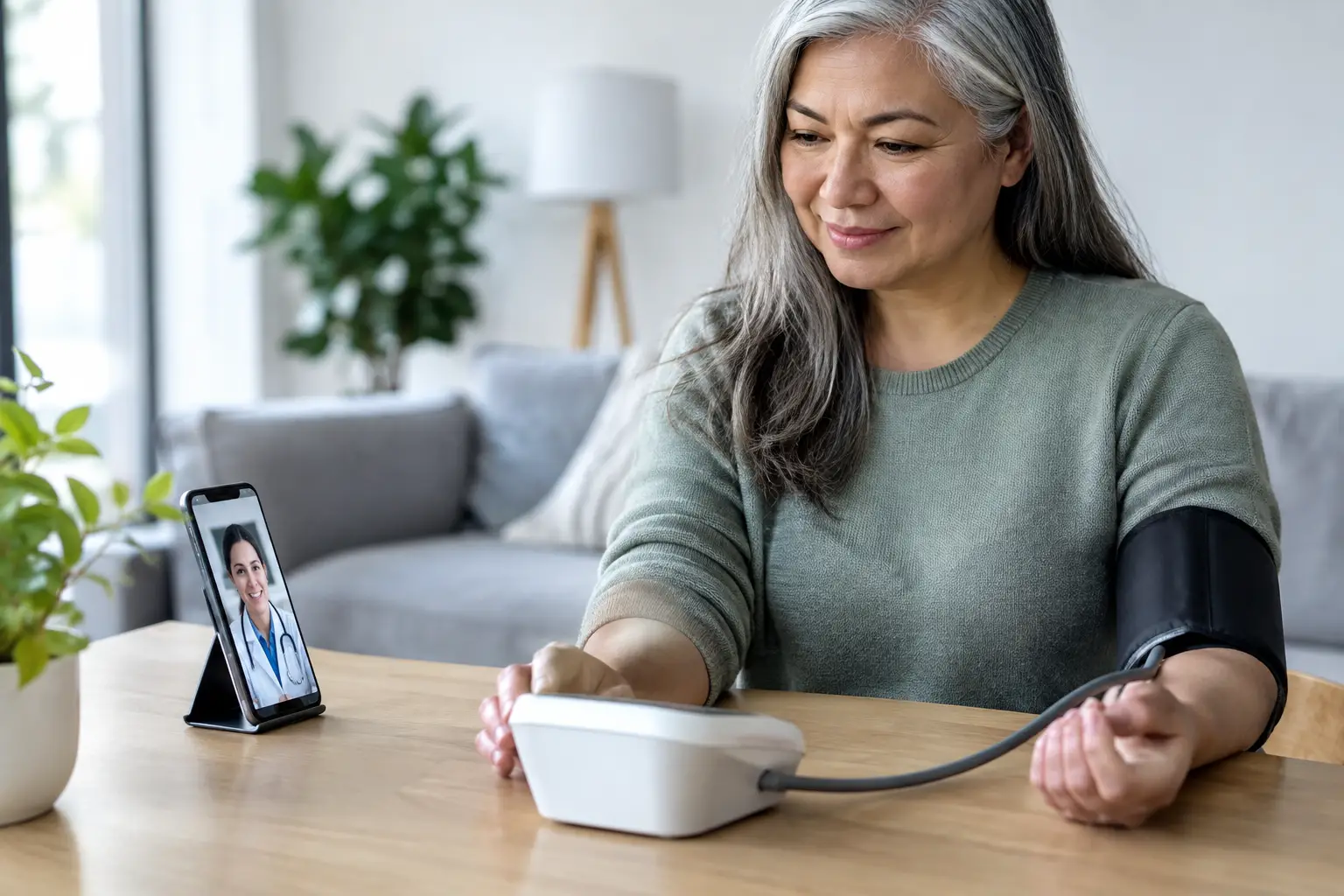
A blood pressure reading is only one moment in time. Your numbers can shift with stress, sleep, activity, medication timing, caffeine, illness, and even how you sit during the measurement. A virtual hypertension monitoring program gives those readings context by helping you track patterns at home and stay connected with a licensed clinician who can guide next steps.
For people with high blood pressure, convenience matters, but continuity matters more. Rather than waiting months to discuss a concerning trend, virtual monitoring can create a regular rhythm of readings, check-ins, medication review, and practical support. It is designed to make blood pressure care more visible, more organized, and easier to fit into real life.
Table of Contents
What a Virtual Hypertension Monitoring Program Does
A virtual program supports hypertension care outside the exam room. You take blood pressure readings at home using a validated upper-arm monitor, share or report those readings as directed, and meet with a clinician remotely for follow-up. Your care plan may include lifestyle guidance, prescription management, lab orders, preventive screening recommendations, and coordination with in-person care or specialists when needed.
This approach is not simply about collecting more numbers. It is about looking at the pattern. A single high reading can occur for many reasons. Repeated readings over days or weeks can help a clinician understand whether your blood pressure is consistently elevated, responding to treatment, or changing in a way that needs attention.
Virtual monitoring can be especially helpful for adults who are managing a busy work schedule, caring for family members, living far from a primary care office, or trying to keep chronic care from becoming another difficult appointment to arrange. It can also support patients who already take blood pressure medication but need regular follow-up to make sure their plan still fits their health needs.
How Virtual Blood Pressure Care Usually Works
Care should feel structured, not confusing. Although each plan is individualized, many virtual hypertension programs follow three practical steps.
1. Start with a complete health assessment
Your clinician begins by reviewing more than your blood pressure. They may discuss your medical history, current medications and supplements, family history, previous readings, symptoms, sleep, stress, diet, activity level, alcohol use, and tobacco use. Conditions such as diabetes, kidney disease, high cholesterol, sleep apnea, and pregnancy can affect how hypertension is evaluated and treated.
This first conversation also helps determine whether virtual care is appropriate for your situation. Some patients need an in-person examination, laboratory testing, imaging, or urgent evaluation. Virtual care can coordinate those next steps, but it should not delay necessary hands-on care.
2. Build a reliable home monitoring routine
Home readings are most useful when they are taken consistently. Your clinician may ask you to check your blood pressure at specific times of day and for a certain number of days before a follow-up visit. They can also explain how to prepare for a measurement and how to avoid common errors.
For a more accurate reading, sit quietly for about five minutes beforehand, keep both feet flat on the floor, support your arm at heart level, and use the correct cuff size. Avoid smoking, exercise, and caffeine for 30 minutes before checking when possible. Taking two readings about one minute apart and recording both can provide a more useful picture than relying on one number.
A wrist monitor may be convenient, but upper-arm devices are generally preferred for home monitoring because positioning errors can affect wrist readings. If you are unsure whether your device is accurate or appropriate, ask your clinician before relying on it for treatment decisions.
3. Review trends and adjust the care plan
During virtual follow-ups, your clinician reviews your readings alongside how you feel and any changes in your health. If the pattern suggests your blood pressure is not at goal, they may recommend medication adjustments, additional testing, an in-person visit, or a referral. If readings are improving, the focus may shift to maintaining progress and watching for side effects or changes over time.
Elevate Your Health for Just $29.99/Month
Join the Precision Wellness Subscription at My Healing 365 and get discounted services, priority coaching access, virtual care, and exclusive wellness resources to support your physical, emotional, and hormonal health.
Join for $29.99/MonthTreatment is never one-size-fits-all. A medication that works well for one person may not be the best choice for someone with kidney concerns, certain heart conditions, pregnancy plans, or medication sensitivities. Ongoing review allows care to respond to your individual situation instead of treating hypertension as a one-time problem.
What You Can Expect From Ongoing Support
High blood pressure often has no obvious symptoms. That is why regular monitoring is valuable even when you feel well. A program can help you maintain a clear record of your readings, notice gradual changes, and stay accountable to the care plan you and your clinician create.
Ongoing support may also include practical conversations about sodium intake, movement, sleep, stress, weight, and medication adherence. These topics should be approached without blame. Small, realistic changes are often more sustainable than trying to overhaul every part of your routine at once. For example, a clinician may help you identify lower-sodium options you already enjoy or create an activity goal that works around your schedule and physical limitations.
For patients taking medication, consistent follow-up is also an opportunity to discuss side effects, refill needs, cost concerns, and missed doses. Do not stop or change a blood pressure medication on your own because readings improve or because you feel different. Your clinician can help you understand whether a change is appropriate and how to make it safely.
When Virtual Monitoring Is a Good Fit
A virtual hypertension monitoring program may be a strong fit if you have been diagnosed with high blood pressure, have borderline or inconsistent readings, need medication follow-up, or want a more consistent relationship with a primary care clinician. It can also help if office readings make you anxious or differ from what you see at home. Home monitoring may provide useful additional information, though your clinician will decide how to interpret it.
It depends on your clinical needs. Virtual care works best when you can use a reliable home monitor, share readings regularly, and follow through with recommended lab work or in-person evaluations. You may still need occasional in-person care for a physical exam, tests, or concerns that cannot be evaluated safely by video or messaging.
My Healing 365 provides membership-based virtual primary care built around regular clinician connection, chronic-condition support, preventive care, and coordination when specialty or in-person services are needed. For many patients, that ongoing relationship is what turns home readings into a meaningful care plan.
Know When to Seek Urgent Care
Home monitoring is helpful, but it is not a substitute for emergency care. If your blood pressure is 180/120 mm Hg or higher, wait at least one minute and check again. If it remains that high, contact a healthcare professional promptly for guidance.
Call 911 or seek emergency care right away if a very high reading occurs with symptoms such as chest pain, shortness of breath, severe headache, weakness or numbness, confusion, trouble speaking, vision changes, or severe back pain. These symptoms can signal a medical emergency.
Common Questions About Virtual Hypertension Monitoring
Can a clinician diagnose hypertension through virtual care?
A clinician can evaluate your history and home readings remotely and may use those findings as part of diagnosis and treatment. Depending on your situation, they may also recommend office readings, lab tests, or other in-person evaluation to confirm the diagnosis and check for related health concerns.
How often should I check my blood pressure at home?
The right schedule depends on whether you are being evaluated, starting or changing medication, or maintaining stable control. Your clinician may ask for more frequent readings at first and less frequent monitoring once your plan is working well. Follow the schedule they recommend rather than checking repeatedly throughout the day out of worry.
Will lifestyle changes replace medication?
Lifestyle changes can make a meaningful difference and may reduce blood pressure over time. Some people can manage mild hypertension with lifestyle-focused care, while others need medication as well. The safest approach is to make decisions with your clinician based on your readings, health history, and overall cardiovascular risk.
Blood pressure care works best when it becomes part of your routine rather than something you address only after a concerning reading. With consistent home measurements and a clinician who sees the whole pattern, you can make informed decisions and keep moving toward steadier, healthier control.

























