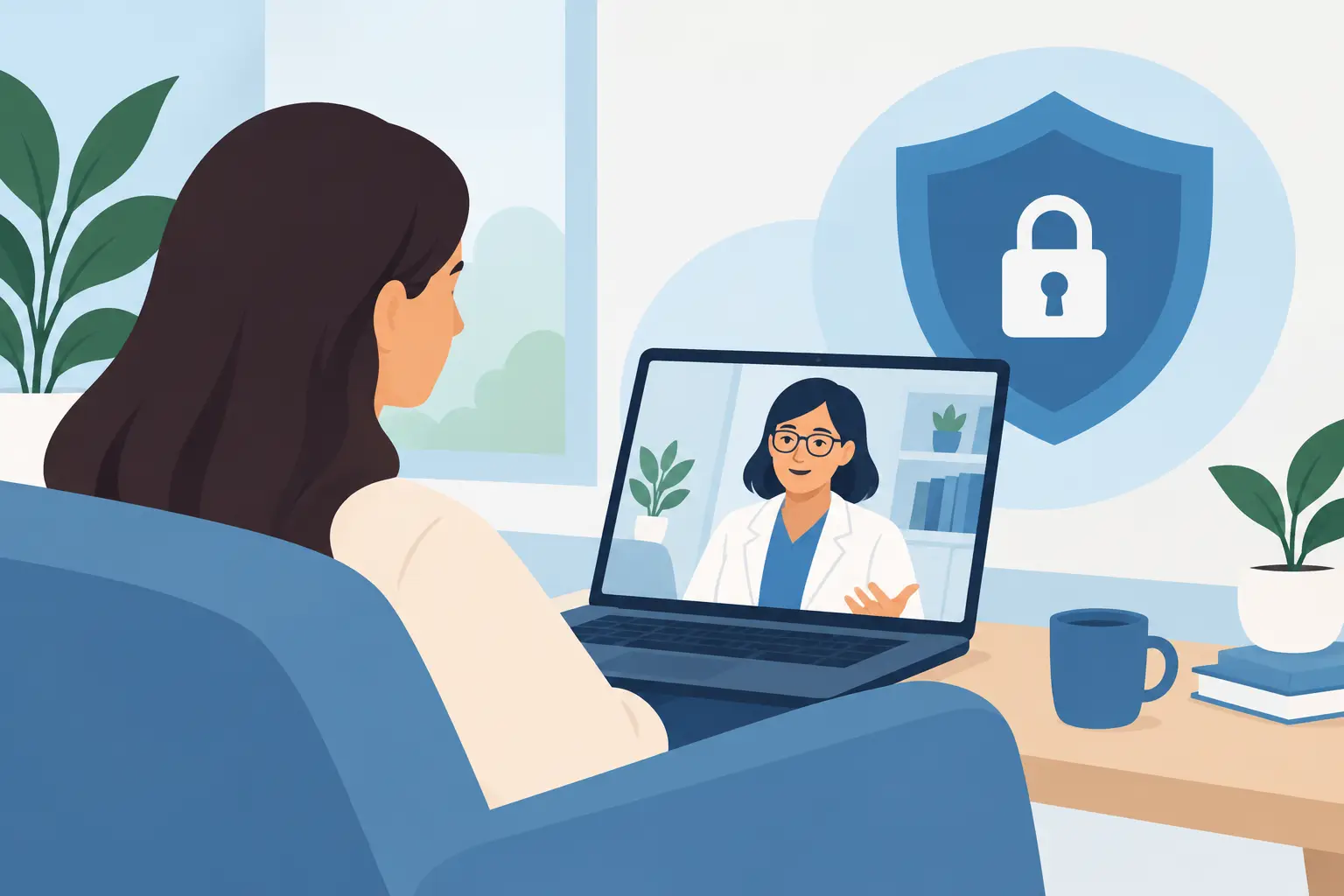
A video visit from your car during lunch. A private message after the kids are asleep. Medication support without sitting in a crowded waiting room. These are real reasons people ask, is online psychiatry confidential? For most patients, the answer is yes – when care is provided through a legitimate telehealth practice with licensed providers and secure systems. But privacy also depends on where you take your visit, how you protect your device, and what type of communication you choose.
Mental health care is personal. You deserve to understand who can see your information, what is protected, and where the limits are before you begin treatment.
Table of Contents
Is Online Psychiatry Confidential Under HIPAA?
In the United States, licensed psychiatric providers and telehealth practices that handle protected health information are generally required to follow the Health Insurance Portability and Accountability Act, better known as HIPAA. This federal law sets standards for how eligible healthcare providers, health plans, and their approved service partners handle your health information.
That can include your diagnosis, treatment plan, prescriptions, appointment details, provider messages, payment information, and notes from your visits. A responsible online psychiatry practice should use appropriate administrative, technical, and physical safeguards to protect that information from unauthorized access.
In practical terms, this means a legitimate platform should not treat your mental health details like ordinary social media messages or a casual chat app. Your care should take place through secure systems designed for healthcare, with access limited to people who need the information to provide care, process necessary operations, or meet legal requirements.
HIPAA does not mean that no one can ever access your records. Your treating provider may consult with an appropriate clinical team, and authorized staff may help coordinate prescriptions, billing, or support. Those people are still expected to protect your information and use only what is necessary for their role.
Elevate Your Health for Just $29.99/Month
Join the Precision Wellness Subscription at My Healing 365 and get discounted services, priority coaching access, virtual care, and exclusive wellness resources to support your physical, emotional, and hormonal health.
Join for $29.99/MonthState privacy laws may add further protections, especially for certain mental health records. The details can vary by state and by the type of service, which is one reason a licensed provider should clearly explain consent and privacy practices before treatment begins.
What Information Stays Private?
Your online psychiatry appointment is not automatically shared with your employer, family, friends, or coworkers. A provider generally needs your permission before discussing your care with another person, including a spouse or parent if you are an adult.
If you use insurance, there is one practical detail to understand: the policyholder may receive an explanation of benefits, often called an EOB. An EOB does not usually include the full content of your appointment, but it can show that a healthcare service occurred, the date, and the type of billing category. If privacy from a policyholder is a concern, ask about self-pay options and billing practices before scheduling.
Medication is also handled with privacy in mind, but prescriptions create their own trail. A pharmacy may contact you about refills or pickup, and notifications can appear on a shared phone or email account. You can often update communication preferences, choose a pharmacy carefully, and turn off lock-screen message previews.
When Confidentiality Has Limits
Confidentiality is a foundation of mental health care, not an absolute promise that information can never be disclosed. Providers have legal and ethical duties in specific situations, particularly when safety is at risk.
A provider may need to take action if they believe there is an immediate risk that you could seriously harm yourself or someone else. They may also be required to report suspected abuse or neglect involving a child, older adult, or vulnerable person. A valid court order or certain public health requirements can also require limited disclosure.
These situations are not about punishment or judgment. They exist to help protect people during serious emergencies. Your provider should explain these limits in clear language as part of informed consent, so you are not left guessing what would happen if a safety concern comes up.
It is also worth knowing that an online provider may ask for your current location at the beginning of a visit. That can feel intrusive at first, but it helps them respond appropriately if an urgent safety issue arises during the appointment.
Your Environment Matters as Much as the Platform
A secure telehealth platform protects the healthcare side of your visit. Your surroundings protect the personal side. If you are speaking openly about anxiety, depression, sleep problems, grief, relationship stress, or medication concerns, it helps to choose a place where you can talk without worrying who may overhear.
Privacy does not require a perfect home office. A parked car, a quiet bedroom with headphones, or a private outdoor space may be more realistic. The goal is simply to give yourself room to be honest.
Before your visit, take a few minutes to consider:
- Whether someone can overhear you through a door, wall, or open window
- Whether your phone or computer is shared with another person
- Whether lock-screen alerts reveal appointment reminders or provider messages
- Whether you are using a personal, password-protected internet connection when possible
- Whether you feel safe discussing sensitive topics where you are
Avoid joining a psychiatry visit through public Wi-Fi when you can. If it is your only option, make sure you are using the provider’s official app or secure web portal rather than sending sensitive details through unsecured email or text.
How to Spot a Privacy-Conscious Online Psychiatry Practice
You do not need to be a privacy expert to make a smart choice. Start by looking for clear answers. A trustworthy telehealth provider explains who is delivering care, how communication works, how information is stored, and what happens in an emergency.
Confirm that the clinician is licensed to provide care in the state where you are located at the time of your appointment. Ask whether appointments and messaging happen through a secure patient portal. Read the privacy notice and consent forms instead of clicking through them blindly, especially if you have questions about insurance, prescriptions, or records.
Be cautious with services that promise a diagnosis or medication after only a few vague questions, offer care entirely through public social platforms, or make it difficult to identify a licensed professional. Convenience should make care easier to access, not remove the clinical standards that keep you safe.
At My Healing 365, mental health care is designed to be private, accessible, and guided by licensed providers. A digital model can make it easier to seek support on your schedule while still giving you a structured place to discuss symptoms, ask questions, and follow an individualized treatment plan.
Private Messaging Is Helpful, but Use It Wisely
Many online psychiatry services offer secure provider messaging between appointments. This can be especially helpful when you have a medication question, notice a side effect, need clarification on a treatment guide, or want to share a non-urgent update without waiting for another visit.
Secure messaging is not the same as emergency support. If you are in immediate danger, thinking about harming yourself or someone else, or experiencing a medical emergency, call 911 or go to the nearest emergency room. If you are in emotional crisis or having thoughts of suicide, call or text 988 to reach the Suicide & Crisis Lifeline.
For non-urgent care, messaging can reduce the pressure to remember every question during a short appointment. It also creates a written record you can revisit later. Still, protect that convenience by using a unique password, enabling two-factor authentication when available, and signing out of shared devices.
Questions You Can Ask Before Starting Care
Feeling nervous about privacy is not a reason to delay getting help. It is a reason to ask direct questions. Before beginning online psychiatric treatment, you can ask how visits are conducted, whether messages are secure, who has access to your records, how prescription notifications are sent, and how you can request a copy of your information.
You can also tell your provider what privacy concerns you have. Maybe you live with roommates, share a family computer, use a spouse’s insurance, or need to schedule around work. Those details can help your care team suggest practical options without requiring you to explain more than you are comfortable sharing.
Asking for help should not mean giving up control of your personal information. With a licensed provider, secure telehealth tools, and a few thoughtful choices at home, online psychiatry can offer a confidential path toward feeling more steady, rested, and supported. You do not have to wait for life to become less busy before you make space for your mental health.

























