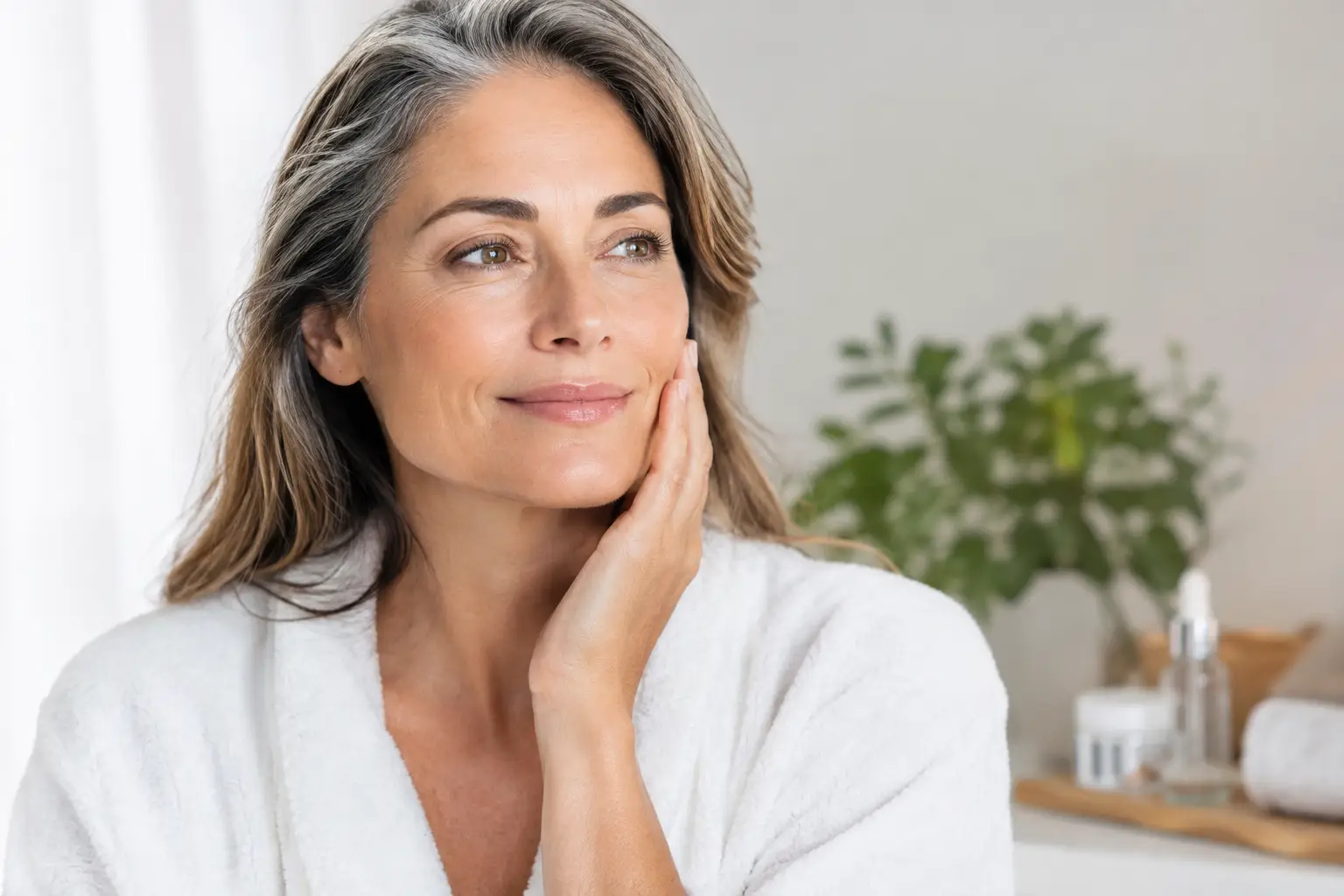
Your skin can start feeling unfamiliar before your periods stop. The moisturizer that once worked may suddenly seem useless. You may notice breakouts along the jawline, a crepey texture around the eyes, or a face that looks more tired despite getting the same amount of sleep. Perimenopause skin changes are real, common, and often connected to shifting hormone levels.
These changes can feel frustrating because they affect more than appearance. When your skin is dry, inflamed, or unpredictable, it can influence confidence, comfort, intimacy, and how you feel when you look in the mirror. The good news is that you are not stuck with a one-size-fits-all approach. Understanding what is changing gives you a better place to start.
Table of Contents
Why perimenopause skin changes happen
Perimenopause is the transition leading up to menopause. It can begin in your 30s or 40s and may last several years. During this time, estrogen and progesterone do not simply decline in a straight line. They can fluctuate significantly from month to month, which is why symptoms may feel inconsistent.
Estrogen supports several parts of healthy skin function. It helps maintain collagen, hydration, elasticity, circulation, and wound healing. As estrogen becomes less predictable, skin may produce less natural oil and retain less moisture. Collagen production can also slow, contributing to thinner skin and more visible fine lines over time.
At the same time, relative changes in androgens can affect oil production. For some women, that means acne returns after decades of clear skin. Stress, disrupted sleep, hot flashes, and changes in metabolism can add to the picture. Your skin is responding to your whole hormonal environment, not just one number on a lab result.
Common skin changes during perimenopause
No two people experience perimenopause exactly the same way. Still, a few skin concerns come up often.
Dryness, tightness, and itching
Dryness is one of the most common complaints. Skin may feel rough, tight after washing, or itchy without an obvious rash. This happens in part because the skin barrier can become less effective at holding onto water and protective lipids.
Dryness can appear everywhere, including the face, neck, chest, arms, legs, and genital area. If itching is persistent, intense, or accompanied by a rash, sores, or swelling, it deserves medical attention rather than being written off as a hormone symptom.
Adult acne and oilier areas
Hormonal breakouts during perimenopause often show up around the chin, jawline, neck, and lower cheeks. They can be deeper and more tender than the occasional surface blemish. Some women have the confusing combination of dry cheeks and an oily, acne-prone lower face.
It may be tempting to treat these breakouts with harsh scrubs or drying products. That can backfire when your skin barrier is already more sensitive. Acne care often works best when it is steady and gentle, not aggressive.
Fine lines, thinning, and reduced firmness
Collagen naturally declines with age, but declining estrogen can accelerate changes in skin thickness and elasticity. You may notice that fine lines become more visible, especially around the eyes and mouth, or that your skin does not bounce back as quickly after facial expressions or weight changes.
These shifts are not a personal failure or proof that you are doing something wrong. They are biological changes. Lifestyle habits and targeted skin care can support your skin, but they cannot fully erase the role hormones may be playing.
Sensitivity, redness, and flushing
Some women find that products they have used for years suddenly sting. Others notice more redness, flushing, or a rosacea-like pattern. Hot flashes can make flushing more noticeable, while a weakened skin barrier can increase reactivity to fragrance, exfoliants, and strong active ingredients.
New or worsening redness is worth discussing with a clinician or dermatologist, particularly if you have burning, visible blood vessels, eye irritation, or recurring bumps. Rosacea, eczema, contact dermatitis, and other conditions can overlap with hormonal changes.
Slower healing and easy bruising
Small cuts, blemishes, and irritation may seem to linger longer. Some people also notice easier bruising or more fragile-looking skin. While hormone changes may contribute, these symptoms can have other causes, including medications, nutritional deficiencies, and medical conditions. A personalized evaluation matters.
A practical skin routine for this transition
A complicated 10-step routine is not automatically better. During perimenopause, consistency and barrier support often matter more than adding every trending product to your bathroom counter.
Start with a mild cleanser that does not leave your skin feeling stripped. Follow it with a fragrance-free moisturizer that contains ingredients such as ceramides, glycerin, hyaluronic acid, or squalane. Apply moisturizer while skin is still slightly damp to help hold in hydration.
Daily broad-spectrum sunscreen is one of the most valuable habits for protecting collagen and preventing discoloration. Choose an SPF 30 or higher that you will realistically wear every day, including on cloudy days and during routine errands.
If fine lines, texture, or acne are concerns, active ingredients can help, but introduce them gradually. Retinoids may support collagen and acne management, while salicylic acid can help unclog pores. Vitamin C may help with uneven tone and antioxidant protection. The trade-off is that these ingredients can cause irritation, especially when skin is dry or reactive. Begin with one product, use it a few times a week, and adjust based on how your skin responds.
Avoid over-exfoliating, picking at blemishes, and switching products every few days. If your face burns, peels, or becomes increasingly red, simplify your routine. Calm skin is more responsive skin.
Support your skin from the inside, too
Skin care products matter, but they are only one part of the picture. Sleep disruption, chronic stress, alcohol, smoking, low protein intake, dehydration, and high sun exposure can all make hormonal skin changes feel more pronounced.
Prioritize protein-rich meals, colorful produce, healthy fats, regular movement, and water throughout the day. These habits support overall health and may help provide the nutrients your skin needs for repair. They are not a replacement for medical care, but they can make a meaningful difference in how you feel.
Elevate Your Health for Just $29.99/Month
Join the Precision Wellness Subscription at My Healing 365 and get discounted services, priority coaching access, virtual care, and exclusive wellness resources to support your physical, emotional, and hormonal health.
Join for $29.99/MonthSleep deserves special attention. When night sweats or hot flashes regularly interrupt rest, skin concerns may feel harder to manage alongside low energy, mood changes, and cravings. Treating the broader symptom pattern can be more effective than chasing each concern separately.
When hormones may be part of the conversation
If skin changes are happening alongside irregular periods, hot flashes, sleep problems, vaginal dryness, low libido, mood shifts, or changes in energy, hormones may be a meaningful part of the discussion. A qualified clinician can review your symptoms, medical history, medications, and treatment goals to help determine what is appropriate.
Hormone therapy can be an option for some women, particularly when menopausal symptoms are affecting quality of life. It is not a cosmetic treatment, and it is not right for everyone. The potential benefits and risks depend on factors such as your age, health history, type of therapy, timing, and whether you have a uterus.
Personalized care can help you move beyond guesswork. At My Healing 365, virtual care is designed to make it easier to discuss symptoms privately, review appropriate options with medical oversight, and build a plan that supports your energy, comfort, confidence, and long-term well-being.
When to see a clinician or dermatologist
Do not assume every skin issue is perimenopause. Seek professional guidance for a changing mole, a sore that does not heal, sudden severe acne, widespread rash, unusual bruising, hair loss that is rapid or patchy, or symptoms that significantly affect your daily life.
A clinician can also help distinguish hormone-related changes from thyroid concerns, nutrient deficiencies, medication effects, autoimmune conditions, and dermatologic conditions that need their own treatment. You deserve clear answers, not dismissal.
Your skin may be changing, but that does not mean you have to quietly accept feeling uncomfortable or unlike yourself. With gentle daily support and care that looks at the full hormonal picture, this transition can become a time to listen to your body and choose what helps you feel like your best self.

























