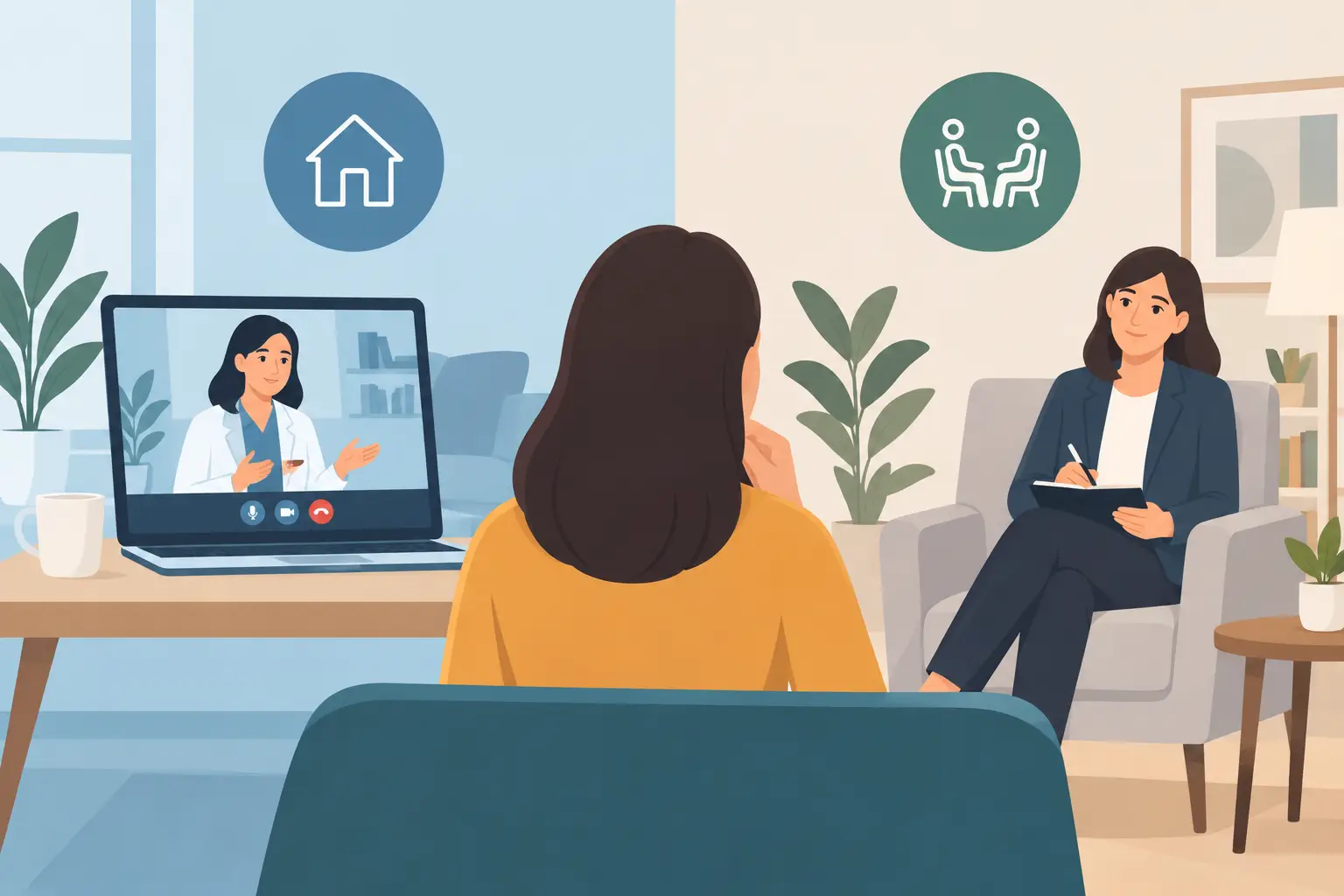
When anxiety is making work feel impossible, sleep has been off for weeks, or a major life change has left you feeling unlike yourself, getting help should not require rearranging your entire life. The question of telepsychiatry versus in person care is less about choosing a universally better option and more about finding care you can realistically begin, continue, and feel comfortable using.
Both approaches can connect you with qualified mental health professionals and treatment that is tailored to your symptoms. The meaningful differences often come down to access, communication style, privacy, clinical needs, and what helps you feel most supported.
Table of Contents
What telepsychiatry can offer
Telepsychiatry is psychiatric care delivered through secure digital tools, such as video visits and private messaging. Depending on the service and your treatment plan, it may include an evaluation, medication management, symptom check-ins, educational resources, and communication with a licensed provider.
For many adults, its biggest advantage is simple: care can fit into a real schedule. You may be able to meet from home, during a break at work, or while managing family responsibilities. There is no commute, no waiting room, and often less time between deciding to seek help and getting started.
That convenience matters because mental health symptoms can make ordinary tasks feel heavier. Depression may drain motivation. Anxiety can make a new office, traffic, or a crowded waiting room feel overwhelming. Sleep problems can leave little energy for coordinating appointments weeks in advance. A digital option removes some of those barriers without making your concerns any less valid.
Telepsychiatry can also feel more private. Some people prefer discussing sensitive experiences from a familiar space rather than sitting in a clinic. Others value the ability to message a provider with a question between scheduled check-ins instead of holding every concern until the next appointment. When the care model includes ongoing messaging and clear treatment guidance, it can create a steadier sense of support.
Where in-person psychiatric care may be a better fit
In-person care remains a valuable choice, especially for people who feel more connected in a shared physical space. Being face-to-face can make it easier for some patients to open up, read a provider’s nonverbal cues, and establish a routine that feels separate from daily stress at home.
Elevate Your Health for Just $29.99/Month
Join the Precision Wellness Subscription at My Healing 365 and get discounted services, priority coaching access, virtual care, and exclusive wellness resources to support your physical, emotional, and hormonal health.
Join for $29.99/MonthAn office visit may also make sense when a clinician needs to perform a physical examination, coordinate closely with other local providers, or address more complex needs that benefit from hands-on evaluation. For some people, leaving home for an appointment creates useful structure. The act of going somewhere dedicated to care can reinforce that their mental health deserves protected time.
Privacy is not automatically better in one setting than the other. A clinic may provide a quiet, confidential room. At home, you may have more control over your surroundings, but you may also share space with family, roommates, or children. Before a virtual visit, consider whether you have a private place to speak honestly, headphones, and a reliable internet connection.
Telepsychiatry versus in person care: the differences that matter
The right fit often becomes clearer when you look at the practical details of your life, not just the format itself.
Access and speed
Virtual care can be especially helpful if you live far from a psychiatric office, have limited transportation, travel frequently, or cannot easily take several hours away from work or caregiving. It can also reduce the friction of follow-up care. Consistent follow-ups matter when you are starting or adjusting treatment, monitoring side effects, or working toward a more stable mood and sleep pattern.
In-person care can involve longer wait times, travel, and fewer appointment choices, although that varies by location and practice. If you already have a trusted local clinician with availability that works for you, those barriers may be minimal.
Connection and communication
A strong therapeutic relationship can develop online or in person. What matters is whether you feel heard, respected, and comfortable being direct about what is happening. If video calls feel natural and you appreciate written communication, telepsychiatry may feel like a good match. If you find screens distracting or you communicate more openly in person, an office-based provider may serve you better.
You do not have to choose based on assumptions. After a few appointments, ask yourself whether you understand the plan, feel safe raising concerns, and know how to reach your provider when questions come up. Those are stronger indicators of quality care than the location of the visit.
Treatment needs
Many common concerns, including anxiety, depression, stress-related symptoms, and sleep issues, can be assessed and treated through telepsychiatry when clinically appropriate. A licensed provider can review your symptoms, health history, current medications, and goals before recommending a personalized plan.
Still, not every situation is right for remote-only care. Symptoms that are severe, rapidly worsening, or affecting your ability to stay safe deserve urgent, local support. Telehealth providers may also recommend in-person evaluation when your symptoms, medical history, or treatment needs call for it. That is not a setback. It is good clinical judgment focused on getting you the right level of care.
Cost and consistency
The cost of care is more than the price of an appointment. Consider time away from work, gas or transit, childcare, and the likelihood that a packed schedule will cause missed visits. A lower-friction option can make it easier to stay engaged with treatment rather than postponing it when life gets busy.
At the same time, confirm what is included before you begin. Ask how follow-ups work, whether messaging is available, what medication monitoring looks like, and whether your insurance or preferred payment method is accepted. Clear expectations make it easier to focus on your health instead of surprise logistics.
How to choose without overthinking it
Start with a few honest questions. Do you need care quickly? Is transportation or scheduling a regular obstacle? Would you feel more at ease talking from home, or do you need a dedicated office setting to focus? Do you want the flexibility to communicate digitally between visits?
If convenience, discretion, and ongoing digital access are high priorities, telepsychiatry may be a practical first step. Services like My Healing 365 are designed to make it easier to connect with licensed providers online, receive a treatment-specific plan, and stay in touch as care progresses.
If you want in-person connection or your needs require a local evaluation, choosing an office-based clinician can be the right decision. You can also use a hybrid approach when available, with virtual follow-ups and in-person visits as needed. Care is not a loyalty test to one format. It can change as your symptoms, schedule, and comfort level change.
A note on safety
Telepsychiatry is not emergency care. If you are in immediate danger, thinking about harming yourself or someone else, or unable to stay safe, call 911 or go to the nearest emergency room. In the United States, you can also call or text 988 to reach the Suicide & Crisis Lifeline.
For concerns that are not an emergency but still feel urgent, do not wait for things to become unbearable. Reaching out when symptoms first begin interfering with sleep, relationships, work, or your sense of self can give you more options and support.
The best form of psychiatric care is the one that meets you with clinical skill, respect, and a plan you can follow. Whether that support begins through a screen or across an office desk, you do not have to carry the weight of what you are feeling alone.
























