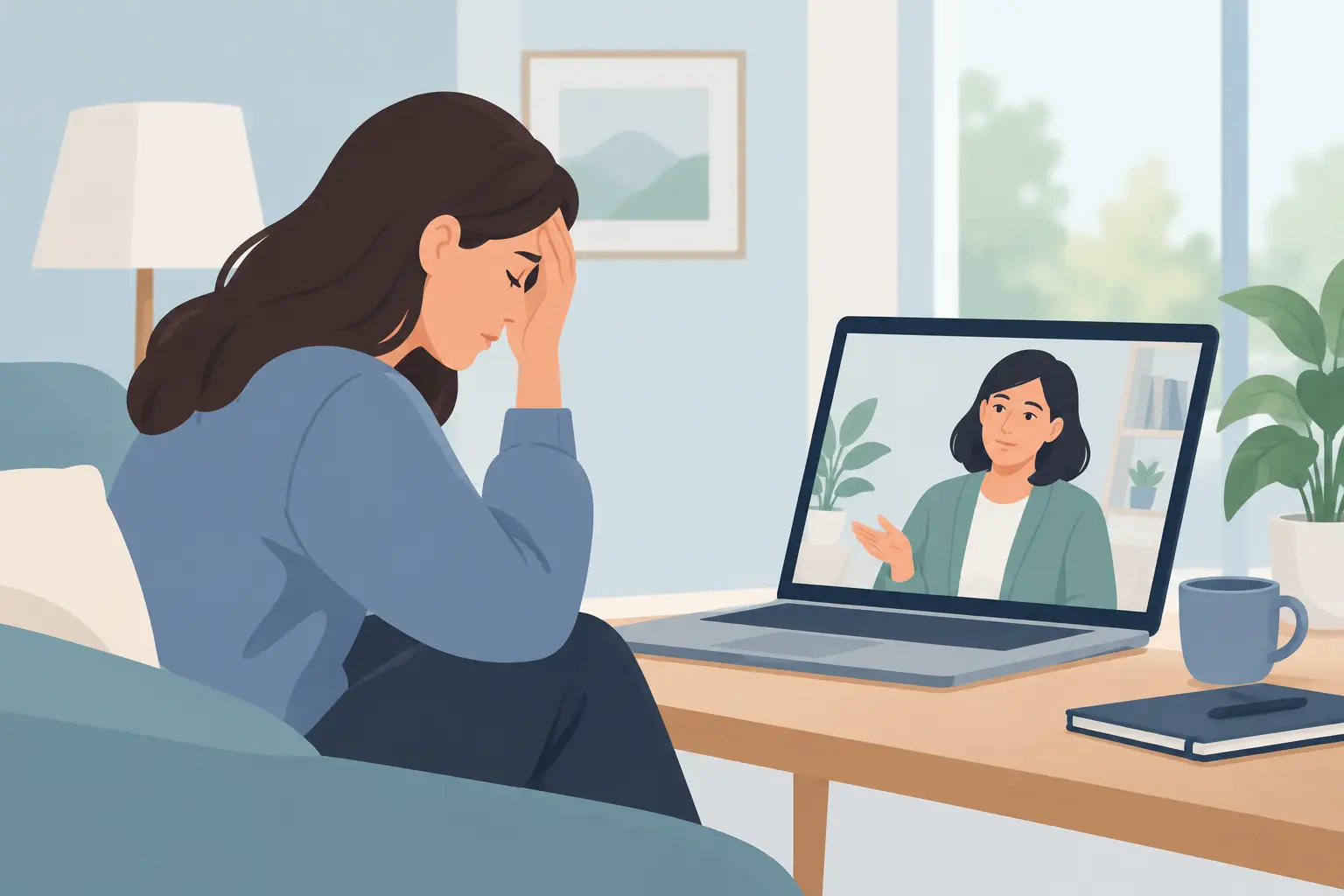
A hard week can turn into a hard month before you realize how much you have been carrying. If anxiety is keeping your mind active at night, low mood is making everyday tasks feel heavier, or a major life change has left you feeling unlike yourself, online counseling can make getting support feel more manageable.
For many people, the hardest part of mental health care is not deciding they need help. It is finding time for an appointment, sitting in a waiting room, arranging childcare, or explaining why they need to leave work. Virtual care removes some of those barriers while keeping the focus where it belongs: on what you are feeling and what may help.
Table of Contents
What online counseling can help with
Online counseling gives you access to mental health support through a secure digital platform. Depending on the service and your needs, care may include video visits, messaging, treatment education, counseling, or an evaluation for medication. A licensed provider can listen to your symptoms, ask about your health history, and help build a plan that fits your situation.
People seek care for many different reasons. You do not need to wait until you are at a breaking point. Support may be useful when worry feels constant, sadness lingers, sleep is disrupted, motivation has changed, or a breakup, loss, move, new baby, health concern, or work pressure has become difficult to manage alone.
Mental health symptoms rarely look the same from one person to the next. Anxiety may show up as racing thoughts, irritability, a tight chest, or avoidance. Depression may feel like numbness, exhaustion, hopelessness, or losing interest in things you normally enjoy. A good care plan starts with the details of your experience, not a one-size-fits-all label.
Why virtual mental health care works for busy adults
Convenience matters, especially when your capacity already feels limited. With online care, there is no commute, parking lot, or crowded office to navigate. You can often connect from home, during a work break, or from another private place that feels comfortable.
Privacy is another reason people choose a digital option. Seeking care is a personal decision, and many adults prefer a process that feels discreet. Secure telehealth platforms are designed to protect your health information while giving you a more direct path to a licensed provider.
There is also a practical benefit to ongoing communication. Mental health is not always something that can be captured in one appointment. Having a way to ask questions, share changes in symptoms, or get clarification on a treatment plan can help care feel less isolating. My Healing 365 combines individualized plans with digital access to licensed providers, so support can fit more naturally into daily life.
Counseling, therapy, and medication are not the same thing
These terms are often used interchangeably, but they can describe different kinds of care. Counseling or therapy generally focuses on talking through emotions, patterns, relationships, coping skills, and life experiences. Medication management focuses on whether a clinically appropriate prescription may help with symptoms such as depression, anxiety, or sleep concerns.
Some people benefit most from counseling alone. Others may benefit from medication, therapy, lifestyle changes, or a combination of approaches. It depends on your symptoms, medical history, goals, preferences, and the provider’s clinical assessment. Medication is not the right answer for every person, and it should never be treated as a shortcut around thoughtful care.
If medication is part of your plan, a licensed clinician should review potential benefits, side effects, interactions, and follow-up needs with you. Ask questions until you understand what you are taking and why. You deserve care that feels informed, collaborative, and respectful.
What to expect from your first online appointment
The first conversation is usually about getting a clear picture of what is going on. You may be asked when your symptoms started, how often they happen, how they affect sleep, work, relationships, appetite, and energy, and whether you have tried treatment before.
It can help to write down a few notes beforehand. Think about the moments when you feel most like yourself and the moments when symptoms get in the way. Notice changes in your sleep, concentration, mood, or daily routine. You do not need to have the perfect words. Honest details give your provider a stronger starting point.
Your provider may recommend a treatment plan right away, suggest monitoring symptoms, or ask you to schedule follow-up care. Progress is not always immediate. Some people feel relief after simply naming what they have been experiencing, while others need time to find the approach that works best for them.
How to choose online counseling that feels right
The right service should make it easy to understand who is providing your care, how communication works, what the costs are, and what happens after your first visit. Clear answers matter. You should not have to guess whether you will see a licensed professional or whether follow-up support is available.
Look for a platform that explains its privacy practices and uses secure technology. It should also be transparent about what it can treat and where its limits are. Telehealth can be a strong option for many common mental health concerns, but it is not a replacement for emergency support or intensive in-person treatment when those are needed.
Fit matters, too. A provider can be qualified and still not feel like the right match. If you do not feel heard, if instructions are unclear, or if your plan does not reflect your goals, speak up. A supportive care relationship should leave room for questions and adjustments.
Small steps that support your treatment plan
Online counseling works best when it becomes part of a larger commitment to your well-being. That does not mean you need to overhaul your life overnight. Small, repeatable actions can make a real difference alongside professional care.
Try protecting a consistent sleep window, even if sleep is currently difficult. Step outside for a few minutes of daylight when you can. Eat regularly enough to support steady energy. Let one trusted person know you have been having a hard time. These are not cures for anxiety or depression, but they can give your nervous system more support while treatment takes effect.
It is also useful to track patterns without judging yourself. A quick note about your mood, sleep, stress level, and medication effects can help you and your provider spot what is changing. The goal is not to monitor every feeling. It is to create enough clarity to make better decisions together.
Elevate Your Health for Just $29.99/Month
Join the Precision Wellness Subscription at My Healing 365 and get discounted services, priority coaching access, virtual care, and exclusive wellness resources to support your physical, emotional, and hormonal health.
Join for $29.99/MonthWhen you need immediate help
Online care is designed for ongoing support, not a crisis response. If you are thinking about harming yourself or someone else, feel unable to stay safe, or are experiencing a mental health emergency, call or text 988 in the United States for the Suicide & Crisis Lifeline. If there is immediate danger, call 911 or go to the nearest emergency room.
Asking for help does not mean you have failed to handle life on your own. It means you are taking your health seriously. Whether you have been struggling quietly for a long time or symptoms have only recently started, a private conversation with a licensed provider can be a practical first step toward feeling more steady, supported, and in control.