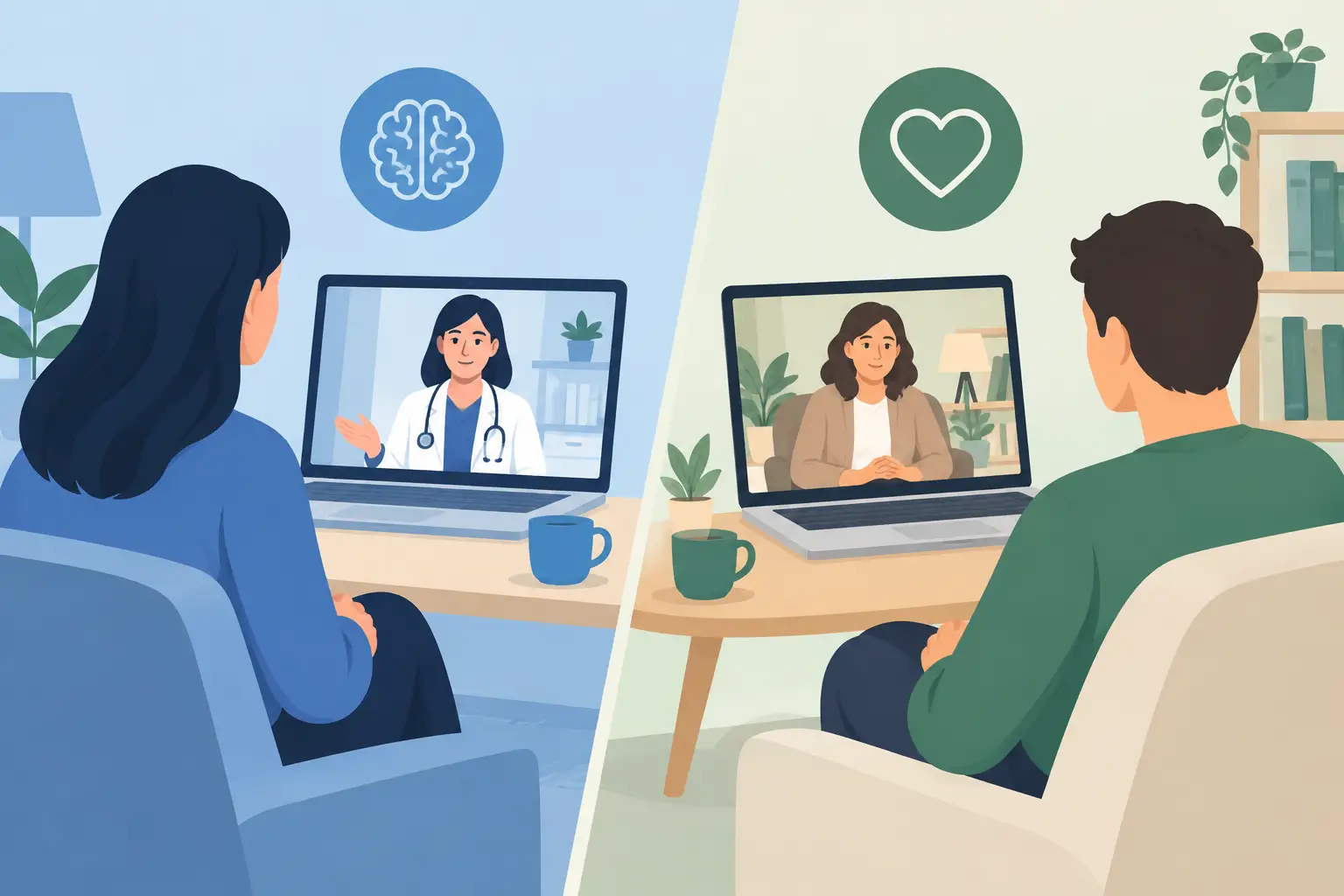
When anxiety is making it hard to focus, sleep has become unpredictable, or a major life change leaves you feeling unlike yourself, the question is rarely whether you need support. It is usually where to begin. Telehealth mental health vs counseling can sound like a choice between two very different paths, but the distinction is more nuanced – and understanding it can help you get care that fits your needs, schedule, and comfort level.
Table of Contents
Telehealth mental health vs counseling: the key difference
Telehealth mental health is a way of receiving care. It uses secure online tools, such as video visits, messaging, and digital treatment plans, to connect you with a licensed provider without requiring a trip to an office. Depending on the service and provider credentials, telehealth mental health care may include assessment, talk-based support, therapy, medication evaluation and management, or a combination of these options.
Counseling is a type of care. It generally involves talking with a trained mental health professional about your thoughts, emotions, behaviors, relationships, or stressful circumstances. Counseling can happen in person or online. In other words, online counseling is one form of telehealth mental health care.
That overlap matters. You do not necessarily have to choose between virtual care and counseling. The more useful question is whether you want talk therapy, medical treatment, ongoing messaging support, or a care plan that can include more than one approach.
When counseling may be the right starting point
Counseling can be especially helpful when you want space to process what is happening in your life. Maybe you are grieving a loss, adjusting to a new job or parenthood, working through relationship patterns, or carrying stress that has built up over time. A counselor or therapist can help you name what you are experiencing, build coping skills, and create healthier ways to respond.
Many people value counseling because the relationship itself is part of the treatment. Regular conversations can give you a private place to be honest without having to solve everything before the session ends. Over time, you may work on communication, boundaries, self-esteem, trauma-related concerns, or the habits that keep anxiety and low mood going.
Counseling may be a strong fit if your symptoms feel manageable day to day and your main goal is emotional insight, practical coping tools, or structured support through a difficult period. It can also work well for people who prefer a scheduled weekly appointment and want to focus primarily on conversation-based care.
Still, counseling is not always the only support someone needs. If symptoms are persistent, worsening, or interfering with work, relationships, sleep, or daily responsibilities, a medical assessment may be helpful too.
What telehealth mental health care can offer
Telehealth makes mental health treatment easier to access for people who do not have the time, privacy, transportation, or local provider availability for traditional office visits. Instead of rearranging your workday or finding childcare for an appointment, you may be able to meet with a licensed provider from home, during a break, or from another private location.
For concerns such as anxiety, depression, sleep disruption, or emotional distress related to a major life event, a telehealth provider can evaluate your symptoms and discuss appropriate next steps. That may include treatment guidance, lifestyle and coping recommendations, therapy referrals, medication when clinically appropriate, or follow-up care to see how you are doing.
The medical side is an important distinction. Some telehealth mental health providers can assess whether medication could be part of your treatment plan and monitor your response over time. Counseling professionals have different licenses and scopes of practice, so not every counselor can prescribe or manage medication. Neither approach is automatically better. The right option depends on your symptoms, history, preferences, and the type of provider you need.
Elevate Your Health for Just $29.99/Month
Join the Precision Wellness Subscription at My Healing 365 and get discounted services, priority coaching access, virtual care, and exclusive wellness resources to support your physical, emotional, and hormonal health.
Join for $29.99/MonthAt My Healing 365, mental health care is designed for people who want a straightforward online path to licensed-provider support, personalized treatment plans, and continued communication without adding another in-person appointment to an already full week.
Consider the kind of support you want between visits
Traditional counseling often centers on a recurring appointment, commonly once a week or every other week. That rhythm can be meaningful, but it may leave you wishing for guidance when a difficult moment happens on Tuesday and your next session is not until Friday.
Some telehealth mental health services offer secure messaging in addition to scheduled visits. This can make care feel more connected and responsive, especially when you are starting a treatment plan, tracking side effects, dealing with changes in sleep, or trying to apply new coping strategies in real life.
Messaging is not the same as 24/7 crisis support, and it should not replace emergency services. But for non-emergency questions and ongoing treatment communication, it can reduce the feeling that you are handling everything alone between appointments.
Cost, privacy, and convenience are part of the decision
Mental health care should fit your life, not create another source of stress. In-person counseling may be ideal for someone who wants face-to-face connection and has easy access to a trusted local clinician. For others, the commute, waitlists, limited office hours, and concern about being seen entering a clinic can become real barriers.
Telehealth can offer more flexibility and discretion. You can often complete intake forms online, attend visits from a private space, and keep follow-up care in one digital place. For busy professionals, parents, caregivers, and people who travel frequently, that convenience can be the difference between delaying care and actually beginning it.
Cost varies widely in both settings. Before enrolling, ask what the price includes. Does it cover the initial evaluation, follow-up visits, messaging, treatment resources, or medication management? Are there separate fees? Is the provider licensed to practice in your state? Clear answers help you compare options without surprises.
How to choose the care that fits your needs
Start by looking at the problem in front of you, not the label on the service. If you want to talk through life stress, learn coping strategies, and build insight over time, counseling may be a natural place to begin. If you are experiencing ongoing anxiety, depression symptoms, significant sleep changes, or symptoms that may benefit from clinical evaluation, telehealth mental health care may give you a broader set of options.
For many people, the best answer is both. A therapist may help you build emotional skills and work through deeper patterns, while a medical provider monitors symptoms and discusses medication if appropriate. Care can be coordinated, even when it comes from different professionals.
When comparing providers, look for a few essentials: a license appropriate to the service, a clear explanation of what they treat, secure communication, transparent pricing, and a plan for follow-up. You should also feel respected. You do not need a perfectly worded explanation of what you are going through to deserve thoughtful care.
Know when online care is not enough
Telehealth is a valuable option, but it is not the right level of support for every situation. If you are thinking about harming yourself or someone else, feel unable to stay safe, are experiencing severe confusion or disconnection from reality, or are facing an immediate emergency, call 911, contact 988 for the Suicide & Crisis Lifeline, or go to the nearest emergency room.
For non-emergency concerns, seeking support early can keep symptoms from taking over more of your life. You do not have to wait until stress becomes unbearable or low mood disrupts every part of your routine.
The right care is the care you can access, trust, and continue. Whether that begins with counseling, telehealth treatment, or a combination of both, one private conversation can be a practical first step toward feeling more like yourself again.