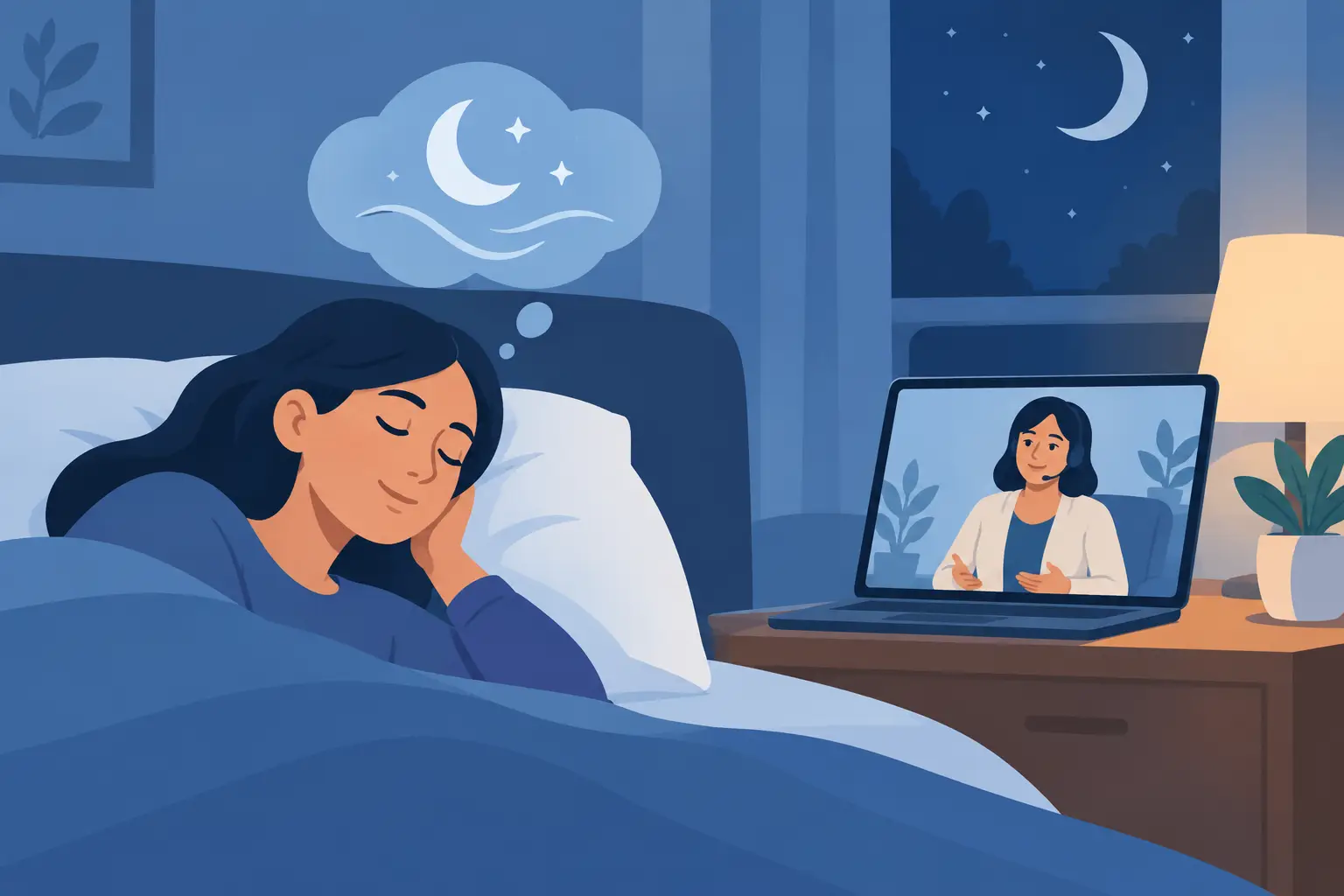
The hardest part of sleep anxiety is often the moment your head hits the pillow. Your body is tired, but your thoughts start reviewing tomorrow’s schedule, last week’s conversation, or every possible thing that could go wrong. If you are looking for the best virtual help for sleep anxiety, the goal is not simply to get more sleep tonight. It is to understand what is keeping your nervous system on alert and build a treatment plan that fits your real life.
Sleep problems and anxiety often feed each other. A few rough nights can leave you more anxious during the day. Then, the worry of another sleepless night can make it even harder to settle down. Online mental health care can make support feel more accessible when leaving home, finding an appointment time, or discussing your symptoms face-to-face feels like one more thing to manage.
Table of Contents
Why sleep anxiety needs more than sleep tips
A calming routine can help, but sleep anxiety is not always solved by a white-noise app or a stricter bedtime. For some people, the issue is racing thoughts. For others, it is panic symptoms, chronic stress, depression, a major life change, or a schedule that makes consistent sleep difficult. You may also start associating your bed with frustration, clock-watching, and pressure to fall asleep quickly.
That is why effective care starts with the full picture. A licensed provider can ask about when your symptoms began, how often they occur, what your days and nights look like, and whether other mental or physical health factors could be involved. This creates room for treatment that addresses the cause of the distress, not just the clock.
Virtual care is especially useful when anxiety is making ordinary tasks feel harder. Instead of arranging transportation, sitting in a waiting room, and trying to fit an appointment around work or family responsibilities, you can discuss your concerns from a private space at home. That convenience does not replace clinical judgment. It gives you a more practical way to access it.
What the best virtual help for sleep anxiety includes
The best virtual support is not a one-size-fits-all sleep prescription. It combines a thoughtful evaluation, clear next steps, and ongoing access to guidance when symptoms change. You should leave the process knowing what your provider is treating, why a particular approach may help, and what to do if it does not feel like the right fit.
A personalized clinical assessment
A quality online visit should make space for details. Your provider may ask whether you have trouble falling asleep, wake up repeatedly, wake too early, experience nightmares, or feel exhausted despite spending enough time in bed. They may also ask about caffeine, alcohol, medications, mood changes, stressful events, and symptoms such as a racing heart or shortness of breath.
This assessment matters because sleep disruption can have different drivers. Occasional sleeplessness during a difficult week may call for a different approach than anxiety that has been building for months. If symptoms point to a concern that needs in-person testing or a higher level of care, a responsible provider should tell you that directly.
Elevate Your Health for Just $29.99/Month
Join the Precision Wellness Subscription at My Healing 365 and get discounted services, priority coaching access, virtual care, and exclusive wellness resources to support your physical, emotional, and hormonal health.
Join for $29.99/MonthTreatment built around your symptoms
For many people, treatment includes practical behavioral strategies alongside mental health support. A provider may help you create a more predictable wind-down routine, adjust habits that are reinforcing nighttime worry, and use techniques that reduce the pressure to force sleep. The right plan should feel manageable, not like another demanding checklist.
Therapy-informed tools can also help you respond differently to anxious thoughts. That might mean noticing a fear without arguing with it at 2 a.m., setting aside a brief worry period earlier in the evening, or learning skills to calm physical stress responses. These strategies take practice, but they can help break the pattern of fearing bedtime itself.
When clinically appropriate, a licensed medical provider may also discuss medication options. Medication is not the right answer for everyone, and it should not be treated as a shortcut around a careful evaluation. It can, however, be part of a broader plan for people whose anxiety or mood symptoms are significantly affecting sleep and daily functioning.
Ongoing communication, not a one-time answer
Sleep can change quickly. A plan that felt helpful at first may need adjustment after a stressful week, a medication change, or a shift in your routine. Look for virtual care that allows you to communicate with your provider between appointments and ask practical questions without starting over each time.
Ongoing messaging can be particularly valuable when you are unsure whether a symptom is improving, whether a side effect needs attention, or whether you need a follow-up visit. It also helps keep treatment focused on progress over time rather than a single difficult night.
How to choose virtual support you can trust
Convenience matters, but it should not be the only deciding factor. Start by confirming that you will work with a licensed provider who can assess anxiety and sleep-related concerns in your state. Clear information about the care process, privacy practices, costs, and follow-up options is a good sign that a service takes your treatment seriously.
It also helps to consider what kind of support you need right now. If you want to explore medication, choose a service with qualified prescribers and a clear process for monitoring treatment. If your sleep anxiety is closely tied to grief, a breakup, work burnout, or another major life event, look for care that recognizes emotional context instead of reducing your experience to a symptom score.
Be cautious of programs that promise instant sleep, guarantee results, or recommend medication without asking meaningful questions about your health history. Good mental health care is compassionate and efficient, but it is still careful. You deserve answers that are clear without being oversimplified.
For adults who want discreet, online access to licensed mental health care, My Healing 365 offers individualized treatment plans, provider messaging, and treatment guidance designed around your symptoms. Starting care online can remove common barriers while keeping professional oversight at the center of the experience.
When medication may be part of the conversation
If anxiety is keeping you awake night after night, medication may come up during your evaluation. The decision depends on your symptoms, medical history, current medications, personal preferences, and whether you are pregnant, breastfeeding, or managing other health conditions. A provider should explain potential benefits, possible side effects, and how follow-up will work before you decide.
Some medications are intended to address ongoing anxiety or depression, which may improve sleep as those symptoms become more manageable. Others may be considered for short-term sleep disruption in specific situations. The safest choice depends on the person, which is why it is important not to self-medicate with leftover prescriptions, alcohol, or over-the-counter sleep products without professional guidance.
Medication works best when it is paired with habits and coping skills that support long-term sleep. If your mind has learned to expect danger at bedtime, treating the anxiety behind that response can be just as meaningful as addressing the sleeplessness itself.
Know when to seek urgent help
Virtual care is a useful starting point for many non-emergency mental health concerns, but some situations require immediate support. Seek urgent help if you are thinking about harming yourself or someone else, feel unable to stay safe, are experiencing severe confusion, or have gone days with almost no sleep and feel increasingly agitated, impulsive, or disconnected from reality.
In the United States, call or text 988 for immediate mental health crisis support, call 911, or go to the nearest emergency room. You do not have to handle a crisis alone.
A better night of sleep may not happen all at once. But when you have a provider who listens, a plan that reflects your symptoms, and support that fits into your day, bedtime can start to feel less like a test you have to pass. Reaching out for care is a practical first step toward feeling calmer, steadier, and more rested.