• Twenty47HealthNews
  • Health & Wellness
  • Disclaimer
    • Terms of Use
    • Privacy Policy
    • DMCA Notice
  • Twenty47HealthNews
  • Health & Wellness
  • Disclaimer
    • Terms of Use
    • Privacy Policy
    • DMCA Notice
24/7 Health News
No Result
View All Result
Home Article

Beyond blame: The role of malfunctioning fat tissue in the disease of obesity

July 23, 2025
in Article
Beyond blame: The role of malfunctioning fat tissue in the disease of obesity

Many people who have struggled with their weight have been told to “eat less and move more.” Others have spent years juggling trendy diets, from keto to fasting, with minimal results. Despite their best efforts, what they often hear from physicians, friends, family and even strangers, is that they lack discipline. However, for many people with obesity, their bodies are fighting against them — a battle dictated by biological mechanisms beyond sheer willpower.

Millions struggle under the weight of societal blame for a condition rooted in complex metabolic science.

Obesity is a critical public health concern affecting millions worldwide. Yet, it is often oversimplified as an issue of personal choice. Canadian data highlights the staggering prevalence of obesity (26.6 per cent) and diabetes (8.1 per cent). For too long, societal attitudes have focused on blaming individuals for poor lifestyle choices, ignoring the deeper, multifaceted causes of the condition.


Read more: Stop asking me if I’ve tried keto: Why weight stigma is more than just being mean to fat people


The need to understand obesity beyond lifestyle changes is urgent — particularly through scientific inquiry into its genetic, environmental and physiological roots. It is beyond the simple equation of calories in versus calories out; this perspective only serves to create stigma by oversimplifying the science.

Malfunctioning fat tissue

The reality lies within the fat in our bodies. Body fat, particularly fat under the skin, known as subcutaneous adipose tissue (SAT), plays a crucial role in energy regulation and metabolic health. When fat accumulates, SAT malfunctions. This seemingly adds to excessive fat storage in organs like the liver and muscles, increasing the risk of diabetes and cardiovascular disease.

Through identifying these specific dysfunctions, researchers can work towards therapies that restore SAT function rather than simply reducing body weight.

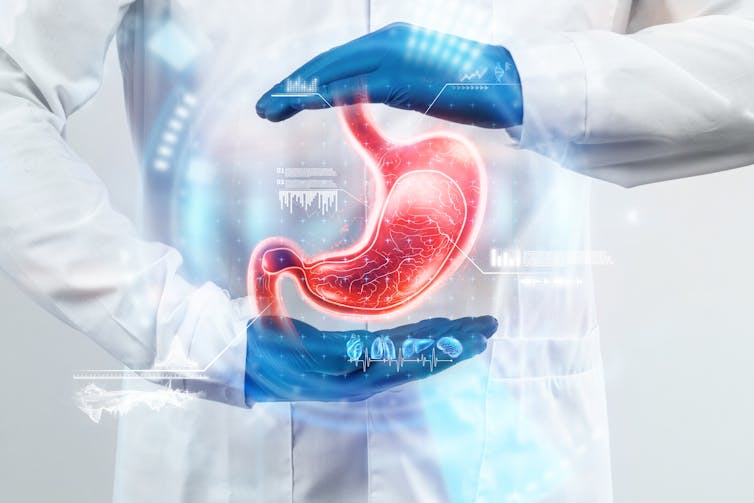
A person in a white coat out of frame wearing blue gloves framing a hologram of a stomach
Researchers are exploring the cellular and genetic aspects of these different fat depots, and their link with obesity and diabetes. (Shutterstock)

Research from our metabolism, nutrition and obesity (MON) lab at Concordia University focuses on understanding the adipose tissue (fat tissue) environment to uncover how these complex mechanisms and their interactions can lead to the development of diabetes and cardiovascular diseases. The goal is to eventually use our discoveries to provide more effective treatment approaches based on individual differences.

One aspect that can contribute to individual differences is where fat is stored in the body. SAT from the lower body, around the hips and thighs, seems to function differently from SAT around the belly in the upper body. We are exploring the cellular and genetic aspects of these different fat depots, and their link with obesity and diabetes.

Obesity is not just about extra weight — it’s about how the body stores and processes fat. Our research also shows that external factors may come into play in how SAT behaves. For example, different SAT depots behave differently depending on sex. Whether a person is male, or female makes a difference to how their fat tissue handles fat.

A closer look at fat tissue under a microscope shows that the tissue is made up of different types of cells including fat cells or adipocytes, and immune cells. Fat cells, or adipocytes, are not passive storage units; they regulate energy, produce hormones, and interact with other systems in the body. However, when these cells become dysfunctional, they can trigger inflammation, insulin resistance and other metabolic disturbances.

We have found that not only is sex a factor in fat cell characteristics of different depots but fat cell characteristics are also affected by whether obesity develops during childhood compared to adulthood. Immune cells are also important components of fat tissue that also play a role in inflammation and metabolic disturbances.

Shifting the conversation

Instead of blaming individuals, we need to shift the conversation towards understanding these pathophysiological mechanisms. By doing so, we can develop targeted treatments that address the root causes of obesity rather than relying on generic, often ineffective solutions.

A line of white paper cutout human figures and one larger red figure being inserted into the line
The need to shift our perspective on obesity is not solely a medical necessity but a societal one. (Shutterstock)

Obesity Canada reports that failing to treat obesity costs Canada $5.9 billion in health care and $21.7 billion in lost workplace productivity annually, with a $5.1 billion hit to government revenue from premature deaths and reduced workforce participation. Women with obesity face disproportionate impacts, earning four per cent less and being 5.3 per cent less likely to be employed than those with a healthy weight.

In 2023, obesity-related diseases placed over 10,000 seniors in long-term care, costing $639 million. Yet, fewer than 20 per cent of privately insured Canadians have access to approved treatments, and bariatric surgery wait times stretch up to eight years — reinforcing harmful stigma and delaying essential care.

The challenge is that our health-care system still leans toward tried and tested weight-loss approaches, such as medication, exercise and nutrition, often to the exclusion of how individual bodies respond biologically. Personalized medicine is a potential replacement. By matching treatment to each patient’s metabolic profile, we can move away from one-size-fits-all approaches and toward more effective interventions.

The need to shift our perspective on obesity is not solely a medical necessity but a societal one. The stigma attached to excess weight and obesity prevents people from receiving medical treatment, drives mental illness and perpetuates damaging myths. A more empathetic, science-based approach could help reshape public attitudes and clinical practices.

Millions of people have been misled by the myth that self-control can cure obesity. Seeing obesity as a chronic metabolic disease rather than a moral one is a way forward for effective remedies. The future of obesity treatment depends on research-driven, personalized interventions — ones that substitute blame with knowledge and stigma with support. Only then can we fully address this global public health crisis.


ShareTweetSharePin
Next Post
COVID-19 is the latest epidemic to show biomedical breakthroughs aren’t enough to eliminate a disease

COVID-19 is the latest epidemic to show biomedical breakthroughs aren’t enough to eliminate a disease

Most Read

What causes stuttering? A speech pathology researcher explains the science and the misconceptions around this speech disorder

What causes stuttering? A speech pathology researcher explains the science and the misconceptions around this speech disorder

December 15, 2022
morning back pain

Morning Again Ache Trigger Is Not the Mattress

October 11, 2021

Why Circadian Rhythms Matter for Your Health

July 30, 2024
lower back pain relief exercises

5 decrease again ache aid workouts

October 11, 2021

4 steps to building a healthier relationship with your phone

January 28, 2025
bleeding in gum

When The Bleeding in gum Is Severe ?

October 11, 2021
3 years after legalization, we have shockingly little information about how it changed cannabis use and health harms

3 years after legalization, we have shockingly little information about how it changed cannabis use and health harms

October 15, 2021
Nasal vaccines promise to stop the COVID-19 virus before it gets to the lungs – an immunologist explains how they work

Nasal vaccines promise to stop the COVID-19 virus before it gets to the lungs – an immunologist explains how they work

December 14, 2022
Good Night Sleep

6 Causes of Good Evening Sleep

October 11, 2021
Kick up your heels – ballroom dancing offers benefits to the aging brain and could help stave off dementia

Kick up your heels – ballroom dancing offers benefits to the aging brain and could help stave off dementia

January 3, 2023
Biden is getting prostate cancer treatment, but that’s not the best choice for all men − a cancer researcher describes how she helped her father decide

Biden is getting prostate cancer treatment, but that’s not the best choice for all men − a cancer researcher describes how she helped her father decide

May 20, 2025

COVID vaccines: how one can pace up rollout in poorer international locations

October 5, 2021
Ten small changes you can make today to prevent weight gain

Ten small changes you can make today to prevent weight gain

October 12, 2021

Maximize Your Performance – Sync with Your Circadian Rhythms

August 9, 2024
Support and collaboration with health-care providers can help people make health decisions

Support and collaboration with health-care providers can help people make health decisions

December 16, 2021
Greece to make COVID vaccines mandatory for over-60s, but do vaccine mandates work?

Greece to make COVID vaccines mandatory for over-60s, but do vaccine mandates work?

December 1, 2021
Five ways to avoid pain and injury when starting a new exercise regime

Five ways to avoid pain and injury when starting a new exercise regime

December 30, 2022

Multiple sclerosis: the link with earlier infection just got stronger – new study

October 12, 2021

This Simple Hygiene Habit Could Cut Your Risk of Stroke, New Research Reveals

February 1, 2025
woman covered with white blanket

Exploring the Impact of Sleep Patterns on Mental Health

August 4, 2024
News of war can impact your mental health — here’s how to cope

Binge-eating disorder is more common than many realise, yet it’s rarely discussed – here’s what you need to know

December 2, 2022
Nurses’ attitudes toward COVID-19 vaccination for their children are highly influenced by partisanship, a new study finds

Nurses’ attitudes toward COVID-19 vaccination for their children are highly influenced by partisanship, a new study finds

December 2, 2022
Why are some people faster than others? 2 exercise scientists explain the secrets of running speed

Why are some people faster than others? 2 exercise scientists explain the secrets of running speed

April 29, 2024
GPs don’t give useful weight-loss advice – new study

GPs don’t give useful weight-loss advice – new study

December 16, 2022
Four ways to avoid gaining weight over the festive period – but also why you shouldn’t fret about it too much

Four ways to avoid gaining weight over the festive period – but also why you shouldn’t fret about it too much

December 22, 2022
Backlash to transgender health care isn’t new − but the faulty science used to justify it has changed to meet the times

Backlash to transgender health care isn’t new − but the faulty science used to justify it has changed to meet the times

January 30, 2024
Nutrition advice is rife with misinformation − a medical education specialist explains how to tell valid health information from pseudoscience

Nutrition advice is rife with misinformation − a medical education specialist explains how to tell valid health information from pseudoscience

January 28, 2025
How hot is too hot for the human body? Our lab found heat + humidity gets dangerous faster than many people realize

How hot is too hot for the human body? Our lab found heat + humidity gets dangerous faster than many people realize

July 6, 2022

🧬 How Your DNA Affects Exercise: The Science of Personalized Fitness

May 21, 2025
FDA limits access to COVID-19 vaccine to older adults and other high-risk groups – a public health expert explains the new rules

FDA limits access to COVID-19 vaccine to older adults and other high-risk groups – a public health expert explains the new rules

May 21, 2025
  • Twenty47HealthNews
  • Health & Wellness
  • Disclaimer

© 2020 DAILY HEALTH NEWS

  • Twenty47HealthNews
  • Health & Wellness
  • Disclaimer
    • Terms of Use
    • Privacy Policy
    • DMCA Notice

© 2020 DAILY HEALTH NEWS








