• Twenty47HealthNews
  • Health & Wellness
  • Disclaimer
    • Terms of Use
    • Privacy Policy
    • DMCA Notice
  • Twenty47HealthNews
  • Health & Wellness
  • Disclaimer
    • Terms of Use
    • Privacy Policy
    • DMCA Notice
24/7 Health News
No Result
View All Result
Home Article

Colorado ranks among the highest states in the country for flu – an emergency room physician describes why the 2025-26 flu season is hitting hard

January 13, 2026
in Article
Colorado ranks among the highest states in the country for flu – an emergency room physician describes why the 2025-26 flu season is hitting hard

Colorado is in the midst of a record-breaking flu season. In the week ending Dec. 27, 2025, 831 people were hospitalized with influenza – the most since the state started tracking flu cases two decades ago. Hospitalizations eased the following week to 737 but still remain higher than prior years.

Colorado is among the top five states with the most flu activity in the country, with doctor’s visits for flu-like illness at a 30-year record high, according to the Centers for Disease Control and Prevention’s weekly influenza surveillance report.

I’m an emergency medicine and critical care physician at the University of Colorado. In my 18 years of practicing clinical medicine, this year is one of the worst I have seen. Our emergency department hit a record number of single-day total visits over the holidays, and visit volumes have stayed high. Flu is likely contributing to this trend.

While there is always a season where respiratory viruses hit hard, this year influenza is making patients miserable and wreaking havoc on both the state and national health care system.

Table of Contents

  • How does this year’s ‘super flu’ differ from other flu seasons?
  • Are any age groups being hit harder than others?
  • Are you still encouraging people to get the flu shot if they haven’t yet?
  • When should you consider going to an emergency room?
  • Is it important to get tested for the sake of knowing what you have?

How does this year’s ‘super flu’ differ from other flu seasons?

This season is especially rough because of the volume of people seeking emergency care. This flu came on fast and seems to be very contagious, and its symptoms are more severe than other recent years’ flu strains.

Flu tends to cause fever, body aches and maybe a cough. But this so-called super flu has also caused vomiting and diarrhea, which has made people feel much worse than isolated respiratory symptoms alone. When people are feeling worse, they seek emergency care, which is part of why our emergency department is seeing so many people.

In past flu seasons, which typically run from October through February, emergency rooms were full because they were facing multiple outbreaks, such as the 2022 “tripledemic” of COVID-19, flu and RSV.

But this 2025-26 flu season, we’re seeing high emergency department visits specifically from the flu. The first group of patients we’re seeing are healthy people who are feeling worse with this flu, which comes with nausea, vomiting and diarrhea, and come to the emergency department looking for symptomatic relief.

The second group are those with severe manifestations of the flu or who have underlying comorbidities such as asthma or heart disease that can be exacerbated by influenza. This is a population that may require oxygen, or they’re a transplant patient and they’re requiring hospitalization.

This double whammy of people feeling really miserable from their symptoms plus people with comorbidities experiencing complications is when you really see a strain on the health care system.

[embedded content]
The CDC ranks Colorado’s flu activity among the highest in the U.S., along with Louisiana, New Jersey, New York and South Carolina.

Are any age groups being hit harder than others?

The U.S. is seeing the highest number of visits to emergency departments in children ages 5 to 17.

Kids seem to be having milder cases than adults, which is typical for some of these viruses. But there have been 17 pediatric deaths from influenza across the U.S., with eight in the week ending January 3. That number of pediatric deaths at this point in the season is not typical.

Young people in their 20s are feeling pretty bad from this year’s flu, but we’re not seeing a lot of complications or hospitalizations in this group across the U.S. and in emergency departments in Colorado.

The main group we’re seeing are people who have a medical problem or underlying conditions, such as asthma, as well as diabetes, obesity, heart disease and those who are immune-compromised. They get the flu, and then it leads to kind of a cascade, or a worsening of their underlying medical problems. This is different from what we saw with COVID-19, where healthy people got very, very sick from COVID-19 itself.

The older you get, the more likely you are to experience complications, such as needing oxygen, which typically requires hospitalization.

Are you still encouraging people to get the flu shot if they haven’t yet?

Yes, you should still consider getting your flu shot, especially if you have medical problems.

Getting an annual, updated flu shot helps with severity of diseases, even if it doesn’t provide total protection. Especially if you have underlying conditions, it’s important to do everything you can to decrease symptom severity, duration and risk of hospitalization.
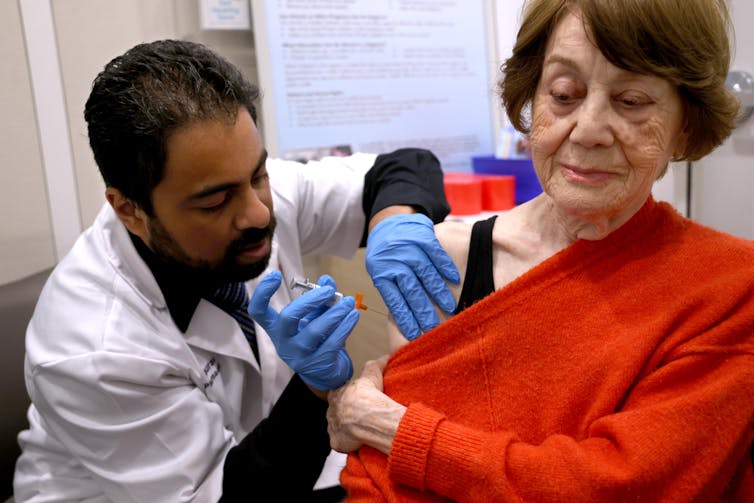
An older woman in a red sweater is getting a shot in her arm by a man in a doctor's coat with blue gloves on.
Getting the flu shot reduces the risk of severe illness and hospitalization, especially for people who are older or have other medical conditions.
Genaro Molina/Getty Images

When should you consider going to an emergency room?

Anytime breathing becomes difficult, or you experience severe chest pain or headaches that are abnormal, that’s something that we want you to seek medical care for right away. And of course, if somebody’s worried about a symptom, we’re here 365 days a year, and we’re happy to help.

If you are feeling bad – such as a mild headache, body aches, fever, sometimes some cough and congestion, and as I mentioned with this flu, potentially vomiting and diarrhea – that is very normal.

If it’s flu, COVID-19 or RSV in a healthy, mildly symptomatic patient, it doesn’t really matter what they have, because there’s not a specific treatment. There’s not anything that we can do that’s going to make them better, other than “tincture of time,” meaning lots of rest.

If you have underlying medical problems, such as diabetes, lung problems or are immune-compromised, and you are experiencing severe symptoms, you should at the very least see your primary care doctor if not the emergency department.

Is it important to get tested for the sake of knowing what you have?

A lot of patients want to know what virus they have, but if you’re young and healthy, there’s not really a need for testing other than surveillance.

Colorado’s infectious disease trackers say wastewater surveillance is the No. 1 way to figure out what infectious diseases are in the community. We can’t get a comprehensive sample through hospitals and clinics, because there are so many people who are home, don’t get tested and do not seek health care.
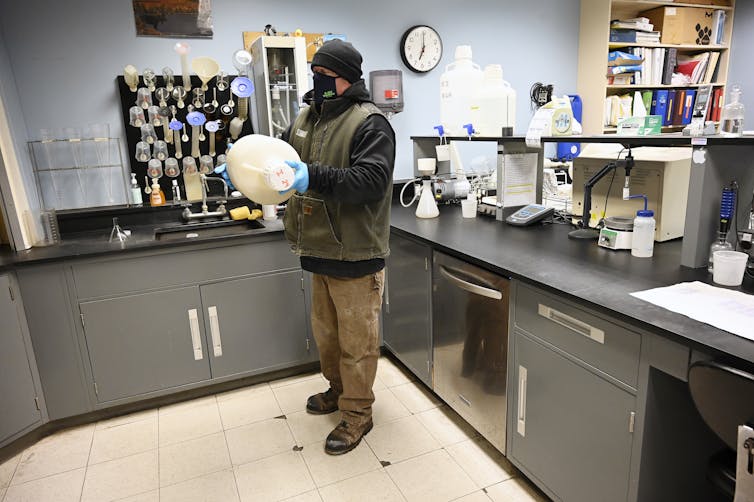
A man wearing a mask and gloves shakes a large jug in a room with lab equipment.
In Colorado and other states, wastewater is tested for infectious pathogens, including influenza, COVID-19 and RSV. This testing indicates the prevalence of a virus in a given community.
Portland Press Herald/Getty Images

Right now, wastewater samples in Colorado are testing extraordinarily high for the flu and pretty low for RSV and COVID-19. Wastewater is a very reliable test because everybody produces wastewater.

In addition, it’s important for the overall health care system that laboratory testing be used judiciously. Testing does help us understand what’s in the community. But from a hospital and emergency department lens, the more tests we send to the lab that have to be run, the more testing services for other illnesses get backed up. It also adds a burden to nursing and other clinical staff, as well as costs for the patient and hospital.

But if a patient is sick with manageable symptoms from a virus, it’s the same standard advice: Stay at home, wash your hands and consider a mask if you have to go out in public.


ShareTweetSharePin

Most Read

What causes stuttering? A speech pathology researcher explains the science and the misconceptions around this speech disorder

What causes stuttering? A speech pathology researcher explains the science and the misconceptions around this speech disorder

December 15, 2022
morning back pain

Morning Again Ache Trigger Is Not the Mattress

October 11, 2021

Why Circadian Rhythms Matter for Your Health

July 30, 2024

4 steps to building a healthier relationship with your phone

January 28, 2025
lower back pain relief exercises

5 decrease again ache aid workouts

October 11, 2021
Nasal vaccines promise to stop the COVID-19 virus before it gets to the lungs – an immunologist explains how they work

Nasal vaccines promise to stop the COVID-19 virus before it gets to the lungs – an immunologist explains how they work

December 14, 2022
3 years after legalization, we have shockingly little information about how it changed cannabis use and health harms

3 years after legalization, we have shockingly little information about how it changed cannabis use and health harms

October 15, 2021
bleeding in gum

When The Bleeding in gum Is Severe ?

October 11, 2021
Good Night Sleep

6 Causes of Good Evening Sleep

October 11, 2021
Kick up your heels – ballroom dancing offers benefits to the aging brain and could help stave off dementia

Kick up your heels – ballroom dancing offers benefits to the aging brain and could help stave off dementia

January 3, 2023
Biden is getting prostate cancer treatment, but that’s not the best choice for all men − a cancer researcher describes how she helped her father decide

Biden is getting prostate cancer treatment, but that’s not the best choice for all men − a cancer researcher describes how she helped her father decide

May 20, 2025
Ten small changes you can make today to prevent weight gain

Ten small changes you can make today to prevent weight gain

October 12, 2021

COVID vaccines: how one can pace up rollout in poorer international locations

October 5, 2021

Multiple sclerosis: the link with earlier infection just got stronger – new study

October 12, 2021
Five ways to avoid pain and injury when starting a new exercise regime

Five ways to avoid pain and injury when starting a new exercise regime

December 30, 2022
Support and collaboration with health-care providers can help people make health decisions

Support and collaboration with health-care providers can help people make health decisions

December 16, 2021
Greece to make COVID vaccines mandatory for over-60s, but do vaccine mandates work?

Greece to make COVID vaccines mandatory for over-60s, but do vaccine mandates work?

December 1, 2021

This Simple Hygiene Habit Could Cut Your Risk of Stroke, New Research Reveals

February 1, 2025
woman covered with white blanket

Exploring the Impact of Sleep Patterns on Mental Health

August 4, 2024

Maximize Your Performance – Sync with Your Circadian Rhythms

August 9, 2024
Backlash to transgender health care isn’t new − but the faulty science used to justify it has changed to meet the times

Backlash to transgender health care isn’t new − but the faulty science used to justify it has changed to meet the times

January 30, 2024
How to protect your well-being, survive the stress of the holiday season and still keep your cheer

How to protect your well-being, survive the stress of the holiday season and still keep your cheer

December 21, 2025
News of war can impact your mental health — here’s how to cope

Binge-eating disorder is more common than many realise, yet it’s rarely discussed – here’s what you need to know

December 2, 2022
Nurses’ attitudes toward COVID-19 vaccination for their children are highly influenced by partisanship, a new study finds

Nurses’ attitudes toward COVID-19 vaccination for their children are highly influenced by partisanship, a new study finds

December 2, 2022
Nutrition advice is rife with misinformation − a medical education specialist explains how to tell valid health information from pseudoscience

Nutrition advice is rife with misinformation − a medical education specialist explains how to tell valid health information from pseudoscience

January 28, 2025
Four ways to avoid gaining weight over the festive period – but also why you shouldn’t fret about it too much

Four ways to avoid gaining weight over the festive period – but also why you shouldn’t fret about it too much

December 22, 2022
Why are some people faster than others? 2 exercise scientists explain the secrets of running speed

Why are some people faster than others? 2 exercise scientists explain the secrets of running speed

April 29, 2024
As viral infections skyrocket, masks are still a tried-and-true way to help keep yourself and others safe

As viral infections skyrocket, masks are still a tried-and-true way to help keep yourself and others safe

December 14, 2022
How regulatory agencies, not the courts, are imposing COVID-19 vaccine mandates

How regulatory agencies, not the courts, are imposing COVID-19 vaccine mandates

October 24, 2021
Heart disease risk from saturated fats may depend on what foods they come from – new research

Heart disease risk from saturated fats may depend on what foods they come from – new research

November 29, 2021
  • Twenty47HealthNews
  • Health & Wellness
  • Disclaimer

© 2020 DAILY HEALTH NEWS

  • Twenty47HealthNews
  • Health & Wellness
  • Disclaimer
    • Terms of Use
    • Privacy Policy
    • DMCA Notice

© 2020 DAILY HEALTH NEWS










