• Twenty47HealthNews
  • Health & Wellness
  • Disclaimer
    • Terms of Use
    • Privacy Policy
    • DMCA Notice
  • Twenty47HealthNews
  • Health & Wellness
  • Disclaimer
    • Terms of Use
    • Privacy Policy
    • DMCA Notice
24/7 Health News
No Result
View All Result
Home Article

For women who live on the margins, health care is often out of reach. Here’s how we can build a bridge to access

February 10, 2026
in Article
For women who live on the margins, health care is often out of reach. Here’s how we can build a bridge to access

Most Canadians either know personally or are aware that getting an appointment with a family doctor can be difficult. Across the country, it’s estimated that 6.5 million people do not have a family doctor or nurse practitioner they see regularly.

For women who live on the margins — those experiencing poverty, racism, trauma, care-giving stress or unstable housing — the barriers to care are even greater.

From adolescence through to mid-life, such women often put their own health needs last. Even if they have a family doctor, the structural realities of care — uneven geographical access, long waits, limited appointment slots and rigid scheduling systems — are difficult for most people to navigate. For women with limited resources of income, time and agency, the barriers to access are, too often, insurmountable.

Life satisfaction is lower among women in Canada than men, and serious conditions such as cardiovascular disease, cancer or reproductive health problems are often diagnosed late. For many women, cultural norms may make it difficult to raise issues such as sexual health, contraception or depression within a 15-minute medical visit, especially if they lack language or gender concordance with their family doctor.

The World Health Organization (WHO) estimates that primary care can deliver more than 90 per cent of essential health services, but only if people can access it. For women who live on the margins, gaining this access is difficult.

Table of Contents

  • Real-world needs not met
  • A bridge to access: Learning from global innovation
  • Implementation is key

Real-world needs not met

In 2023, the federal government’s agreement with the provinces committed to expanding access to family health services, especially in rural and remote areas, and to supporting health workers while reducing backlogs.

Under this plan, Ontario was designated receive $2.5 billion between 2023 and 2026 to strengthen family health services, including $90 million specifically to expand inter-professional primary care teams in high-need communities and to help existing teams manage rising costs.

Ontario’s Primary Care Action Plan has committed to incentives and investments to improve rates of attachment to team-based primary care. But it’s not clear if these can overcome the barriers for marginalized women.

There are other forces that impact the availability of access to family physicians. Studies from the United States indicate that if primary care physicians followed every preventive and chronic-care guideline, they would need 27 hours a day — more than half of that devoted to prevention alone.

The system as designed may not be able to meet the real-world needs of patients, especially those with complex social and health circumstances.

A bridge to access: Learning from global innovation

Women on the margins often experience stigma, mistrust and have a scarcity mindset, and are unable to prioritize their own health needs. As a result, they end up in walk-in clinics or emergency departments at a late stage of serious illnesses. Our current system — stretched and time-deficient — is not optimized for preventive, trust-based, community-embedded care.

Exterior shot of a hospital emergency department entrance
Women on the margins often experience stigma, mistrust and have a scarcity mindset, placing their health needs last. As a result, they are at risk of being diagnosed at a late stage with serious illnesses.
THE CANADIAN PRESS/Jeff McIntosh

As physicians and population health researchers, we propose importing and adapting a proven innovation from the Global South — the Community Health Worker model, first endorsed by WHO and UNICEF in the 1978 Alma-Ata Declaration.

A community health worker (CHW) is typically a trusted member of the local community who understands the challenges of those who are sick or socially excluded. With targeted training, CHWs can conduct basic health screenings for conditions such as high blood pressure, diabetes, breast and cervical cancer, and reproductive and mental health problems.

Importantly, CHWs act as bridges to primary care physicians, meaning when a woman’s screening reveals a concern, the CHW can prioritize her for a physician review. This approach builds trust, continuity and access — creating the “first mile” of connection to the health system for women who might otherwise remain invisible.

Unlike nurses, CHWs do not require professional credentials, though many have college or allied-health backgrounds such as a personal support worker or occupational therapy assistant. Their greatest assets are trust, cultural competence and mobility — the ability to meet marginalized women where they are at.
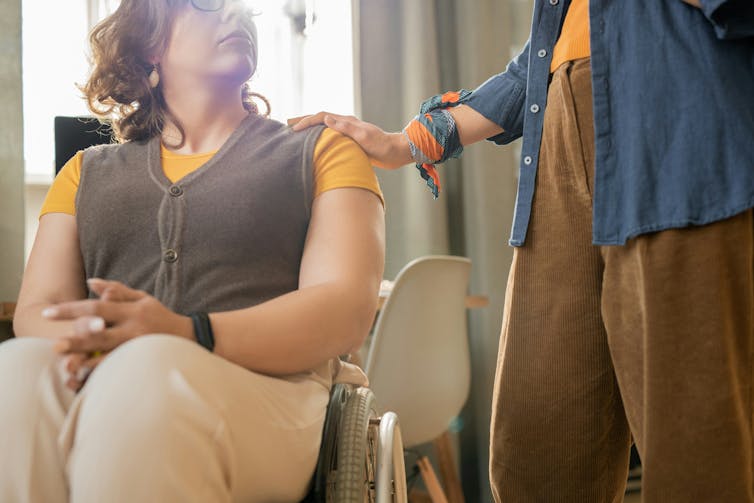
Out-of-focus shot of a standing woman placing her hand on a seated woman's shoulder
If implemented well, CHWs have the potential to strengthen first-contact accessibility, foster trusting relationships, and deliver person-centred, and integrated care.
(Unsplash+/Getty Images)

Implementation is key

The CHW model has the potential to deliver community-based, first-contact access — what we call “A Bridge to Access.” These workers can provide the first mile of care, ensuring that prevention, screening and support reach the women who need it most.

While CHWs can be equipped with digital or artificial intelligence (AI) enabled screening tools to optimize the connection with care, technology should complement — not replace — human connection. Digital tools can support communication and record-keeping, but relationships and trust remain the foundation of effective care.

Money alone cannot fix Canada’s patchwork health-care system of today. Funding is necessary, but innovation is essential. The CHW model — an evidence-based success in countries from India to Indonesia — represents an opportunity for reverse innovation: bringing proven global strategies from the Global South to Canada.

If implemented well, CHWs have the potential to strengthen first-contact accessibility, foster trusting relationships and deliver person-centred, integrated care. For women on the margins, this could mean earlier diagnosis, greater continuity and restored faith in a system they currently cannot access easily.

Testing and evaluating the CHW model in Canada offers a path to close the health-equity gap for women and other underserved populations. If successful, it could be scaled across provinces, contributing to a stronger, more inclusive health-care system — one that delivers on prevention, screening and primary care for those most in need.


ShareTweetSharePin
Next Post
Exercise can be ‘frontline treatment’ for mild depression, researchers say

Exercise can be ‘frontline treatment’ for mild depression, researchers say

Most Read

What causes stuttering? A speech pathology researcher explains the science and the misconceptions around this speech disorder

What causes stuttering? A speech pathology researcher explains the science and the misconceptions around this speech disorder

December 15, 2022
morning back pain

Morning Again Ache Trigger Is Not the Mattress

October 11, 2021

Why Circadian Rhythms Matter for Your Health

July 30, 2024

4 steps to building a healthier relationship with your phone

January 28, 2025
lower back pain relief exercises

5 decrease again ache aid workouts

October 11, 2021
Nasal vaccines promise to stop the COVID-19 virus before it gets to the lungs – an immunologist explains how they work

Nasal vaccines promise to stop the COVID-19 virus before it gets to the lungs – an immunologist explains how they work

December 14, 2022
3 years after legalization, we have shockingly little information about how it changed cannabis use and health harms

3 years after legalization, we have shockingly little information about how it changed cannabis use and health harms

October 15, 2021
bleeding in gum

When The Bleeding in gum Is Severe ?

October 11, 2021
Good Night Sleep

6 Causes of Good Evening Sleep

October 11, 2021
Kick up your heels – ballroom dancing offers benefits to the aging brain and could help stave off dementia

Kick up your heels – ballroom dancing offers benefits to the aging brain and could help stave off dementia

January 3, 2023
Biden is getting prostate cancer treatment, but that’s not the best choice for all men − a cancer researcher describes how she helped her father decide

Biden is getting prostate cancer treatment, but that’s not the best choice for all men − a cancer researcher describes how she helped her father decide

May 20, 2025
Ten small changes you can make today to prevent weight gain

Ten small changes you can make today to prevent weight gain

October 12, 2021

COVID vaccines: how one can pace up rollout in poorer international locations

October 5, 2021
Support and collaboration with health-care providers can help people make health decisions

Support and collaboration with health-care providers can help people make health decisions

December 16, 2021

Maximize Your Performance – Sync with Your Circadian Rhythms

August 9, 2024

This Simple Hygiene Habit Could Cut Your Risk of Stroke, New Research Reveals

February 1, 2025
Five ways to avoid pain and injury when starting a new exercise regime

Five ways to avoid pain and injury when starting a new exercise regime

December 30, 2022
woman covered with white blanket

Exploring the Impact of Sleep Patterns on Mental Health

August 4, 2024
Greece to make COVID vaccines mandatory for over-60s, but do vaccine mandates work?

Greece to make COVID vaccines mandatory for over-60s, but do vaccine mandates work?

December 1, 2021

Multiple sclerosis: the link with earlier infection just got stronger – new study

October 12, 2021

🧬 How Your DNA Affects Exercise: The Science of Personalized Fitness

May 21, 2025
Nutrition advice is rife with misinformation − a medical education specialist explains how to tell valid health information from pseudoscience

Nutrition advice is rife with misinformation − a medical education specialist explains how to tell valid health information from pseudoscience

January 28, 2025
News of war can impact your mental health — here’s how to cope

Binge-eating disorder is more common than many realise, yet it’s rarely discussed – here’s what you need to know

December 2, 2022
How regulatory agencies, not the courts, are imposing COVID-19 vaccine mandates

How regulatory agencies, not the courts, are imposing COVID-19 vaccine mandates

October 24, 2021
As viral infections skyrocket, masks are still a tried-and-true way to help keep yourself and others safe

As viral infections skyrocket, masks are still a tried-and-true way to help keep yourself and others safe

December 14, 2022
GPs don’t give useful weight-loss advice – new study

GPs don’t give useful weight-loss advice – new study

December 16, 2022
Four ways to avoid gaining weight over the festive period – but also why you shouldn’t fret about it too much

Four ways to avoid gaining weight over the festive period – but also why you shouldn’t fret about it too much

December 22, 2022
How hot is too hot for the human body? Our lab found heat + humidity gets dangerous faster than many people realize

How hot is too hot for the human body? Our lab found heat + humidity gets dangerous faster than many people realize

July 6, 2022
Heart disease risk from saturated fats may depend on what foods they come from – new research

Heart disease risk from saturated fats may depend on what foods they come from – new research

November 29, 2021
FDA limits access to COVID-19 vaccine to older adults and other high-risk groups – a public health expert explains the new rules

FDA limits access to COVID-19 vaccine to older adults and other high-risk groups – a public health expert explains the new rules

May 21, 2025
  • Twenty47HealthNews
  • Health & Wellness
  • Disclaimer

© 2020 DAILY HEALTH NEWS

  • Twenty47HealthNews
  • Health & Wellness
  • Disclaimer
    • Terms of Use
    • Privacy Policy
    • DMCA Notice

© 2020 DAILY HEALTH NEWS










