Medically Reviewed
Dr. Jose Rossello, MD, PhD, MHCM
Preventive Medicine & Public Health Specialist
Last Reviewed: April 6, 2026
A well-stocked kitchen makes healthy eating easier and less stressful throughout the week. When nutritious ingredients are ready to use, putting together balanced meals takes less time and planning. Having a well-stocked pantry[1] means fewer last-minute trips to the store and more options for quick dinners.
The key to a healthy kitchen is keeping a balance of fresh, frozen, and shelf-stable foods that work together to create complete meals. This includes proteins like beans and eggs, whole grains like oats and brown rice, plenty of fruits and vegetables, and flavor builders like spices and healthy oils.
This guide breaks down exactly what to stock in the pantry, fridge, and freezer to support better eating habits. It covers everything from basic staples to quick snacks and shows how to organize a kitchen that makes cooking balanced meals[2] simple and stress-free.
Table of Contents
Key Takeaways
- Stock core staples like beans, whole grains, frozen produce, and healthy fats to build balanced meals quickly
- Keep both shelf-stable and fresh items on hand to reduce waste and ensure meal flexibility
- Organize your kitchen with flavor builders and quick meal ingredients so healthy choices become the easiest choices
Creating the Foundation for a Healthy Kitchen
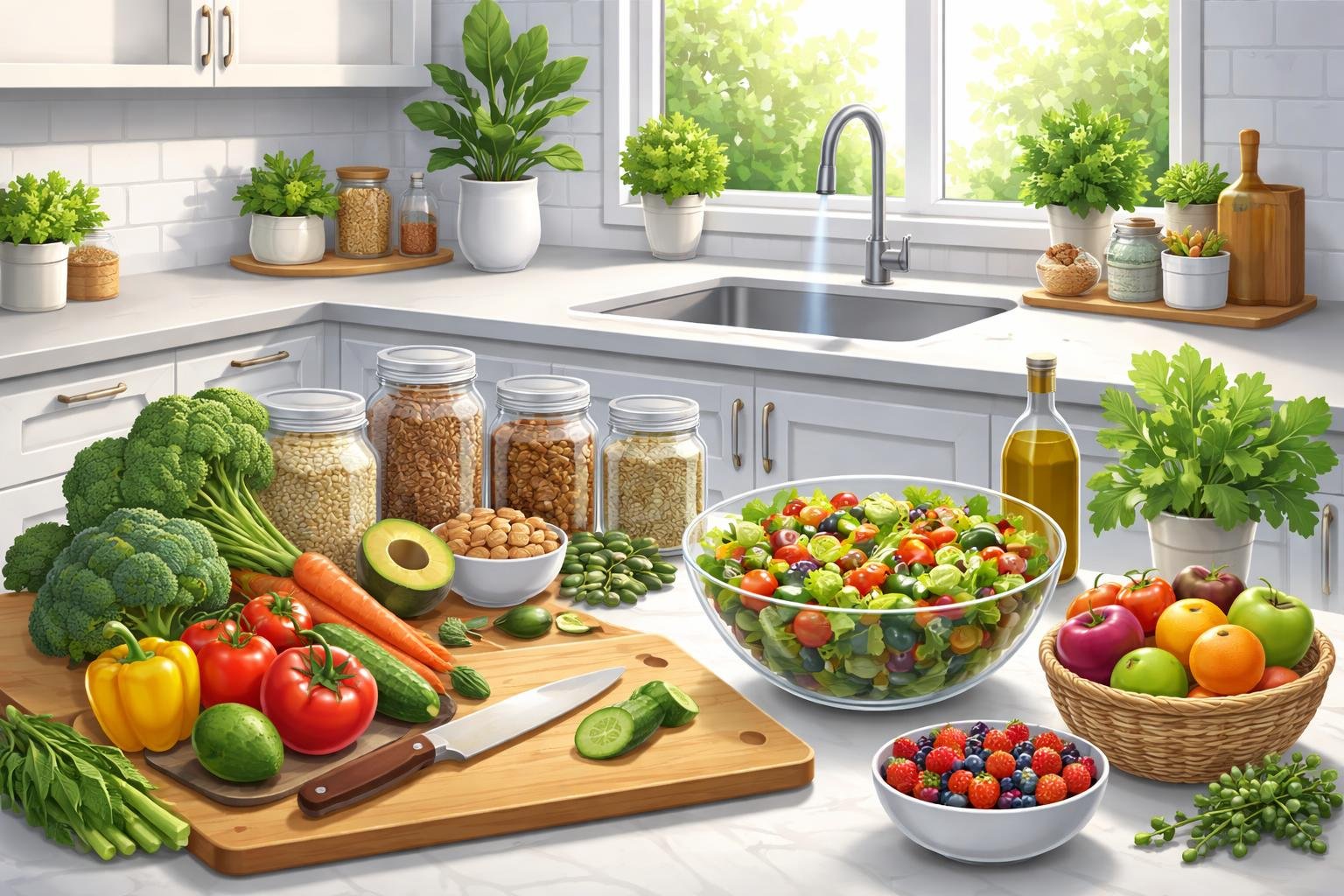
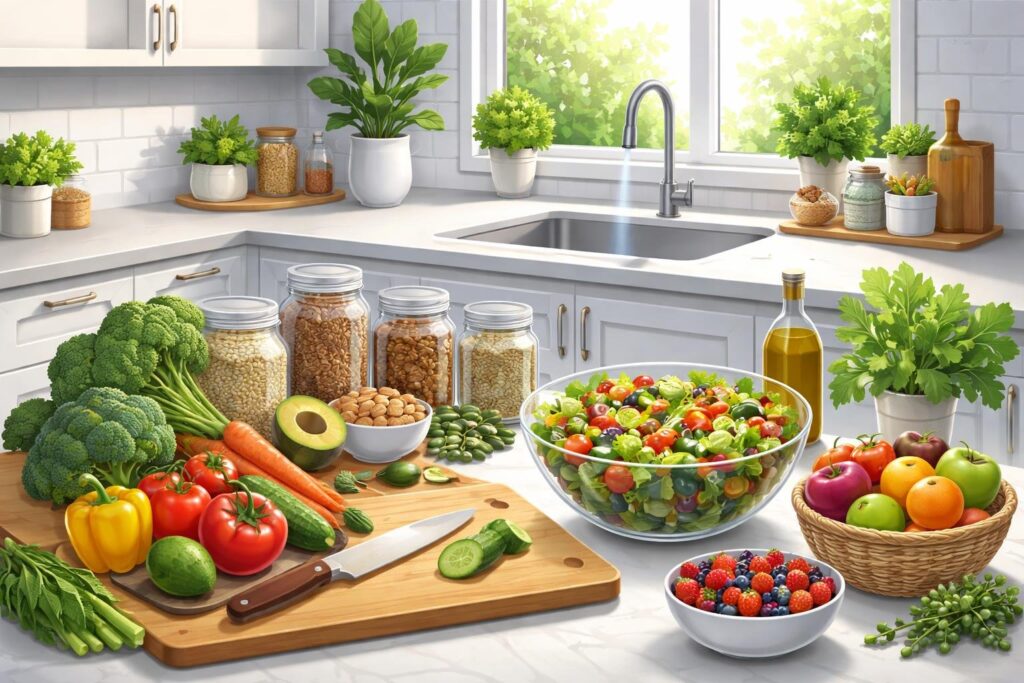
A healthy kitchen starts with understanding personal cooking patterns and clearing out foods that don’t support wellness goals. Taking stock of current pantry items and organizing the space makes meal preparation simpler and more efficient.
Assessing Your Kitchen Needs and Habits
The first step involves looking at current eating patterns and cooking frequency. Someone who cooks dinner five nights a week needs different staples than someone who meal preps on weekends.
Consider these key questions:
- How many meals are prepared at home each week?
- What recipes get made most often?
- Which ingredients consistently go to waste?
- Are there dietary restrictions or health goals to address?
Tracking meals for one week reveals actual habits versus intended ones. This honest assessment shows which staples get used regularly and which items sit untouched. People who rarely cook breakfast don’t need extensive morning ingredients taking up space.
The kitchen should reflect real lifestyle needs. A busy parent might prioritize quick-cooking grains and pre-cut frozen vegetables. Someone managing blood sugar might focus on high-fiber foods and lean proteins.
Decluttering and Pantry Purge
Removing expired and unhealthy items creates space for better choices. Start by checking expiration dates[2] on all shelf-stable foods, refrigerated items, and frozen goods.
Items to remove or donate:
- Expired canned goods and spices
- Highly processed snacks with long ingredient lists
- Foods with added sugars as the first three ingredients
- Partially hydrogenated oils and trans fats
- Foods that don’t align with current health goals
Unopened non-perishable items can go to local food banks. This prevents waste while helping others.
The purge also includes cleaning out the refrigerator to prevent cross-contamination between raw and cooked foods. Designate specific shelves for raw meats on the bottom and ready-to-eat items on upper shelves.
How to Take Inventory and Audit What You Have
A complete inventory prevents duplicate purchases and identifies gaps. Go through each storage area systematically with a notebook or phone.
List current items in these categories:
| Category | Check For |
|---|---|
| Proteins | Canned beans, lentils, nuts, eggs |
| Grains | Rice, oats, quinoa, whole-grain pasta |
| Oils & Fats | Olive oil, avocado oil, nut butters |
| Produce | Fresh, frozen, and canned options |
| Seasonings | Spices, herbs, vinegars, condiments |
When buying produce, those following the dirty dozen guidelines should note which fresh items they prefer organic. The audit reveals what’s already on hand versus what needs restocking.
Group similar items together during the inventory process. This organization makes it easier to see quantities at a glance. Someone might discover three half-empty bags of rice or multiple jars of the same spice.
The inventory also shows spending patterns. Tracking which shelf-stable items get used most helps focus future grocery budgets on foods that actually get eaten rather than discarded.
Building a Healthy Pantry
A strong pantry foundation includes shelf-stable proteins like canned beans and tuna, nutrient-dense whole grains such as quinoa and brown rice, and smart baking essentials that support everyday cooking needs.
Selecting Essential Pantry Staples
The right pantry staples form the backbone of quick, nutritious meals without requiring constant grocery store trips. A well-stocked pantry should balance proteins, grains, and flavor-building ingredients that work together across multiple recipes.
Essential items include canned goods, dried grains, cooking oils, and basic seasonings. These pantry essentials provide the flexibility to create balanced meals even when the refrigerator runs low on fresh ingredients.
Core pantry items to keep on hand:
- Cooking oils (olive oil, avocado oil)
- Vinegars (balsamic, apple cider, white)
- Canned tomatoes and tomato sauce
- Low-sodium broth (chicken, vegetable, beef)
- Salt, pepper, and dried herbs
- Garlic and onion (fresh or powdered)
Canned tomatoes and tomato sauce serve as the foundation for pasta dishes, soups, and stews. Broth adds depth to grains and makes a simple base for quick soups when combined with pantry proteins and frozen vegetables.
Shelf-Stable Proteins and Plant-Based Options
Shelf-stable proteins eliminate the pressure of using ingredients before they spoil while delivering essential nutrients. Canned beans and lentils provide fiber and plant-based protein[2] that support steady blood sugar and lasting fullness.
Black beans work well in tacos, burrito bowls, and as a side dish. Chickpeas blend into hummus, roast for crunchy snacks, or add substance to salads and grain bowls. Lentils cook quickly compared to dried beans and make hearty soups and stews.
Canned tuna offers an affordable protein source rich in omega-3 fatty acids. It needs no cooking and transforms into sandwiches, salads, or pasta dishes in minutes.
Protein pantry staples to stock:
| Protein Source | Uses | Shelf Life |
|---|---|---|
| Black beans | Tacos, soups, rice bowls | 2-5 years |
| Chickpeas | Salads, hummus, roasted snacks | 2-5 years |
| Lentils | Soups, curries, side dishes | 2-3 years |
| Canned tuna | Sandwiches, salads, casseroles | 3-5 years |
Beans and lentils cost less per serving than most animal proteins while delivering comparable protein content. They also contribute important minerals like iron and magnesium that support energy production.
Healthy Grains and Whole Grain Choices
Whole grains deliver sustained energy through complex carbohydrates and fiber that refined grains lack. Brown rice takes longer to cook than white rice but provides more nutrients and keeps people satisfied longer.
Quinoa cooks in just 15 minutes and contains all nine essential amino acids, making it a complete protein. This grain works as a breakfast porridge, salad base, or side dish that pairs with nearly any protein and vegetable combination.
Oats rank among the most versatile pantry items available. Rolled oats create traditional oatmeal, overnight oats, granola, and can even substitute for breadcrumbs in meatballs or meatloaf.
Whole grain options for the pantry:
- Brown rice (short-grain, long-grain, jasmine)
- Quinoa (white, red, or tri-color)
- Rolled oats (old-fashioned or quick-cooking)
- Whole wheat pasta (spaghetti, penne, rotini)
- Farro or barley
Pasta made from whole wheat flour contains more fiber than traditional pasta. Both spaghetti and penne shapes work for most recipes, from simple marinara dishes to baked casseroles with vegetables and proteins.
Smart Baking Essentials
Basic baking essentials allow for homemade breads, muffins, and treats without excessive processed ingredients. Whole wheat flour adds fiber and nutrients compared to all-purpose flour while still producing good results in most recipes.
Natural sweeteners like honey and maple syrup offer alternatives to refined sugar. These options contain trace minerals and antioxidants, though they should still be used in moderation like any sweetener.
Essential baking ingredients:
- Whole wheat flour or all-purpose flour
- Baking powder and baking soda
- Honey or maple syrup
- Sugar (white or coconut)
- Vanilla extract
- Chocolate chips or cocoa powder
Flour serves beyond baking—it thickens sauces, coats proteins before cooking, and creates simple flatbreads or pizza dough. A five-pound bag typically lasts several months when stored in an airtight container away from heat and moisture.
Sugar plays a role in balancing flavors in savory dishes like tomato sauce or salad dressings, not just desserts. Having both granulated sugar and a liquid sweetener like honey gives cooks flexibility across different recipes and preparation methods.
Fridge and Freezer Staples for Balance
Keeping the right foods cold ensures quick access to nutrient-dense ingredients that support balanced meals throughout the week. Fresh proteins, dairy alternatives, and frozen produce form the foundation of a well-stocked cold storage system.
Nutritious Fridge Essentials
Fresh eggs[2] provide versatile protein for breakfast scrambles, hard-boiled snacks, or baked goods. They last three to five weeks when stored properly in their original carton.
Greek yogurt delivers protein and probiotics that support digestive health. It works well as a breakfast base, smoothie ingredient, or substitute for sour cream in recipes.
Tofu offers plant-based protein that absorbs flavors from marinades and seasonings. Extra-firm varieties hold their shape for stir-fries, while silken tofu blends into smoothies and desserts.
Almond milk and other plant-based alternatives provide calcium-fortified options for those avoiding dairy. Most opened containers stay fresh for seven to ten days.
Leafy greens like spinach and kale pack vitamins A, C, and K into minimal calories. Spinach wilts easily into pasta dishes and omelets. Kale holds up better in salads and maintains texture when massaged with dressing.
Freezer-Friendly Healthy Foods
Frozen vegetables retain their nutrients because they’re frozen at peak ripeness. Broccoli, cauliflower, and mixed vegetable blends save prep time for weeknight meals.
Frozen fruit like berries maintains antioxidants and vitamin C for months. Strawberries, blueberries, and mixed berry bags blend into smoothies or thaw for oatmeal toppings.
A chest freezer[3] provides extra space for bulk purchases and batch-cooked meals. Standard upright freezers work well for smaller households.
Whole-grain bread freezes well and thaws quickly. Individual slices can be toasted directly from frozen.
Pre-cooked grains and beans stored in portion-sized containers offer quick meal bases. Cooked quinoa, brown rice, and black beans reheat in minutes.
Maximizing Fresh Produce Shelf Life
Storage Location Matters
| Produce Type | Best Storage | Expected Freshness |
|---|---|---|
| Berries | Refrigerator in original container | 3-5 days |
| Leafy greens | Crisper drawer in breathable bag | 5-7 days |
| Carrots | Refrigerator in water-filled container | 2-3 weeks |
| Tomatoes | Counter until ripe, then fridge | 5-7 days |
Leafy greens stay crisp longer when wrapped in paper towels inside a plastic bag. The towels absorb excess moisture that causes wilting.
Berries should stay unwashed until use. Washing introduces moisture that speeds up mold growth.
Ethylene-producing fruits like apples and bananas accelerate ripening in nearby produce. Keep them separate from leafy greens and berries.
Cut vegetables lose nutrients faster than whole ones. Prep only what gets used within two to three days.
Glass containers allow visual inspection of stored items and prevent forgotten foods from spoiling. Clear bins in the freezer help track what needs using first.
Healthy Fats, Oils, and Nutritious Condiments
Stocking the right fats, oils, and condiments transforms everyday cooking into nutritious meals. Quality oils provide essential fatty acids, while nuts and seeds deliver protein and minerals, and the right condiments add flavor without excess sodium or sugar.
Choosing Heart-Healthy Cooking Oils
Olive oil stands as one of the healthiest cooking oils[4] available, particularly extra virgin olive oil. It contains monounsaturated fats that support heart health and works well in salad dressings, marinades, and low to medium-heat cooking.
Avocado oil offers exceptional versatility[4] with its high smoke point, making it ideal for high-heat cooking methods like roasting and sautéing. Its neutral flavor won’t overpower dishes, and it delivers the same beneficial monounsaturated fats found in whole avocados.
Coconut oil serves specific purposes in the kitchen. While it contains saturated fat, it remains stable at room temperature and adds distinct flavor to baked goods and smoothies. For everyday cooking, liquid oils like olive and avocado oil should take priority over solid fats.
Canola oil works as an affordable option for high-temperature cooking. Its neutral taste and high smoke point make it suitable for baking and frying when needed.
Nuts, Seeds, and Nut Butters
Walnuts, almonds, and other nuts provide healthy fats along with plant-based protein. They make convenient snacks and add texture to salads, oatmeal, and baked goods. A quarter cup of almonds delivers about 6 grams of protein plus vitamin E and magnesium.
Chia seeds pack omega-3 fatty acids into tiny packages. They absorb liquid and create a gel-like texture, making them useful in puddings, smoothies, and as egg replacements in baking. Two tablespoons contain 4 grams of protein and 11 grams of fiber.
Nut butters like peanut butter[5] and almond butter offer concentrated nutrition and convenience. Natural versions without added sugar or oils provide the most nutritional value. They work in sandwiches, smoothies, and sauces.
Dried fruit adds natural sweetness but should be portioned carefully due to concentrated sugars. Unsweetened varieties pair well with nuts for balanced snacks.
Flavorful and Functional Condiments
Balsamic vinegar brings depth to salads and roasted vegetables without added calories. Its sweet-tart profile reduces the need for excessive oil in dressings. Apple cider vinegar offers similar benefits with a sharper taste that complements raw vegetables and grain bowls.
Soy sauce adds savory umami flavor to stir-fries and marinades. Low-sodium versions help control salt intake while maintaining taste. A tablespoon typically contains 600-900mg of sodium depending on the variety.
Hummus delivers both healthy fats and plant-based protein[6] from chickpeas and tahini. It works as a dip, spread, or sauce base. Salsa and guacamole provide nutrient-dense options[6] that add vegetables and healthy fats to meals without excess calories.
Mustard, hot sauce, and herbs offer bold flavors with minimal calories. These condiments help reduce reliance on high-calorie options like mayonnaise and creamy dressings.
Stocking Flavor with Spices and Fresh Herbs
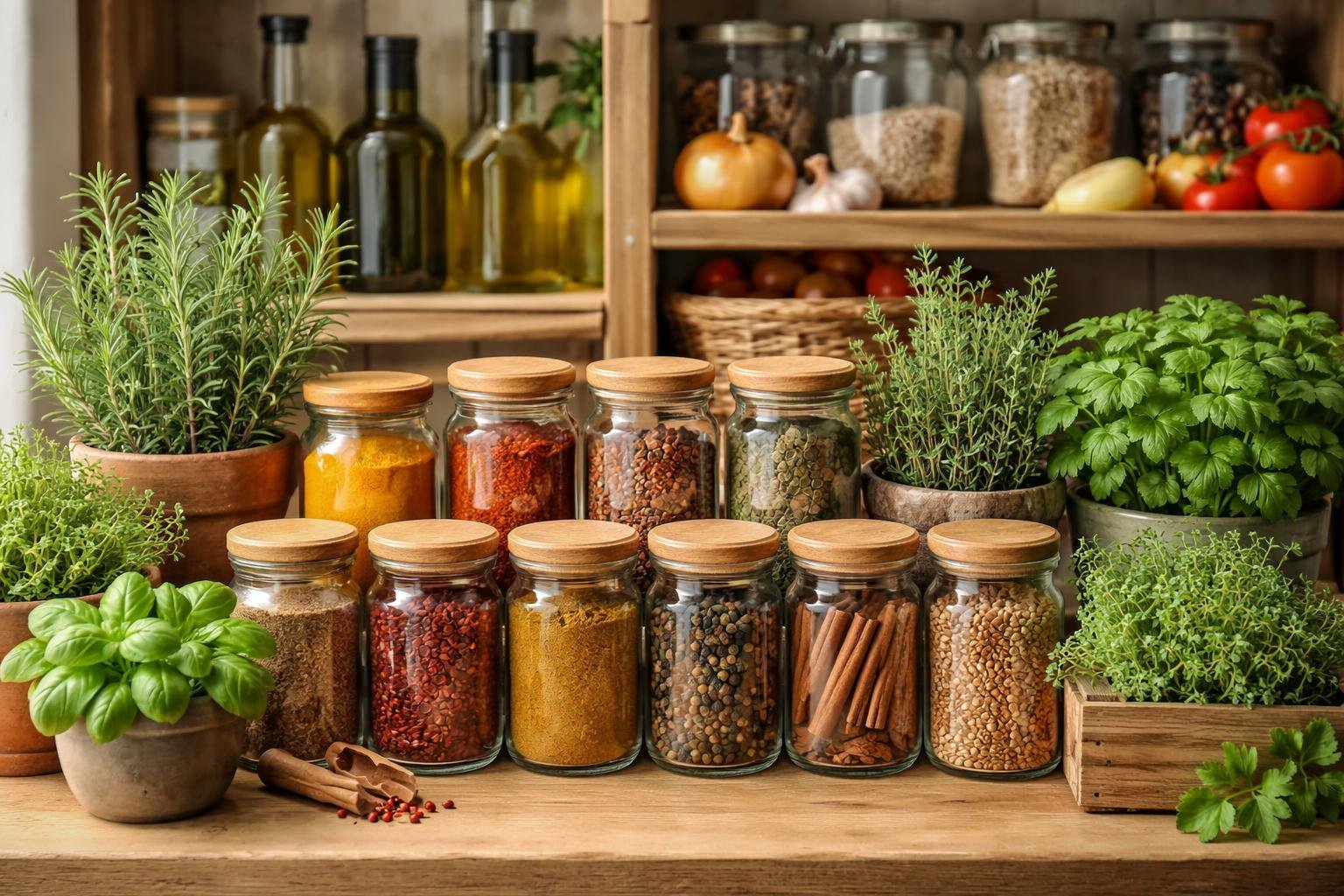
Building a collection of herbs and spices transforms simple ingredients into flavorful meals while reducing reliance on excess salt and processed seasonings. The right selection of dried spices and fresh herbs makes home cooking more enjoyable and supports healthier eating habits.
Essential Herbs for Everyday Cooking
Fresh herbs add brightness and complexity to dishes that dried versions cannot replicate. Basil works beautifully in pasta dishes, caprese salads, and tomato-based sauces with its sweet, slightly peppery flavor. Cilantro brings a fresh, citrusy note to Mexican and Asian cuisines, though some people have a genetic aversion to its taste.
Parsley serves as more than a garnish when high quality. It adds a mild, fresh flavor to soups, salads, and light sauces. Thyme offers an earthy, slightly minty taste that complements roasted vegetables, chicken, and bean dishes.
Oregano stands out as a versatile herb for Italian and Mexican cooking[7] with its peppery, slightly minty flavor. It pairs exceptionally well with tomatoes and acidic ingredients. Fresh herbs should be stored in the refrigerator, either wrapped in damp paper towels or placed stem-down in a glass of water.
Must-Have Spices for a Healthy Kitchen
A well-stocked spice cabinet[8] includes both common staples and spices with health benefits. Cumin delivers an earthy, warm flavor that enhances vegetables, beans, and meat dishes while appearing frequently in Indian and Middle Eastern recipes. Turmeric provides anti-inflammatory properties along with its golden color and mild, earthy taste.
Paprika comes in sweet and smoked varieties. Sweet paprika adds color and subtle heat to dishes like deviled eggs and roasted vegetables. Garlic powder offers concentrated garlic flavor without the prep work of fresh cloves, working well in dry rubs and seasoning blends.
Cinnamon does double duty in sweet and savory applications. It adds warmth to oatmeal and baked goods while also enhancing curries and stews. Black pepper remains essential as a kitchen staple that boosts the absorption of many nutrients.
Nutritional yeast deserves a spot in healthy kitchens for its cheesy, nutty flavor and vitamin B12 content. Cayenne pepper adds heat while potentially boosting metabolism.
How to Use Fresh and Dried Herbs Effectively
Fresh herbs and dried versions require different cooking approaches. Fresh herbs lose their flavor when exposed to high heat for extended periods, so they work best when added during the final minutes of cooking or as a garnish. Dried herbs have concentrated flavors and hold up better during long cooking times in soups and stews.
The general conversion ratio is three parts fresh herbs to one part dried. For example, one tablespoon of fresh basil equals one teaspoon of dried basil. Crushing dried herbs between fingers before adding them to dishes releases their essential oils and intensifies flavor.
Store dried spices in airtight containers away from heat, light, and moisture. They maintain peak flavor for about one year, though they remain safe to use beyond that timeframe. Fresh herbs stay fresher longer when stored properly in the refrigerator with adequate moisture.
Pantry Snacks, Beverages, and Quick Meal Inspiration
A well-stocked kitchen needs ready-to-eat snacks and drink options alongside ingredients for fast, nutritious meals. Smart choices in these categories ensure healthy eating stays convenient even during the busiest days.
Healthy Snacks to Keep on Hand
Keeping pantry snacks stocked[9] makes it easier to avoid less nutritious options when hunger strikes between meals. Nuts and seeds like almonds, walnuts, pumpkin seeds, and sunflower seeds provide protein and healthy fats. Store them in airtight containers to maintain freshness.
Whole grain crackers paired with nut butters offer satisfying combinations. Look for crackers made with simple ingredients and minimal added sugars. Individual nut butter packets provide portion control and convenience.
Dried fruit such as raisins, apricots, and dates adds natural sweetness without refined sugar. Mix dried fruit with nuts for homemade trail mix. Popcorn kernels can be air-popped for a whole grain snack that’s low in calories but high in fiber.
Other shelf-stable options include roasted chickpeas, whole grain pretzels, and dark chocolate squares. Rice cakes topped with almond butter and banana slices create a quick energy boost.
Smart Beverage Choices
Coffee and tea form the foundation of most healthy beverage pantries. Plain coffee contains antioxidants and can be enjoyed black or with minimal additions. Keep both regular and decaf options available.
Herbal tea varieties like chamomile, peppermint, and ginger offer caffeine-free alternatives throughout the day. Green tea and black tea provide different flavor profiles and health benefits. Store tea bags or loose leaf tea in a cool, dry place away from strong odors.
Sparkling water adds variety without calories or sugar. Keep several flavors on hand or add fresh lemon and lime juice to plain versions. Unsweetened plant-based milk alternatives like almond, oat, or soy milk work well in coffee and cooking.
Quick and Balanced Meal Ideas
Stocking ingredients for quick meals[10] prevents relying on takeout during hectic weekdays. Overnight oats require just rolled oats, milk, and toppings assembled the night before. Add chia seeds, nuts, and dried fruit for extra nutrition.
Breakfast bowls come together quickly with cooked grains like quinoa or brown rice topped with eggs, avocado, and salsa. Make large batches during meal prep sessions and reheat portions throughout the week.
Canned beans transform into burrito bowls when combined with rice, cheese, and vegetables. Pasta dishes need only 20 minutes when using whole wheat noodles, canned tomatoes, and frozen vegetables. Keep rotisserie chicken or canned tuna for protein that requires zero cooking time.
Frozen stir-fry vegetables paired with soy sauce and served over rice creates a balanced meal in under 15 minutes. Stock tortillas for quesadillas filled with beans and cheese or scrambled eggs with vegetables.
Kitchen Essentials and Organization Tips
A well-equipped kitchen starts with the right tools and smart storage systems. Having quality cookware paired with organized spaces makes healthy cooking faster and more enjoyable.
Key Cookware and Tools for Efficiency
The foundation of any functional kitchen includes essential pots and pans[8] that handle everyday cooking tasks. A large stockpot works well for soups, stews, and boiling pasta. Medium and small saucepans with lids are perfect for heating liquids and cooking grains.
A quality skillet is needed for searing proteins and vegetables. Non-stick options work great for eggs, while stainless steel provides better browning. A Dutch oven handles braising, baking, and one-pot meals with ease.
Additional tools that boost efficiency include:
- An instant pot for quick pressure cooking and slow cooking meals
- A cookie sheet for roasting vegetables and baking healthy snacks
- A wok or large skillet specifically for stir-fry dishes
- A blender for smoothies and sauces
- Sharp knives including a chef’s knife and paring knife
- Mixing bowls in various sizes
- Measuring cups and spoons for accurate portions
These items cover most cooking methods without cluttering the kitchen. Quality matters more than quantity when building a collection.
Organizing Your Pantry, Fridge, and Freezer
Organizing your kitchen[11] starts with grouping similar items together and removing duplicates. Store grains, beans, and pasta in clear containers to see what needs restocking. Place frequently used items at eye level.
The fridge should keep raw meats on the bottom shelf to prevent drips. Store prepared foods and leftovers at eye level where they’re visible. Use the crisper drawers for fruits and vegetables, keeping them separate to maintain freshness.
Keep frozen vegetables, fruits, and proteins organized in labeled bins or bags. Date everything that goes into the freezer. Group items by category like breakfast items, vegetables, and proteins.
Pantry organization tips:
- Use shelf risers to maximize vertical space
- Label containers with contents and dates
- Keep healthy snacks at eye level
- Store baking supplies together in one area
Storage Strategies for Maintaining Freshness
Proper storage extends the life of fresh ingredients and reduces food waste. Glass containers with airtight seals work best for storing prepped vegetables and cooked grains in the fridge. These containers stack easily and let cooks see what’s inside.
Store leafy greens wrapped in paper towels inside containers to absorb excess moisture. Keep herbs standing upright in water like fresh flowers. Berries last longer when stored unwashed in breathable containers.
Nuts, seeds, and whole grain flours stay fresh longer in the freezer. Store dried spices in airtight containers away from heat and direct sunlight. Keep oils in dark bottles in cool cabinets to prevent rancidity.
Best practices for freshness:
- Wash produce only right before using it
- Store tomatoes and avocados on the counter until ripe
- Keep onions and potatoes in a cool, dark place separate from each other
- Use airtight containers for all dry goods
- Rotate items using the “first in, first out” method
Frequently Asked Questions
Stocking a healthy kitchen involves choosing the right staples, managing your budget, and knowing which foods provide the most value for your health and time. These common questions address practical concerns about building and maintaining a nutritious kitchen.
What are the essential pantry staples to keep for healthy everyday cooking?
A well-stocked pantry should include shelf-stable proteins like canned beans, lentils, and chickpeas. These beans and legumes are packed with fiber and plant-based protein[2] that help keep blood sugar steady and support digestion.
Whole grains form another essential category. Brown rice, quinoa, oats, and whole-grain pasta provide steady energy and fiber. They serve as the base for countless meals.
Healthy fats and oils are important staples. Olive oil, avocado oil, and nut butters should always be available. Seeds like chia and flaxseed add nutrition to many dishes.
Canned tomatoes, low-sodium broth, and vinegars help build flavor in meals. Spices and dried herbs like garlic powder, cumin, cinnamon, and basil make healthy food taste good without added salt or sugar.
How do I stock a healthy kitchen for the first time on a realistic budget?
Starting with dried beans and lentils instead of pre-cooked versions saves significant money. A one-pound bag of dried beans costs less than three cans but provides much more food.
Buying whole grains in bulk reduces costs dramatically. Many stores offer oats, brown rice, and quinoa in bulk bins at lower prices than packaged versions.
Frozen fruits and vegetables are budget-friendly and reduce waste[2] while being just as nutrient-dense as fresh. They’re frozen at peak ripeness and last for months.
Store brands typically offer the same quality as name brands for pantry staples like canned goods, oils, and grains. Reading ingredient labels confirms that the contents are identical.
Shopping sales and stocking up on non-perishables when prices drop helps stretch a budget. Buying what’s on sale and building meals around those ingredients makes healthy eating more affordable.
Which healthy shelf-stable snacks should I keep on hand for quick options?
Nuts and seeds make excellent shelf-stable snacks. Almonds, walnuts, cashews, and pumpkin seeds provide healthy fats and protein that keep hunger at bay.
Nut butters paired with whole-grain crackers or rice cakes offer balanced nutrition. Individual nut butter packets work well for portion control and convenience.
Dried fruit without added sugar provides natural sweetness and fiber. Dates, raisins, and dried apricots satisfy sweet cravings while offering nutrients.
Canned fish like tuna, salmon, or sardines serves as a protein-rich snack. Pairing them with whole-grain crackers creates a filling option that doesn’t require refrigeration.
Roasted chickpeas or edamame offer crunchy, savory alternatives to chips. These protein-packed options can be made at home or purchased pre-seasoned.
How can I plan pantry items so they last longer and reduce food waste?
Organizing pantry items by expiration date keeps older products in front where they get used first. A quick check every two to four weeks helps identify what needs to be consumed soon.
Storing grains, nuts, and seeds in airtight containers protects them from moisture and pests. This simple step extends their shelf life significantly.
Whole grains and nuts last longer when kept in the refrigerator or freezer. Brown rice, quinoa, and flaxseed particularly benefit from cold storage to prevent rancidity.
Buying smaller quantities of items used infrequently prevents waste. It’s better to purchase a small jar of an expensive spice that gets fully used than a large container that sits for years.
Creating a meal plan based on what’s already in the pantry helps use up existing items. This approach prevents ingredients from expiring unused while saving money on groceries.
What are the best healthy freezer and fridge staples to complement pantry basics?
The freezer should contain a variety of frozen vegetables like broccoli, spinach, cauliflower, and mixed vegetables. Frozen produce is just as nutritious as fresh[2] and provides convenience on busy nights.
Frozen fruits work perfectly for smoothies and oatmeal toppings. Berries, mango chunks, and banana slices add nutrition without the worry of spoilage.
The fridge should always have fresh eggs as a versatile protein source. Greek yogurt provides protein and works in both sweet and savory dishes.
Leafy greens like spinach, kale, or romaine lettuce add nutrients to meals quickly. Keeping them washed and ready to use increases the likelihood they’ll be eaten.
Fresh vegetables that last longer include carrots, bell peppers, and cabbage. These complement frozen options and add crunch and color to meals.
What simple healthy meals can I make from common pantry staples when I’m short on time?
A two-bean chili combines canned kidney beans, black beans, canned tomatoes, and spices for a hearty meal. This dish comes together in under 30 minutes and provides protein and fiber.
Overnight oats mixed with Greek yogurt, chia seeds, and frozen fruit create a ready-to-eat breakfast. The preparation takes just five minutes the night before.
Whole-grain pasta tossed with canned beans, olive oil, garlic powder, and dried herbs makes a satisfying dinner. Adding frozen vegetables boosts nutrition without much extra effort.
Egg scrambles with canned beans and any available vegetables create a protein-packed meal. This combination works for breakfast, lunch, or dinner.
A grain bowl built with quinoa or brown rice, canned chickpeas, frozen roasted vegetables, and a simple olive oil dressing delivers balanced nutrition. The entire meal can be assembled in 15 minutes using leftover grains or quick-cooking options.
Post Views: 2
References
- How To Stock a Healthy Pantry. https://nourishedbynutrition.com/how-to-stock-a-healthy-pantry/ Accessed April 7, 2026
- How to Stock a Healthy Pantry: A Dietitian Explains Staples for Health. https://www.berrystreet.co/blog/how-to-stock-a-healthy-pantry-a-registered-dietitian-s-guide Accessed April 7, 2026
- Pantry, Refrigerator and Freezer Essentials Checklist. https://www.foodnetwork.com/recipes/packages/cooking-from-the-pantry/pantry-essentials-checklist Accessed April 7, 2026
- Healthy Cooking Oils and Fats: How to pick the best ones. https://mayowellness.com/healthy-cooking-oils-and-fats/ Accessed April 7, 2026
- 50+ Healthy Pantry Staples to Keep Stocked in Your Kitchen. https://mindfulmomma.com/healthy-pantry-staples/ Accessed April 7, 2026
- Hummus delivers both healthy fats and plant-based protein. https://www.health.com/healthiest-condiments-11820708 Accessed April 7, 2026
- 13 Essential Spices for a Well-Stocked Pantry (And How to Use Them). https://pinchspicemarket.com/blog/essential-pantry-spices/ Accessed April 7, 2026
- How to Fully Stock Your Kitchen: A Comprehensive Guide. https://thekitchenpursuits.com/how-do-i-fully-stock-my-kitchen/ Accessed April 7, 2026
- 33 Healthy Pantry Snacks (+ printable shopping list) — Elizabeth Harris. https://elizabethharrisnutrition.com/blog/33-healthy-pantry-snacks Accessed April 7, 2026
- 17 Healthy Pantry Staples For Quick Meals + 55 Recipes & Healthy Pantry Printable!. https://anoregoncottage.com/healthy-pantry-staples/ Accessed April 7, 2026
- Organizing a kitchen: 35 ideas for a concise cook space. https://www.homesandgardens.com/kitchens/organizing-a-kitchen Accessed April 7, 2026

















