Medically Reviewed
Dr. Jose Rossello, MD, PhD, MHCM
Preventive Medicine & Public Health Specialist
Last Reviewed: January 29, 2026
Children with cerebral palsy often face daily challenges with movement, balance, and muscle control. Traditional physical therapy helps, but some families are discovering that horses cerebral palsy therapy offers unique benefits[1] that other treatments cannot replicate. The steady, rhythmic motion of a horse creates a natural therapy session that engages multiple body systems at once.
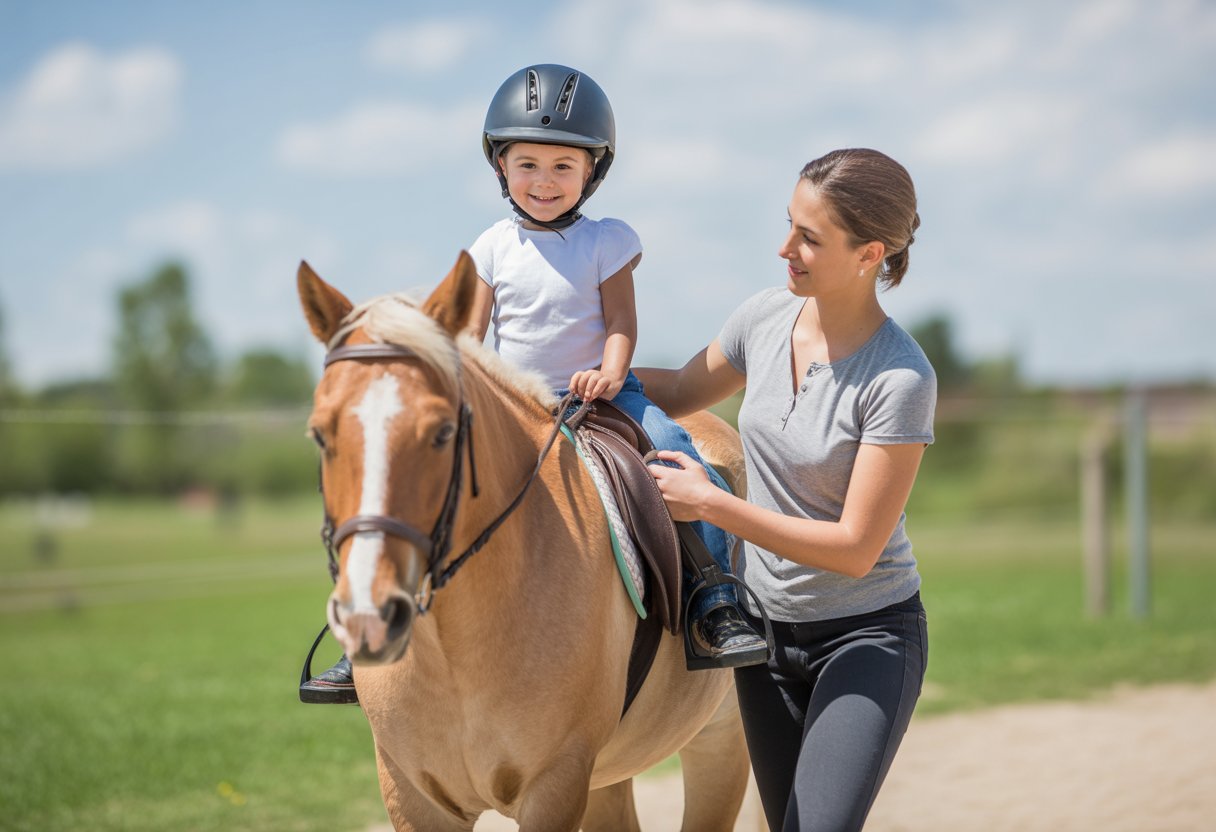
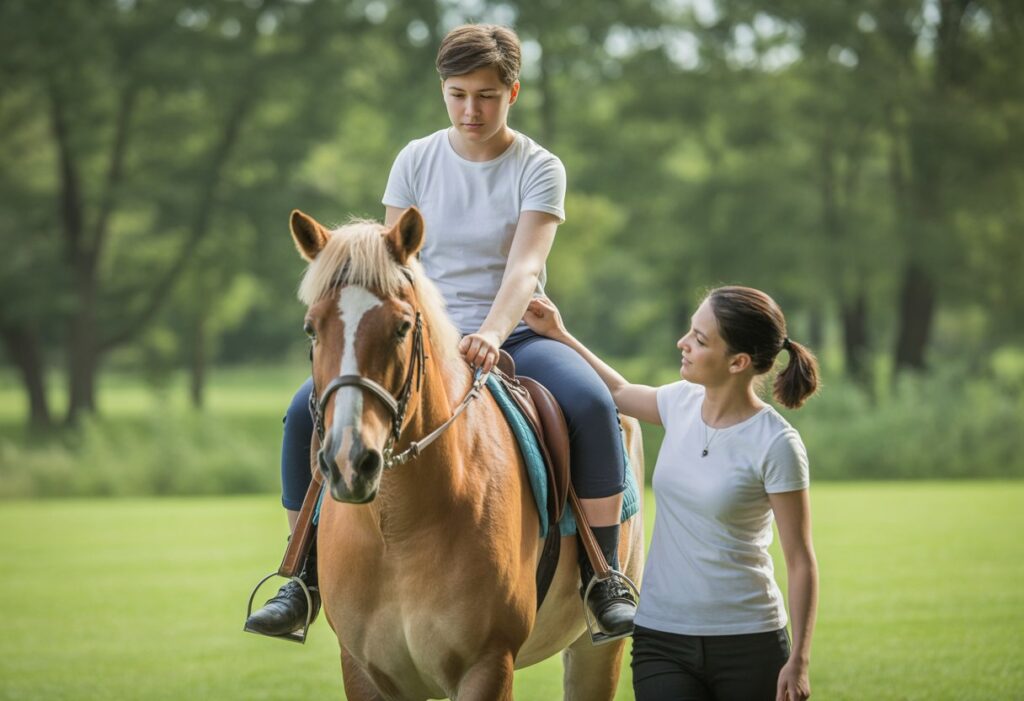
Hippotherapy uses the movement of horses[2] to improve balance, posture, coordination, and muscle tone in children with cerebral palsy. Unlike regular horseback riding lessons, this therapy involves trained physical therapists, occupational therapists, or speech-language pathologists who guide each session. The horse’s warm body temperature and three-dimensional movement pattern mimics human walking, which helps children develop motor skills they can use in daily life.
Equine therapy works for children as young as two years old[3] and provides benefits for all severity levels of cerebral palsy. The therapy keeps children engaged and motivated because they enjoy working with the horse, making them more likely to practice the repetitive movements needed for improvement. This combination of physical stimulation and emotional connection creates an effective treatment approach that fits within a broader therapy plan.
Table of Contents
Key Takeaways
- Hippotherapy uses horse movement to improve muscle coordination, balance, posture, and mobility in children with cerebral palsy
- Trained therapists guide sessions that stimulate multiple body systems while keeping children engaged and motivated
- The therapy works for various severity levels and provides both physical improvements and emotional benefits
Understanding Cerebral Palsy and Motor Challenges
Cerebral palsy affects movement and posture due to brain damage that occurs before, during, or shortly after birth. The condition creates specific motor challenges that impact how children move, balance, and coordinate their bodies throughout daily activities.
Overview of Cerebral Palsy
Cerebral palsy is a neurological disorder that affects muscle control and movement. It results from damage to the developing brain, most often occurring before birth. The condition is permanent but non-progressive, meaning it does not worsen over time.
The severity of cerebral palsy varies widely from person to person. Some individuals experience minor difficulties with movement, while others require significant assistance for daily activities. The type and location of brain damage determine which muscles are affected and how severely.
Children with cerebral palsy may have different types of movement problems. These include stiff muscles, loose and floppy muscles, or a combination of both. The condition can affect just one side of the body, both legs, or all four limbs.
Common Motor Impairments in CP
Muscle Tone Problems create some of the most noticeable challenges. Spasticity causes muscles to become tight and stiff, making movements jerky and difficult. Some children experience low muscle tone, which makes their muscles feel loose and weak.
Balance and coordination issues affect how children with cerebral palsy move through space. They may struggle to:
- Maintain an upright sitting or standing position
- Walk without assistance
- Reach for and grasp objects accurately
- Perform tasks requiring both hands working together
Gross motor function describes large movements like walking, running, and jumping. Many children with cerebral palsy face challenges with these fundamental skills. The Gross Motor Function Classification System (GMFCS) provides five levels to describe mobility abilities. Level I indicates the child walks without limitations, while Level V means the child has severe limitations in all motor areas and requires extensive assistance.
Fine motor skills involving small muscle movements also present difficulties. Tasks like writing, buttoning clothes, and using utensils require practice and adaptive strategies.
Impact on Daily Living and Development
Motor impairments affect nearly every aspect of a child’s day. Getting dressed, eating meals, and moving around the house become tasks that require extra time and effort. Children may need special equipment like braces, walkers, or wheelchairs to help them move safely.
Social development can be impacted when motor challenges limit participation in play and school activities. Children may find it hard to join playground games or keep up with peers during physical activities. This can affect confidence and social connections.
Academic learning also connects to motor skills. Writing, cutting with scissors, and manipulating learning materials require coordination that may be difficult for children with cerebral palsy. Schools often provide occupational therapy and adaptive tools to support educational success.
Physical growth and bone development require attention in children with cerebral palsy. Limited movement can lead to weak bones, tight muscles, and joint problems. Regular physical activity and therapy help maintain strength and flexibility as children grow.
What Is Hippotherapy?
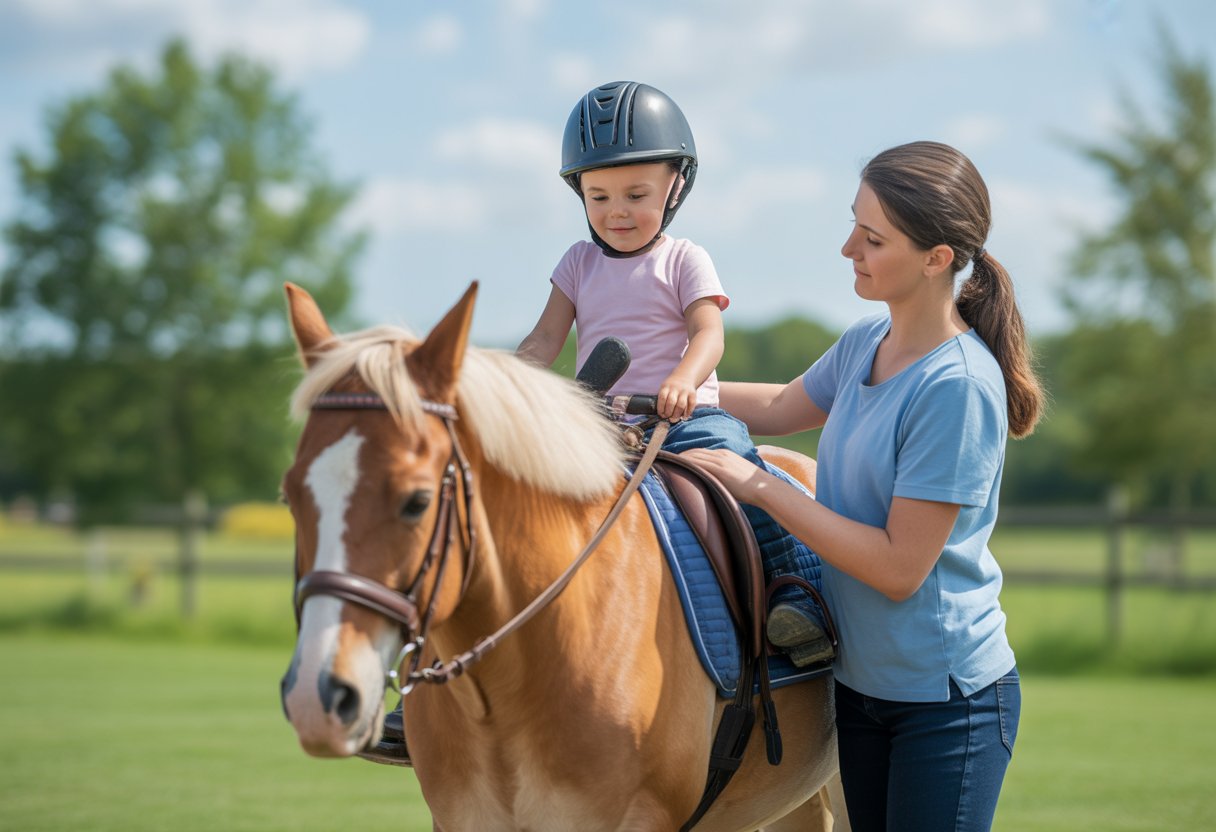
Hippotherapy uses the natural movement of horses to help children and adults with cerebral palsy improve their physical abilities. This therapy differs from regular horseback riding lessons in its medical focus and the specialized training required for practitioners.
Origins and Definition
The term hippotherapy comes from the Greek word “hippos,” which means horse. Physical therapists, occupational therapists, and speech-language pathologists use hippotherapy as a treatment tool[1] to address specific goals for their patients.
The American Hippotherapy Association certifies therapists who want to provide this specialized form of treatment. These professionals must complete additional training beyond their standard therapy credentials.
During a session, the horse’s walking motion creates a rhythmic pattern that moves the rider’s body. This movement happens in three dimensions and mimics the same motions that occur when a person walks. The horse moves forward and backward, side to side, and up and down at the same time.
A trained therapy team controls everything about the horse’s movement. They adjust the speed, direction, and type of gait to target specific muscles and movements the patient needs to practice.
Difference Between Hippotherapy and Therapeutic Horseback Riding
Hippotherapy differs from therapeutic horseback riding[3] in several important ways. Therapeutic horseback riding teaches people with disabilities how to ride and care for horses. Students learn riding skills and may work toward becoming independent riders.
Hippotherapy does not focus on teaching riding skills. Instead, licensed therapists use the horse’s movement as a tool to reach specific medical goals. The patient often does not hold the reins or control the horse.
The therapist makes all decisions about the horse’s movement based on the patient’s treatment plan. Sessions might include exercises performed while sitting on the horse, such as reaching for objects or shifting weight in different directions.
Therapeutic riding instructors receive different training than hippotherapy providers. They focus on adaptive riding techniques rather than medical rehabilitation goals.
How Hippotherapy Works in Cerebral Palsy Therapy
Hippotherapy uses the natural movement of a horse[1] to improve neurological and physical functioning in children with cerebral palsy. The horse’s walking motion creates multidimensional movement that challenges the body to make constant adjustments, which helps develop better muscle control and balance.
Mechanism of Action
The horse’s gait produces a rhythmic pattern that moves the rider’s pelvis in a way similar to normal human walking. This movement happens in three dimensions, shifting the rider’s body up and down, side to side, and forward and backward. The repetitive motion gives the nervous system constant feedback.
Children with spastic cerebral palsy show improved muscle symmetry[4] after just eight minutes of hippotherapy. The horse’s warmth also helps relax tight muscles. Each step the horse takes requires the rider to adjust their position, which activates muscles throughout the body. This process helps retrain the brain’s motor pathways.
Role of Horse Movement in Motor Development
The horse’s movement directly affects postural control and motor planning. When the horse walks, children must engage their core muscles to stay balanced. This automatic response strengthens the trunk and improves sitting ability.
Different horse paces create different therapeutic effects[4], with walk-trot combinations showing stronger results for reducing hip muscle tightness than walking alone. The varied speeds challenge sensory processing skills as children learn to adapt to changing rhythms. Studies show improvements in standing, walking, and other functional movements after regular hippotherapy sessions.
Therapeutic Team Structure
A licensed physical, occupational, or speech therapist leads hippotherapy sessions. The therapist positions the child on the horse and guides specific exercises during the ride. A trained horse handler controls the horse’s speed and direction based on the therapist’s instructions.
Sessions typically last 30 minutes and occur once or twice per week. A side walker often assists for safety, walking beside the horse to help stabilize the child if needed. The team works together to create exercises that target each child’s specific needs, whether improving head control, reaching skills, or leg strength.
Physical Benefits: Coordination, Posture, and Mobility
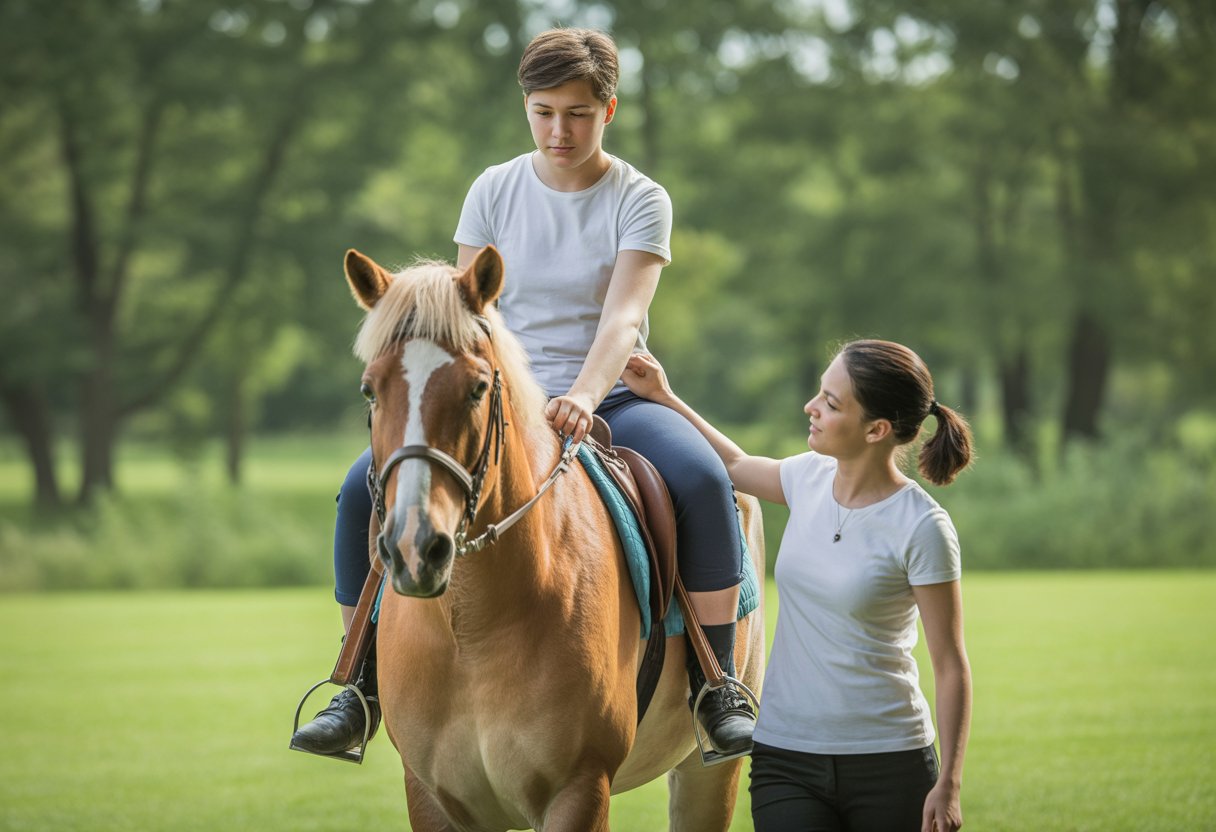
Hippotherapy builds physical capabilities[1] through the horse’s rhythmic movement, which directly impacts core strength, muscle balance, and the ability to move with greater independence. The three-dimensional motion of the horse’s gait creates repeated opportunities for the body to make small adjustments that strengthen key muscle groups.
Trunk Strength and Control
The horse’s walking motion requires constant micro-adjustments from the rider’s core muscles. These small corrections engage abdominal and back muscles that support upright sitting and standing.
Trunk control develops as children work to maintain their position on the moving horse. The pelvis moves in response to the horse’s stride, which activates stabilizing muscles throughout the torso. This repetitive activation helps build the foundational strength needed for daily activities.
Children with cerebral palsy often struggle with trunk stability during seated tasks or walking. Physical rehabilitation through hippotherapy[2] addresses this by providing a dynamic surface that challenges balance systems. The rider must engage core muscles continuously to stay centered on the horse, creating natural strength-building opportunities that translate to improved sitting balance and postural control off the horse.
Muscle Symmetry and Strength
The horse’s symmetrical movement pattern encourages balanced muscle development on both sides of the body. Many children with cerebral palsy have uneven muscle tone or favor one side over the other.
Riding positions the body in a way that promotes equal weight distribution through both hips and legs. This alignment helps reduce the muscle imbalances common in cerebral palsy. The warmth from the horse’s body also helps relax tight muscles, making it easier to achieve better positioning.
Key muscle groups affected include:
- Hip flexors and extensors
- Inner and outer thigh muscles
- Lower back stabilizers
- Shoulder girdle muscles
Regular sessions can lead to improved postural symmetry and reduced abnormal muscle tone. Muscle strength increases gradually as the rider adapts to the horse’s movement patterns over time.
Functional Mobility Improvements
The skills gained during hippotherapy transfer to everyday movement tasks. Balance improvements on the horse often result in better stability when walking or standing.
Children develop better gross motor skills[5] that support functional mobility. The repeated practice of weight shifting on the horse teaches the body how to adjust to changing positions. These learned responses help with transitions like moving from sitting to standing or navigating uneven surfaces.
Coordination between upper and lower body improves as riders learn to guide the horse while maintaining their seat. This enhanced coordination supports activities like reaching while maintaining balance or walking while carrying objects. The endurance built through regular riding sessions also increases stamina for physical activities throughout the day.
Sensory and Neurological Outcomes of Equine-Assisted Therapy
Equine-assisted therapy helps children with cerebral palsy[6] by creating specific changes in how the brain processes sensory information and builds new neural pathways. The rhythmic movement of horses triggers responses in the nervous system that support better motor control and body awareness.
Improvements in Sensory Processing
The horse’s walking pattern provides steady input to a child’s sensory system. This input helps the brain organize and respond to information from muscles, joints, and the balance system.
Children with cerebral palsy often struggle to process sensory signals from their bodies. Hippotherapy uses the horse’s movement[1] to stimulate these sensory systems through repeated, predictable motions. The three-dimensional movement pattern mimics human walking and sends signals through the pelvis and spine.
Key sensory benefits include:
- Better body position awareness
- Improved balance responses
- Enhanced touch processing
- Stronger connection between sensory input and motor output
The warmth of the horse and the texture of its coat add tactile input. This combination of movement and touch helps children learn to interpret sensory information more accurately.
Neurological Reorganization and Plasticity
The brain can form new connections in response to repeated activities. Hippotherapy takes advantage of this ability by providing consistent movement patterns that challenge the nervous system.
Neuromuscular responses improve as the child’s body adjusts to the horse’s gait, tempo, and rhythm. These adjustments require the brain to coordinate multiple muscle groups simultaneously. Over time, these repeated experiences can lead to lasting changes in how the nervous system controls movement.
Motor function gains occur because the therapy activates both voluntary and automatic movement systems. The child must make constant small adjustments to maintain position on the horse. These micro-adjustments strengthen neural pathways between the brain and muscles, supporting better movement control in daily activities.
Designing Effective Hippotherapy Programs for CP
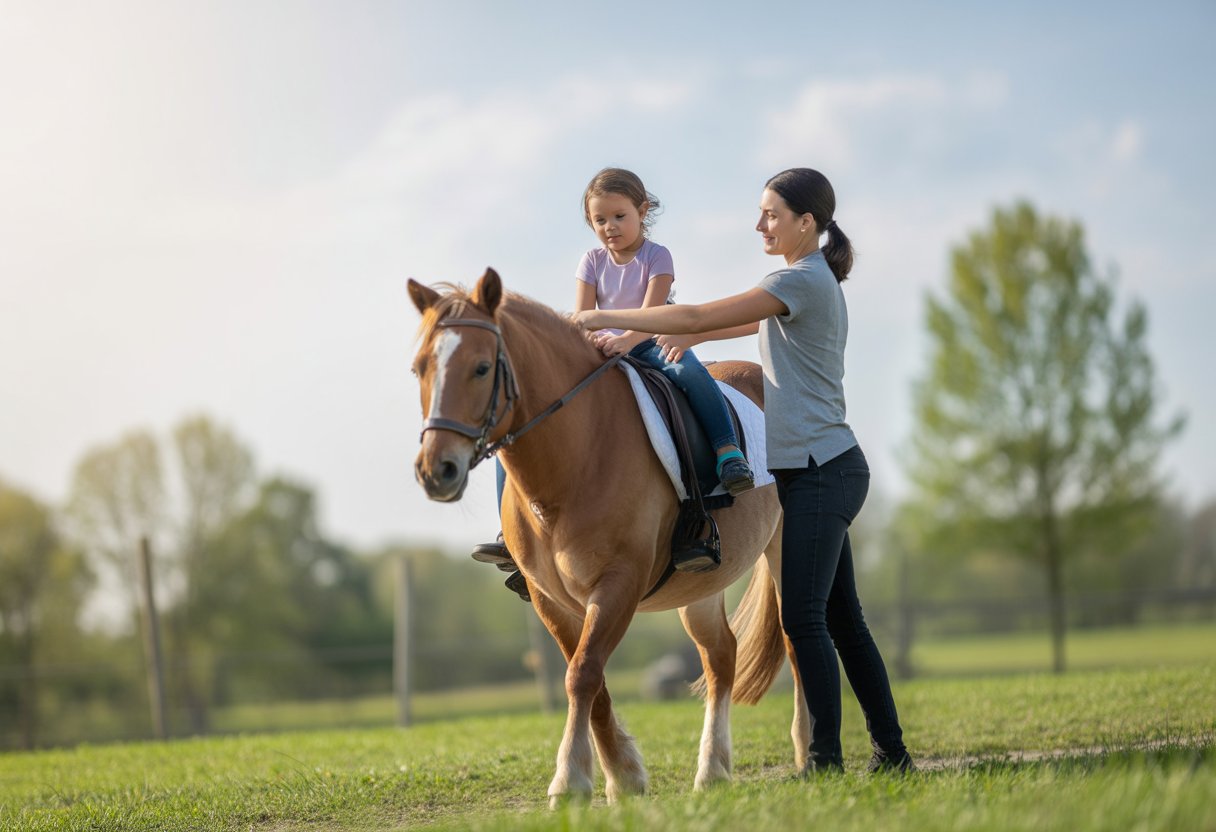
Creating a successful hippotherapy program requires careful evaluation of each child’s abilities and specific challenges. Programs must balance structured therapeutic goals with appropriate session timing to maximize benefits.
Assessment and Individualized Goal Setting
A comprehensive initial assessment forms the foundation of any effective hippotherapy program. Therapists evaluate the child’s current motor function, balance abilities, muscle tone, and specific movement limitations. This assessment identifies which areas need the most attention and helps establish realistic therapeutic outcomes.
Goal setting must address the individual needs of each child with cerebral palsy. Some children may focus on improving trunk stability and core strength, while others work on fine motor planning or coordination. The therapist creates measurable objectives based on the assessment findings.
Goals should be specific and achievable within a set timeframe. A child might aim to maintain an upright seated position on the horse for five minutes without support, or to reach across their body to touch markers on both sides of the horse. These concrete targets help track progress throughout the treatment period.
Types of Activities and Exercises
Hippotherapy sessions incorporate various activities that use the horse’s movement as a therapeutic tool. Basic exercises include forward and backward sitting positions, which challenge different muscle groups and improve postural control. Side-sitting and lying across the horse’s back provide additional sensory input and stretch tight muscles.
Reaching activities enhance motor planning and coordination. Children might pick up rings, place objects in buckets, or touch their toes while mounted. These tasks require the child to maintain balance while completing purposeful movements.
Common hippotherapy exercises include:
- Arm raises and circles to strengthen shoulders
- Gentle twisting movements for trunk rotation
- Leg stretches and repositioning for lower body flexibility
- Ball tossing and catching for hand-eye coordination
The horse’s walking gait provides rhythmic, repetitive movement that mimics the human walking pattern. This movement stimulates the same muscles and neural pathways used in typical walking.
Session Frequency and Duration
Most rehabilitation programs schedule hippotherapy sessions once or twice per week. Weekly sessions allow the body time to adapt to new movement patterns between treatments. Some children benefit from more frequent sessions during intensive therapy periods.
Individual session length typically ranges from 30 to 45 minutes. Shorter sessions work better for younger children or those with limited endurance. The actual riding time may be only 15 to 25 minutes, with additional time for mounting, dismounting, and transitions.
Program duration varies based on the child’s goals and progress. Some families continue hippotherapy for several months, while others maintain it as an ongoing therapy for years. Regular reassessment every 8 to 12 weeks helps adjust the program as the child develops new skills.
Hippotherapy within Multidisciplinary Treatment Plans
Hippotherapy works as part of physical, occupational and speech therapy[1] rather than as a standalone treatment. The success of this approach depends on how well different therapy professionals coordinate their efforts around the child’s specific needs.
Integration with Physical, Occupational, and Speech Therapy
Physical therapists use equine movement to target gross motor skills[1], balance, and strength in the core, legs, and arms. They focus on how the horse’s gait triggers postural adjustments that build trunk stability.
Occupational therapists address fine motor skills, sensory processing, and vestibular issues during hippotherapy sessions. They help children develop the coordination needed for daily activities while working on proprioceptive awareness through the horse’s movement patterns.
Speech therapists incorporate hippotherapy to improve communication abilities. The rhythmic movement of the horse supports respiratory control, which directly affects speech production and language expression.
Each therapy discipline uses the same horse movement but adapts activities to meet different rehabilitation goals. A child might work on maintaining seated balance with a physical therapist, practice reaching for objects with an occupational therapist, and use verbal commands with a speech therapist.
Team Collaboration for Optimal Results
Therapy teams meet regularly to discuss the child’s progress and adjust treatment strategies. They share observations about how the child responds to equine movement across different therapy sessions.
The therapists coordinate scheduling so the child experiences complementary activities. One session might focus on building core strength while another reinforces those gains through functional tasks like grooming the horse.
Communication between team members prevents conflicting approaches and ensures consistent messaging to families. A physical therapist’s work on hip alignment informs how an occupational therapist positions the child during reaching activities.
Teams document specific metrics like range of motion improvements, balance scores, and speech clarity. This data helps them modify the intensity and type of hippotherapy activities as the child progresses through rehabilitation milestones.
Safety, Suitability, and Implementation Considerations
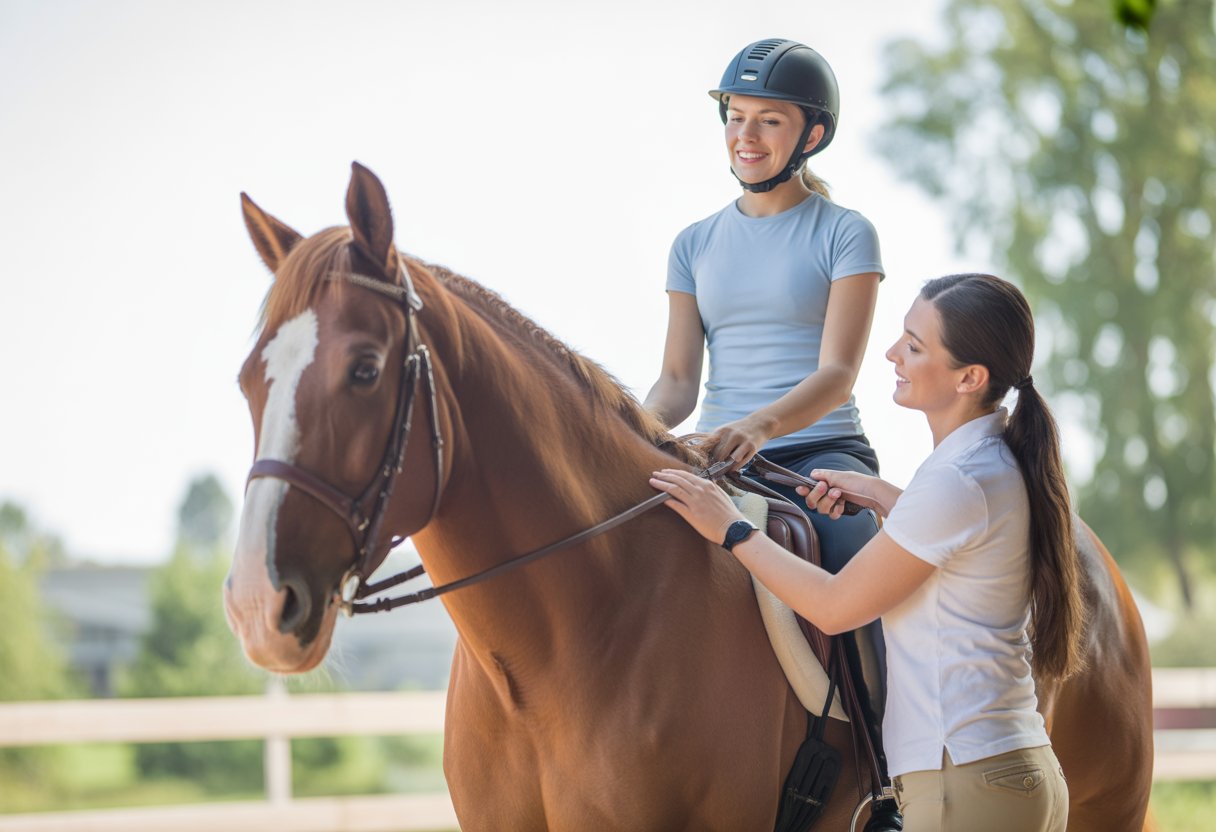
Successful hippotherapy requires careful screening of candidates, qualified professionals, properly trained horses, and strict safety measures. Each element plays a critical role in ensuring effective and safe treatment outcomes.
Eligibility and Contraindications
Children with cerebral palsy must receive medical clearance before starting hippotherapy sessions[3]. A physician evaluates whether the child’s specific type and severity of cerebral palsy will benefit from equine movement.
Common contraindications include:
- Uncontrolled seizures
- Severe bone fragility or osteoporosis
- Hip subluxation or dislocation
- Atlantoaxial instability
- Allergies to horses or hay
- Extreme fear of horses
A therapist conducts a pre-session assessment to evaluate the child’s physical, emotional, and cognitive abilities. This assessment determines if accommodations are needed while the child sits on the horse. The evaluation also identifies specific therapeutic goals based on the child’s individual needs and challenges.
Therapist Qualifications and Team Roles
Professional hippotherapy providers[1] must be licensed physical therapists, occupational therapists, or speech-language pathologists. These professionals undergo specialized training through organizations like the American Hippotherapy Association[3].
Therapists need at least three years of experience in their field plus 100 hours of hippotherapy-specific training. The training covers horse movement patterns, emergency procedures, safety protocols, and how equine motion relates to human movement.
A typical hippotherapy team includes:
- Licensed therapist (leads the session)
- Horse handler (controls the horse)
- Side walker or spotter (provides additional safety support)
The therapist walks alongside the horse during sessions to monitor the child’s responses and adjust positioning. This hands-on approach allows immediate modifications based on the child’s reactions to the horse’s gait.
Horse Selection and Welfare
Therapy horses undergo extensive training and temperament screening before working with children. The ideal therapy horse displays calmness, predictability, and tolerance for unexpected movements or sounds.
Physical characteristics matter significantly. Horses used in hippotherapy typically have a smooth, rhythmic walk that produces the desired therapeutic movement patterns. The horse’s size must match the child’s needs and the therapist’s ability to assist safely.
Regular veterinary care keeps therapy horses healthy and comfortable. Horses work limited hours each day to prevent fatigue. A tired or uncomfortable horse cannot provide consistent, safe therapeutic movement.
Session Safety Protocols
Every session begins with proper mounting procedures using ramps or lifts designed for children with mobility challenges. The child wears appropriate safety gear, though helmet requirements vary by facility and the child’s specific needs.
The therapist explains safety rules before the first session. These rules cover how to approach the horse, proper positioning, and what to do if feeling uncomfortable or scared.
Standard safety measures include:
- Enclosed arena space free from hazards
- Emergency stop procedures
- Maximum session duration limits
- Continuous monitoring of child’s responses
- Documentation of any adverse reactions
Sessions typically last 30 to 45 minutes to prevent fatigue. The therapist continuously observes the child for signs of discomfort, overexertion, or distress. If any concerns arise, the session stops immediately.
Evidence and Research: Therapeutic Outcomes
Research shows that hippotherapy produces measurable improvements in motor function, balance, and daily living skills for children with cerebral palsy. Studies track specific physical changes and functional gains to determine treatment effectiveness.
Clinical Studies and Meta-Analyses
Equine-assisted therapies for children with cerebral palsy[6] have been examined through multiple research studies. Meta-analyses combine data from numerous trials to identify overall treatment effects.
Research demonstrates that hippotherapy improves gross motor function in children with CP. Studies measure changes in walking ability, standing balance, and trunk control. Children typically show gains in muscle symmetry and postural alignment after regular sessions.
Hippotherapy compared to horse-riding simulators[7] reveals different therapeutic outcomes between the two approaches. Real horses provide three-dimensional movement patterns that closely match human walking. This natural movement helps retrain the nervous system more effectively than mechanical alternatives.
Clinical trials examine session frequency, duration, and intensity to identify optimal treatment protocols. Most studies use 30 to 45-minute sessions once or twice weekly over several months.
Measuring Progress and Outcomes
Therapists use standardized assessment tools to track patient progress. The Gross Motor Function Measure evaluates five areas: lying and rolling, sitting, crawling and kneeling, standing, and walking and running.
Common measurement tools include:
- Pediatric Balance Scale
- Timed Up and Go Test
- Gait analysis systems
- Muscle tone assessments
- Functional Independence Measure
Progress appears in multiple areas beyond motor skills. Children often gain confidence in physical activities and improve their ability to perform daily tasks independently. Parents report better postural control during sitting and improved endurance during walking activities.
Accessibility and Future Directions in Hippotherapy for CP
Cost, location, and availability often limit access to hippotherapy programs, while new technologies and research continue to shape how equine-assisted therapy reaches more children with cerebral palsy.
Overcoming Barriers to Access
Traditional hippotherapy programs face significant accessibility challenges. Many families live far from equine therapy centers, making regular sessions difficult to attend. The cost of therapy sessions ranges from $75 to $150 per hour, which insurance often doesn’t cover.
Transportation of children with mobility limitations adds another layer of complexity. Some therapy centers now offer scholarship programs or sliding scale fees to reduce financial barriers.
Rural programs have emerged to serve communities without nearby facilities. Mobile therapy units bring trained horses to schools and community centers in some regions. Indoor arenas allow year-round sessions in areas with harsh weather conditions.
Wait lists at established centers can stretch for months. Partnerships between therapy organizations and local riding stables help expand capacity and create more treatment slots.
Advancements in Simulated Hippotherapy
Mechanical horse simulators now replicate the three-dimensional movement patterns of real horses. These devices provide similar rhythmic motion without the challenges of live animal care or facility requirements.
Simulators offer several practical advantages:
- Controlled environment with adjustable speed and movement patterns
- Weather-independent sessions throughout the year
- Lower cost per session compared to live horse therapy
- Increased safety for children with severe physical limitations
Research shows simulators can improve trunk control and balance in children with cerebral palsy. The devices allow therapists to precisely control movement intensity and duration.
However, simulators lack the emotional connection and sensory experiences that live horses provide. Most experts view them as complementary tools rather than complete replacements for traditional hippotherapy.
Expanding Evidence-Based Practice
Recent meta-analyses examine which specific aspects of equine-assisted therapy produce the best outcomes for cerebral palsy. Studies now measure standardized metrics like gross motor function and gait quality rather than subjective observations.
Researchers compare different treatment protocols to identify optimal session frequency and duration. Current evidence suggests 30-45 minute sessions twice weekly yield measurable improvements in motor function.
Large-scale clinical trials help establish hippotherapy as a recognized medical intervention. Insurance companies increasingly cover sessions when prescribed by physicians as part of comprehensive treatment plans.
Therapist certification programs ensure consistent quality across facilities. Professional organizations develop standardized assessment tools to track patient progress and treatment effectiveness.
Frequently Asked Questions
Parents and caregivers often have questions about how hippotherapy works for cerebral palsy and what benefits it provides. Understanding the therapy’s physical effects, insurance coverage, and differences from other horse-based treatments helps families make informed decisions.
What are the recognized benefits of hippotherapy for individuals with cerebral palsy?
Hippotherapy provides physical, cognitive, and emotional benefits[2] for children with cerebral palsy. The therapy works for kids as young as 2 years old and suits all severity levels of the condition.
Physical improvements include better balance, strength, coordination, and muscle tone. Children also show gains in their range of movement, posture, and walking patterns.
The psychological benefits are equally important. Kids often experience increased self-confidence and motivation during sessions. They also develop better sensory processing, concentration, and spatial awareness.
The therapy triggers endorphin release, which promotes feelings of emotional well-being. These mood improvements can make children more engaged in their overall treatment plan.
How does hippotherapy contribute to motor development in children with cerebral palsy?
The horse’s movements provide rhythmic and repetitive patterns[2] similar to human walking. This motion transfers to the child’s pelvis and helps improve their gait.
Children must constantly adjust their center of gravity while on the moving horse. This continuous engagement strengthens core muscles and improves trunk stability.
Multiple body systems work together during hippotherapy sessions. The sensory, musculoskeletal, limbic, and vestibular systems all receive stimulation. Repetitive activation of these systems promotes neurological reorganization through neuroplasticity.
Neuroplasticity allows the central nervous system to adapt and create new neural pathways. Children’s brains have higher levels of neuroplasticity than adult brains, making early intervention particularly effective.
Can hippotherapy improve posture and mobility in cerebral palsy patients?
Hippotherapy uses the horse’s gait, tempo, rhythm, repetition, and cadence[1] to enhance neuromuscular development. The horse’s body temperature plays a key role in these improvements.
Horses maintain body temperatures 1-5 degrees higher than humans. This warmth promotes muscle relaxation in riders.
Relaxed muscles lead to reduced spasticity and pain. Children with cerebral palsy then experience improved range of motion.
The skills developed while riding transfer to abilities off the horse. Children work on balance, posture, and gait during sessions, and these improvements carry over to their daily movements.
What distinguishes hippotherapy from other equine-assisted therapies?
Hippotherapy requires certification from the American Hippotherapy Association[2] for all providers. Only physical therapists, occupational therapists, or speech-language pathologists can offer these services.
The therapy team includes a certified therapist, horse trainer, and instructors on both sides of the horse. This team controls the horse’s movements and speed to stimulate specific motor and sensory skills.
Therapists provide feedback to children on how to respond to the horse’s movements. This guidance optimizes progress toward specific therapeutic goals.
Hippotherapy channels the movement of the horse[1] to develop neurological and physical functioning. The focus stays on therapeutic outcomes rather than riding skills.
Is there scientific evidence supporting the effectiveness of hippotherapy in cerebral palsy therapy?
Hippotherapy is recognized as a form of physical, occupational, and speech therapy[8] that treats patients with cerebral palsy. The therapy uses equine movement to improve physical and neurological function.
Studies show that consistent participation in hippotherapy can slow symptom progression in cerebral palsy. The therapy stimulates neuroplasticity through highly repetitive, task-specific exercises.
Early intervention proves particularly crucial. Children who start therapy young can learn new skills quicker and more easily than adults.
The dynamic movements children experience during sessions engage them more than traditional therapy exercises. This increased engagement leads to better outcomes because children practice skills without realizing how hard they’re working.
How can individuals determine if their insurance plan covers hippotherapy for cerebral palsy?
Families should contact their insurance provider directly to ask about coverage for hippotherapy services. Coverage varies significantly between insurance plans and providers.
Some insurers cover hippotherapy when a licensed physical therapist, occupational therapist, or speech-language pathologist provides the service. Documentation from the child’s pediatrician may strengthen the case for coverage.
Parents can request a letter of medical necessity from their child’s doctor. This letter should explain why hippotherapy benefits the child’s specific condition and treatment goals.
Families should also consult with the hippotherapy center about payment options. Some facilities offer sliding scale fees or payment plans for families without insurance coverage.
Post Views: 60

















