• Home
  • Health & Wellness
  • Disclaimer
    • Terms of Use
    • Privacy Policy
    • DMCA Notice
  • Home
  • Health & Wellness
  • Disclaimer
    • Terms of Use
    • Privacy Policy
    • DMCA Notice
24/7 Health News
No Result
View All Result
Home Article

How C-reactive protein outpaced ‘bad’ cholesterol as leading heart disease risk marker

December 19, 2025
in Article
How C-reactive protein outpaced ‘bad’ cholesterol as leading heart disease risk marker

Heart disease is the leading cause of death in the United States.

Since researchers first established the link between diet, cholesterol and heart disease in the 1950s, risk for heart disease has been partly assessed based on a patient’s cholesterol levels, which can be routinely measured via blood work at the doctor’s office.

However, accumulating evidence over the past two decades demonstrates that a biomarker called C-reactive protein – which signals the presence of low-grade inflammation – is a better predictor of risk for heart disease than cholesterol.

As a result, in September 2025, the American College of Cardiology published new recommendations for universal screening of C-reactive protein levels in all patients, alongside measuring cholesterol levels.

Table of Contents

  • What is C-reactive protein?
  • Why does inflammation matter in heart disease?
  • Can diet influence C-reactive protein levels?
  • Does cholesterol still matter for heart disease risk?
  • What’s the best way to prevent heart disease?

What is C-reactive protein?

C-reactive protein is created by the liver in response to infections, tissue damage, chronic inflammatory states from conditions like autoimmune diseases, and metabolic disturbances like obesity and diabetes. Essentially, it is a marker of inflammation – meaning immune system activation – in the body.

C-reactive protein can be easily measured with blood work at the doctor’s office. A low C-reactive protein level – under 1 milligram per deciliter – signifies minimal inflammation in the body, which is protective against heart disease. An elevated C-reactive protein level of greater than 3 milligrams per deciliter, signifies increased levels of inflammation and thus increased risk for heart disease. About 52% of Americans have an elevated level of C-reactive protein in their blood.

Research shows that C-reactive protein is a better predictive marker for heart attacks and strokes than “bad,” or LDL cholesterol, short for low-density lipoprotein, as well as another commonly measured genetically inherited biomarker called lipoprotein(a). One study found that C-reactive protein can predict heart disease just as well as blood pressure can.

Why does inflammation matter in heart disease?

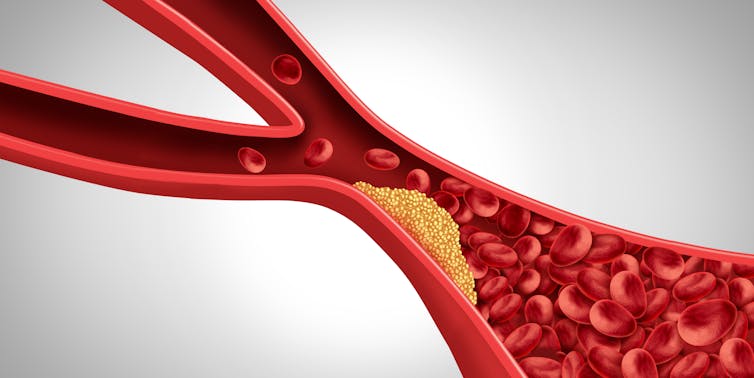
Inflammation plays a crucial role at every stage in the development and buildup of fatty plaque in the arteries, which causes a condition called atherosclerosis that can lead to heart attacks and strokes.

From the moment a blood vessel is damaged, be it from high blood sugar or cigarette smoke, immune cells immediately infiltrate the area. Those immune cells subsequently engulf cholesterol particles that are typically floating around in the blood stream to form a fatty plaque that resides in the wall of the vessel.

This process continues for decades until eventually, one day, immune mediators rupture the cap that encloses the plaque. This triggers the formation of a blood clot that obstructs blood flow, starves the surrounding tissues of oxygen and ultimately causes a heart attack or stroke.

Hence, cholesterol is only part of the story; it is, in fact, the immune system that facilitates each step in the processes that drive heart disease.

Three-dimensional concept of fatty plaque buildup in an artery.

Fatty plaque buildup in the arteries causes a blockage that starves tissues of oxygen and can lead to a heart attack or stroke.
wildpixel/iStock via Getty Images Plus

Can diet influence C-reactive protein levels?

Lifestyle can significantly influence the amount of C-reactive protein produced by the liver.

Numerous foods and nutrients have been shown to lower C-reactive protein levels, including dietary fiber from foods like beans, vegetables, nuts and seeds, as well as berries, olive oil, green tea, chia seeds and flaxseeds.

Weight loss and exercise can also reduce C-reactive protein levels.
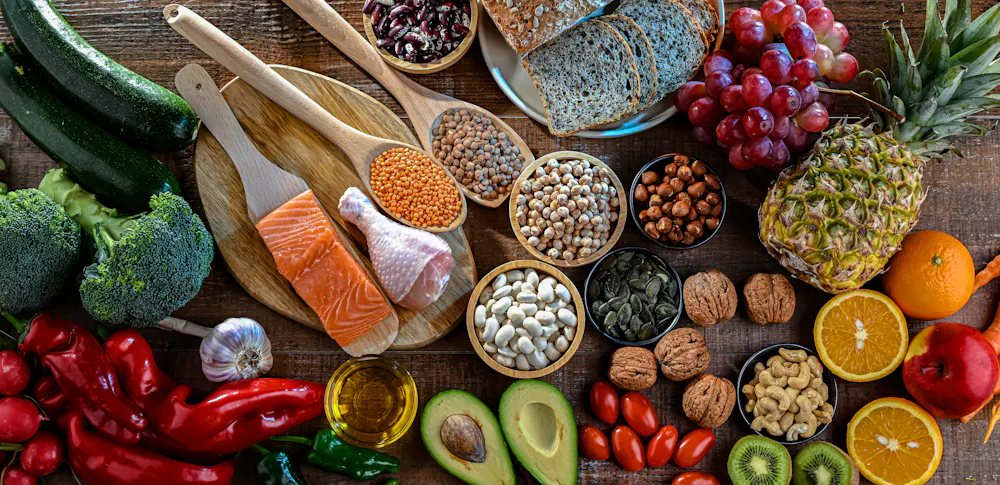
Colorful variety of foods that help lower heart disease risk.

Diet plays a key role in heart disease risk.
monticelllo/iStock via Getty Images Plus

Does cholesterol still matter for heart disease risk?

Though cholesterol may not be the most important predictor of risk for heart disease, it does remain highly relevant.

However, it’s not just the amount of cholesterol – or more specifically the amount of bad, or LDL, cholesterol – that matters. Two people with the same cholesterol level don’t necessarily have the same risk for heart disease. This is because risk is determined more so by the number of particles that the bad cholesterol is packaged into, as opposed to the total mass of bad cholesterol that’s floating around. More particles means higher risk.

That is why a blood test known as apolipoprotein B, which measures the number of cholesterol particles, is a better predictor of risk for heart disease than measurements of total amounts of bad cholesterol.

Like cholesterol and C-reactive protein, apolipoprotein B is also influenced by lifestyle factors like exercise, weight loss and diet. Nutrients like fiber, nuts and omega-3 fatty acids are associated with a decreased number of cholesterol particles, while increased sugar intake is associated with a larger number of cholesterol particles.

Furthermore, lipoprotein(a), a protein that lives in the wall surrounding cholesterol particles, is another marker that can predict heart disease more accurately than cholesterol levels. This is because the presence of lipoprotein(a) makes cholesterol particles sticky, so to speak, and thus more likely to get trapped in an atherosclerotic plaque.

However, unlike other risk factors, lipoprotein(a) levels are purely genetic, thus not influenced by lifestyle, and need only be measured once in a lifetime.

What’s the best way to prevent heart disease?

Ultimately, heart disease is the product of many risk factors and their interactions over a lifetime.

Therefore, preventing heart disease is way more complicated than simply eating a cholesterol-free diet, as once thought.

Knowing your LDL cholesterol level alongside your C-reactive protein, apolipoprotein B and lipoprotein (a) levels paints a comprehensive picture of risk that can hopefully help motivate long-term commitment to the fundamentals of heart disease prevention. These include eating well, exercising consistently, getting adequate sleep, managing stress productively, maintaining healthy weight and, if applicable, quitting smoking.


ShareTweetSharePin
Next Post
The world risks forgetting one of humanity’s greatest triumphs as polio nears global eradication − 70 years after Jonas Salk developed the vaccine in a Pittsburgh lab

The world risks forgetting one of humanity’s greatest triumphs as polio nears global eradication − 70 years after Jonas Salk developed the vaccine in a Pittsburgh lab

Most Read

What causes stuttering? A speech pathology researcher explains the science and the misconceptions around this speech disorder

What causes stuttering? A speech pathology researcher explains the science and the misconceptions around this speech disorder

December 15, 2022
morning back pain

Morning Again Ache Trigger Is Not the Mattress

October 11, 2021

4 steps to building a healthier relationship with your phone

January 28, 2025

Why Circadian Rhythms Matter for Your Health

July 30, 2024
lower back pain relief exercises

5 decrease again ache aid workouts

October 11, 2021
3 years after legalization, we have shockingly little information about how it changed cannabis use and health harms

3 years after legalization, we have shockingly little information about how it changed cannabis use and health harms

October 15, 2021
bleeding in gum

When The Bleeding in gum Is Severe ?

October 11, 2021
Good Night Sleep

6 Causes of Good Evening Sleep

October 11, 2021
Nasal vaccines promise to stop the COVID-19 virus before it gets to the lungs – an immunologist explains how they work

Nasal vaccines promise to stop the COVID-19 virus before it gets to the lungs – an immunologist explains how they work

December 14, 2022
Biden is getting prostate cancer treatment, but that’s not the best choice for all men − a cancer researcher describes how she helped her father decide

Biden is getting prostate cancer treatment, but that’s not the best choice for all men − a cancer researcher describes how she helped her father decide

May 20, 2025

COVID vaccines: how one can pace up rollout in poorer international locations

October 5, 2021
Ten small changes you can make today to prevent weight gain

Ten small changes you can make today to prevent weight gain

October 12, 2021
Kick up your heels – ballroom dancing offers benefits to the aging brain and could help stave off dementia

Kick up your heels – ballroom dancing offers benefits to the aging brain and could help stave off dementia

January 3, 2023
Support and collaboration with health-care providers can help people make health decisions

Support and collaboration with health-care providers can help people make health decisions

December 16, 2021

Maximize Your Performance – Sync with Your Circadian Rhythms

August 9, 2024
woman covered with white blanket

Exploring the Impact of Sleep Patterns on Mental Health

August 4, 2024
Five ways to avoid pain and injury when starting a new exercise regime

Five ways to avoid pain and injury when starting a new exercise regime

December 30, 2022

This Simple Hygiene Habit Could Cut Your Risk of Stroke, New Research Reveals

February 1, 2025
Greece to make COVID vaccines mandatory for over-60s, but do vaccine mandates work?

Greece to make COVID vaccines mandatory for over-60s, but do vaccine mandates work?

December 1, 2021

Multiple sclerosis: the link with earlier infection just got stronger – new study

October 12, 2021
GPs don’t give useful weight-loss advice – new study

GPs don’t give useful weight-loss advice – new study

December 16, 2022
News of war can impact your mental health — here’s how to cope

Binge-eating disorder is more common than many realise, yet it’s rarely discussed – here’s what you need to know

December 2, 2022
Nurses’ attitudes toward COVID-19 vaccination for their children are highly influenced by partisanship, a new study finds

Nurses’ attitudes toward COVID-19 vaccination for their children are highly influenced by partisanship, a new study finds

December 2, 2022
FDA limits access to COVID-19 vaccine to older adults and other high-risk groups – a public health expert explains the new rules

FDA limits access to COVID-19 vaccine to older adults and other high-risk groups – a public health expert explains the new rules

May 21, 2025
As viral infections skyrocket, masks are still a tried-and-true way to help keep yourself and others safe

As viral infections skyrocket, masks are still a tried-and-true way to help keep yourself and others safe

December 14, 2022

🧬 How Your DNA Affects Exercise: The Science of Personalized Fitness

May 21, 2025
How regulatory agencies, not the courts, are imposing COVID-19 vaccine mandates

How regulatory agencies, not the courts, are imposing COVID-19 vaccine mandates

October 24, 2021
Four ways to avoid gaining weight over the festive period – but also why you shouldn’t fret about it too much

Four ways to avoid gaining weight over the festive period – but also why you shouldn’t fret about it too much

December 22, 2022
Nutrition advice is rife with misinformation − a medical education specialist explains how to tell valid health information from pseudoscience

Nutrition advice is rife with misinformation − a medical education specialist explains how to tell valid health information from pseudoscience

January 28, 2025
How hot is too hot for the human body? Our lab found heat + humidity gets dangerous faster than many people realize

How hot is too hot for the human body? Our lab found heat + humidity gets dangerous faster than many people realize

July 6, 2022
  • Home
  • Health & Wellness
  • Disclaimer

© 2020 DAILY HEALTH NEWS

  • Home
  • Health & Wellness
  • Disclaimer
    • Terms of Use
    • Privacy Policy
    • DMCA Notice

© 2020 DAILY HEALTH NEWS










