
Medically Reviewed
Dr. Jose Rossello, MD, PhD, MHCM
Preventive Medicine & Public Health Specialist
Last Reviewed: March 23, 2026
You might have noticed some people seem to radiate health and vitality without wearing any makeup. Their skin looks clear, bright, and full of life. The secret isn’t about expensive products or complicated beauty routines.

True radiance comes from supporting your body’s natural processes through proper nutrition, hydration, stress management, and healthy lifestyle habits that work together to create visible results on your skin. Your skin reflects what’s happening inside your body. When you nourish yourself from within, your skin naturally becomes clearer and more luminous.
This guide explains the practical steps anyone can take to achieve a natural skin glow[1] without relying on makeup or expensive treatments. From the foods that support skin health to the daily habits that protect your natural radiance, these strategies address the root causes of dull skin rather than just covering up the symptoms.
Table of Contents
Key Takeaways
- Glowing skin starts with internal health through proper hydration, nutrition rich in antioxidants, and maintaining good gut health
- Quality sleep and stress management directly impact skin appearance by supporting natural repair processes and reducing inflammation
- Combining gentle skincare practices with healthy lifestyle habits creates sustainable radiance that improves over time
Understanding the Natural Glow

A natural glow reflects the body’s overall health and comes from proper care both internally and externally. The skin’s appearance depends on biological processes, genetic factors, and lifestyle choices that work together.
What Does It Mean to Glow From the Inside Out?
Glowing from the inside out means the skin looks healthy because of what happens beneath its surface. This type of radiance comes from proper nutrition, hydration, and body functions rather than makeup or topical products alone.
The concept focuses on nourishing the skin from the inside out[2] through diet and lifestyle. When the body receives adequate nutrients and water, skin cells function better. They produce the right amount of natural oils and maintain proper moisture levels.
A true natural glow shows up as even skin tone, smooth texture, and a subtle luminosity. The skin looks plump and healthy without obvious dry patches or excessive oiliness. This type of radiance indicates that cells are renewing properly and blood circulation is delivering oxygen and nutrients effectively.
The Science Behind Radiant Skin
Radiant skin results from several biological processes working correctly. Blood flow carries oxygen and nutrients to skin cells while removing waste products. Good circulation gives the skin a healthy color and supports cell renewal.
The skin’s outermost layer contains a protective barrier made of lipids and proteins. When this barrier functions well, it holds moisture inside and keeps irritants out. Damaged barriers lead to dryness, sensitivity, and dullness.
Collagen and elastin proteins provide structure and firmness. The body produces these proteins naturally, but production slows with age. Antioxidants from food protect these proteins from damage caused by free radicals.
Cell turnover happens continuously as new cells form and old ones shed. This process takes about 28 days in young adults but slows over time. Proper nutrition and hydration support faster, more efficient cell renewal.
Genetics vs. Daily Habits
Genetics determine basic skin characteristics like type, tone, and how quickly it ages. Some people inherit genes that produce more collagen or better protect against sun damage. Others may be prone to conditions like eczema or acne.
However, daily habits can improve skin health[1] regardless of genetic makeup. Diet, sleep, stress management, and sun protection all influence how the skin looks and functions. Studies show these factors can slow aging and improve overall appearance.
Key habits that impact glowing skin:
- Sleep quality affects skin repair and regeneration
- Stress levels influence inflammation and breakouts
- Exercise increases blood flow and oxygen delivery
- Sun protection prevents premature aging and damage
While genetics set the foundation, consistent healthy habits make the biggest difference in achieving and maintaining radiant skin. A person with average genetics who follows good practices often has better skin than someone with good genes who neglects proper care.
Nutrition for Skin Health
The foods people eat directly impact how their skin looks and functions. Key nutrients like vitamins C and E support collagen production and protect against damage, while omega-3s reduce inflammation and keep skin supple.
Essential Nutrients for a Luminous Complexion
Vitamin C stands out as one of the most important nutrients for skin. This potent antioxidant helps protect against free radicals[3] and plays a key role in collagen synthesis. Just half a cup of bell peppers provides over 100% of the daily value for vitamin C.
Vitamin E works alongside vitamin C to defend against oxidative stress. Almonds deliver nearly 50% of the daily value in just one ounce, making them an efficient way to get this protective nutrient.
Vitamin A supports healthy cell turnover and repair. One medium sweet potato packs over 100% of the daily value for vitamin A through its beta-carotene content. The body converts beta-carotene into vitamin A[3], which helps maintain skin structure and appearance.
Top vitamin sources for skin:
- Vitamin C: Bell peppers, strawberries, kiwi
- Vitamin E: Almonds, avocados
- Vitamin A: Sweet potatoes, spinach, leafy greens
The Power of Omega-3 Fatty Acids
Omega-3 fatty acids help reduce inflammation throughout the body, including the skin. These healthy fats strengthen the skin’s barrier[3], which helps seal in moisture and protect against irritants.
Sardines provide omega-3s along with vitamin D and selenium. The combination supports skin cell growth, repair, and protection from damage. Walnuts offer a plant-based omega-3 option that also contains polyphenols to combat inflammation.
Flaxseeds represent another plant source worth adding to meals. Research suggests that consuming flaxseed oil can increase skin hydration and smoothness. Ground flaxseeds work better than whole seeds because the body can digest and absorb their nutrients more easily.
Hydrating Foods for Skin Vitality
Water-rich foods contribute to overall hydration levels that affect skin appearance. Kiwis contain over 90% water while simultaneously delivering 141% of the daily value for vitamin C. This dual benefit makes them particularly valuable for maintaining skin moisture and elasticity.
Tomatoes provide hydration along with lycopene, a pigment that helps prevent photodamage from UV radiation[3]. Cooking tomatoes in sauces or stews actually increases the amount of lycopene the body can absorb.
Leafy greens like spinach supply both water content and lutein, a carotenoid that shields skin from oxidative stress. One cup of cooked spinach delivers over 50% of the daily value for vitamin A plus iron, magnesium, and folate that support oxygen delivery to skin cells.
Hydration: The Foundation of Glow
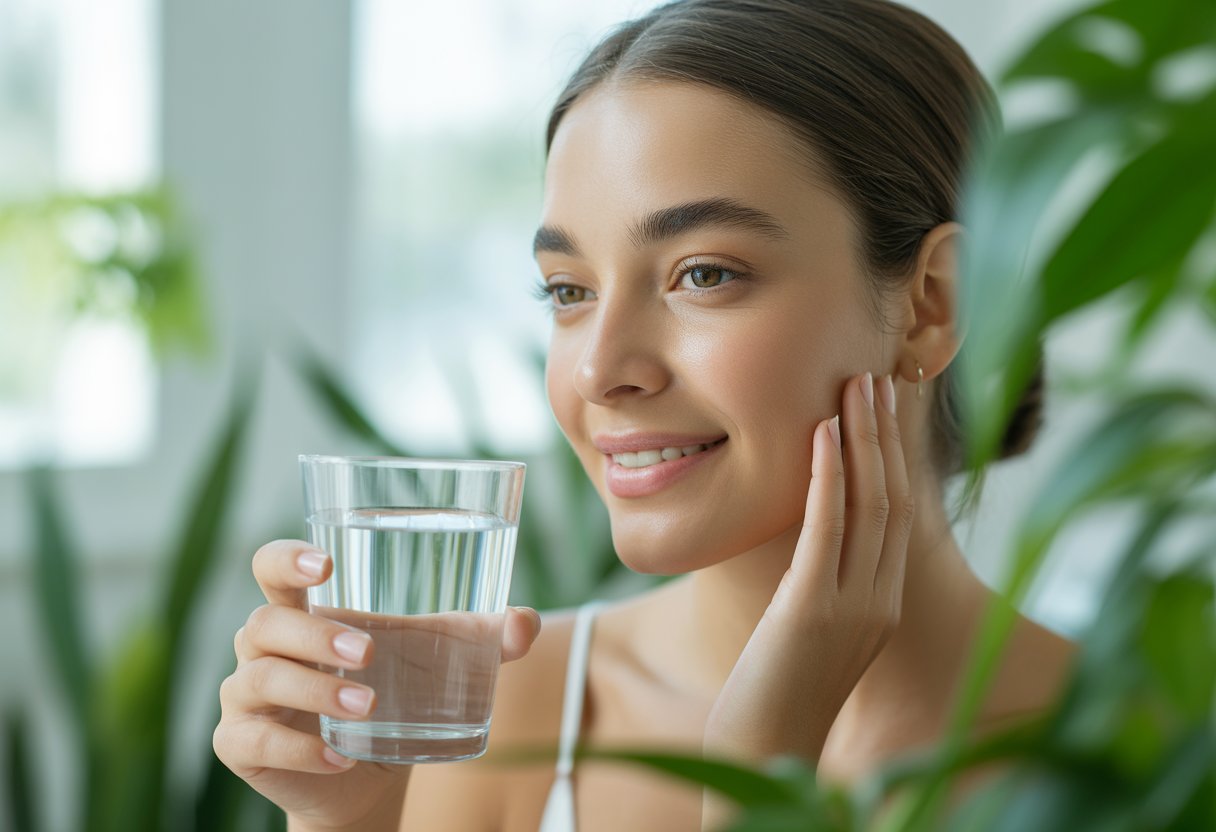
Water makes up about 60% of the body and plays a direct role in skin health. When someone stays hydrated, their skin maintains better elasticity, appears plumper, and functions more effectively as a protective barrier.
Why Staying Hydrated Matters
The skin is the body’s largest organ and depends on water to function properly. When cells receive adequate hydration, they maintain their structure and support natural processes like nutrient delivery and waste removal.
Properly hydrated skin appears brighter and smoother[4] because water supports collagen function and cellular repair. Dehydrated skin often looks dull and shows fine lines more prominently.
Water helps flush toxins from the body through the kidneys and digestive system. This internal cleansing can reduce inflammation and prevent breakouts that interfere with clear, glowing skin. Circulation improves when someone stays hydrated, which means more oxygen and nutrients reach skin cells.
The body cannot store water like it stores fat or other nutrients. This means hydration requires consistent daily attention rather than occasional effort.
Best Practices for Daily Hydration
Most adults need between 8 to 12 cups of water daily, though individual needs vary based on activity level, climate, and body size. Starting the morning with a glass of water before coffee or tea helps establish a foundation for the day.
Simple daily habits include:
- Keeping a reusable water bottle nearby as a visual reminder
- Drinking water before, during, and after meals
- Setting phone reminders throughout the day
- Adding citrus slices or herbs to plain water for natural flavor
Foods contribute significantly to hydration totals. Cucumbers contain 96% water, while watermelon, strawberries, oranges, and lettuce also provide high water content along with vitamins and minerals.
Drinks with electrolytes and low sugar content support hydration more effectively[4] than sugary beverages, especially for active individuals. Herbal teas and coconut water offer good alternatives to plain water. Excessive caffeine can increase fluid loss, so balancing coffee intake with water consumption helps maintain hydration.
Signs of Dehydrated Skin
Dehydrated skin differs from dry skin, though they often get confused. Dehydration refers to a lack of water in skin cells, while dryness relates to oil production. Any skin type can become dehydrated.
Common indicators include:
- Dullness or lack of radiance
- Increased appearance of fine lines
- Tight or uncomfortable feeling
- Flakiness or rough texture
- Dark circles under the eyes
- Increased sensitivity or irritation
The pinch test provides a quick assessment. When someone gently pinches the skin on the back of their hand, well-hydrated skin bounces back immediately. Dehydrated skin takes longer to return to normal.
Itchiness without an apparent cause often signals water deficiency. The skin may also feel tight after cleansing, even when using gentle products. These symptoms typically improve within days of increasing water intake, though severe dehydration may take longer to resolve.
Antioxidants and Their Role in Radiant Skin
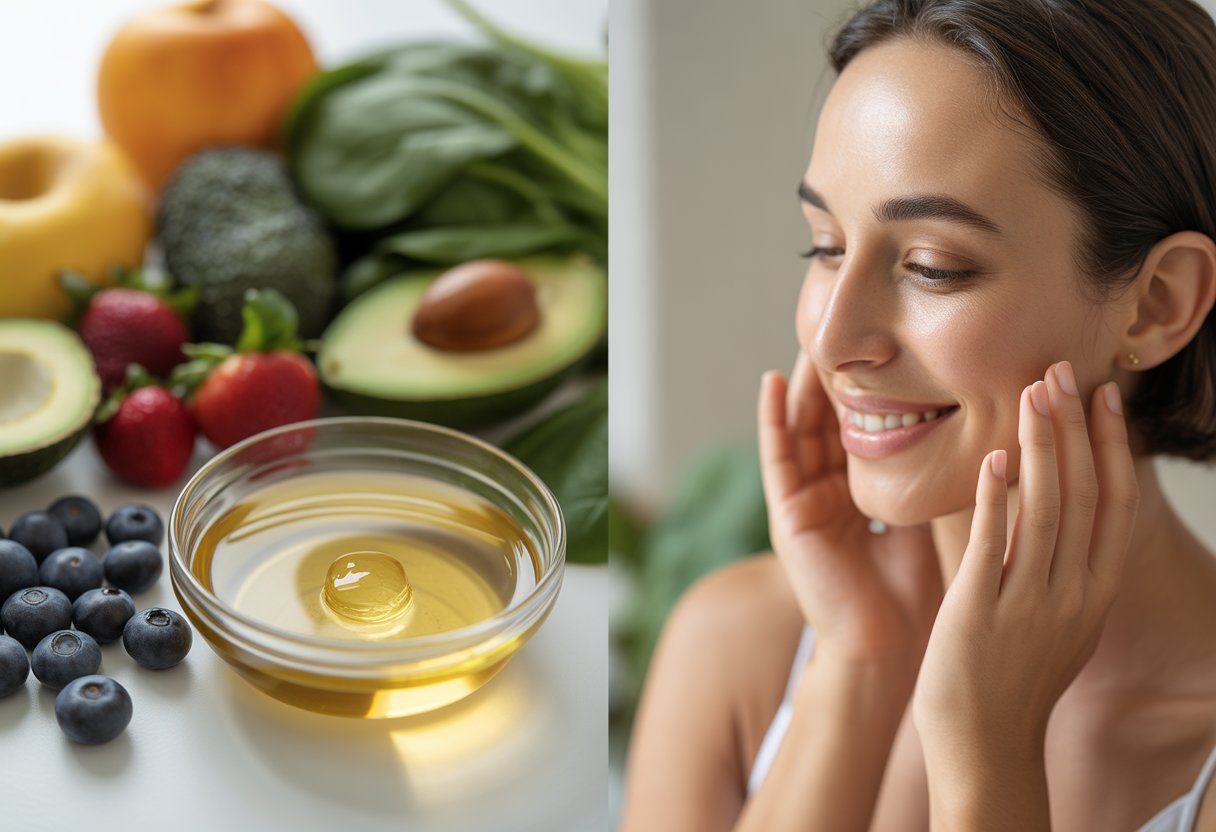
Free radicals from pollution, UV rays, and stress damage skin cells daily. Antioxidants neutralize these harmful molecules before they cause wrinkles, dark spots, and dullness.
Antioxidant-Rich Foods to Add to Your Diet
Berries stand out as some of the most powerful antioxidant-rich foods[5] for skin health. Blueberries, strawberries, and raspberries contain high levels of vitamin C and polyphenols that protect skin cells from damage.
Leafy greens like spinach and kale provide vitamins A, C, and E. These nutrients work together to repair skin tissue and maintain moisture levels.
Nuts and seeds offer vitamin E and selenium. Almonds, sunflower seeds, and walnuts help strengthen the skin barrier and reduce inflammation. Just a small handful each day delivers noticeable benefits.
Tomatoes contain lycopene, a powerful antioxidant that becomes more potent when cooked. Dark chocolate with at least 70% cocoa provides flavonoids that improve skin texture and hydration. Green tea delivers catechins that calm irritation and protect against environmental damage.
How Antioxidants Protect Your Skin
Antioxidants work by donating electrons to unstable free radical molecules. This process stops the chain reaction of cell damage that leads to premature aging.
Vitamin C boosts collagen production[6] while fading hyperpigmentation and enhancing natural glow. Vitamin E reinforces the skin barrier and prevents moisture loss. These two vitamins work even better when combined.
Glutathione regenerates other antioxidants[7] like vitamin C and E, earning its title as the master antioxidant. It detoxifies skin cells and lightens dark spots by reducing oxidative stress.
Resveratrol from grapes supports cellular health and extends skin cell life. Coenzyme Q10 energizes cells to improve repair and regeneration. These antioxidants reduce inflammation, even out skin tone, and maintain firmness by protecting DNA from damage.
Gut Health and Its Connection to Skin

The gut contains trillions of bacteria that directly influence skin appearance through what scientists call the gut-skin axis[8]. When the gut microbiome becomes unbalanced, skin often shows the first signs through breakouts, redness, or dullness.
Benefits of Fermented Foods
Fermented foods naturally contain live bacteria that support a healthy gut microbiome. Common options include kefir, sauerkraut, kimchi, and yogurt with live cultures.
These foods go through a fermentation process that creates beneficial bacteria strains. The bacteria help restore balance in the digestive system, which can reduce skin inflammation and improve clarity.
Popular fermented foods for gut health:
- Kefir (dairy or non-dairy)
- Sauerkraut
- Kimchi
- Kombucha
- Miso
- Tempeh
- Pickled vegetables (naturally fermented)
Research shows that people with skin conditions like eczema, rosacea, and acne often have higher rates of gut inflammation. Adding fermented foods to the daily diet helps address this underlying issue rather than just treating surface symptoms.
Probiotics, Prebiotics, and Glowing Skin
Probiotics are live bacteria consumed through supplements or food to balance the gut microbiome. Different strains offer different benefits, so choosing a supplement with multiple bacterial strains supports overall gut diversity.
Prebiotics are fiber types that feed good gut bacteria. They’re found in foods like onions, garlic, leeks, asparagus, oats, and apples. When gut bacteria digest this fiber, they create anti-inflammatory compounds that benefit skin health.
How prebiotics and probiotics work together:
- Prebiotics provide food for beneficial bacteria
- Probiotics introduce new beneficial bacteria strains
- Together they strengthen the gut lining
- A stronger gut reduces inflammation throughout the body
Most people notice skin improvements around four weeks after starting a probiotic regimen, though results vary by individual. The key is consistency and pairing probiotics with a fiber-rich, nutrient-dense diet[8] for best results.
Beauty Sleep: Overnight Transformation

While you sleep, your skin shifts into high gear for repair and renewal. Getting enough quality rest helps boost collagen production, increase blood flow, and reverse daily damage from sun exposure and pollution.
How Sleep Influences Skin Repair
During deep sleep, the body doubles its rate of cell turnover. This process helps shed old, damaged cells and replace them with fresh ones.
Blood flow to the skin increases at night. This delivers more oxygen and nutrients to skin cells while removing toxins and waste products.
The body also produces more collagen during sleep. Collagen keeps skin firm and smooth, reducing the appearance of fine lines and wrinkles.
Sleep deprivation disrupts these natural processes. Even one night of poor sleep can lead to a dull complexion, dark circles under the eyes, and more visible fine lines. Chronic lack of sleep speeds up skin aging and weakens the skin’s protective barrier.
Research shows that sleep loss[9] causes pale and lackluster skin, droopy eyelids, and new wrinkles. Getting 7-9 hours of quality sleep gives your body enough time to heal and regenerate skin cells properly.
Tips for Enhancing Quality Sleep
Set up your bedroom for better skin health. Keep the room temperature between 65-68°F to help you fall asleep faster. Use blackout curtains or an eye mask to block light.
Sleep on a silk or satin pillowcase. These fabrics don’t absorb moisture from your skin like cotton does. They also reduce friction that can cause sleep wrinkles over time.
Try sleeping on your back when possible. This position prevents your face from pressing into the pillow, which can create creases and contribute to puffiness.
Add a humidifier to your room if the air is dry. Keeping humidity around 40-60% prevents skin from drying out overnight.
Create a calming bedtime routine. Avoid screens for at least 30 minutes before bed. Try reading, gentle stretching, or meditation instead. Go to bed at the same time each night to help regulate your body’s natural repair cycle.
Managing Stress for a Natural Glow

Chronic stress triggers cortisol release, which breaks down collagen and increases oil production in the skin. Learning effective ways to calm the mind and body can reduce inflammation and help skin cells repair themselves more efficiently.
Stress Management Techniques That Work
Deep breathing exercises offer a simple way to lower stress hormones quickly. A person can practice box breathing by inhaling for four counts, holding for four counts, exhaling for four counts, and holding again for four counts. This technique activates the parasympathetic nervous system and reduces cortisol levels within minutes.
Regular meditation helps manage long-term stress effects on the skin. Even five to ten minutes daily can decrease inflammation markers in the body. Apps and guided videos make it easy for beginners to start a consistent practice.
Physical movement like yoga, walking, or stretching releases tension stored in muscles. Exercise increases blood flow to the skin while helping the body process stress hormones more effectively. Low-impact exercises like walking, yoga, or pilates[10] improve circulation without adding physical stress.
Getting seven to nine hours of quality sleep each night allows skin to repair and regenerate. The body produces new collagen during deep sleep stages, which prevents sagging and wrinkles.
The Mind-Skin Connection
The gut-brain-skin axis links mental state directly to skin health. When stress levels rise, the gut microbiome changes, which can trigger inflammation that shows up as acne, rosacea, or dullness. Addressing stress helps maintain the balance of good bacteria in the digestive system.
Chronic stress weakens the skin barrier function. This makes skin more sensitive to irritants and less able to retain moisture. Managing daily stress helps the skin maintain its protective barrier and stay hydrated.
Stress hormones increase sebum production in oil glands. This excess oil combines with dead skin cells to clog pores and cause breakouts. Reducing stress through proven techniques helps regulate oil production naturally and keeps pores clear.
Physical Wellness: Movement, Circulation, and Glow

Regular physical activity boosts blood flow to skin cells while lymphatic drainage techniques help remove toxins that dull the complexion. Both practices work together to create visible improvements in skin tone and texture.
Exercise for Improved Skin Health
Physical activity increases circulation, delivering oxygen and essential nutrients to the skin. This process helps cells function properly and repair damage more efficiently.
Exercise benefits extend beyond fitness[11] to create visible changes in skin radiance. The increased blood flow during workouts gives skin a natural flush that can last for hours afterward.
Sweating during exercise also plays a role in skin health. It opens pores and helps clear out dirt and oil that can lead to breakouts. People should always wash their face after workouts to prevent buildup.
Different types of movement offer different benefits. Cardio activities like running or cycling maximize circulation, while yoga reduces stress hormones that trigger inflammation. Even a 20-minute walk each day can improve skin tone over time.
The key is consistency rather than intensity. Regular moderate exercise produces better long-term results than occasional intense workouts.
Lymphatic Drainage and Facial Massage
The lymphatic system removes waste and excess fluid from tissues throughout the body. When this system moves slowly, fluid builds up and causes puffiness and a dull appearance.
Gentle facial massage techniques encourage lymphatic drainage and reduce swelling, especially around the eyes and jawline. These movements should follow specific patterns that direct fluid toward lymph nodes in the neck.
Basic facial massage involves:
- Using light pressure with fingertips
- Moving in upward and outward motions
- Starting from the center of the face
- Finishing at the hairline and down the neck
People can perform these techniques at home using clean hands or tools like jade rollers. The process takes just 5-10 minutes and works best when done daily. Morning sessions help reduce overnight puffiness, while evening massage promotes relaxation before sleep.
Dry Brushing and Other External Natural Techniques
External skin care practices can boost circulation and remove dead cells to reveal brighter, healthier skin. These techniques work on the skin’s surface to support the body’s natural renewal process.
Benefits of Dry Brushing for Skin Texture
Dry brushing removes dead skin cells[12] by using a dry brush to gently exfoliate the skin’s surface. This simple practice encourages new cell growth and helps even out skin tone.
The technique stimulates blood flow to the skin, which brings oxygen and nutrients to the surface. Better circulation creates a healthy, vibrant appearance that contributes to a natural glow.
Dry brushing also supports the lymphatic system. This network of vessels moves waste and toxins out of the body. Light, rhythmic strokes help move lymph fluid toward lymph nodes in the neck, armpits, and groin where the body filters out harmful substances.
Key benefits include:
- Softer, smoother skin texture
- More even skin tone
- Reduced appearance of dry, flaky patches
- Temporary improvement in the look of cellulite
The practice takes only three to five minutes and requires just a basic brush with natural bristles. Results often appear after the first session, though more significant changes may take several weeks of regular use.
Safe Practices for At-Home Treatments
The best time to dry brush is right before a shower. Both the skin and brush should be completely dry. A person should stand in an empty shower or bathtub to catch any skin flakes.
Brushing should always move toward the heart or nearest lymph nodes. Start at the feet and work upward using long, sweeping strokes. Cover the legs, stomach, chest, back, and arms in that order.
Proper technique requires:
- Firm pressure that feels stimulating but never painful
- No back-and-forth scrubbing motions
- Gentle treatment on sensitive areas like the chest
- Avoiding the face or using extremely light pressure
After brushing, take a lukewarm shower and apply moisturizer immediately while skin is still damp. This locks in hydration.
People with eczema, psoriasis, rosacea, or open wounds should skip dry brushing. Those with sensitive skin may need a softer brush and lighter pressure. Redness or discomfort means the pressure is too strong.
Daily Skincare Rituals That Complement Inner Wellness
Topical skincare works best when it supports the body’s natural processes rather than fighting against them. Using gentle, natural ingredients paired with protective habits creates a foundation for healthy skin that reflects inner vitality.
Natural Ingredients for Topical Care
Plant-based ingredients work with the skin’s natural biology to support repair and protection. Turmeric reduces inflammation and helps heal acne scars while fighting bacteria that cause breakouts. Rose water calms redness and helps preserve collagen by blocking enzymes that break it down.
Ashwagandha root extract helps skin handle stress while supporting collagen production and fighting signs of aging. Its antimicrobial properties make it useful for treating acne-prone skin.
Vitamin C from sources like amla berry protects against environmental damage and supports healthy skin function. Hyaluronic acid delivers immediate hydration by holding moisture in the skin.
Key natural ingredients for glowing skin:
- Turmeric – reduces inflammation and scarring
- Rose water – calms skin and protects elastin
- Ashwagandha – fights stress and supports firmness
- Vitamin C – protects and brightens
- Hyaluronic acid – provides deep hydration
Consistency and Sun Protection
Daily application matters more than occasional intensive treatments. The skin responds to steady, repeated care that builds protective barriers and supports cell turnover over time.
Sun protection prevents the majority of visible aging and protects skin health at every age. UV exposure breaks down collagen, creates dark spots, and damages cells that affect how skin looks and functions.
A basic routine includes cleansing, applying treatment products with active ingredients, moisturizing, and protecting from sun exposure. Mindful skincare practices[13] connect these physical steps with intentional self-care that reduces stress. Morning and evening routines don’t need many products, but they do need regular commitment to see results.
Building Sustainable Habits for Lasting Radiance
Real progress comes from small daily actions tracked over time and finding ways to stay committed when motivation fades.
Tracking Your Progress and Making Adjustments
Keeping a simple skin journal helps identify what actually works. A person can snap weekly photos in the same lighting and note how their skin looks and feels each day. This creates a clear record of improvements that might be hard to notice day-to-day.
The journal should include:
- Water intake – Number of glasses consumed
- Sleep hours – Quality and duration
- Food choices – Meals rich in vitamins and healthy fats
- Product reactions – Any new items used and skin response
- Stress levels – Notable high-stress days
Most changes take 6-8 weeks to become visible. If someone sees no improvement after two months, they should adjust one variable at a time. Maybe their cleanser is too harsh, or they need more omega-3 fatty acids in their diet.
Signs of progress include fewer breakouts, improved texture, better moisture retention, and reduced redness. When tracking reveals patterns, like skin looking dull after eating certain foods, that person gains valuable information for making smart adjustments.
Staying Motivated on Your Glow Journey
Motivation naturally drops after the initial excitement wears off. Creating everyday wellness habits for glowing skin[14] requires planning for those low-motivation days.
Setting up environmental cues makes healthy choices automatic. A person can place a water bottle on their desk, prep smoothie ingredients the night before, or set phone reminders for their skincare routine.
Breaking big goals into smaller milestones keeps momentum going. Instead of focusing on perfect skin in three months, they might celebrate drinking enough water for seven straight days or sticking to their routine for two weeks.
Finding an accountability partner helps too. Sharing progress with a friend who has similar goals creates mutual support. They can remind each other why they started when temptation strikes to skip steps or revert to old habits.
Frequently Asked Questions
Natural skin radiance comes from combining the right ingredients, daily practices, and nutrition choices that support the body’s largest organ from the inside out.
What are effective natural ingredients for achieving glowing skin?
Vitamin D and omega-3 fatty acids stand out as two powerful natural ingredients for skin health. Vitamin D supports anti-inflammatory actions and tissue repair in the skin, while omega-3 fatty acids provide well-documented anti-inflammatory benefits that show up in skin appearance.
Beta-carotene from green leafy vegetables absorbs ultraviolet radiation from sunlight and prevents skin damage. Leafy greens also contain vitamins, tocopherols, and flavonoids that work together to support healthy skin.
Antioxidants from fruits and vegetables help fight inflammation in the body. Since the skin is the largest organ, it often shows signs of internal inflammation through dryness, loss of elasticity, and uneven pigmentation.
What daily habits contribute to a natural, radiant complexion?
Getting enough sleep is one of the most important habits for radiant skin. Sleep deprivation leads to increased fine lines, uneven pigmentation, and reduced skin elasticity.
Regular exercise improves skin health by preventing dry skin through sweating[2] and increasing blood circulation. Better circulation means more nutrients and oxygen reach the skin.
Stress management through deep breathing or meditation helps lower cortisol levels. High stress can trigger or worsen skin conditions like psoriasis and eczema by affecting the body’s hormonal balance.
Protecting skin from UV rays, environmental pollution, and harsh cosmetic ingredients prevents damage. Covering up in the sun and choosing products without harmful chemicals like sodium lauryl sulfate keeps skin healthier.
Can you recommend a routine for improving skin glow within a week?
A week-long routine should focus on hydration, nutrition, and consistent sleep patterns. Drinking plenty of water throughout the day helps maintain skin moisture from within.
Adding more fruits and vegetables to each meal provides immediate anti-inflammatory nutrients. Dark leafy greens, colorful berries, and orange vegetables deliver vitamins and antioxidants that the skin can use right away.
Getting seven to eight hours of quality sleep each night allows the skin time to repair itself. Pairing this with gentle exercise that increases circulation helps nutrients reach the skin faster.
Which homemade remedies help to instantly enhance skin’s luminosity?
While topical treatments provide temporary effects, true luminosity comes from internal changes rather than instant fixes. The skin needs time to respond to nutritional and lifestyle improvements.
Staying hydrated by drinking water throughout the day can improve skin appearance within hours. Proper hydration helps skin cells function better and look plumper.
Eating foods rich in omega-3s like walnuts, flaxseeds, or fatty fish provides building blocks for healthy skin cell membranes. These changes take consistent effort rather than producing instant results.
How can diet and nutrition influence skin health and glow?
Low fruit and vegetable consumption links directly to inflammation in the body[2], which shows up as skin dryness, wrinkles, and dull appearance. Whole grains, nuts, seeds, and beans provide anti-inflammatory nutrients that promote clearer skin.
Eating greens rich in beta-carotene helps protect skin from sun damage at the cellular level. These vegetables contain compounds that may slow skin aging when consumed regularly.
Vitamin D from foods like fatty fish and fortified products supports skin repair processes. Combined with omega-3 fatty acids, these nutrients reduce inflammation that can make skin look tired and aged.
What skincare practices are essential for nourishing skin from within?
Choosing clean skincare products without harmful chemicals protects the skin barrier. The European Union has banned over 1,300 chemicals in cosmetics, while the United States has only banned eight ingredients.
Incorporating nourishing foods into a daily routine[10] that includes exercise and stress-reducing habits promotes both skin health and longevity. This holistic approach addresses the root causes of skin concerns rather than just covering symptoms.
Protecting skin from environmental damage while feeding it nutrients from inside creates lasting improvements. Combining physical protection like covering up in the sun with nutritional support from antioxidant-rich foods gives skin the best chance to glow natural
Post Views: 8
References
- Just a moment…. https://rollingout.com/2025/04/14/natural-skin-glow/ Accessed March 24, 2026
- Skin Health from the Inside Out: 7 Holistic Nutrition Tips for Naturally Glowing Skin. https://csnn.ca/distance-education/blog/skin-health-from-the-inside-out-7-holistic-nutrition-tips-for-naturally-glowing-skin/ Accessed March 24, 2026
- This potent antioxidant helps protect against free radicals. https://www.goodhousekeeping.com/health/diet-nutrition/g65962713/best-foods-for-healthy-glowing-skin-at-any-age/ Accessed March 24, 2026
- Creating a Glow-Up That Actually Lasts: How Internal Hydration Beats Temporary Fixes — Posh Lifestyle & Beauty Blog. https://www.poshbeautyblog.com/health/2026/1/26/creating-a-glow-up-that-actually-lasts-how-internal-hydration-beats-temporary-fixes Accessed March 24, 2026
- 9 Superfoods for Glowing Skin: Boost Radiance Naturally. https://www.medanta.org/patient-education-blog/superfoods-for-glowing-radiant-skin Accessed March 24, 2026
- Top 9 Antioxidants for Youthful, Radiant Skin. https://www.revivalabs.com/the-best-antioxidants-in-skincare-what-to-look-for-and-why-they-matter/ Accessed March 24, 2026
- Glowing from the Inside Out: Antioxidants for Radiant Skin. https://www.sesres.com/blog/glowing-from-the-inside-out-antioxidants-for-radiant-skin/ Accessed March 24, 2026
- gut-skin axis. https://www.byrdie.com/gut-skin-axis-4799925 Accessed March 24, 2026
- Beauty Sleep Essentials: Overnight Tips for Glowing Skin by Morning
– grace & stella. https://www.graceandstella.com/blogs/blog/beauty-sleep-overnight-tips-glowing-skin Accessed March 24, 2026 - 5 Simple Tips to Glow From The Inside Out
– beeya wellness. https://beeyawellness.com/blogs/all/5-simple-tips-to-glow-from-the-inside-out Accessed March 24, 2026 - Exercising for an inside-out glow. https://ediblebeautyaustralia.com/blogs/health-wellness/exercising-for-an-inside-out-glow-how-movement-can-boost-your-radiance-and-your-confidence Accessed March 24, 2026
- Want Glowing Skin? A Complete Guide to Dry Brushing. https://bodymind.com/want-glowing-skin-a-complete-guide-to-dry-brushing/ Accessed March 24, 2026
- Mindful Beauty Rituals: Skincare Practices for Inner and Outer Glow. https://beyondbeautylab.com/mindful-skincare-practices/ Accessed March 24, 2026
- 7 Everyday Wellness Habits for True Beauty From Inside Out. https://cosmeticsarenas.com/beauty-and-wellness-habits-for-glowing-skin-inside-out/ Accessed March 24, 2026

















