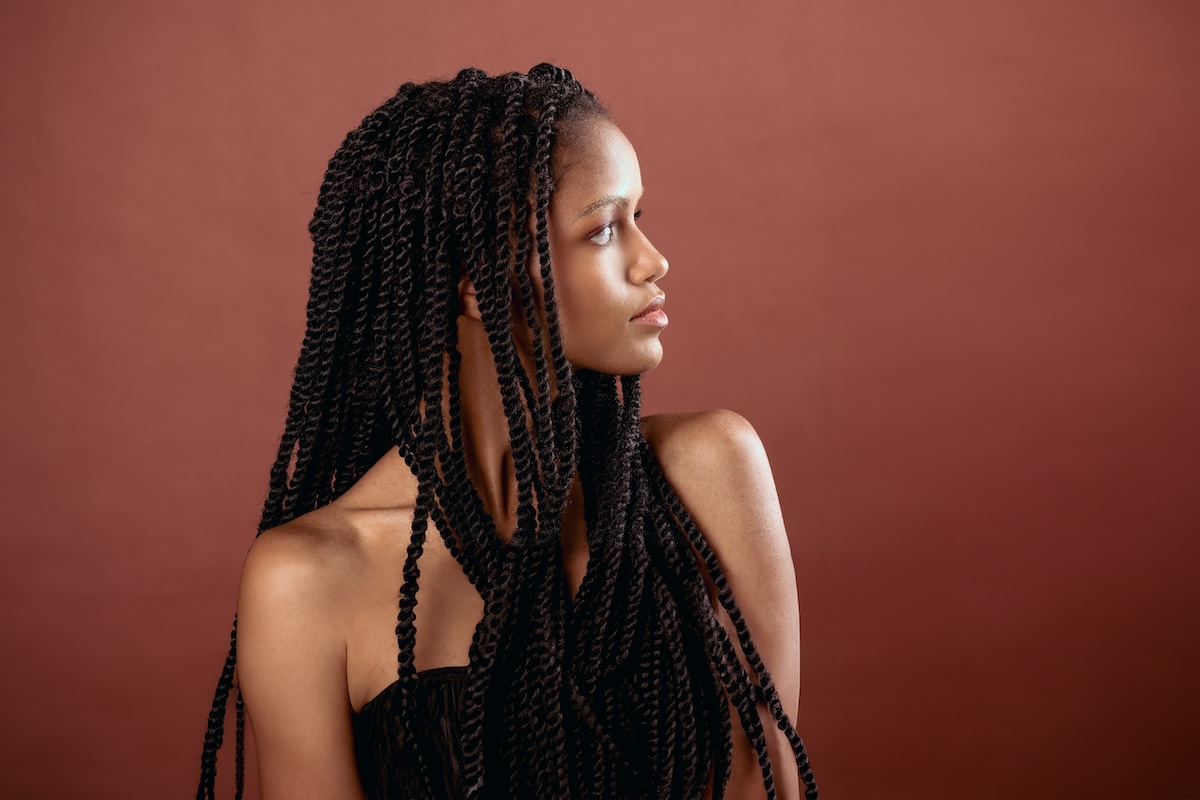
If you think switching to human hair for your protective styles is safer for your hair and health, think again. Consumer Reports followed up on the test they did on synthetic braiding hair last year with 30 additional brands, including human hair and plant-based products. Their new findings: human braiding hair was the worst offender.
Consumer Reports is an independent, nonprofit member organization that seeks truth, transparency, and fairness in the marketplace. According to their investigation of human, plant-based, and synthetic brands tested, “One hundred percent of the products also contained VOCs, including acetone, a respiratory irritant, and low levels of carcinogens (toxins that may be linked to cancer).”
Table of Contents
Why They Tested Braiding Hair
Initially, they actually listened to Black women. In fact, they held listening sessions with Black-led organizations and their members to understand which products they have concerns about. The safety of braiding hair was among our top concerns. But after the first investigation came out, Consumer Reports reviewed scores of social media posts and comments. Many wanted to know whether they could believe the claims of those touting safer alternatives. In addition, James E. Rogers, PhD, director and head of product safety testing at CR, had a personal interest since his adult daughters are long-time braid wearers.
What CR Tested For
The scientist conducting the testing had a thorough understanding not only of the places we might get our hair braided, but also of the habits associated with the process. Yes, they tested for heavy metals, including lead, arsenic, and cadmium. But they also test for microbiological contaminants because they realize that, at salons, braiders may touch their faces and wipe their mouths. Then there is the fact that many salon braiders and DIYers may put the braids in their mouths. And our children may put our braids in their mouths as well. Experts, however, agree that that is just one way contaminants can be absorbed in our systems.
The Silent Spring Institute published a study in the Journal of the American Chemical Society and also found ingredients that could be harmful to our health.
Cost is Not a Deciding Factor
Paying a higher price tag for the braiding hair does not guarantee safety. In the human hair category, YG Water Wave had the most lead. Mane Concept, Janet Collection, and Indique also contained significant levels of lead and cadmium. When it came to synthetic hair, Gyal Braids, and Slayy Hair had the highest levels of VOCs detected in their samples. Even Rebundle, a popular plant-based hair extension alternative made from banana leaves, contained lead. Dosso Beauty was the only brand that didn’t contain detectable amounts of VOCs.
These Results Show the Need for More Regulations
If you think about it, we are not always clear where the human hair we use is sourced beyond the country of origin. Ingredients that the donor has used, such as lead, which is sometimes present in hair dye or cosmetics, may also be present in the hair. Two states are hoping to push for more transparency.
In California, the government could amend the Prop 65 List to include ingredients used in hair extensions. “The list contains a wide range of naturally occurring and synthetic chemicals that are listed for cancer or reproductive harm, or both. These chemicals include additives or ingredients in pesticides, common household products, food, drugs, dyes, or solvents.” On the East Coast, legislators are pushing for the passage of “The Beauty Justice Act, ” which would ban some of the most toxic chemicals from personal care and beauty products sold in New York State.”
How to Handle Protective Styles Now
Braids, twists, and cornrows are a year-round go-to for many of us. When the first investigation came out, most people did not change their habits. This may also be the case with this recent investigation. If you insist on continuing to use braiding hair, give some thought to how you use them. Consider the brands you choose, how long you keep the braiding hair in, and how often you take breaks between uses.

















