Only three of the 14 counties in north-central Florida provide full access to obstetric care. Six have low access to care – meaning there are fewer than two hospitals offering obstetric care or birth centers per 10,000 births and fewer than 60 obstetric providers. The remaining five counties are maternity care deserts. Approximately 3,400 women of childbearing age live in those deserts.
In 2024, a report found that hospitals across Florida were discontinuing obstetric care due to lack of funding. Eighteen of the state’s 21 rural hospitals no longer provide obstetric care.
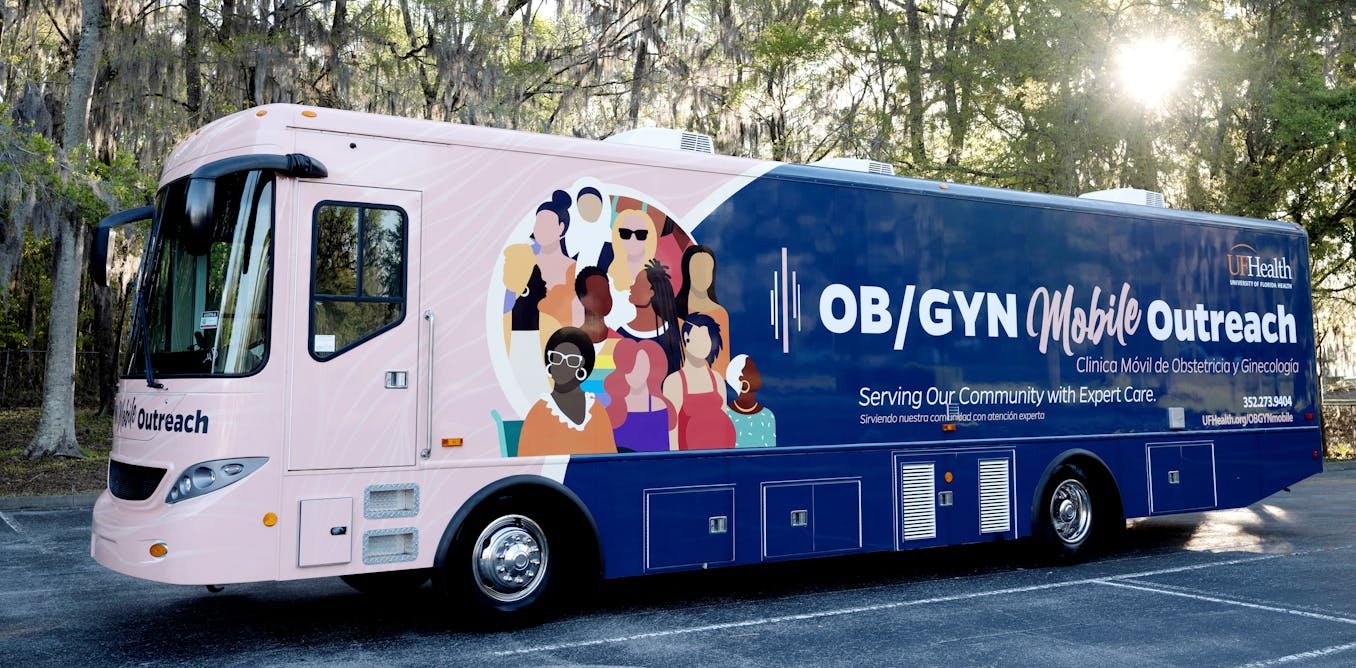
To address this gap in care, in February 2025 the University of Florida established the OB/GYN Mobile Outreach Clinic. The mobile clinic provides comprehensive maternal health services, including prenatal and postpartum care, breastfeeding support, family planning, annual gynecological exams and preventive health screenings. The only services not offered on-site are deliveries.
We are the director and assistant director of the clinic and a medical student at the University of Florida. Outside of our work with the mobile clinic, we also research interventions to improve maternal health in low-resource settings.
We launched the clinic in February 2025. By the end of 2025, we had provided care to 194 women in 616 visits.
Based on our experience, we believe that mobile clinics focused on maternal health could be an effective way to reach more rural and low-income communities.
Table of Contents
Maternity deserts across the US
Two and a half million American women of childbearing age – nearly 4% – live in a maternity care desert: a county without a single hospital, birthing center or obstetric health care professional.
Over the past decade, the closure of hundreds of obstetric units has exacerbated this problem, particularly in rural regions. Women in maternity care deserts travel an average of 35 miles to reach a birthing hospital, compared to an average of 9 miles for women in full-access counties.
The maternal mortality rate in the U.S., which peaked during COVID, remains higher than that of most other high-income nations. Access to timely prenatal and postpartum care is crucial to preventing pregnancy-related deaths. Studies have shown that traveling longer distances for obstetric care is associated with worse infant and maternal health outcomes.
Our mobile model
Mobile health clinics are vehicles, such as buses or vans, equipped with medical tools and supplies to deliver health care services.
The University of Florida OB/GYN Mobile Outreach Clinic is a retrofitted bus with two exam rooms, an ultrasound machine and supplies for serum and urine testing for prenatal labs. A small dispensary allows providers to give prenatal vitamins and medications for common conditions, such as vaginitis or urinary tract infections. This reduces the need for patients to make additional pharmacy or lab visits or pay for medication.
Care provided at the mobile clinic is free to the patient. If patients are eligible for Medicaid or other health insurance, our team assists them in applying for benefits. In 2023, about 1 in 7 women of childbearing age in Florida were uninsured.
Operating on a different model
The Mobile Outreach Clinic operates twice weekly in consistent, rotating locations, including northeast Gainesville in Alachua County, Lake City in Columbia County, Bronson in Levy County and Trenton in Gilchrist County. Of these locations, only Levy County is a maternity care desert, but all of these locations were selected to care for patients of low socioeconomic status and limited access to care.
We set up the clinic at sites that are already trusted or frequently visited by our target population. This includes family resource centers, churches and public libraries. Patients and families know they can expect us on a consistent day of the week. A core principle of our program is that we show up, no matter what. This ethos has helped us establish and maintain trust with our patients.
Appointments are walk-in or scheduled, with wait times significantly shorter than traditional clinics. Patients are scheduled within a week, generally through referrals from trusted partner agencies or from other patients.
Unlike traditional clinics, which schedule for 15- to 20-minute appointments, the mobile clinic allots 30-60 minutes for patient visits. This allows time to address social needs, transportation barriers, food insecurity or housing needs. The clinical care team is led by nurse midwives and includes a physician assistant, certified nurse-midwives, nurses, a nurse practitioner and lactation consultant, medical assistants and promotoras, community health workers who act as peer educators and patient liaisons in Hispanic communities. Maternal-fetal medicine physicians review ultrasound images remotely.
Operating outside a traditional clinical setting sometimes requires our staff to be flexible and creative to meet the needs of our patients. For instance, the week before Thanksgiving, our clinic was at capacity while parked in a church lot in Trenton. One of our patients needed a nonstress test, and with space limited, the nurse and health educator interpreter worked together to complete the test in a quiet area within the church. The patient received timely care despite the full schedule and space constraints.
Taking health care to the streets
Currently, there are approximately 3,600 mobile health clinics in the United States, with 1,319 tracked through the Mobile Health Map.
These clinics can provide a wide range of services, from disaster relief and mental health care to mammography and dental care, to primary and preventive care. They particularly target low-income and uninsured populations. A study of 811 mobile clinics found that among patients treated between 2007 and 2017, 36% were from rural areas, 38% were homeless, 55% were low income and 56% were uninsured.
Mobile health clinics have been shown to improve health by delivering regular care directly to populations that would not have access otherwise.
In a survey of mobile clinic users, patients reported receiving holistic care, feeling safer than they’d felt in other health care settings and interacting with staff who were mindful of health care costs.
Regardless of insurance status, patients said they were able to maintain continuity of care, meaning the mobile clinic managed their care consistently and was able to share their records with new providers to ensure they received appropriate care.
Expanding mobile health to pregnant patients
Unfortunately, only 128 of the 1,319 mobile clinics tracked in the mobile health map provide maternal and infant health services, and the services they offer pregnant, postpartum and newborn patients are generally quite limited. As maternity care deserts expand, mobile health clinics could offer a practical solution for meeting prenatal and postpartum care needs.
We believe our model could be replicated elsewhere, and other similar clinics are already up and running, such as the University of Arizona Mobile Health Program.
The primary challenge for mobile clinics is funding, as they are typically free to patients and supported through grants. With projected recent changes to Medicaid and ACA marketplace coverage, even more patients may face limited access to prenatal and postpartum health care.
Studies on mobile health clinics have identified several additional challenges associated with this model of care. Mobile clinics are not equipped to manage emergent complications, complex medical procedures or labor and delivery.
They also face staffing limitations, particularly in finding health care professionals who understand and enjoy the unique opportunities and challenges inherent in providing care on a mobile clinic, in addition to their scheduled clinic or hospital shifts.
But our hope is that as our clinic and others like it demonstrate an improvement in health care in maternal care deserts, increased awareness and support may help expand this model to more communities.
Read more stories from The Conversation about Florida.

















