Nearly three times as many Pennsylvania adults gamble online today than just a few years ago.
And as online platforms make gambling easier and more convenient, some Pennsylvanians are gambling more often and may be more prone to developing problems.
We are researchers at Penn State’s Criminal Justice Research Center and the University of Kentucky’s College of Social Work who recently published these findings in a report on online gambling in Pennsylvania. The report was produced in partnership with the Pennsylvania Department of Drug and Alcohol Programs.
We surveyed over 3,500 Pennsylvania adults and found that between 2.5% and 6.4% could be classified as problem gamblers.
An additional nearly 30% fell into “at-risk” categories, meaning they show meaningful signs of harm but do not yet meet the threshold for problem gambling.
Here are five of our key findings and why they matter:
1. Most Pennsylvanians still gamble offline, not online – but the distance between the two is shrinking
When Pennsylvania legalized online gambling in 2017, it required an annual assessment on the impacts of the legislation on Pennsylvania residents’ gambling behaviors. The assessment began two years after the first licenses were issued.
In the first two years of the survey, which were used to produce the 2021 and 2022 annual reports, approximately 11% of Pennsylvania adults reported gambling online. That number rose to as high as 30% in the most recent 2025 report, which was released in January 2026.
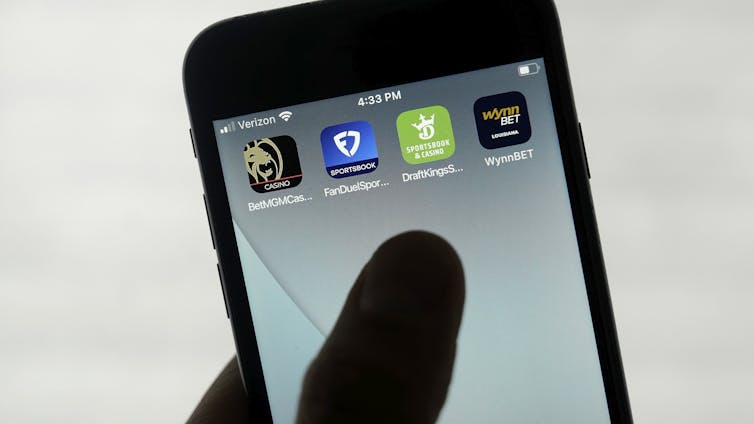
The 2025 report, which used both online and phone survey methods, identified that between 61% and 74% of Pennsylvania adults had gambled at least once in the past year. These numbers were consistent with previous reports. Depending on the sampling method, between 56% and 69% of adults reported they had gambled offline – for example, playing slot machines at brick-and-mortar casinos or buying lottery tickets at a store. Between 17% and 30% had gambled online.
Lottery games and raffles remain the most popular offline gambling format, while sports betting remains the most popular online gambling format. This finding has been consistent through all five years of the report.
But the line between “online gamblers” and “offline gamblers” is blurry. Among those who had gambled online, more than three-quarters also gambled offline.
We grouped Pennsylvania gamblers into three subgroups and found that about 43% gambled exclusively offline, about 4% exclusively online, and somewhere between 14% to 27% were “mixed-mode” gamblers, meaning they gambled both online and offline.
AP Photo/Jeff Chiu
2. The more ways people gamble, the more they tend to gamble overall
Those who engaged in mixed-mode gambling participated in nearly twice as many gambling formats as those who gambled only offline or only online.
They also gambled most often: close to once a week on average, compared with about once a month for those who gamble offline only.
Mixed-mode gamblers also spent more time and more money on gambling. People who gambled offline-only or online-only spent a median of about US$20-$40 per month on gambling. Mixed-mode gamblers, meanwhile, spent about $105-$230 per month. Mixed-mode gamblers also had the largest single-day gambling losses.
3. Nearly a third of Pennsylvania gamblers are at risk of problem gambling
This year’s report is the first to estimate how many Pennsylvanians meet criteria for problem gambling in the general population.
Between 2.5% and 6.4% of adults could be classified as current problem gamblers, according to the “problem gambling measure.” This is an evidence-based measure of problem gambling that classifies individuals as recreational, at-risk and problem gamblers.
Nearly 30% fell into “at-risk” gambling categories. They showed meaningful signs of harm but did not yet meet the threshold for problem gambling.
People who engage in mixed-mode gambling are significantly more likely to fall into at-risk and problem gambling categories than people who gamble offline only or online only.
4. Most people with gambling problems do not seek help
Despite the size of the at-risk and problem gambling groups, very few people seek treatment or other assistance.
Only about 1.5% of Pennsylvanians said they felt they had a gambling problem in the past year. Just 0.2% said they had sought help.
Even among those who met criteria for problem gambling, only about 6% reported getting help.
Some people did reach out proactively for others. About 0.4% of residents said they had contacted the 1-800-GAMBLER helpline because of someone else’s gambling.
This gap between harm and help-seeking is not unique to Pennsylvania. But it matters more as gambling becomes easier, faster and more continuous, and as people are more exposed to gambling content through social media and streaming platforms.
5. Young men are particularly vulnerable
Pennsylvania’s experience with gambling mirrors what public health research has long shown with alcohol, tobacco and more recently cannabis: When a behavior becomes more accessible and easier to repeat, overall use rises and harm concentrates among a smaller, more vulnerable group.
Features of online gambling – such as ease of access and acceptance of online payment methods, including cryptocurrencies – are particularly appealing to younger adults, many of whom have shown declining interest in traditional forms of gambling, such as casinos or lotteries. Online platforms offer them the opportunity to gamble on their phones, at all hours, with rapid feedback and minimal barriers to entry. This matters because younger people, especially young men, are disproportionately vulnerable to different types of addictive behaviors, including misuse of alcohol and illicit substances.
For most Pennsylvanians, gambling remains a casual pastime. But as with drinking or substance use, increased availability expands both experimentation and the number of people who progress to harmful levels of engagement. As the online gambling market grows, the data suggests that entertainment and harm may be rising together, following a pattern that public health has seen before with alcohol and cannabis.
Read more of our stories about Philadelphia and Pennsylvania, or sign up for our Philadelphia newsletter on Substack.

















