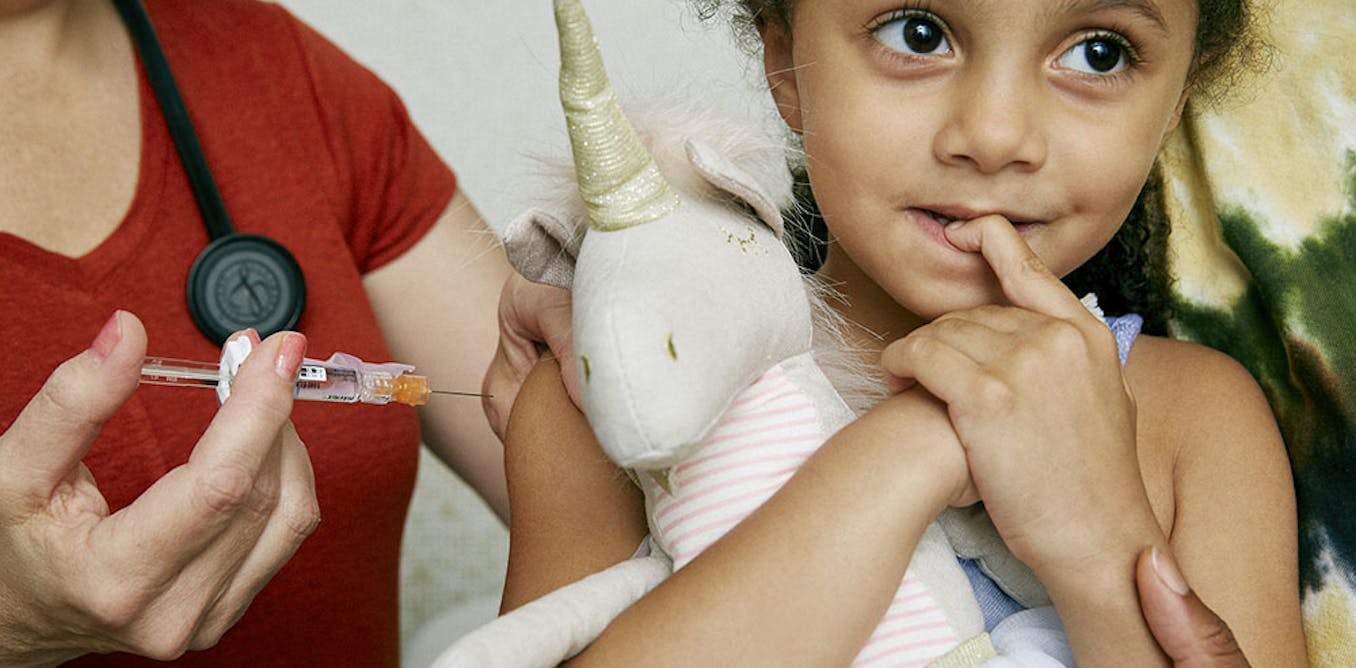
When federal health officials announced on Jan. 5, 2026, that they were taking six out of 17 vaccines off the childhood immunization schedule, they argued that the move would give parents and caregivers more choice.
Instead of all U.S. children routinely receiving them, these six vaccines are now optional – available to families who request them after consulting a clinician, through a process called shared clinical decision-making, officials said. All six – hepatitis A, hepatitis B, influenza, rotavirus, meningococcal disease and COVID-19 – will still be covered by federal programs such as Medicaid and the Vaccines for Children program, and by private insurers, at least through 2026.
I’m a health policy researcher and the co-author of the book “Vaccine Law and Policy.” I’ve spent years studying how vaccine laws and regulations affect uptake – and who gets left behind when policies change.
Shared decision-making sounds straightforward: a patient and their doctor putting their heads together to make an informed choice. But when applied to routine childhood vaccines, the concept shifts the burden of deliberation onto already-stretched clinicians and parents.
Table of Contents
What is shared decision-making?
Shared decision-making is an approach doctors use when there’s genuinely more than one reasonable choice – say, weighing two cancer treatments with different side effects – and the “right” answer depends on what matters most to the patient. The idea is that doctor and patient talk it through together to help make the decision that feels right for that patient.
The Centers for Disease Control and Prevention uses this term for vaccines that aren’t automatically recommended for everyone but that might make sense for some people after a conversation with their doctor.
The key difference is what happens if no conversation takes place. For routine vaccines, the default is yes. Children get the shot unless there’s a medical reason not to. For shared clinical decision-making vaccines, there’s no default. If the conversation doesn’t happen, neither does the vaccine.
That distinction matters because the federal vaccine advisory committee has historically reserved shared decision-making for narrow situations. One example is the HPV vaccine for adults 27 to 45. Most people in that age group have already been exposed to HPV, so the vaccine helps some individuals but won’t change infection rates overall. In that case, a conversation with your doctor makes sense: The benefit depends on your personal circumstances.
Childhood vaccines against rotavirus and hepatitis B are different. They’re not for a small subset of people who might benefit – they prevent tens of thousands of hospitalizations a year.
When a vaccine is routine, it pops up as an alert in a child’s medical records and becomes part of the clinic’s standard workflow. The nurse draws it up, the doctor gives a heads-up to the parent, and the shot happens before the family leaves. Parents and other caregivers typically encounter it as part of normal pediatric care rather than as a separate decision to weigh.
That’s important because even in well-resourced practices, pediatricians already have limited time to cover many priorities – growth, feeding, sleep, development, safety and any questions the family may have. For lower-income families, who often face even shorter appointments and have fewer options for follow-up visits, that limitation can get magnified.
Studies have found that many low-income families do not receive all recommended care, in part because their time with the doctor during routine visits is so short.
What this looks like for a family coming in for a checkup
Even before this policy change, lower-income children in the U.S. were falling behind on vaccines. From 2011 to 2021, kids in higher-income families got more of their shots on time, while kids in lower-income families didn’t keep pace – and that gap kept widening.
Here’s how the new policy could make things harder:
A mother brings her 2-month-old to a clinic that serves mostly low-income families – the kind of practice that sees 25 or 30 kids a day for well-child visits. Under the old schedule, the visit runs on rails: The nurse pulls up the baby’s chart, sees that six vaccines are due, draws them up, and the doctor gives them during the exam. By the time Mom is buckling the car seat, the shots are done. The whole vaccine portion takes a few minutes.
Under the new policy, two of those vaccines – rotavirus and hepatitis B – are no longer automatic. Now, the doctor has to stop and have a conversation to explain what rotavirus and hepatitis B are, walk through the risks and benefits of each vaccine and ask what the parent wants to do.
That’s fine if there’s time. But this visit is 15 minutes long, and the doctor still has to check the baby’s growth, ask about their feeding and sleep habits and make sure development is on track. If the mother has questions or feels unsure, the clinic might ask her to come back or wait for a phone call. But she took two hours off her shift to get here and she doesn’t have paid leave. There may not be a next visit.
Now multiply that by every baby on the schedule that day. And this is just the 2-month visit. The same thing will happen at other ages when other vaccines that moved out of the “routine” category come due. Something has to give. Often, it’s the vaccines that no longer happen automatically.
Why more ‘choice’ can mean less access
Talking with families about vaccines already takes time. According to the American Academy of Pediatrics, more than half of pediatricians report spending from 10 to 19 minutes counseling parents about vaccines, and nearly 1 in 10 spend more than 20 minutes – often several times per day.
Shared decision-making takes even longer. When vaccines are routine, the system does most of the work. When they require shared decision-making, that work lands on the doctor and parent in an already-packed appointment. The doctor must walk through the disease and the vaccine’s benefits and risks, ask what concerns the parent has, make sure they understand, and then document the whole conversation.
That’s one more barrier to vaccination, and one that won’t fall evenly. Getting medical care can take more time for families with fewer resources. When a policy change adds steps, those families feel it most.
The data might end up showing that some parents “chose” not to vaccinate. But for many families, it won’t really be a choice – it will be a reflection of who had time to come back, and who didn’t.

















