Medically Reviewed
Dr. Jose Rossello, MD, PhD, MHCM
Preventive Medicine & Public Health Specialist
Last Reviewed: May 5, 2026
Starting a fitness journey can feel overwhelming with so much information about exercise, strength training, and cardio. However, one of the most important and often overlooked aspects of fitness is stretching. Beginner stretches help improve flexibility[1], reduce the risk of injury, and make everyday movements easier.
New exercisers need a simple routine that targets the major muscle groups without requiring special equipment or advanced skills. This article covers essential stretches that focus on the hamstrings, hip flexors, back, glutes, legs, shoulders, and chest. It also explains why flexibility matters and how to add stretching into a weekly fitness plan.
Table of Contents
1) Standing Hamstring Stretch
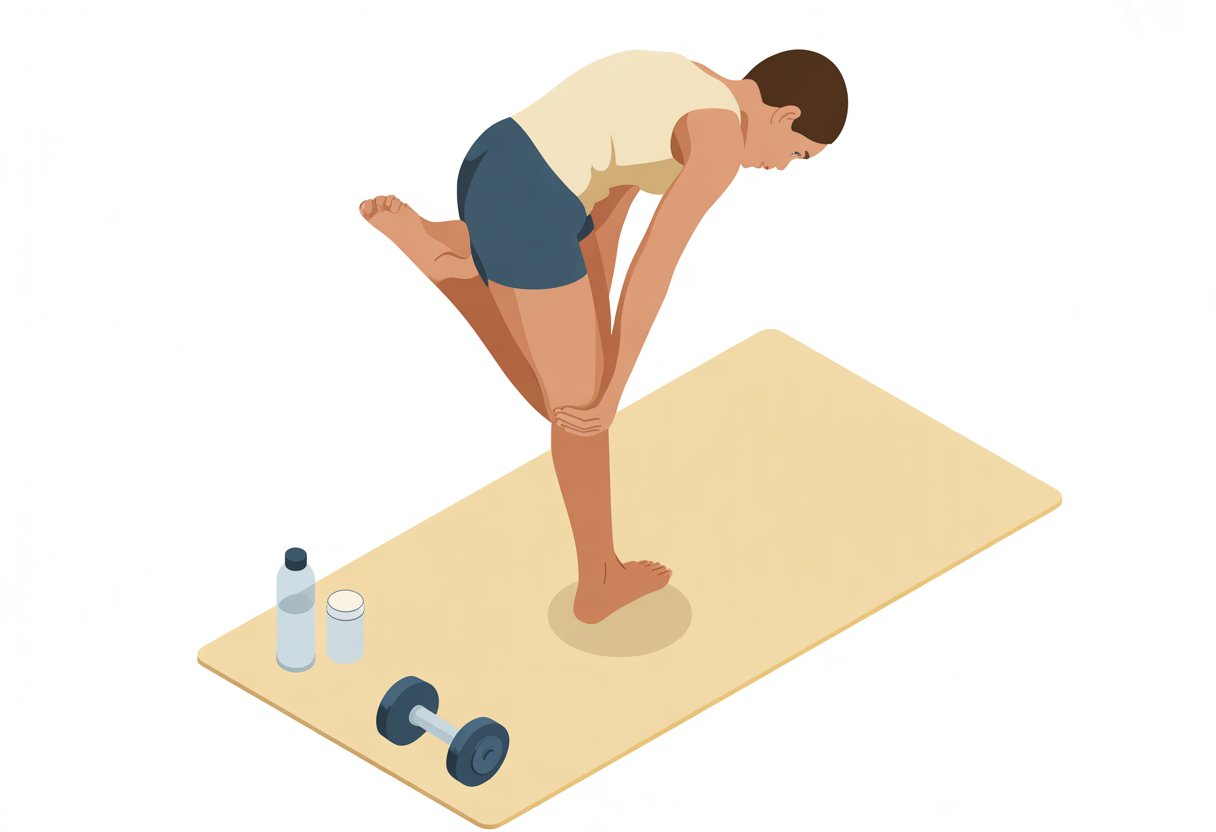
The standing hamstring stretch is one of the best stretches beginners can do anywhere[2] without getting down on the floor. It targets the muscles along the back of the thigh that often get tight from sitting or exercise.
To perform this stretch, a person should stand with feet hip-width apart. They extend one leg forward and place the heel on the ground with toes pointing up. The back leg stays slightly bent for balance.
Next, they hinge forward at the hips while keeping the back straight. The hands can rest on the bent leg for support. A gentle pull should be felt along the back of the extended leg.
Beginners should hold this position for 15 to 30 seconds without bouncing. They can then switch legs and repeat. This simple hamstring stretch can be done at home[3] or at the gym.
The stretch helps improve flexibility and range of motion over time. It also reduces the risk of injury during other exercises.
2) Kneeling Hip Flexor Stretch
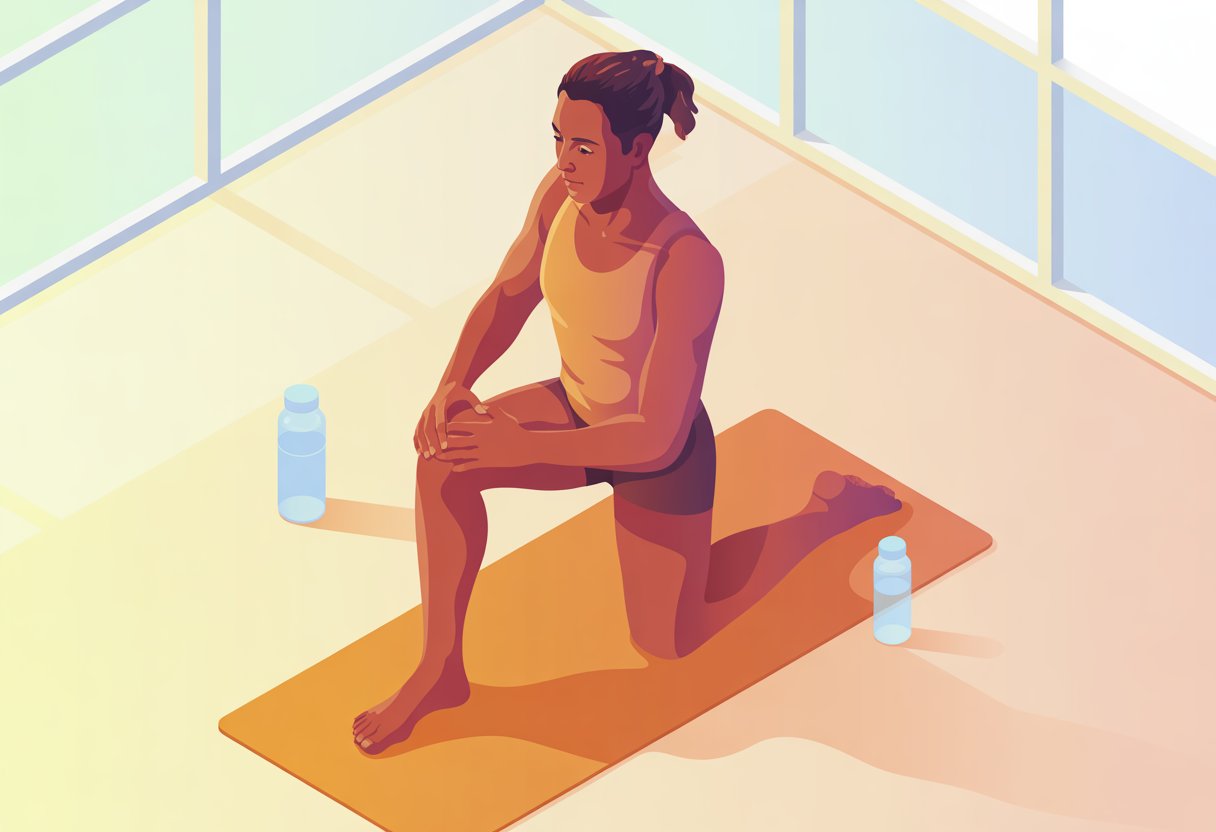
The kneeling hip flexor stretch targets the hip flexor muscles[4] at the front of the hip. This area often becomes tight from sitting for long periods during the day.
To perform this stretch, a person starts by kneeling on one knee with the other foot placed flat on the floor in front. The back knee should rest directly under the hip. From this position, they gently push their hips forward while keeping their back straight.
The stretch should be felt in the front of the hip on the kneeling leg. Positioning is key to the kneeling hip flexor stretch[5], so taking time to set up properly matters.
Stretching hip flexors 3-4 times per week can help prevent hip and lower back pain[5]. It also improves overall flexibility in the hip area.
This exercise is beginner-friendly, safe, and requires no equipment[6]. Breathing slowly and deeply during the stretch helps the muscles relax. Each stretch can be held for 20-30 seconds before switching to the other side.
3) Seated Forward Fold (Paschimottanasana)
The Seated Forward Bend stretches the entire back body[7], from the calves up through the spine. This basic yoga pose works well for beginners who want to improve flexibility in their hamstrings and lower back.
To perform this stretch, a person sits on the floor with legs extended straight in front. They hinge forward from the hips, reaching toward their feet while keeping the spine long. The knees can stay slightly bent if the hamstrings feel too tight.
This calming posture supports digestion and helps regulate the nervous system[8]. It also stretches the spine and reduces tension in the back muscles.
Beginners should hold the position for 30 seconds to one minute. They should breathe slowly and avoid forcing the body deeper into the stretch. The goal is a gentle lengthening, not touching the toes at any cost.
Modifications work well for people with tight backs[9]. Using a yoga strap around the feet or placing a folded blanket under the hips can make the pose more accessible. The stretch becomes more effective with regular practice over time.
4) Child’s Pose (Balasana)
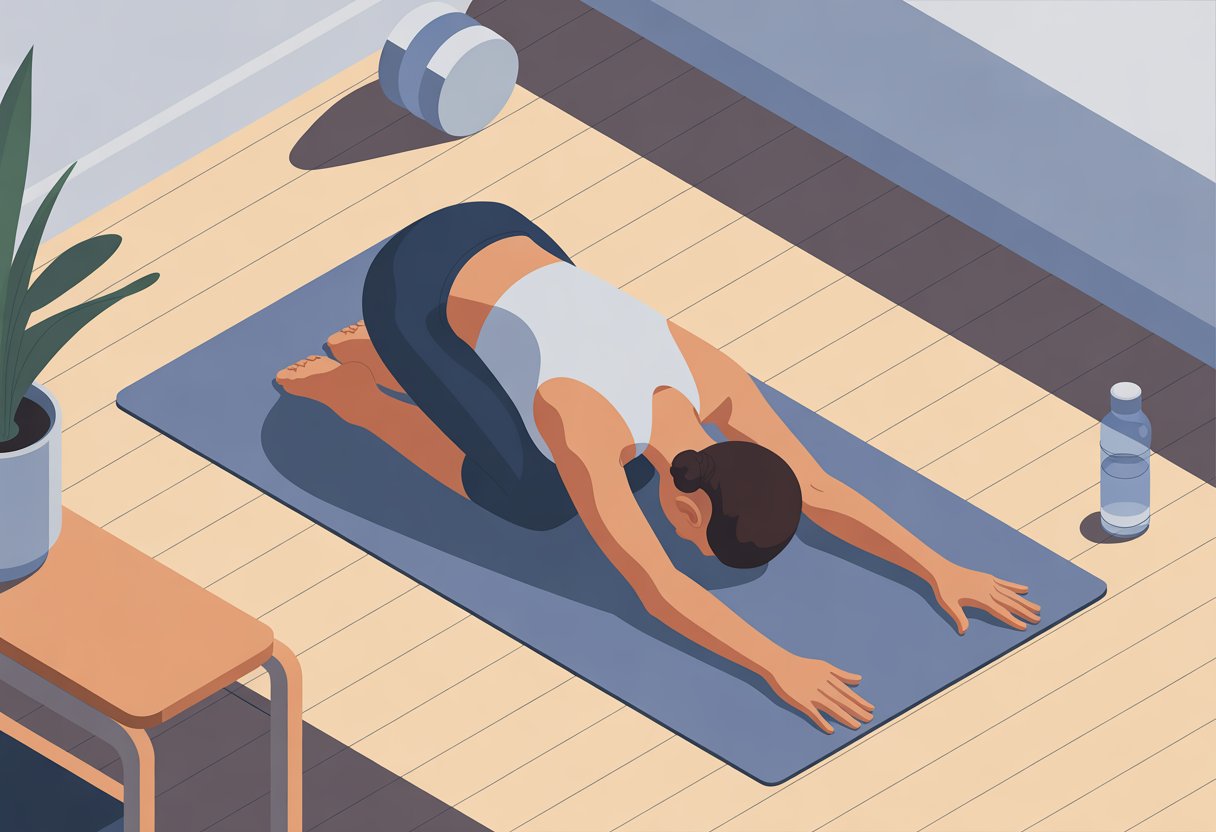
Child’s Pose is a gentle kneeling yoga pose[10] that works well for fitness beginners. It stretches the spine, hips, thighs, and ankles all at once.
To get into this position, a person starts by kneeling on the floor. They sit back on their heels and then fold forward, lowering their chest toward their thighs. The arms can either rest alongside the body or stretch forward on the floor.
This resting posture calms the nervous system[11] and helps people reconnect with their breath. It provides a good break between more active exercises.
The pose also relieves tension in the back and shoulders. When the arms extend forward, they engage the back muscles and provide a deeper stretch. This makes it useful after workouts or during stressful days.
Beginners should hold the position for 30 seconds to a few minutes. They can return to this pose whenever they need to rest during their workout routine.
5) Cat-Cow Spinal Mobilization
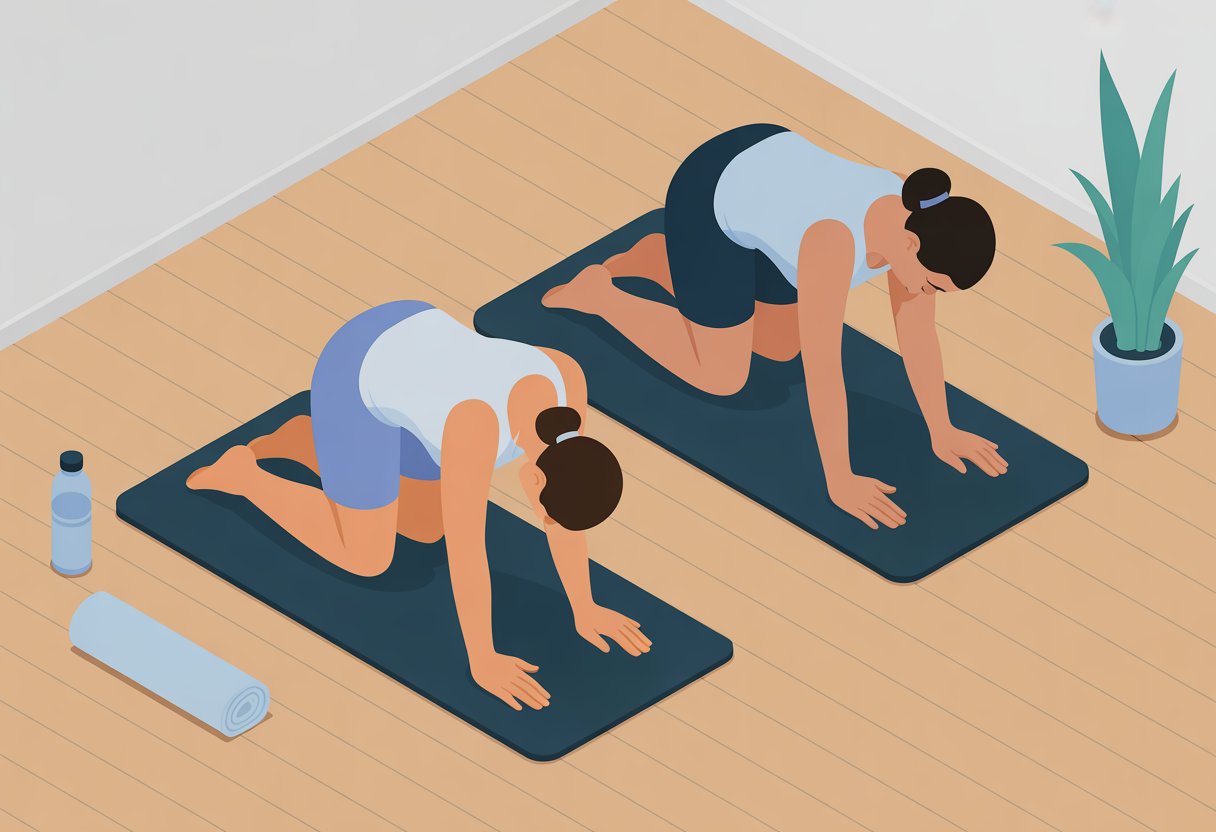
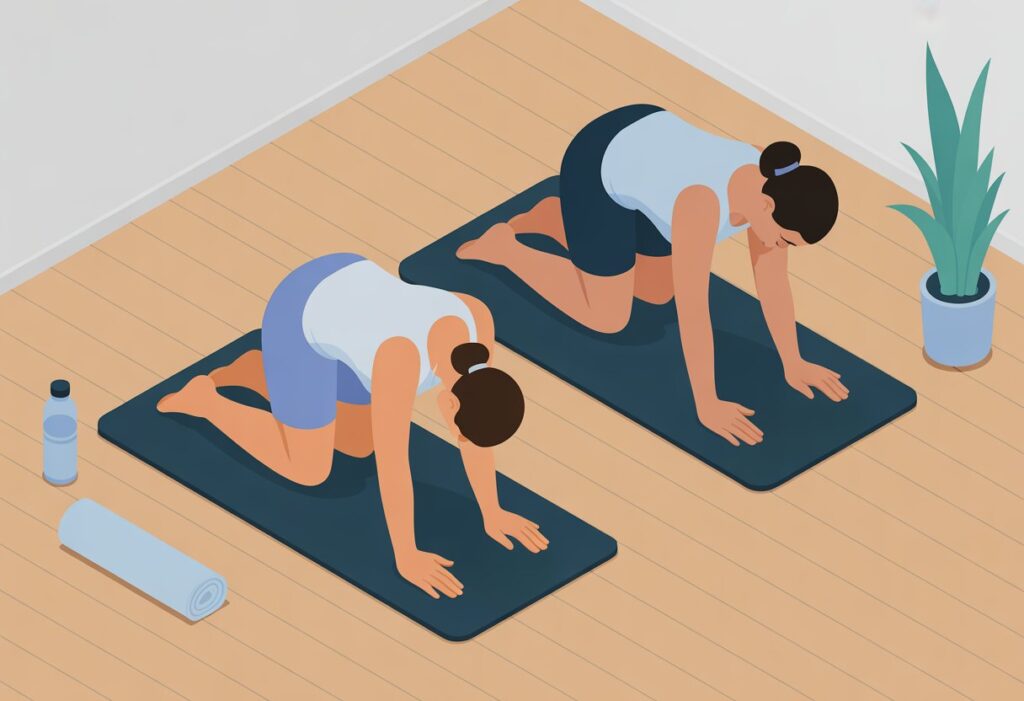
The cat-cow stretch is a beginner-friendly yoga pose[12] that helps improve spine mobility and flexibility. It works the back muscles and abdominals at the same time.
To start, a person gets on their hands and knees. The hands should be under the shoulders and the knees under the hips.
For the cow phase, they breathe in and let the belly drop toward the floor. The chest lifts up and the head looks forward. The spine curves downward in this position.
For the cat phase, they breathe out and pull the belly button toward the spine. The back rounds up toward the ceiling. The head drops down gently toward the chest.
This stretch helps strengthen the core and maintain flexibility[13] throughout the spine. Each position should be held for a few seconds before moving to the next one.
Beginners can repeat this movement five to ten times. The motion should feel smooth and controlled. This exercise is gentle enough for daily practice and helps reduce back tension.
6) Supine Glute Figure-Four Stretch
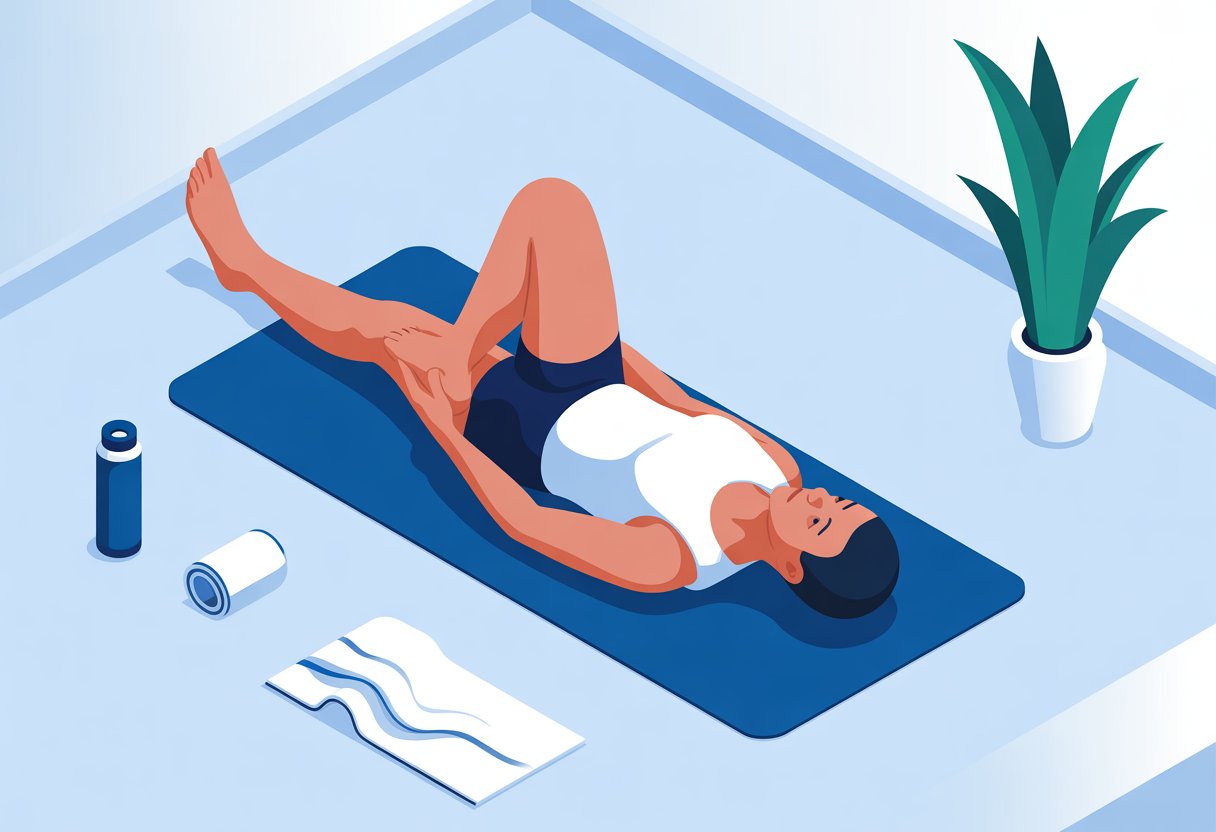
The figure 4 stretch helps increase flexibility and mobility[14] in the hips and glutes. It targets tight muscles that often cause discomfort in beginners.
To perform this stretch, a person lies on their back with both knees bent and feet flat on the floor. They cross one ankle over the opposite knee, creating a figure-four shape with their legs. The person then reaches through the gap and clasps their hands behind the supporting thigh.
From this position, they gently pull the supporting leg toward their chest. The stretch should be felt in the glute of the crossed leg. They hold this position for 20 to 30 seconds while breathing steadily.
This hip-opening stretch relieves tight hips[15] and can reduce lower back tension. Beginners should focus on keeping their head and shoulders relaxed on the floor. The stretch can be modified by keeping the supporting foot on the ground instead of lifting it. Each side should be stretched equally for balanced flexibility.
7) Quadriceps Standing Stretch (hold ankle)
The quadriceps standing stretch targets the large muscles on the front of the thigh. This standing quad stretch[16] helps improve flexibility in the lower body while also working on balance.
To perform this stretch, a person stands on one leg and bends the other knee behind them. They reach back with one hand to grab the ankle of the bent leg. The knee should point straight down toward the floor.
The person gently pulls the heel toward their glutes while keeping their knees close together. They should feel a stretch along the front of the thigh. Their standing leg stays slightly bent to maintain balance.
For beginners who struggle with balance, standing near a wall or chair provides support. The free hand can rest on the surface for stability. Each leg should be stretched for 20 to 30 seconds.
This stretch relieves tight quads[17] that often develop from walking, running, or sitting for long periods. Regular practice helps maintain healthy leg mobility and reduces muscle tension.
8) Calf Wall Stretch (gastrocnemius)
The calf wall stretch targets the gastrocnemius muscle, which is the larger of the two main calf muscles. This muscle runs from above the knee down to the heel, making it essential for walking, running, and jumping.
To perform this stretch, a person stands facing a wall and places both hands flat against it at shoulder height. They step one foot back while keeping both feet pointing forward. The back leg stays straight with the heel pressed firmly into the ground.
The front knee bends slightly as the person leans toward the wall. They should feel tension in the calf of the straight back leg. The gastrocnemius needs the knee fully extended[18] to stretch properly.
Holding this position for 20 to 30 seconds allows the muscle to lengthen. The stretch should feel tight but not painful.
The wall calf stretch helps improve ankle mobility[19] and prevents injury during physical activity. Beginners can adjust the intensity by moving the back foot closer or farther from the wall. Each leg should be stretched separately to identify any tightness differences between sides.
9) Shoulder Cross-Body Stretch
The cross-body shoulder stretch relieves tension[20] and improves mobility in the upper body. This simple movement targets the rear shoulder muscles and upper back.
To perform this stretch, a person stands or sits with good posture. They bring one arm across their chest at shoulder height. The opposite hand gently pulls the extended arm closer to the body by pressing on the elbow or upper arm.
The stretch should be felt in the back of the shoulder and upper back area. A person holds this position for 20 to 30 seconds without bouncing or forcing the movement.
This stretch targets the posterior shoulder muscle[21] along with the mid-trapezius and rhomboid muscles. It works well as part of a warm-up or cool-down routine.
Beginners should keep their shoulders relaxed and avoid hunching forward. The chest stays open throughout the movement. They repeat the stretch on both sides to maintain balanced flexibility.
Regular practice helps reduce shoulder stiffness from daily activities like computer work or carrying bags.
10) Chest Opener on Foam Roller
The chest opener on foam roller helps release tight chest muscles and improve posture. This stretch targets the pectoralis major and minor muscles that often become shortened from daily activities like sitting at a desk or looking at phones.
To perform this stretch, a person places a foam roller vertically along their spine. They lie back so their head and tailbone are both supported. Their knees should be bent with feet flat on the floor.
The arms extend out to the sides at shoulder height with palms facing up. Gravity naturally pulls the chest open as the shoulders sink toward the ground. This position allows the chest and shoulder muscles to relax[22] and lengthen.
Beginners should hold this stretch for 30 to 60 seconds while breathing deeply. The stretch can be performed as part of a cool-down routine after workouts or on recovery days. Many people also use it during warm-ups before exercise.
This movement works well for people who want to counteract rounded shoulders. It can help reduce muscle soreness and increase flexibility in the upper body.
Why Flexibility Matters for Beginners
Stretching helps beginners move better in daily life and reduces the risk of injury during workouts. Understanding what stretching actually does and clearing up common myths helps new exercisers build a safe and effective routine.
Benefits of Safe Stretching
Regular stretching improves range of motion in the joints. This makes everyday activities like reaching for items on high shelves or tying shoes easier and more comfortable.
Stretching at least 3 days a week[1] helps increase flexibility over time. Beginners can start with just 2 sessions per week and add more days as they get comfortable.
Flexible muscles experience less strain during physical activity. When muscles can move through their full range without restriction, they handle stress from exercise better. This protective effect matters most for people new to fitness who are still building strength.
Stretching also helps reduce muscle tightness that builds up from sitting or repetitive movements. Areas like the hips, hamstrings, chest, shoulders, and lower back[23] commonly become tight in daily life and benefit most from regular attention.
Better flexibility supports balance and coordination. These improvements help beginners feel more confident trying new exercises and movements.
Elevate Your Health for Just $29.99/Month
Join the Precision Wellness Subscription at My Healing 365 and get discounted services, priority coaching access, virtual care, and exclusive wellness resources to support your physical, emotional, and hormonal health.
Join for $29.99/MonthCommon Misconceptions About Stretching
Many beginners think stretching should hurt to be effective. The reality is that stretching should create a gentle feeling of tension, not pain. Pushing into painful ranges can cause muscle strains or tears.
Another myth suggests that stretching before exercise prevents all injuries. While stretching has benefits, it does not guarantee injury prevention on its own. Proper form, gradual progression, and adequate rest also play important roles.
Some people believe flexibility improves overnight. Meaningful changes take weeks or months of consistent practice. Beginners who expect instant results often give up too soon.
The idea that only certain body types can become flexible is false. Most people can improve their range of motion with regular practice, regardless of their starting point. Age and genetics influence flexibility, but they do not determine it completely.
Finally, many assume that holding a stretch for a few seconds provides full benefits. Holding stretches for 1-2 minutes[1] creates better results for those looking to increase flexibility.
Incorporating Stretching Into Your Routine
Timing stretches correctly and using proper form prevents injuries while maximizing flexibility gains. Beginners who stretch at the right times and follow basic safety guidelines see better results than those who stretch randomly or push too hard.
When to Stretch for Best Results
Dynamic stretches work best before a workout to warm up muscles and prepare the body for movement. These stretches involve controlled movements like leg swings, arm circles, and walking lunges. They increase blood flow and raise body temperature without relaxing muscles too much before exercise.
Static stretches are most effective after a workout when muscles are warm. Holding stretches for 15-30 seconds helps improve flexibility and reduces muscle tightness. Stretching exercises can be categorized into several types[24], with static and dynamic stretches serving unique purposes.
Many people benefit from a dedicated stretching session 2-3 times per week. These sessions should last 10-20 minutes and focus on major muscle groups. Morning stretches help reduce stiffness, while evening stretches can improve sleep quality.
Tips to Avoid Injury
Never bounce during static stretches. Bouncing causes small tears in muscle fibers and can lead to scar tissue formation. Instead, move into each stretch slowly and hold the position steadily.
Stretches should create mild tension, not pain. A good stretch feels like gentle pulling in the muscle. Sharp pain means the stretch has gone too far.
Breathing deeply helps muscles relax and increases stretch effectiveness. Holding the breath creates tension that limits range of motion. Exhale slowly while moving deeper into each position.
Warming up for 5-10 minutes before stretching reduces injury risk. Light cardio like walking or jogging raises muscle temperature and makes tissues more pliable. Cold muscles are more prone to strains and pulls when stretched aggressively.
Frequently Asked Questions
Beginners often wonder how long to hold stretches, when to perform them, and which modifications work best for older adults. These answers provide practical guidance for building a safe and effective stretching practice.
What are the most important stretches beginners should include in a full-body routine?
A complete routine should target the major muscle groups used in daily movement. The hamstrings, hip flexors, lower back, and spine need regular attention to maintain flexibility.
Standing hamstring stretches and seated forward folds address the back of the legs and lower back. Kneeling hip flexor stretches open the front of the hips, which get tight from sitting. Child’s pose and cat-cow movements help mobilize the spine and release tension in the back and shoulders.
These five stretches create a balanced foundation that prepares the body for more advanced work later.
How long should a beginner hold each stretch, and how many rounds should they do?
Most beginners should hold static stretches for 15 to 30 seconds per side. This duration allows muscles to relax without causing strain or discomfort.
One to two rounds of each stretch works well for someone just starting out. As flexibility improves over several weeks, holding stretches for up to 60 seconds becomes appropriate.
The total routine should take about 10 minutes to complete. This timeframe fits easily into most schedules and provides enough time to work through all major muscle groups.
Is it better for beginners to stretch before a workout, after a workout, or both?
Dynamic stretches work best before exercise to warm up muscles and increase blood flow. Static stretches like the ones in beginner stretching routines[25] should happen after workouts when muscles are already warm.
Stretching cold muscles before exercise can increase injury risk. Light movement like walking or arm circles prepares the body better than deep static holds.
After a workout, muscles are warm and more pliable. This is when static stretching provides the most benefit for flexibility gains and recovery.
Which beginner stretches are safe and effective to do at home without equipment?
All five core stretches require nothing more than a comfortable floor surface. A yoga mat provides cushioning but is not necessary to get started.
Standing hamstring stretches use body weight and gravity. Kneeling hip flexor stretches, seated forward folds, child’s pose, and cat-cow movements all work on the floor without props.
A folded towel can replace a yoga mat for knee support during kneeling positions. Regular clothing works fine, though comfortable pants that allow full range of motion help.
What stretching modifications are recommended for beginners over 50 or over 60?
Older adults should move more slowly into each position and avoid forcing the body past comfortable limits. Using a chair or wall for balance during standing stretches prevents falls.
In seated forward folds, bending the knees slightly reduces strain on the hamstrings and lower back. Placing a folded blanket under the hips elevates them and makes the position more accessible.
For kneeling stretches, extra padding under the knees protects the joints. Child’s pose can be modified by placing a pillow between the hips and heels to reduce the range of motion needed.
How can a beginner turn a set of stretches into a printable, step-by-step routine they can follow consistently?
Creating a simple chart with the stretch name, hold time, and number of repetitions keeps the routine organized. Writing down the order prevents confusion about what comes next.
Many people take photos of themselves doing each stretch or print images from stretching guides for beginners[26]. Visual references help maintain proper form when starting out.
Setting the same time each day for stretching builds the habit. Morning routines help reduce stiffness, while evening stretches promote relaxation before bed.
Post Views: 7
References
- Stretches for Beginners. https://blog.nasm.org/stretches-for-beginners Accessed May 6, 2026
- 10 Standing Stretches, and Why You Should Add Them to Your Day. https://www.onepeloton.com/blog/standing-stretches Accessed May 6, 2026
- simple hamstring stretch can be done at home. https://www.verywellfit.com/hamstring-stretches-2696359 Accessed May 6, 2026
- Exercise Tutorial: Kneeling Hip Flexor Stretch. https://www.yourhousefitness.com/blog/exercise-tutorial-kneeling-hip-flexor-stretch Accessed May 6, 2026
- How to Do a Kneeling Hip Flexor Stretch: 13 Steps (with Pictures). https://www.wikihow.health/Do-a-Kneeling-Hip-Flexor-Stretch Accessed May 6, 2026
- Unlock Flexibility: Kneeling Hip Flexor Stretch for Key Muscles – Fitness Volt. https://fitnessvolt.com/kneeling-hip-flexor-stretch/ Accessed May 6, 2026
- Seated Forward Bend: How to Practice Paschimottanasana. https://www.yogajournal.com/poses/seated-forward-bend/ Accessed May 6, 2026
- Paschimottanasana (Seated Forward Bend): Benefits, Steps & Variations. https://myyogateacher.com/yoga-asana/paschimottanasana Accessed May 6, 2026
- Seated Forward Bend (Paschimottanasana): Stretch & Tips. https://yogajala.com/seated-forward-bend-pose-paschimottanasana/ Accessed May 6, 2026
- Balasana (Child’s Pose): Benefits, Steps & Variations. https://myyogateacher.com/yoga-asana/balasana Accessed May 6, 2026
- Child Pose (Balasana): Benefits, Step-by-Step Guide & Variations. https://www.meridian-fitness.co.uk/exercises/child-pose/ Accessed May 6, 2026
- How to Do Cat-Cow Stretch: Video, Form, Muscles Worked, Tips. https://www.zing.coach/exercises/cat-cow-stretch Accessed May 6, 2026
- Cat-Cow Stretch: How To Do It and Benefits. https://health.clevelandclinic.org/cat-cow-stretch Accessed May 6, 2026
- How to perform the Figure 4 Stretch . https://www.physitrack.com/exercise-library/how-to-perform-the-figure-4-stretch-exercise Accessed May 6, 2026
- Figure 4 Stretch: Here’s How to Relieve Tight Hips. https://www.thehealthy.com/exercise/figure-4-stretch/ Accessed May 6, 2026
- Standing Quad Stretch: Benefits, How-To, and FAQs. https://julielohre.com/quad-stretch/ Accessed May 6, 2026
- 10 Quad Stretches That Will Relieve Your Legs. https://boxlifemagazine.com/quad-stretches/ Accessed May 6, 2026
- The gastrocnemius needs the knee fully extended. https://medschool.cuanschutz.edu/docs/librariesprovider65/courtney-grimsrud/useful-links/calf-stretches.pdf?sfvrsn=aa4192ba_2 Accessed May 6, 2026
- Wall Calf Stretch Exercise: How to, Common Mistakes and Related Exercises. https://betterme.world/articles/wall-calf-stretch-exercise/ Accessed May 6, 2026
- Exercise Tutorial: Cross Body Shoulder Stretch. https://www.yourhousefitness.com/blog/exercise-tutorial-cross-body-shoulder-stretch Accessed May 6, 2026
- 12 Shoulder Stretches To Relieve Shoulder Tightness – Fitness Volt. https://fitnessvolt.com/shoulder-stretches/ Accessed May 6, 2026
- Just a moment…. https://fitbod.me/exercises/foam-roll-chest Accessed May 6, 2026
- 10 Best Flexibility Exercises for Beginners (Simple Daily Routine). https://www.cleaneatzkitchen.com/a/blog/what-type-of-exercise-is-flexibility Accessed May 6, 2026
- Stretching Routine: 10 Easy Stretches to Do Every Day. https://www.signos.com/blog/stretching-routine Accessed May 6, 2026
- Just a moment…. https://fitbod.me/blog/stretching-routine-for-beginners/ Accessed May 6, 2026
- Beginner’s Stretching Guide: Top 10. https://www.americansportandfitness.com/blogs/fitness-blog/beginners-stretching-guide-top-10 Accessed May 6, 2026

























