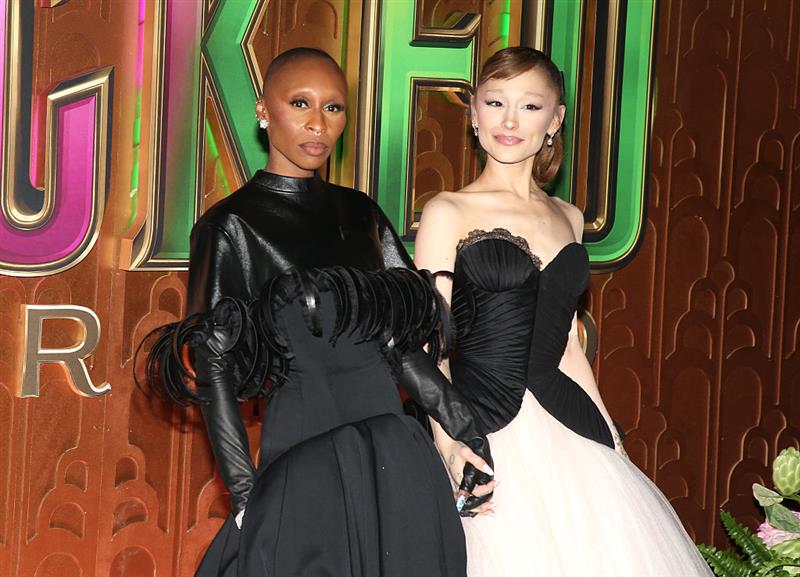
The bodies of public figures like Wicked For Good Stars Ariana Grande and Cynthia Erivo have always been up for discussion. Social media has made the conversation louder than ever.
Both performers have shown up on the press lines for the anticipated musical, appearing significantly thinner than before. Commentary on the topic exploded. Some speculated that the pair might be participating in disordered eating or excessive usage of increasingly popular weight loss medications like GLP-1s.
Table of Contents
How Social Media Has Made Us All Armchair Experts
Commenting on someone’s appearance has become more commonplace. Social media makes it easier. “The access that we have to speak on people now is quite dangerous,” Wendi S. Williams, PhD, President-Elect of the American Psychological Association, told Black Health Matters.
“Before the advent of social media and so much use of technology and the ability to propagate a message so vastly, a person could have an opinion about a celebrity or a politician that they see in the news or in one of those magazines, and it would have been an opinion shared either to themselves or within the locality of their friends and family,” she said.
Anyone can place them into the world where they might cause harm, now.
Grande posted a message on social media containing a “loving reminder” of the harm that can be caused by commenting on the size of someone’s body. She addressed the comments on her figure during an interview with Oui Oui Baguette.
“So I have heard it all. I’ve heard every version of it, of what’s wrong with me. And then you fix it, and then it’s wrong for different reasons,” said Grande. “It’s hard to protect yourself from that noise,” continued the “7 Rings” singer.
Lizzo wrote about how the aftermath of losing weight was impacting her in a recent essay on Substack. “I think it’s something that is uncomfortable no matter what scale you’re experiencing it on,” Grande added in the interview.
“I don’t think that we can ever diminish the impact of so much public opinion on the psyche of one individual,” said Williams.
Elevate Your Health for Just $29.99/Month
Join the Precision Wellness Subscription at My Healing 365 and get discounted services, priority coaching access, virtual care, and exclusive wellness resources to support your physical, emotional, and hormonal health.
Join for $29.99/MonthLay People Can’t Assess Someone’s Health by Looking At Them.
Weight loss leads to speculation about health conditions, including eating disorders, substance abuse issues, and infectious diseases. Weight gain comes with preconceived notions about one’s mental and emotional health. Both excessive thinness and obesity are accompanied by healthcare challenges. The specifics of these are not visible to laypeople.
Clinicians are the only ones qualified to evaluate the state of someone’s appearance from a healthcare perspective. You wouldn’t know that by listening to everyday discourse on the subject.
Red carpets are not the only place where weight stigma shows up. It happens to everyday people at holiday dinner tables, in workplaces, and in other intimate settings.
Dr. Faith Ohuoba, board-certified OB-GYN, sees patients put on baby bump watch by people in their lives when they are facing health issues like fibroid tumors or ascites, a condition that causes abdominal swelling. “It’s actually a problem, it’s not a pregnancy,” she said. Gabrielle Union described dealing with infertility and having people constantly speculate about her body as her pelvic area distended and retracted during treatments.
According to a 2021 article from Frontiers in Nutrition, “While conversations about weight stigma have historically centered on individuals who are classified with overweight or obesity, evidence suggests that those classified as underweight also experience stigma that exacerbates poor health.”
Chadwick Boseman, who recently received a posthumous star on the Hollywood Walk of Fame, was openly criticized for his noticeably thinner appearance before the public learned that he was dealing with colorectal cancer. Colorectal cancer is prevalent in the Black community. The weight loss was laughed at by some online who thought his lifestyle was contributing to it.
His case was an example of how one’s appearance might not tell the whole story about what they are experiencing.
Publicly Speculating About Someone’s Body Can Impact Their Mental and Physical Health
According to the International Journal of Obesity, weight stigma can lead to unhealthy behaviors and poor outcomes.
Health indicators don’t just live on the scale. They can exist in your head as well.
“Commenting on someone’s weight when they are experiencing a weight eating disorder or just challenges around weight loss or weight management actually is a trigger,” said Williams.
A 2025 article from Frontiers in Psychiatry reports that “Weight stigma, or social devaluation based on an individual’s body size or weight, is directly related to greater depressive and anxiety symptoms.”
“I think that we should be very careful about what we say because it may have unintended consequences,” added Ohuoba.
On this season of Married To Medicine, Dr. Jackie Walters asked newcomer Brandi Milton if she had an enlarged thyroid on camera. Walters issued a public apology later, acknowledging that her actions could have been hurtful.
“We all could benefit from having a little more empathy, considering how our words and judgements may impact others,” said Ashley Goodwin LCSW. “Commenting on these suspected disorders also adds to the stigma.”
Ohuoba noted that speculating about someone’s health based on their appearance without their consent can be damaging.
“I don’t think it’s fair,” she said. “They’re not giving you solutions, they’re not giving you treatment, they’re not giving you anything other than their opinion, which may be harmful.”

























