90s babies are aging, and healthcare is catching up.
Black Millennials might still be suffering from the pop lock and drop it era, but random knee pain isn’t the only challenge they’re facing. Healthcare firms are meeting the moment by including hip-hop and R&B in their consumer marketing efforts.
As millennials age, their vast healthcare concerns are moving to the forefront of the healthcare industry priority list. That means integrating messaging that will speak to them directly.
The music that once signaled a rebellious youth of bar hopping and bottle service is now helping providers court a generation of adults in need of information and interventions to address their collective issues.
Table of Contents
Music As a Means of Getting Attention
Research shows that tapping into cultural competency works when trying to reach specific audiences. “The importance of cultural competency, including culturally and linguistically appropriate resources and tools, cannot be overstated or overemphasized,” according to the Centers for Disease Control (CDC).
Unlike a generic jingle, a familiar jam can stop you in your tracks. It can reconnect you to a moment from your past. Twisting around familiar beats aren’t the only way to have an impact.
Speaking to the language of music can help create connections too. We Are Ill founder Victoria named her organization, designed to connect Black women with chronic illness, after the classic Nas album Illmatic.
New music can have an impact as well. The FDA turned to developing original hip-hop songs to convince young people not to smoke. Gilead turned to rapper and podcaster Big Loon to help spread the message about their efforts to promote safer sex. Power to the Patients turned to Busta Rhymes, Fat Joe, Method Man, Rick Ross, Chuck D, and French Montana to promote their arguments for transparency in healthcare pricing.
Fighting HIV With TLC
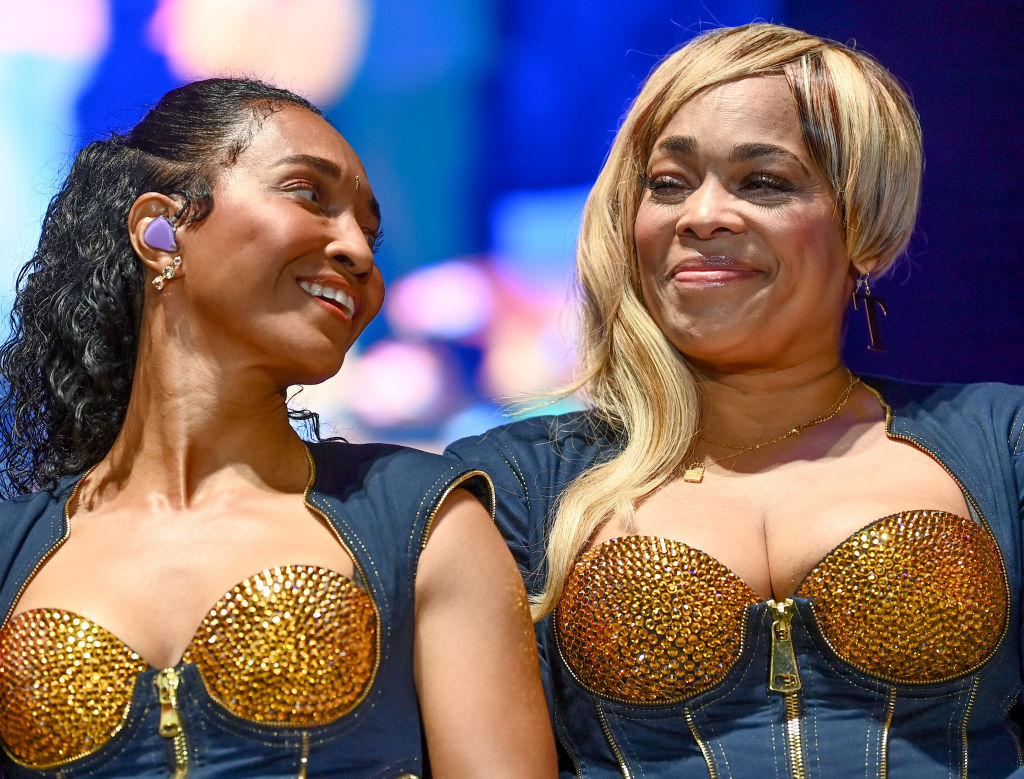
TLC, a group that broke barriers by getting a generation to talk frankly about sex, has had their hit “Creep” reinterpreted for Gilead to promote PrEP. Original and core group member Tionne ‘T-Boz’ Watkins performed the healthcare-centered rendition.
“In the 90s, we used our platform to speak truth and empower people to love themselves. That mission hasn’t changed,” Watkins told People in November.
“Black women in the United States are disproportionately affected by human immunodeficiency virus (HIV) and are less likely to be represented among HIV clinical research participants relative to their cumulative HIV burden,” according to Women’s Health. This makes TLC the perfect track to speak to an audience that needs to be informed about their options for protecting themselves.
Elevate Your Health for Just $29.99/Month
Join the Precision Wellness Subscription at My Healing 365 and get discounted services, priority coaching access, virtual care, and exclusive wellness resources to support your physical, emotional, and hormonal health.
Join for $29.99/MonthFighting Colon Cancer With Lil’ Jon
Lil’ Jon has transcended the Nuvo guzzling and the pill popping of the crunk era. The snap music pioneer converted his hit “Get Low” into a track to promote Cologuard, a screening device for colon cancer.
“The distribution of CRC is not even across U.S. subpopulations; there is marked difference in CRC incidence, cancer stage, and cancer mortality by race and ethnicity. In particular, Black Americans show the highest incidence, and have the highest mortality among major U.S. racial and ethnic groups,” according to the Journal of Advances in Cancer Research.
The American Cancer Society has highlighted the rise in colorectal cancer in people under the age of 55.
Lil’ Jon shared why he agreed to do the campaign in a 2024 interview with Black Health Matters. “It just makes it easier to palette this subject because it’s funny because the song is called ‘Get Low #2,’ and you have to take a #2 to do the colon cancer screen with the Cologuard kit. So I thought it was pretty hilarious,” he said.
He’s no slouch when it comes to promoting mental health either. He released an album for meditation.
Raising Eczema Awareness with Mary J Blige
Mary J. Blige owned the early 90s with “Real Love.” The kids who grew up singing the classic on their way to elementary school are primed to listen to the remixed version for EBGLYSS, a medication developed to fight eczema, also known as atopic dermatitis.
The Journal of Allergy and Clinical Immunology reports that “Black people in the US experience greater atopic dermatitis (AD) prevalence, severity, and persistence when compared to White people.”
Eczema presents differently in Black people making it more important that they be informed about the symptoms of the condition.
Fighting Vaccine Misinformation with Juvenile
Taking over for the 99 and the 2000 is like a millennial mating call. It flips a switch in the millennial brain flooding it with memories of when it was time to “Back That Thang Up” in a club that didn’t take Apple Pay or put a time limit on sections,
This made it the perfect track to match the moment when anti-vaccine information was flooding the internet. Juvenile released “Vax That Thang Up” to promote the COVID-19 vaccine.
He partnered with Mannie Fresh and Mia X on the track giving it an even stronger NOLA flavor.
Resources
Los Angeles Times: Millennials’ escalating health problems raise economic concerns
Blue Cross Blue Shield: The Health of Millennials
Journal of Advances in Cancer Research.

























