Medically Reviewed
Dr. Jose Rossello, MD, PhD, MHCM
Preventive Medicine & Public Health Specialist
Last Reviewed: March 14, 2026
Spring allergies affect millions of people each year, causing sneezing, itchy eyes, runny noses, and nasal congestion that can make daily life miserable. When pollen counts rise and symptoms strike, most people want relief as quickly as possible.
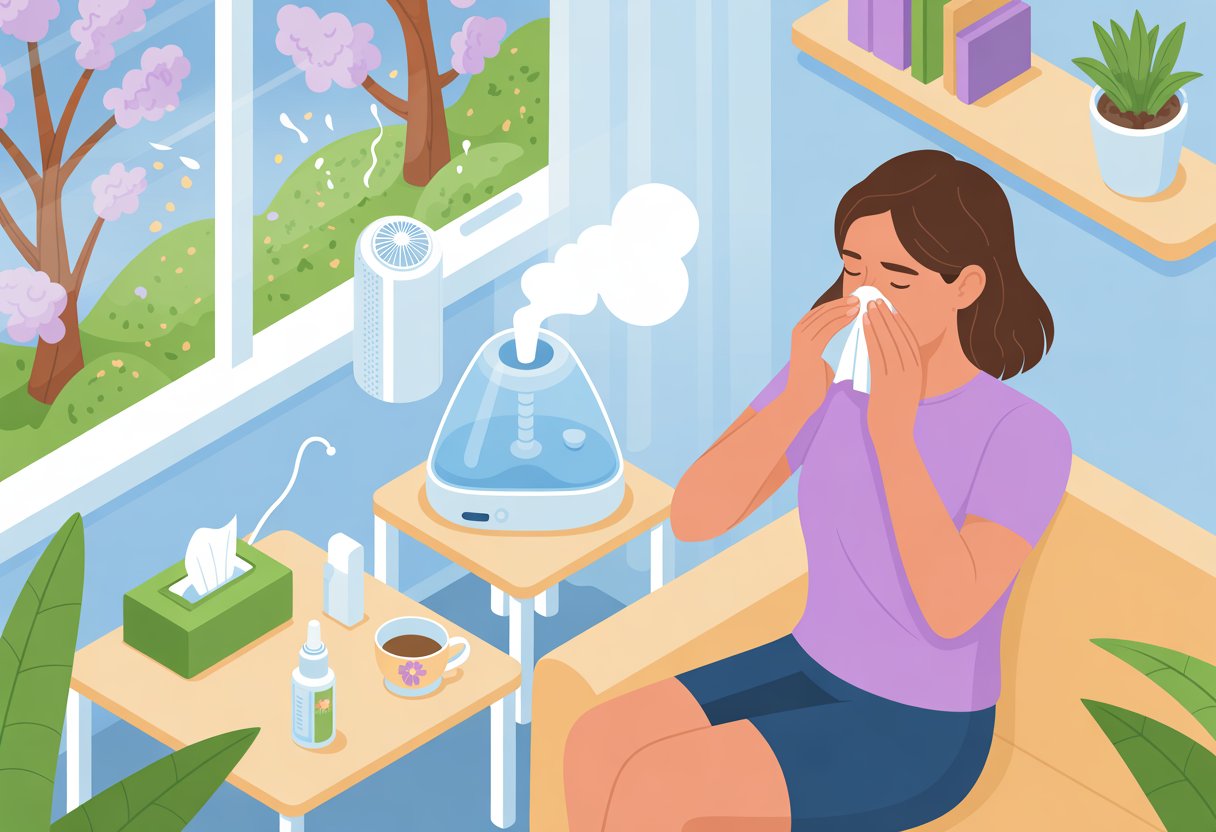
The good news is that fast-acting antihistamines can start working within 20 to 30 minutes, while simple environmental changes like showering after being outdoors and keeping windows closed can provide immediate relief. Understanding which medications actually work[1] and how to reduce pollen exposure makes a real difference in managing symptoms.
This guide covers everything from quick-relief medications to natural remedies and long-term prevention strategies. Whether someone needs instant relief or wants to stop allergies before they start, these proven methods can help them feel better fast.
Table of Contents
Key Takeaways
- Over-the-counter antihistamines provide relief within 20 to 30 minutes for fast symptom control
- Reducing pollen exposure by showering after outdoor activities and keeping windows closed helps minimize allergy triggers
- Starting allergy medications two to three weeks before pollen season begins can prevent symptoms from developing
Understanding Spring Allergies and Their Triggers
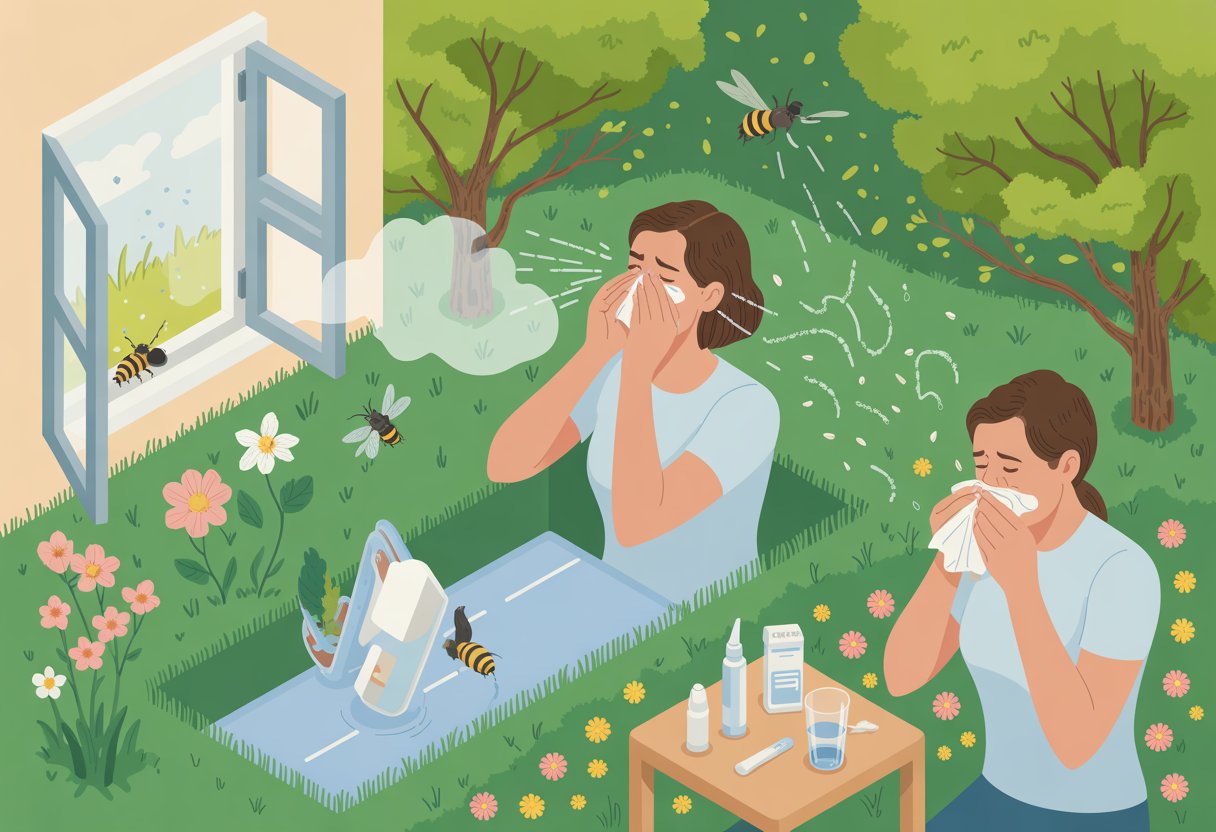
Spring allergies occur when the immune system overreacts to airborne pollen from trees, grasses, and weeds. Tree pollen is the primary culprit during early spring, with pollen counts rising as temperatures warm and plants begin their reproductive cycles.
What Causes Spring Allergies
Spring allergies develop when the body’s immune system mistakenly identifies harmless pollen as a dangerous threat. This condition is medically known as allergic rhinitis or hay fever[2].
When pollen enters the nose, eyes, or throat of someone with pollen allergies, their immune system releases histamine and other chemicals to fight off the perceived invader. These chemicals trigger the uncomfortable symptoms people associate with allergy season.
The tendency to develop seasonal allergies often runs in families. People with parents who have allergies are more likely to experience spring allergies themselves.
Common Allergy Triggers in Spring
Tree pollen is to blame for most spring allergies[3] and begins circulating in the air as early as February in warmer climates. Different trees release pollen at different times throughout the spring.
Common culprits include:
- Oak – produces large amounts of pollen in mid to late spring
- Maple – releases pollen in early spring
- Elm – pollinates from late winter through early spring
- Ash – produces pollen in early to mid spring
- Pine – releases visible yellow pollen in late spring
- Cedar – can trigger symptoms in late winter and early spring
Pollen counts tend to be highest on warm, dry, and windy days when pollen travels easily through the air. Rain temporarily reduces pollen exposure by washing pollen out of the air.
Checking the pollen forecast helps people plan outdoor activities and take preventive measures on high pollen days.
How Pollen Affects the Body
When pollen particles land on the mucous membranes of the eyes, nose, and throat, they trigger an immediate immune response in allergic individuals. The body releases histamine, which causes blood vessels to expand and tissues to swell.
This reaction leads to common symptoms including sneezing, wheezing, and itchy eyes[4]. Many people also experience a runny or stuffy nose, scratchy throat, and fatigue.
The severity of allergy symptoms depends on the level of pollen exposure and individual sensitivity. Some people experience mild irritation while others find their symptoms significantly impact daily activities and sleep quality.
Repeated exposure during pollen season can cause inflammation to persist, making symptoms feel worse as spring progresses.
Identifying Spring Allergy Symptoms Quickly
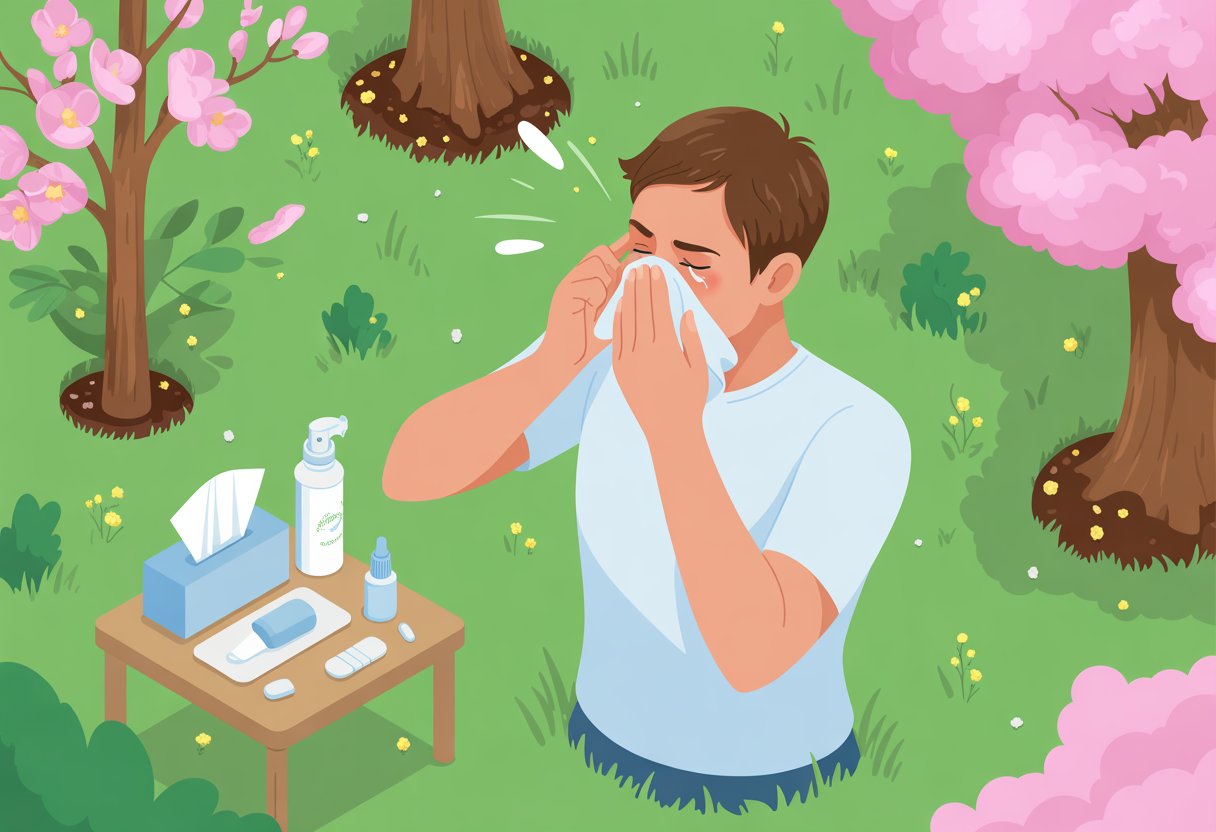
Spring allergy symptoms appear when the immune system reacts to pollen from trees, grasses, and weeds. Recognizing these signs early helps people take action before symptoms become severe.
Signs of Allergic Rhinitis
Allergic rhinitis, commonly called hay fever, occurs when airborne pollen triggers an immune response in the nose and sinuses. Common symptoms of spring allergies[3] include head congestion, stuffy or runny nose, sinus pain, and headaches. The body treats pollen as a threat and releases histamines to fight it off.
These histamines cause the uncomfortable reactions people experience during allergy season. Unlike a cold that typically resolves in seven to ten days, allergic rhinitis persists as long as the person remains exposed to pollen. Symptoms often worsen on windy days when pollen counts are highest.
People with allergic rhinitis may also experience facial puffiness, jaw discomfort, and tooth pain. Some lose their sense of smell or taste during severe flare-ups.
Itchy Eyes, Runny Nose, and Sneezing
Itchy eyes rank among the most bothersome spring allergy symptoms. The eyes become red, watery, and may swell or feel irritated. Many people report constant rubbing or the sensation that something is stuck in their eye.
A runny nose with clear, thin mucus accompanies the eye symptoms. This differs from the thick, colored discharge associated with sinus infections. Sneezing fits happen repeatedly throughout the day, especially after going outside or opening windows.
The nose itself often feels itchy inside. Some people experience an itchy throat or ears as well. These symptoms typically start within minutes of pollen exposure and continue until the person removes themselves from the trigger or takes medication.
Sinus Pressure and Nasal Congestion
Nasal congestion makes breathing through the nose difficult or impossible. The nasal passages swell as they attempt to flush out allergens, creating a blocked feeling. This congestion often leads to mouth breathing, especially at night.
Sinus pressure builds around the forehead, cheeks, and behind the eyes. The pain can feel like a constant, dull ache or develop into sharp headaches. Some people confuse this pressure with a sinus infection, but allergies rarely cause fever.
When nasal congestion persists and develops into pain around the face or teeth with post-nasal drip that won’t clear, it may signal sinusitis rather than simple allergies[5]. A healthcare provider can determine whether symptoms stem from allergies alone or have progressed to a sinus infection requiring different treatment.
Elevate Your Health for Just $29.99/Month
Join the Precision Wellness Subscription at My Healing 365 and get discounted services, priority coaching access, virtual care, and exclusive wellness resources to support your physical, emotional, and hormonal health.
Join for $29.99/MonthMonitor Pollen Counts and Forecasts for Proactive Relief

Checking pollen levels before heading outside helps people avoid the worst allergy symptoms during peak times. Weather conditions like temperature, wind, and rainfall directly affect how much pollen fills the air each day.
How to Track Local Pollen Levels
Several reliable websites and apps provide daily pollen counts for specific locations. The National Allergy Bureau[6] offers accurate pollen and mold measurements from certified counting stations across the country. Pollen.com[7] provides an interactive allergy map where users can search their city to view current pollen levels and multi-day forecasts.
Most tracking tools categorize pollen levels as low, moderate, high, or very high. These ratings help people understand their risk of experiencing symptoms on any given day.
Checking the forecast each morning takes less than a minute but makes a real difference. People who monitor pollen counts can plan their day around safer times and reduce pollen exposure significantly.
Timing Outdoor Activities
Pollen counts typically peak during morning hours between 5 a.m. and 10 a.m. Tree, grass, and weed pollens release most heavily during this window. Planning outdoor exercise or yard work for late afternoon or evening reduces exposure to high pollen concentrations.
Rainy days offer the best conditions for outdoor activities. Rain washes pollen from the air and keeps new pollen grounded. The hours immediately following rainfall provide a temporary break from airborne allergens.
Windy days spread pollen over long distances, even from areas miles away. Weather conditions like temperature and wind[8] determine how much pollen ends up in the air. People sensitive to allergies should limit time outside when forecasts predict strong winds during pollen season.
Recognizing High-Risk Weather Conditions
Warm, dry, and breezy days create perfect conditions for high pollen counts. Ground temperatures trigger plants and trees to release more pollen into the air. Dry conditions allow pollen to stay airborne longer instead of settling.
High-risk weather patterns include:
- Temperatures above 60°F
- Low humidity below 40%
- Wind speeds over 10 mph
- Sunny, cloudless skies
Cool, damp weather suppresses pollen release and provides relief during allergy season. Morning dew and fog temporarily weigh down pollen particles. People can use these patterns to identify safer days for extended outdoor time and reduce pollen exposure effectively.
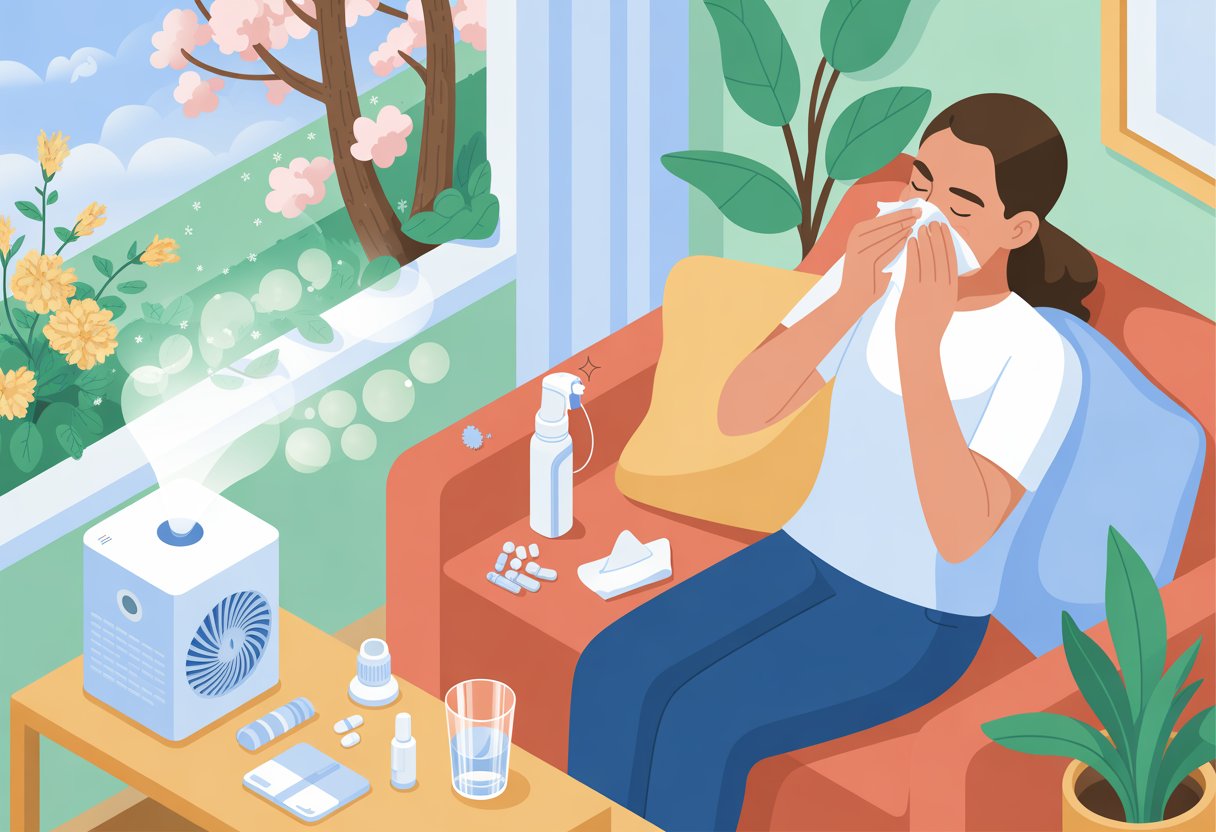
When spring allergies strike, quick action can make a significant difference in symptom severity. Oral antihistamines work best when taken before pollen exposure peaks, while saline rinses clear allergens from nasal passages within minutes.
Taking Allergy Medication Early
Timing plays a critical role in managing spring allergy symptoms effectively. Oral antihistamines like Claritin and Allegra work best when taken before pollen counts rise, ideally in the morning or the night before high-pollen days.
These antihistamines typically take 1-2 hours to reach full effectiveness. Starting them early prevents histamine from binding to receptors that cause symptoms like sneezing and itchy eyes.
Common antihistamine options:
- Claritin (loratadine): Non-drowsy, lasts 24 hours
- Allegra (fexofenadine): Fast-acting, doesn’t interact with fruit juices
- Zyrtec (cetirizine): Strong relief but may cause mild drowsiness
Steroid nasal sprays provide additional relief for nasal congestion. Nasal corticosteroids like Flonase reduce inflammation in nasal passages but need several days of consistent use to reach maximum effectiveness.
Using Saline Nasal Rinse
A saline nasal rinse clears allergens, mucus, and bacteria from nasal passages immediately. This simple technique uses a saline solution made from salt and water to flush out irritants that trigger runny nose and congestion.
Neti pots, squeeze bottles, or nasal irrigation systems deliver the saline solution through one nostril while it drains from the other. Studies show regular saline irrigation reduces inflammation[9] and eases stuffiness within minutes.
The process works best when performed 1-2 times daily during allergy season. Use only distilled, sterile, or previously boiled water to avoid infections.
Relieving Itchy Eyes Quickly
Itchy eyes and watery eyes respond well to cold compresses and artificial tears. A clean, cold washcloth placed over closed eyelids for 10-15 minutes reduces swelling and soothes irritation.
Artificial tears flush out pollen and allergens while lubricating dry, irritated eyes. Preservative-free versions work best for frequent use throughout the day.
Antihistamine eye drops provide faster relief than oral medications for eye-specific symptoms. They block histamine directly at the source and start working within minutes. Avoid rubbing eyes, as this releases more histamine and worsens itching.
Over-the-Counter and Prescription Treatments
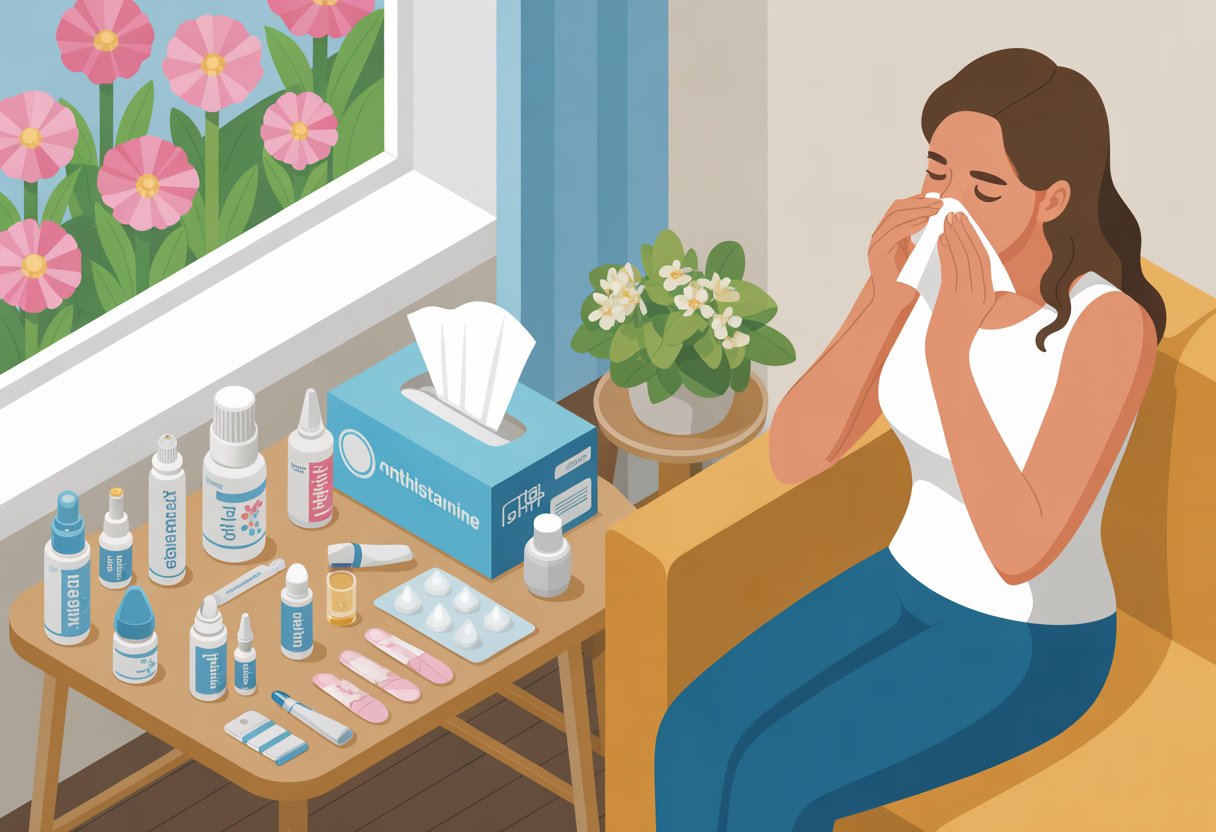
Multiple medication types can address spring allergy symptoms, from fast-acting oral antihistamines to targeted nasal sprays. Prescription options like immunotherapy provide longer-term solutions when over-the-counter treatments fall short.
Oral Antihistamines for Rapid Relief
Oral antihistamines work by blocking histamine, the chemical that causes sneezing, itching, and runny nose. These medications start relieving symptoms within one to three hours of taking them.
Popular non-drowsy options include Claritin (loratadine), Allegra (fexofenadine), Zyrtec (cetirizine), and Xyzal (levocetirizine). These newer antihistamines are better choices than older types like Benadryl because they don’t cause as much drowsiness or impair alertness.
People should avoid first-generation antihistamines such as diphenhydramine for allergy treatment. These older medications can affect memory, concentration, and the ability to operate vehicles safely. Long-term use in older adults has been linked to increased dementia risk.
For best results with seasonal allergies, people should start allergy medicines a couple weeks before their allergy season begins[10]. Pregnant individuals can safely use cetirizine or loratadine, as these have established safety profiles during pregnancy.
Effective Use of Nasal Sprays
Nasal corticosteroids reduce inflammation inside the nose and prevent allergic reactions from developing. These steroid nasal sprays are the most effective medicine type for allergic rhinitis[10] because they address all nasal symptoms including congestion.
Many corticosteroid nasal sprays are available without a prescription. They can also provide some relief for itchy, watery eyes. Side effects are minimal and may include headache, nosebleeds, or minor irritation.
Unlike antihistamines that work quickly, nasal corticosteroids take one to two weeks to reach full effectiveness. People get the best results when they use these sprays daily throughout their allergy season.
Saline nasal rinses help by washing out allergens like pollen and dust from nasal passages. These rinses cut down on mucus and can be used alongside other medications.
Role of Decongestants During Allergy Season
Decongestants shrink swollen tissue in the nasal passages to relieve stuffiness. Sudafed (pseudoephedrine) is a common oral decongestant available behind the pharmacy counter.
Nasal decongestant sprays should only be used for three days or less. Using them longer causes rebound congestion that makes symptoms worse than before. The package instructions clearly state these time limits.
People with certain health conditions need to check with their doctor before using decongestants. These medications can cause problems for those with high blood pressure, heart disease, glaucoma, diabetes, thyroid disease, or difficulty urinating.
Oral phenylephrine, found in many over-the-counter decongestant pills, may not effectively relieve congestion. The FDA reviewed studies showing it doesn’t work well at standard doses and has proposed removing these products from stores.
Some allergy medicines combine an antihistamine with a decongestant in one pill. These combination products should not be used for more than seven days.
Advanced Prescription Options
Prescription treatments offer solutions when over-the-counter options don’t control symptoms adequately. Leukotriene modifiers like montelukast block chemical messengers involved in allergic reactions, though this medication carries a black box warning for mental health side effects.
Allergy shots[10] deliver increasing doses of allergens over time to reduce sensitivity. This immunotherapy works well for allergies to pollen, pets, dust, mold, and stinging insects. Shots must be given in an allergist’s office due to the risk of severe reactions.
Sublingual immunotherapy places small allergen doses under the tongue. Tablets are available for dust mites, grass, and ragweed allergies. This treatment improves tolerance without injections.
Omalizumab is a biologic medication given by injection or infusion. It’s approved for moderate to severe allergic asthma and chronic hives. An allergist can determine if these advanced treatments are appropriate based on symptom severity and response to standard medications.
Natural and Home Remedies for Spring Allergies
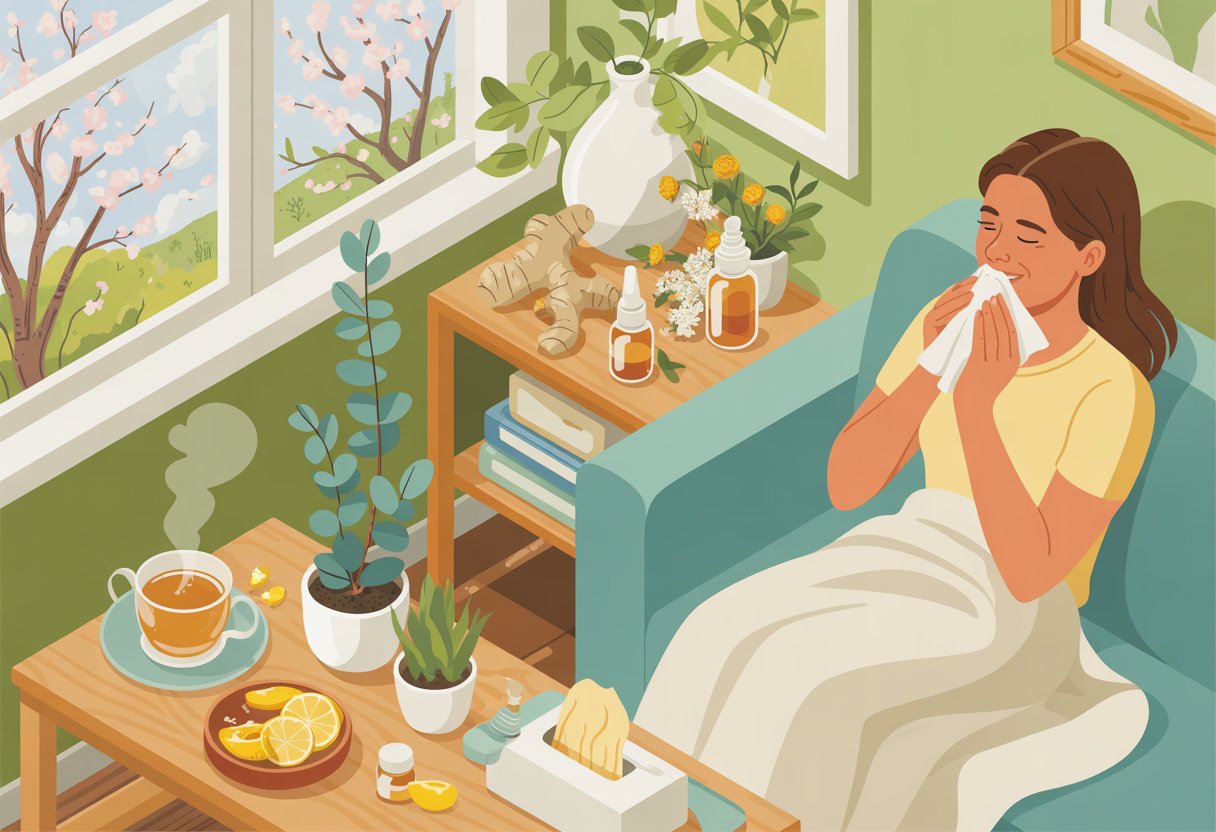
Several natural approaches can help reduce allergy symptoms without relying solely on medication. Herbal supplements like butterbur and quercetin offer anti-inflammatory benefits, while steam therapy and humidifiers help clear nasal passages. Certain foods contain compounds that act as natural antihistamines to block allergic reactions.
Herbal Approaches and Supplements
Butterbur supplements[9] work as effectively as some over-the-counter antihistamines for reducing stuffiness and improving breathing during allergy attacks. The herb contains petasin, which reduces inflammation in the nasal passages.
Quercetin is a plant compound found in apples, citrus fruits, onions, and broccoli. Studies show that quercetin supplementation[9] reduces eye itchiness, nasal congestion, and other allergy symptoms while improving sleep quality. This flavonoid has both antioxidant and anti-inflammatory properties.
Stinging nettle offers immune-boosting and anti-inflammatory benefits. Regular nettle tea consumption for one week can reduce runny nose and stuffiness symptoms.
Other helpful supplements include:
- Spirulina (blue-green algae with anti-inflammatory effects)
- Vitamin C (supports immune function and reduces respiratory symptoms)
- Probiotics (balance gut bacteria linked to immune response)
People should consult a healthcare provider before starting any herbal remedies, as supplements can interact with medications.
Steam and Humidifier Therapy
A neti pot or saline nasal rinse clears allergens, mucus, and bacteria from the nasal passages. Regular saline irrigation[9] for up to four weeks reduces inflammation and eases congestion symptoms. The saline solution is simply a mixture of salt and water that flushes out irritants.
Steam inhalation opens blocked nasal passages and loosens mucus. Adding menthol essential oil to steam reduces inflammation and swelling in the airways. People can inhale menthol through a diffuser, steam inhaler, or directly from the bottle.
Running a humidifier adds moisture to dry indoor air, which soothes irritated nasal passages. The added humidity prevents the nasal lining from drying out and becoming more sensitive to allergens. Clean humidifiers regularly to prevent mold and bacteria growth that could worsen allergy symptoms.
Dietary Adjustments and Natural Antihistamines
Certain foods contain compounds that block histamine release or reduce inflammation. Ginger has natural anti-inflammatory properties that help calm allergic reactions in the respiratory system. People can add fresh ginger to tea or smoothies for symptom relief.
Turmeric contains curcumin, which reduces inflammation throughout the body. This golden spice acts as a natural antihistamine when consumed regularly in food or as a supplement.
Foods rich in natural antihistamines include:
- Local honey (may reduce sensitivity to local pollen)
- Green tea (contains quercetin)
- Kale and leafy greens (high in vitamin C)
- Fatty fish (omega-3s reduce inflammation)
Avoiding certain foods during allergy season can also help. Dairy products may increase mucus production in some people. Alcohol and processed foods can trigger inflammatory responses that worsen symptoms.
Preventing Pollen Exposure Indoors and Outdoors
Keeping pollen levels low requires simple changes to both home environments and daily routines. These steps help reduce pollen exposure and minimize allergy symptoms during peak seasons.
Home Air Quality Improvements
HEPA filters remove up to 99.97% of airborne pollen particles from indoor air. Air purifiers with these filters work best in bedrooms and living spaces where people spend most of their time. Running them continuously during allergy season provides the most protection.
People should keep windows closed during high pollen days, especially between 5 a.m. and 10 a.m. when pollen counts peak. Air conditioning systems with clean filters offer a better way to cool homes while keeping pollen out. Changing HVAC filters every 30 to 90 days prevents pollen buildup in ventilation systems.
Regular cleaning reduces indoor allergens that settle on surfaces. Vacuuming with HEPA-equipped machines twice weekly removes pollen from carpets and upholstery. Damp mopping hard floors traps pollen instead of spreading it into the air. Washing curtains and bedding in hot water every two weeks eliminates accumulated allergens.
Personal Habits for Allergen Reduction
Taking a shower after spending time outdoors removes pollen from skin and hair before it spreads through the house. Changing into fresh clothes immediately prevents pollen transfer to furniture and beds. People should wash clothes worn outside separately from other laundry.
Checking daily pollen forecasts[11] helps with planning outdoor activities. Limiting time outside on high-count days significantly reduces symptoms. Avoiding yard work like mowing lawns or raking leaves during peak pollen times prevents direct exposure to concentrated allergen sources.
Protective Gear and Hygiene Practices
Wearing sunglasses shields eyes from airborne pollen and reduces irritation. Wide-brimmed hats keep pollen particles out of hair. Some people benefit from wearing pollen masks[12] during outdoor activities like gardening or exercising.
Keeping shoes near entryways instead of wearing them throughout the house prevents tracking pollen inside. Pets that go outdoors carry pollen on their fur, so wiping them down with damp towels before they enter helps reduce indoor contamination. Storing outdoor clothes in closed closets or mudrooms contains allergens to specific areas.
Allergy-Proofing Your Home and Environment
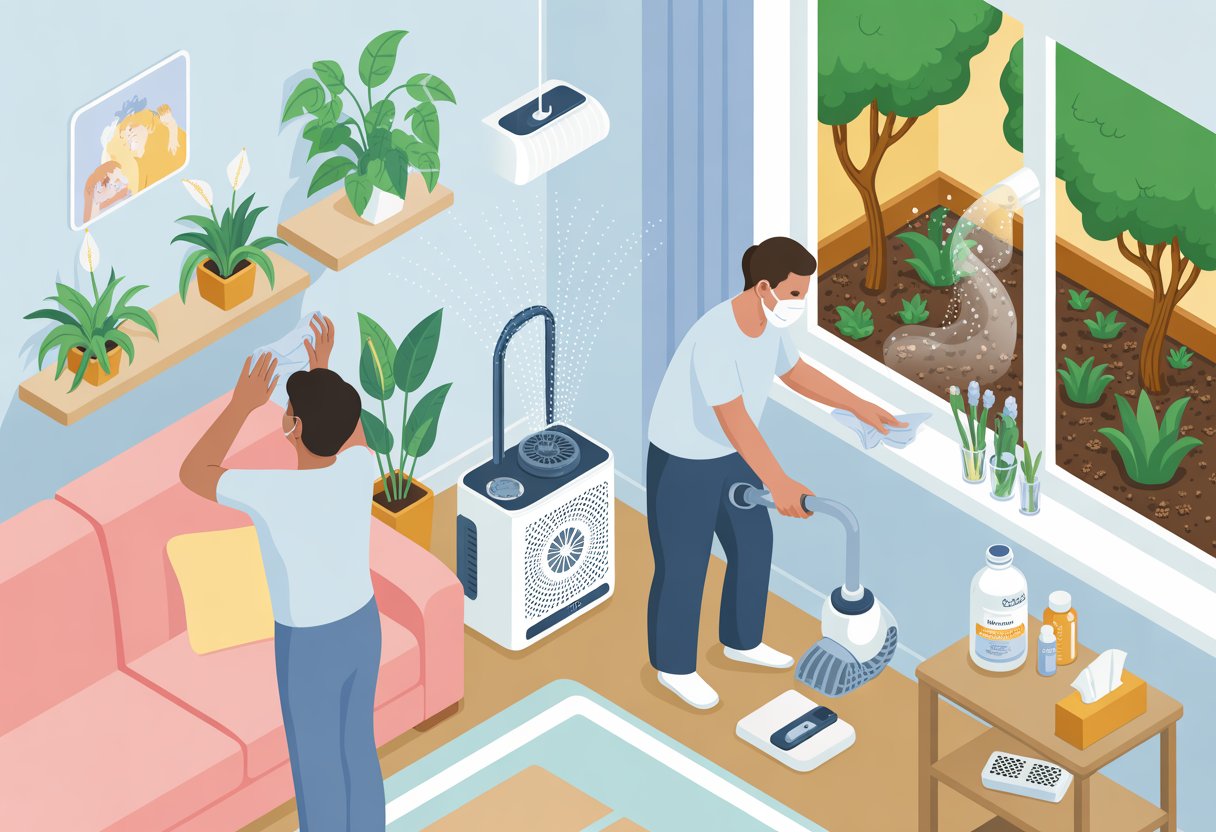
Keeping allergens out of indoor spaces requires regular cleaning, proper pet care, and controlling moisture that leads to mold growth. Simple changes to daily routines can reduce indoor allergens and provide significant allergy relief.
Cleaning and Laundry Tips
Dust with a damp microfiber cloth instead of dry dusting. This method traps pollen and other particles rather than spreading them into the air.
Vacuum at least twice per week using a machine with HEPA filters. These filters capture tiny particles like pollen, pet dander, and dust mites that regular vacuums miss. Focus on high-traffic areas, rugs, and upholstered furniture where allergens settle.
Wash bedding weekly in hot water during peak allergy season. Allergens love to settle into soft fabrics[13] like sheets, pillowcases, and blankets. Curtains also need weekly washing since they collect airborne particles.
Wipe down window sills, baseboards, and air vents regularly. These spots trap allergens but often get overlooked during routine cleaning.
Remove clutter from surfaces. The more items sitting out, the more places allergens can accumulate. Keep books, papers, and decorative objects stored away.
Managing Pets During Allergy Season
Groom pets outdoors whenever possible. Brushing them outside prevents loose fur and attached pollen from spreading inside the home.
Wipe down pets with a damp cloth before they come indoors. Their fur picks up pollen, grass, and other outdoor allergens during walks or playtime.
Keep pets out of bedrooms during high pollen days. This creates at least one allergen-free zone for sleep and rest.
Bathe pets more frequently in spring. A weekly bath removes accumulated allergens from their coat. Use pet-safe shampoo and rinse thoroughly.
Wash pet bedding weekly along with household linens. Pet beds collect dander, saliva, and outdoor allergens that pets bring inside.
Controlling Mold and Indoor Allergens
Use a dehumidifier to keep indoor humidity below 50 percent. Mold thrives in damp conditions, so controlling moisture prevents growth in bathrooms, basements, and laundry rooms.
Fix water leaks immediately. Even small drips create the moisture mold needs to grow behind walls, under sinks, or around windows.
Run exhaust fans in bathrooms during and after showers. Proper ventilation removes moisture before it can encourage mold growth.
Keep windows closed on high pollen days[13]. While fresh air seems appealing, open windows let pollen drift inside. Check daily pollen counts before opening windows.
Place air purifiers with HEPA filters in bedrooms and main living areas. These devices continuously remove airborne particles from indoor air. Change filters according to manufacturer instructions for best results.
Upgrade HVAC filters to HEPA-rated options. Standard filters miss small particles, but a HEPA filter traps allergens before they circulate through the home.
When to See a Doctor or Allergist
Most people can manage spring allergies with over-the-counter treatments, but professional medical help becomes necessary when symptoms persist despite medication or when complications develop. A doctor or allergist can provide specialized testing and treatment options that target the root cause of allergic reactions.
When Allergy Testing is Needed
People should consider scheduling an allergy test[14] when home remedies and drugstore medications fail to control their symptoms after two weeks of consistent use. An allergist performs skin prick tests or blood tests to identify specific allergens triggering reactions.
Testing becomes especially important when someone experiences severe symptoms that interfere with daily activities or sleep. The results help doctors create targeted treatment plans instead of relying on general approaches.
People who develop new allergy symptoms later in life should also seek testing. Their immune system may have become sensitive to allergens that never bothered them before.
Common reasons to get tested:
- Unclear what triggers symptoms
- Multiple suspected allergens
- Year-round symptoms suggesting environmental allergies
- Family history of severe allergic reactions
Understanding Allergy Shot and Immunotherapy Options
Allergy shots, also called immunotherapy, work by gradually exposing the body to small amounts of specific allergens over time. This process trains the immune system to stop overreacting to these substances.
Treatment typically requires 6 to 18 months before patients notice significant improvement. People receive injections once or twice weekly at first, then monthly for maintenance. The entire treatment course usually lasts three to five years.
Doctors recommend immunotherapy for patients with allergic rhinitis, eye allergies, or asthma triggered by pollen. This option works best for people who cannot avoid their allergens or who experience side effects from medications.
Sublingual immunotherapy offers an alternative. Patients place tablets under their tongue daily instead of getting shots. Both methods can provide long-lasting relief even after treatment ends.
Managing Complications Like Sinus Infection
Sinus infections often develop[15] when untreated allergies cause nasal passages to swell and trap mucus. This creates an environment where bacteria can grow.
Symptoms of sinusitis include thick yellow or green nasal discharge, facial pain or pressure, reduced sense of smell, and fever. These signs differ from regular allergy symptoms and require medical attention.
A doctor can determine whether the infection needs antibiotics or will clear up with other treatments. Chronic sinus infections that occur repeatedly may indicate poorly controlled allergies.
Warning signs requiring immediate medical care:
- High fever above 101°F
- Severe headache or face pain
- Vision changes or eye swelling
- Stiff neck or confusion
People experiencing frequent ear infections alongside allergies should also consult an allergist. Fluid buildup from inflammation can lead to recurring ear problems that need professional treatment.
Long-Term Management and Lifestyle Strategies
Building consistent habits and understanding personal allergy patterns can significantly reduce the severity of spring allergies over time. Simple daily routines, stress management techniques, and careful tracking help people gain better control of their symptoms year after year.
Establishing Ongoing Preventive Routines
People who monitor pollen counts daily can plan their outdoor activities around lower pollen levels. Most weather apps and websites provide local pollen forecasts that show when tree, grass, and weed pollen are highest.
Creating a daily routine helps reduce pollen exposure consistently. These habits include:
- Showering before bed to remove pollen from hair and skin
- Changing clothes after spending time outdoors
- Keeping windows closed during peak pollen hours (typically 5 AM to 10 AM)
- Using HEPA filters in home air conditioning systems
- Washing bedding in hot water weekly
Starting preventive medications two weeks before allergy season begins gives the body time to build up protection. This approach works better than waiting until symptoms appear. People should also clean their homes regularly to remove settled pollen from surfaces, carpets, and furniture.
Reducing Stress for Better Allergy Control
High stress levels can make allergy symptoms worse by affecting immune system function. When someone experiences chronic stress, their body produces more inflammatory chemicals that intensify allergic reactions.
Getting adequate sleep each night supports the immune system and helps manage inflammatory responses. Most adults need seven to nine hours of quality sleep to maintain proper immune function.
Regular exercise can reduce stress and improve overall health, but timing matters during allergy season. People should exercise indoors or late in the evening when pollen counts are lower. They can also try stress-reduction techniques like deep breathing exercises, meditation, or yoga to keep their immune response balanced.
Tracking Symptom Patterns Across Seasons
Keeping a detailed allergy journal helps identify specific triggers and patterns. People should record daily symptoms, pollen counts, locations visited, and any medications taken. This information reveals which types of pollen cause the worst reactions.
A simple tracking table might include:
| Date | Pollen Count | Symptoms | Severity (1-10) | Medication Used |
|---|---|---|---|---|
| Mar 6 | High | Sneezing, itchy eyes | 7 | Antihistamine |
Noting weather conditions like wind speed and humidity also provides useful context. Wind spreads pollen more widely, while rain temporarily clears it from the air. After tracking symptoms for one or two seasons, people can predict when their allergies will be worst and take preventive action earlier.
Frequently Asked Questions
Spring allergy sufferers often seek quick relief through nasal rinses, antihistamines, and avoiding triggers during high pollen days. Natural approaches like steam inhalation and staying hydrated can complement medical treatments for better symptom control.
What are the most effective natural remedies for immediate allergy relief?
Nasal irrigation provides fast relief by washing out mucus and allergens from the nasal passages. A person can use a neti pot with a mixture of 1 teaspoon iodide-free salt and 1 teaspoon baking soda dissolved in 8 ounces of distilled or boiled water.
Steam inhalation helps loosen mucus and makes breathing easier. Someone can lean over a bowl of warm water with a towel over their head or sit in a steamy bathroom.
Drinking plenty of fluids thins nasal mucus and provides relief. Warm liquids like soup or tea offer the added benefit of steam while keeping the body hydrated.
What are the best strategies for managing seasonal allergies at home?
Keeping indoor air clean reduces allergen exposure throughout the home. Using air conditioning with regular maintenance and a HEPA filter in the bedroom traps airborne particles effectively.
A person should shower and change clothes after being outdoors to remove pollen. Keeping windows and doors closed at night prevents pollen from entering living spaces.
Vacuuming floors frequently with a HEPA filter vacuum removes allergens from carpets and surfaces. Natural cleaning products made with vinegar or baking soda[16] avoid harsh chemicals that can irritate nasal passages.
How can one permanently alleviate allergy symptoms?
Allergy shots or immunotherapy can provide long-term relief for people who don’t respond well to other treatments. This medical approach works by gradually building tolerance to specific allergens over time.
Visiting an allergy specialist helps identify specific triggers through testing. Once a person knows their exact allergens, they can create a targeted avoidance plan.
No single approach guarantees permanent relief for everyone. Most people achieve the best results by combining multiple strategies tailored to their specific triggers.
What treatment options are available for pollen allergies that can be done at home?
Over-the-counter oral antihistamines like loratadine, cetirizine, and fexofenadine reduce allergy symptoms effectively. These medications work best when taken before symptoms start during high pollen days.
Nasal sprays including cromolyn sodium and saline solutions offer targeted relief. Decongestants like pseudoephedrine help with congestion but should not be used for more than 3-4 days without doctor guidance.
Combination medications that pair antihistamines with decongestants provide dual action relief. A person should manage their symptoms with antihistamines and nasal spray[3] while monitoring pollen counts to time medication use.
Which practices help reduce the severity of spring allergy flare-ups?
Staying indoors on dry, windy days when pollen counts peak reduces exposure. A person should avoid lawn mowing and gardening chores that stir up allergens.
Wearing a pollen mask or N95 mask outdoors provides protection during necessary activities. Checking local pollen forecasts helps someone plan outdoor activities for times when counts are lower.
Avoiding early morning hours when pollen levels are highest makes a difference. Someone should keep car windows closed while driving and use air conditioning instead.
What are proven natural remedies for allergies and sinus issues?
Eating a diet rich in fresh vegetables and fruits may reduce allergy symptoms. Studies show that children who eat grapes, apples, oranges, and tomatoes regularly experience fewer allergy problems.
Acupuncture has shown promise in some studies for reducing allergy flare-ups. A person should consult their doctor to determine if this approach fits their treatment plan.
Avoiding cigarette smoke and other irritants like wood-burning fireplace smoke prevents symptom worsening. These substances inflame nasal passages and make allergy symptoms more severe.
Post Views: 8
References
- How to Stop Allergies Immediately, According to Allergy & Immunology Doctors. https://www.thehealthy.com/allergies/how-to-stop-allergies-immediately/ Accessed March 16, 2026
- Spring Allergies. https://www.aaaai.org/tools-for-the-public/conditions-library/allergies/spring-allergies Accessed March 16, 2026
- Managing Spring Allergies. https://health.clevelandclinic.org/how-to-manage-spring-allergies Accessed March 16, 2026
- Spring Allergies: Triggers, Symptoms, and How to Find Relief. https://www.self.com/story/spring-allergies Accessed March 16, 2026
- Spring Allergy Relief: Signs, Prevention Tips, and Home Remedies. https://www.almanac.com/home-remedies-spring-allergies Accessed March 16, 2026
- AAAAI. https://pollen.aaaai.org/ Accessed March 16, 2026
- National Allergy Forecast & Info About Allergies. https://www.pollen.com/ Accessed March 16, 2026
- National Allergy Map. https://www.pollen.com/map Accessed March 16, 2026
- Studies show regular saline irrigation reduces inflammation. https://www.verywellhealth.com/how-to-stop-allergies-immediately-11752643 Accessed March 16, 2026
- Allergy Medicine Guide: Best Treatments for Allergies. https://aafa.org/allergies/allergy-treatments/ Accessed March 16, 2026
- 10 Effective Ways to Prevent Pollen Allergy. https://www.wupdoc.com/guides/detail/10-effective-ways-to-prevent-pollen-allergy Accessed March 16, 2026
- 10 Easy Ways to Beat Seasonal Allergies. https://intermountainhealthcare.org/blogs/10-easy-ways-to-beat-seasonal-allergies-when-the-pollen-count-spikes Accessed March 16, 2026
- Allergens love to settle into soft fabrics. https://www.bhg.com/how-to-allergy-proof-your-home-for-spring-11911097 Accessed March 16, 2026
- Making the Most of Your Spring Allergy Visit. https://www.aaaai.org/tools-for-the-public/conditions-library/allergies/spring-allergy Accessed March 16, 2026
- How to Survive Spring Allergies. https://blogs.cooperhealth.org/ehealth/2025/03/20/how-to-survive-spring-allergies/ Accessed March 16, 2026
- What Is the Fastest Way to Fix Seasonal Allergies? 13 Quick Fixes. https://www.medicinenet.com/what_is_the_fastest_way_to_fix_seasonal_allergies/article.htm Accessed March 16, 2026

























