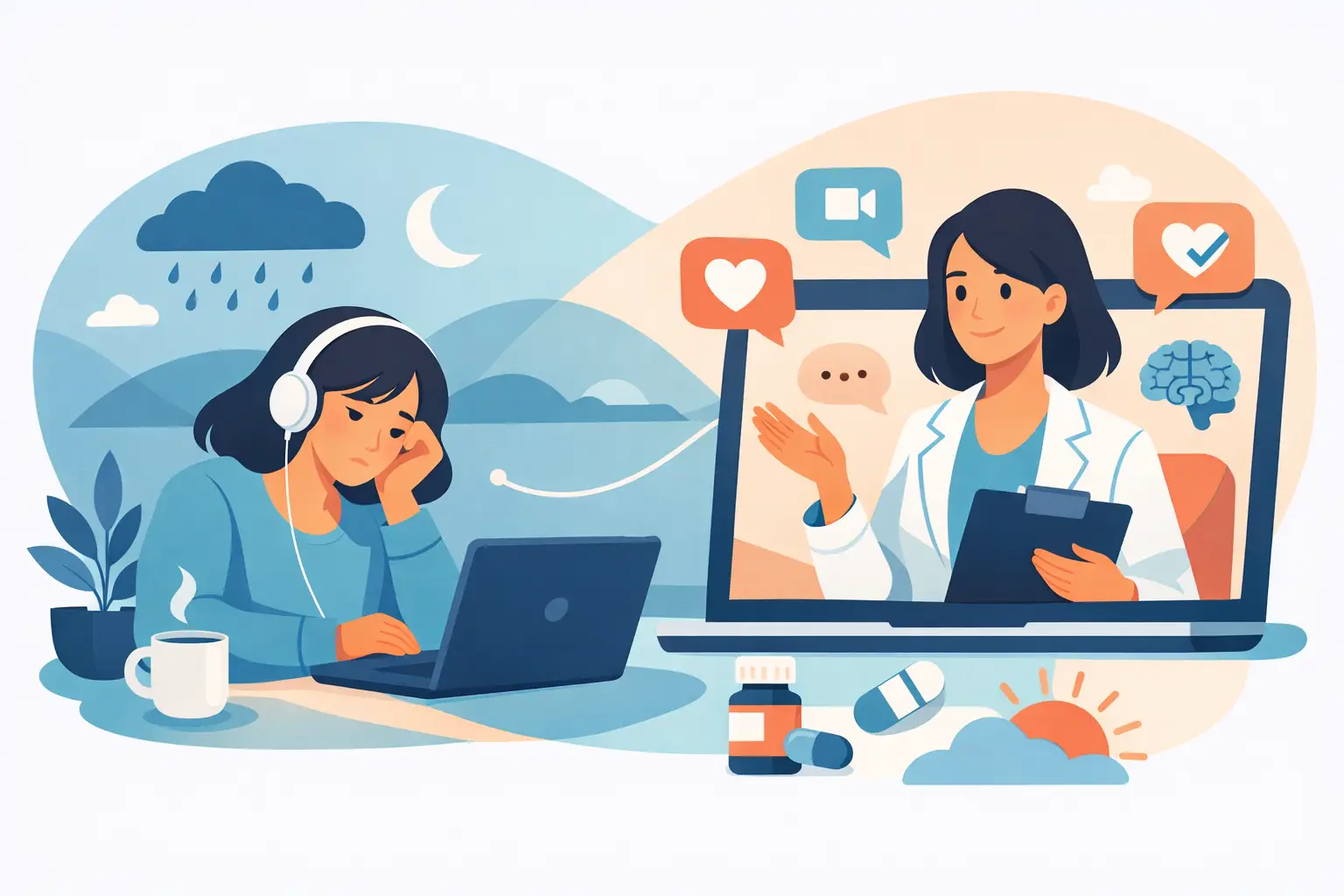
Getting through the workday while feeling flat, exhausted, or emotionally numb can make even small tasks feel heavier than they should. When you start looking for the best online care for depression, what usually matters most is not hype. It is whether care feels real, responsive, private, and simple enough to start when you are already overwhelmed.
Online depression treatment has improved quickly, but not every option offers the same level of support. Some services are little more than a questionnaire and a prescription refill. Others give you access to licensed providers, ongoing check-ins, treatment adjustments, and practical guidance that helps you stay on track. If you are trying to choose wisely, the difference matters.
Table of Contents
What the best online care for depression should include
The strongest online care models do more than make treatment convenient. They reduce friction at every stage, from getting evaluated to asking questions after you begin care. Depression can drain motivation, focus, and follow-through, so a platform that is hard to use is not a small issue. It can become the reason treatment gets delayed.
A good starting point is licensed-provider access. Depression is not one-size-fits-all. Some people are dealing with persistent low mood and loss of interest. Others are also facing anxiety, sleep disruption, burnout, grief, or major life changes. The best online care for depression should account for that complexity with an individualized treatment plan instead of a generic path.
That plan may include medication, behavioral strategies, regular monitoring, or a combination of approaches. It should also leave room for adjustment. Early treatment is often a process of learning what helps, what side effects show up, and how symptoms change over time.
Why convenience matters more than people think
Convenience can sound like a bonus, but for depression care it is often central to whether someone gets help at all. Traditional care can involve long wait times, commuting, missed work, childcare issues, and the stress of sitting in a waiting room when you already feel depleted. Online treatment removes many of those barriers.
That does not mean convenience should replace quality. It means convenience should support quality. Secure digital intake, faster access to a licensed provider, and the ability to message your care team can make treatment feel manageable instead of intimidating. For many adults, especially busy professionals and parents, that is the difference between acting now and putting it off again.
Privacy matters too. Some people want support but do not want to explain repeated office visits to employers, family, or anyone else. A digital care model offers discretion without making care feel distant.
Medication can help, but support around it matters
For many people with depression, medication is part of effective treatment. The key question is not just whether medication is offered. It is whether it is prescribed thoughtfully and followed with real clinical oversight.
A credible online platform should use licensed medical providers who evaluate symptoms, health history, and any overlapping concerns before recommending treatment. Clinically proven medications can be a meaningful part of care, but they are not instant fixes. Some take time to work. Some require dose changes. Some cause side effects that need to be discussed early.
This is where ongoing access matters. Unlimited messaging or easy follow-up can be especially valuable during the first few weeks, when questions come up and reassurance helps people stay engaged with treatment. If a service makes it hard to reach someone after the initial visit, it may not offer the level of support many people actually need.
Not every person with depression needs the same care model
Depression shows up differently from person to person. Someone with mild to moderate symptoms may benefit from a straightforward online treatment plan with medication management, regular check-ins, and self-guided support tools. Someone else may need therapy, more frequent psychiatric oversight, or higher-acuity care.
That is an important trade-off to understand. Online care can be an excellent fit for many adults, but it is not the right setting for every situation. If someone is in immediate danger, having thoughts of self-harm, or experiencing severe psychiatric symptoms, emergency or in-person crisis care is the safer choice.
For everyone else, online treatment can be a strong option when it combines structure with flexibility. The best services recognize where telehealth works well and where another level of care may be necessary.
How to judge an online depression service before you sign up
A polished website is easy to build. A thoughtful care experience is harder. Before choosing a provider, look at how the service actually works.
First, pay attention to who is providing care. Licensed professionals should be clearly identified, and the process should feel clinical without being cold. You want care that is approachable, but still grounded in real medical judgment.
Next, look at what happens after intake. Is treatment personalized, or do all roads lead to the same outcome? Can you communicate with your provider between scheduled visits? Are there on-demand treatment guides or practical resources to help you understand symptoms, sleep, stress, and medication expectations? Depression care works better when you are not left guessing.
Cost is another real factor. Affordable entry pricing can make care more accessible, especially for people who have delayed treatment because traditional routes felt too expensive or too complicated. Still, the cheapest option is not always the best option if support is minimal. Value comes from a combination of price, responsiveness, and clinical depth.
What a strong digital treatment experience feels like
The best online care for depression should feel clear from the start. You should know how to begin, what information you need to provide, when you will hear from a licensed provider, and what your next steps are after treatment starts.
It should also feel human. Depression can make people feel isolated, guilty, or hard to understand. A good telehealth experience does not add to that. It gives you practical direction while reinforcing that what you are going through is treatable and worth addressing.
That is why services built around messaging, individualized plans, and quick access tend to stand out. They meet people where they are. If your energy is low, your schedule is packed, or you are not ready to walk into a clinic, digital care can offer a way forward that feels less overwhelming.
For many adults, this kind of model is not just easier. It is more realistic. You can check in from home, stay engaged without rearranging your week, and get support that fits daily life instead of disrupting it.
When online care is the right next step
If symptoms have started to affect your sleep, concentration, motivation, relationships, or ability to enjoy normal routines, it may be time to stop waiting for things to improve on their own. Depression does not always look dramatic. Sometimes it looks like irritability, emotional shutdown, brain fog, or feeling like every task takes too much effort.
Elevate Your Health for Just $29.99/Month
Join the Precision Wellness Subscription at My Healing 365 and get discounted services, priority coaching access, virtual care, and exclusive wellness resources to support your physical, emotional, and hormonal health.
Join for $29.99/MonthThat is often when online treatment makes sense – not because things are at their worst, but because support is easier to start before symptoms deepen. Fast access can help you regain a sense of control sooner.
For people who want a modern, private, and clinically grounded option, a platform like My Healing 365 can make treatment feel more approachable. Licensed-provider access, personalized plans, secure online care, and ongoing communication create a model that fits real life rather than asking you to build your life around treatment.
You do not need to have every answer before you begin. You only need a care option that meets you with clarity, respect, and a plan that feels possible. If getting help has felt too complicated, the right online support can make the first step feel lighter.
























