Five years ago, British Columbia’s heat dome became one of the deadliest weather disasters in Canadian history.
Over eight days in late June and early July 2021, 619 people died from heat-related causes. Most were older adults. Many lived alone. Nearly all died indoors. What happened was not just a weather event. It was a failure of housing, health systems, emergency preparedness and social policy.
Today, the uncomfortable question is not whether we learned from the tragedy. It is whether we learned enough.
Elevate Your Health for Just $29.99/Month
Join the Precision Wellness Subscription at My Healing 365 and get discounted services, priority coaching access, virtual care, and exclusive wellness resources to support your physical, emotional, and hormonal health.
Join for $29.99/MonthThis month, much of Europe is once again under extreme heat alerts. Italy has issued its highest-level warnings in multiple cities. France and the United Kingdom have recorded temperatures above 44 C, schools have closed, transportation systems have been disrupted and governments are scrambling to protect vulnerable residents. Thousands of deaths have already been linked to the current heat wave, with those deaths concentrated in older age groups.
Recent heat waves across Canada have once again highlighted the growing health risks associated with a warming climate right here in our own country. In late June and early July 2026, prolonged periods of extreme heat prompted widespread heat warnings across Ontario, Québec and parts of Atlantic Canada, with humidex values exceeding 40 C in some regions.

(AP Photo/Andrew Medichini)
Table of Contents
A defining public health challenge
The scenes are familiar because the underlying problem is the same. Extreme heat is no longer a rare event. It is becoming a defining public health challenge of the 21st century. Yet our response remains largely reactive.
The heat dome exposed something researchers have long known: climate-related risks are not experienced equally. Heat does not affect everyone the same way. Age, disability, income, housing quality, social isolation, caregiving responsibilities and access to cooling all matter. The people most at risk are those with the fewest resources to protect themselves.

This article is part of our ongoing series The Grey Revolution. The Conversation Canada and La Conversation are exploring the impact of the aging boomer generation on Canadian society, including housing, working, culture, nutrition, travelling and health care. The series explores the upheavals already underway and those looming ahead.
Older adults are frequently discussed as a vulnerable group during extreme heat, but vulnerability is not simply a function of age. It is a function of policy choices.
People become vulnerable when they live in poorly ventilated housing, cannot afford air conditioning, have limited mobility, are socially isolated or rely on fragmented health and social care systems that struggle to identify who may be at risk before a crisis occurs.
Aging in a changing climate
Canada’s population is now super-aged. More than 20 per cent are above the age of 65. At the same time, climate change is increasing both the frequency and intensity of extreme heat events.
Health Canada projects that heat-related mortality will continue to rise in coming decades. In British Columbia, modelling suggests that without significant adaptation, extreme heat could kill more than 1,300 people annually by 2030.
Read more:
Canada is getting old — and that’s our biggest advantage for 2067
At the National Collaborative on Climate Change and Aging, where I am scientific director, we know what would help. Cities can expand urban tree canopies and shaded public spaces. Building codes can prioritize passive cooling and heat-resilient design, and we can ensure and enforce legislation that homes have areas that are designated to be temperature-controlled.
Social housing, long-term care homes, retirement residences and community housing can be adapted and mandated to prevent dangerous indoor temperatures. Health systems can develop mechanisms to identify and support people who are at greatest risk. Heat-health action plans can integrate public health, social services, emergency management, and community organizations before temperatures rise. We can listen to lived experts on the ground who have been dealing with these issues firsthand for years.
The challenge is not a lack of evidence. It is a lack of urgency.
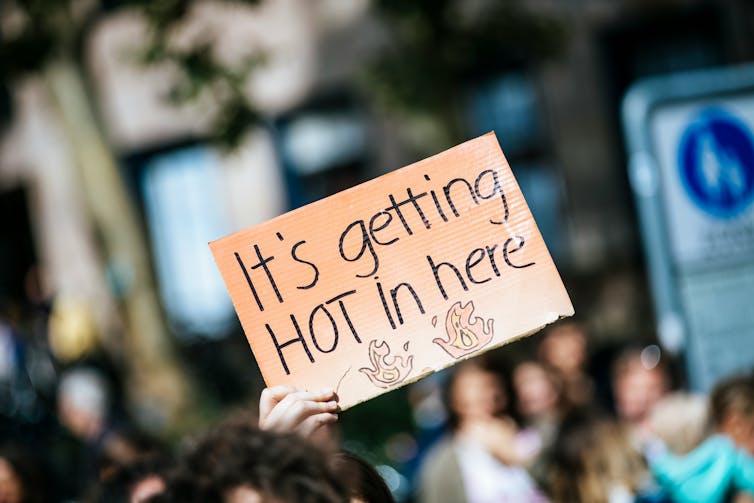
(Unsplash/Markus Spiske)
The most dangerous assumption
In the aftermath of the 2021 heat dome, many governments promised action. Important improvements have occurred, but adaptation remains fragmented and uneven. Too often, heat preparedness still relies on individuals taking responsibility for risks that are largely shaped by broader social and environmental conditions.
Over the next 20 years in Canada, those age 65 and older are expected to grow by 68 per cent. Ensuring that communities are prepared to support older adults in the face of climate change will become an increasingly important policy priority.
Given that most older adults prefer to age in place, which means that people prefer stay in their homes and communities as long as possible, climate adaptation strategies should extend beyond emergency response to include age-friendly housing, neighbourhood infrastructure, accessible services and community supports that enable people to remain safely in their homes and communities in a changing climate.
Five years ago, 619 lives were taken in British Columbia and the immense tragedy offered the country a warning. Europe is currently offering another one. The lesson is not that extreme heat is coming; it is already here. The most dangerous assumption we can make is that we have more time.
























