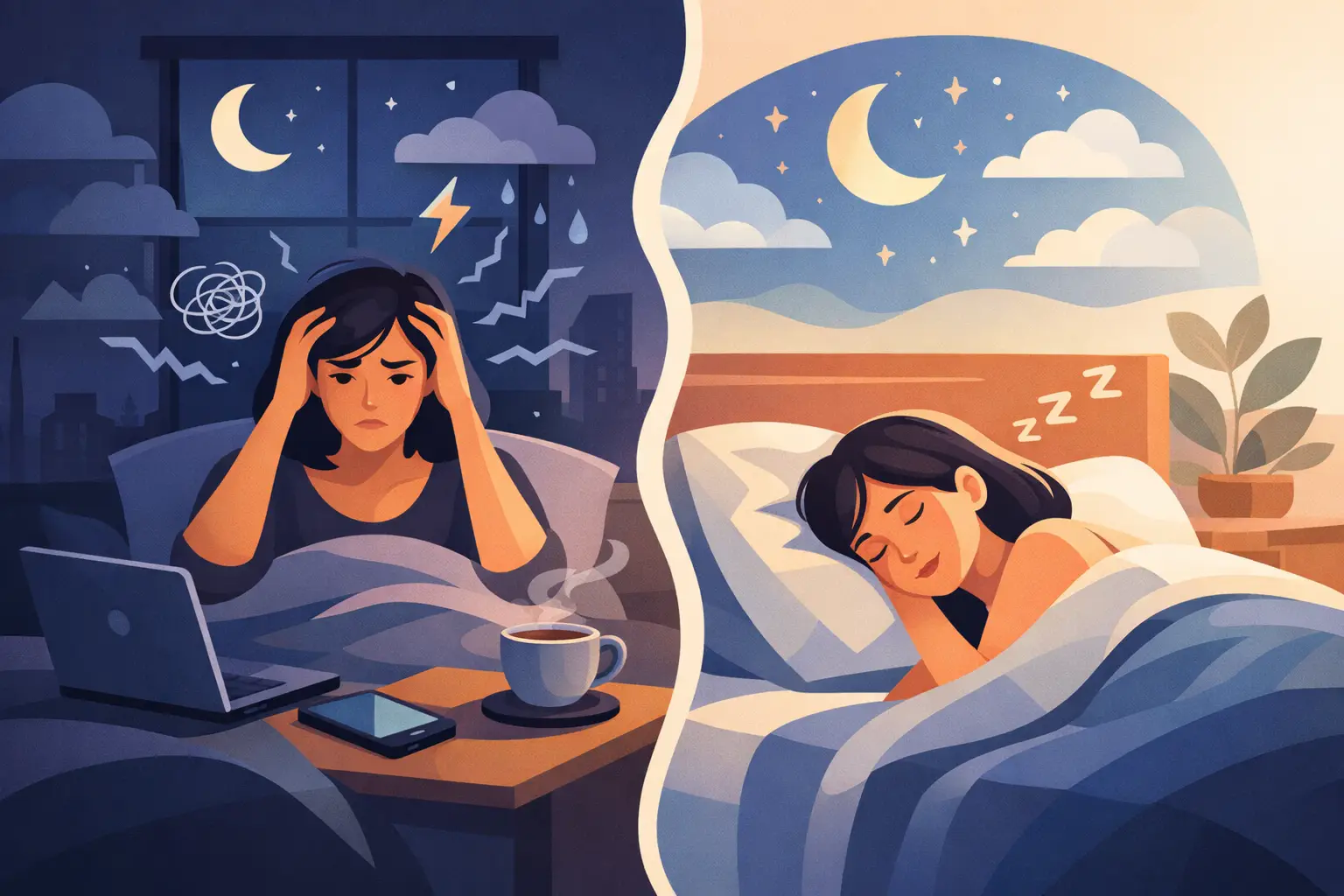
You finally get into bed, turn off the light, and expect sleep to happen. Instead, your brain starts replaying tomorrow’s deadlines, that awkward conversation from earlier, and everything else you have been trying to keep together. If you are wondering how to treat stress insomnia, the first thing to know is that this pattern is common, and it is treatable.
Stress insomnia usually shows up when your body is tired but your nervous system is still on high alert. You may have trouble falling asleep, wake up in the middle of the night with your mind racing, or sleep lightly and wake feeling like you barely rested. A bad night here and there is frustrating. Several in a row can start affecting your mood, focus, patience, and overall mental health.
The good news is that treating stress insomnia is not about forcing sleep. It is about lowering the mental and physical activation that keeps sleep from happening naturally. For some people, a few routine changes are enough. For others, especially when anxiety or ongoing emotional stress is involved, professional support can make the process faster and more effective.
Table of Contents
What stress insomnia actually is
Stress insomnia is sleep disruption driven by emotional strain, mental overload, or an overactive stress response. It can happen during a major life event, a difficult work period, relationship problems, financial pressure, grief, or ongoing anxiety. Even positive changes like moving, starting a new job, or becoming a parent can trigger it.
When stress is high, your body releases hormones that increase alertness. That is useful during the day when you need to respond to pressure. It is not helpful at 1:30 a.m. when you need your mind and body to settle. If this keeps happening, your brain can start linking bedtime with frustration and wakefulness, which makes the cycle harder to break.
That is why stress insomnia is rarely just a sleep problem. It is often a stress and mental health problem that shows up most clearly at night.
How to treat stress insomnia at home
If your symptoms are mild or relatively new, start with the basics that calm your system and rebuild sleep cues. These steps are simple, but they work best when you practice them consistently rather than only after a bad night.
Keep the same wake time
If you slept poorly, sleeping late may feel tempting. The problem is that it can weaken your sleep drive the next night. A steady wake time helps reset your body clock and supports better sleep over time. This matters more than having a perfect bedtime.
If you need to catch up, a short early afternoon nap may help, but keep it brief. Long naps or late naps can make nighttime insomnia worse.
Create a short wind-down routine
Your brain needs a clear signal that the day is ending. A wind-down routine does not need to be elaborate. In fact, simpler is usually better. Dim lights, put away work, and choose two or three calming activities you can repeat each night, such as stretching, reading something light, showering, or listening to quiet audio.
Try to avoid turning bedtime into a performance. If your routine feels like another task to get right, it can add pressure instead of reducing it.
Reduce stimulation before bed
Caffeine, alcohol, late meals, doomscrolling, and stressful conversations can all keep your body activated. The goal is not perfection. It is noticing what reliably makes your nights harder.
Caffeine can linger for hours, so even an afternoon coffee may affect sensitive sleepers. Alcohol may help you fall asleep faster but often leads to lighter, more fragmented sleep later in the night. Screens are not just about blue light. The bigger issue is that your phone often brings work, news, and emotional stimulation right back into bed.
Get out of bed if you are wide awake
This is one of the most effective and least intuitive strategies. If you have been awake for a while and feel frustrated, get out of bed and do something quiet in low light until you feel sleepy again. That might mean reading a few pages, breathing slowly, or sitting somewhere comfortable.
The reason this helps is simple. You want your brain to reconnect bed with sleep, not bed with worrying.
Calm the stress response, not just the sleep problem
If you want to know how to treat stress insomnia for real, you have to work on what is fueling it during the day. Nighttime symptoms often reflect stress that never got processed.
Give worry a time and place
People with stress insomnia often try not to think about their stress all day, then it floods in at night. Instead, set aside 10 to 15 minutes earlier in the evening to write down what is on your mind. List the problem, what you can do next, and what can wait.
This does not solve everything, but it teaches your brain that worries have a container. They do not have to show up the moment your head hits the pillow.
Use body-based calming techniques
When stress is stuck in your body, thinking your way out of it may not work well. Slow breathing, progressive muscle relaxation, gentle stretching, and grounding exercises can help shift your nervous system out of high alert.
A simple place to start is breathing in for four counts and out for six. The longer exhale can help signal safety to your body. If counting makes you tense, skip the numbers and just focus on a slow, easy exhale.
Watch the sleep effort trap
The more desperately you try to sleep, the more alert you may become. You start checking the clock, calculating how many hours are left, and monitoring whether you feel sleepy enough. That effort creates pressure, and pressure works against sleep.
A better goal is rest, not sleep on command. Resting quietly is still useful. When you take the pressure off, sleep often comes more easily.
When lifestyle changes are not enough
Sometimes stress insomnia improves with home strategies. Sometimes it does not, especially when anxiety, depression, panic symptoms, or major life stress are part of the picture. If your sleep problems are lasting more than a few weeks, affecting your daily functioning, or making your mental health feel harder to manage, it may be time for professional support.
This is particularly true if you dread bedtime, feel physically tense all evening, or notice that poor sleep is making your stress worse in a loop you cannot break on your own. At that point, treatment should address both the insomnia and the underlying emotional strain.
Professional treatment for stress insomnia
A licensed provider can help you sort out what is driving your symptoms and what type of care makes sense. For some people, the best next step is behavioral sleep treatment. For others, it may include support for anxiety, depression, or acute stress.
Cognitive behavioral strategies for insomnia are commonly used because they target the thoughts and habits that keep sleep problems going. If your insomnia is tied closely to anxiety or emotional distress, treatment may also include therapy, guided coping tools, or medication when appropriate.
Medication is not the right fit for everyone, and it depends on your symptoms, health history, and goals. Some people want short-term support during a high-stress period. Others need a broader mental health plan that improves sleep as their anxiety or mood symptoms improve. The key is individualized care rather than guessing your way through it.
For adults who want private, convenient care, online treatment can make getting help much easier. A service like My Healing 365 connects you with licensed providers, personalized treatment plans, secure messaging, and care designed around real-life schedules. That can matter when stress insomnia is already draining your time and energy.
Signs you should not wait to get help
Reach out sooner if you are having frequent panic symptoms, persistent anxiety, depression, or insomnia that is interfering with work, parenting, relationships, or safety. You should also seek support if you are relying on alcohol, overusing sleep aids, or feeling emotionally overwhelmed by the lack of sleep.
And if low mood becomes severe or you have thoughts of harming yourself, get immediate emergency help. Sleep loss can intensify mental health symptoms quickly.
Elevate Your Health for Just $29.99/Month
Join the Precision Wellness Subscription at My Healing 365 and get discounted services, priority coaching access, virtual care, and exclusive wellness resources to support your physical, emotional, and hormonal health.
Join for $29.99/MonthHow to treat stress insomnia without blaming yourself
One of the hardest parts of stress insomnia is how personal it can feel. You may start thinking you are doing sleep wrong, managing stress badly, or somehow making the problem happen. That mindset adds another layer of tension.
Try to treat insomnia as a signal, not a personal failure. Your nervous system is responding to pressure. That response can be changed with the right support, the right habits, and enough consistency. Some people improve quickly. Others need a more structured treatment plan. Both are normal.
If sleep has become a struggle, you do not have to wait until you are completely worn down to take it seriously. A calmer night often starts with getting the right kind of help during the day.
























