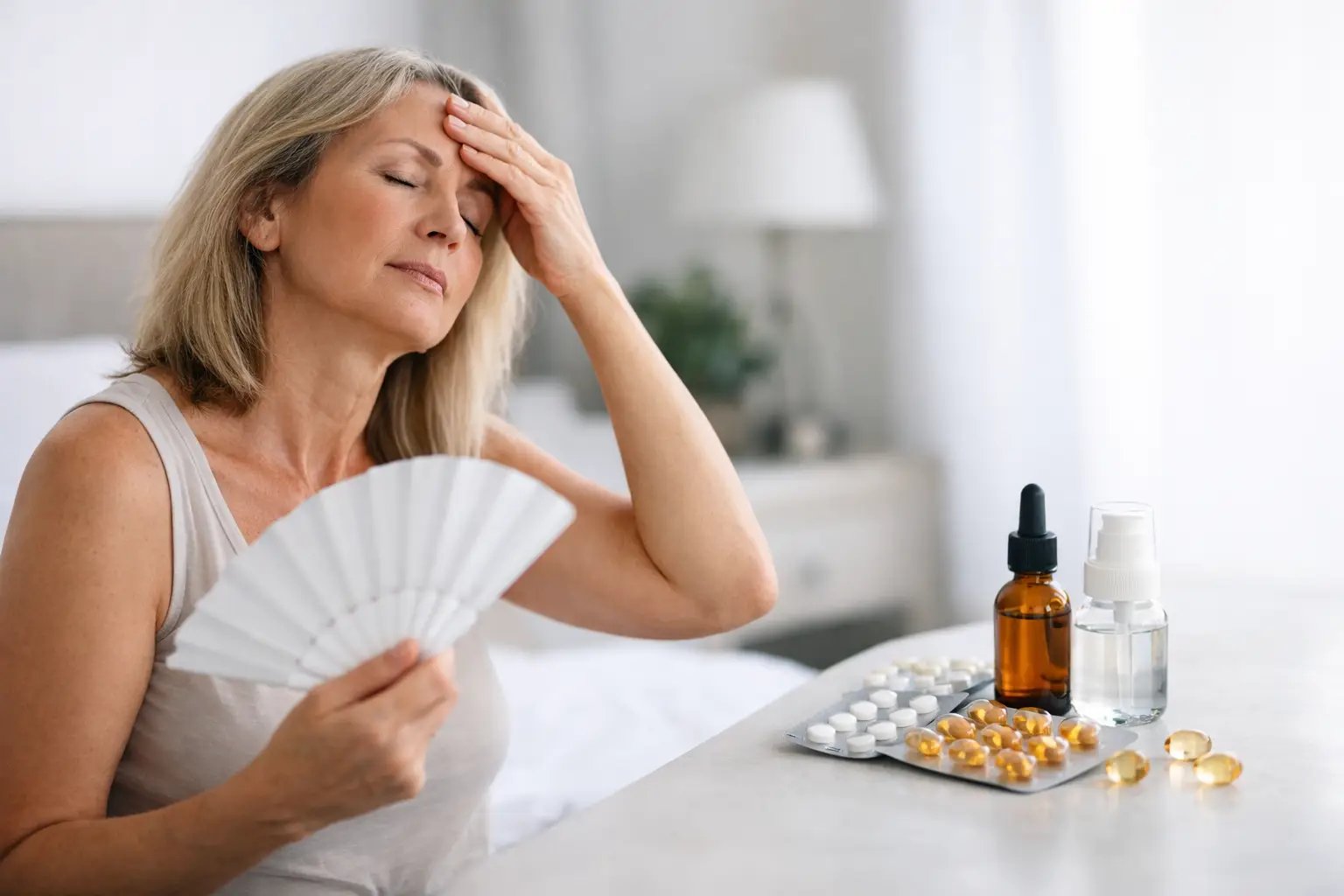
Waking up drenched at 2 a.m., kicking off the covers, and wondering why your body suddenly feels out of your control is a common menopause experience. For many women, hormones for hot flashes become part of the conversation when cooling sheets, fans, and lifestyle changes stop being enough.
Hot flashes can feel simple on the surface – sudden heat, sweating, flushing, maybe a pounding heart – but they often affect much more than comfort. Sleep gets disrupted. Mood gets shorter. Workdays feel harder. Intimacy can change. When symptoms start chipping away at how you feel in your own body, it makes sense to look at solutions that address the cause, not just the moment.
Table of Contents
Why hot flashes happen in the first place
Hot flashes are strongly linked to shifting estrogen levels, especially during perimenopause and menopause. As estrogen changes, the brain can become more sensitive to small shifts in body temperature. The result is an internal alarm that says you are overheating even when the room feels normal.
That is why hot flashes are not just about being warm. They are part of a broader hormonal transition that may also bring night sweats, poor sleep, low libido, brain fog, irritability, vaginal dryness, and changes in weight or energy. If several of those symptoms are showing up together, the bigger picture matters.
How hormones for hot flashes work
Hormones for hot flashes usually mean hormone therapy designed to stabilize the hormonal changes driving symptoms. In many cases, estrogen is the key treatment because declining estrogen is one of the main reasons hot flashes happen.
For women who still have a uterus, progesterone is often added to protect the uterine lining. For women who have had a hysterectomy, estrogen alone may be appropriate. The right plan depends on your health history, age, symptoms, and goals.
Elevate Your Health for Just $29.99/Month
Join the Precision Wellness Subscription at My Healing 365 and get discounted services, priority coaching access, virtual care, and exclusive wellness resources to support your physical, emotional, and hormonal health.
Join for $29.99/MonthWhen treatment is a good fit, hormone therapy can reduce both the frequency and intensity of hot flashes. Some women notice improvement within a few weeks, while others need a bit more time and dose adjustment. It is not a one-size-fits-all process, which is exactly why personalized care matters.
Are hormones the most effective treatment?
For moderate to severe menopausal hot flashes, hormone therapy is widely considered one of the most effective treatment options. That does not mean it is right for every woman, but it does mean it is often the option that brings the most meaningful relief when symptoms are clearly hormone-driven.
The real value goes beyond fewer hot flashes. Better sleep can restore patience, focus, and energy. More stable hormones may support mood and sexual wellness. Some women simply say they feel like themselves again, which is not a small thing.
Still, effectiveness depends on timing and fit. Women who begin treatment closer to the menopause transition often have a different risk-benefit profile than those starting much later. This is where a medical review is essential, because the best answer is not just what works in general, but what makes sense for you.
Who may be a good candidate for hormones for hot flashes
Women dealing with frequent, disruptive hot flashes or night sweats are often the clearest candidates, especially when symptoms interfere with daily life. If you are losing sleep, avoiding activities, feeling drained, or struggling with other menopause-related changes, hormone therapy may be worth discussing.
A good candidate is not defined by discomfort alone. Your provider also has to look at personal and family history, cardiovascular risk, migraine history, past blood clots, liver disease, unexplained vaginal bleeding, and any history of hormone-sensitive cancers. Those details shape whether hormones are appropriate and which type may be safest.
That is why thoughtful care should feel both supportive and medically grounded. Relief matters, but so does choosing a plan that respects the full picture of your health.
The different forms of hormone therapy
Hormone therapy is not one product or one delivery method. It may come as pills, patches, creams, gels, sprays, or other prescription forms. The best choice depends on your symptoms, preferences, convenience, and medical background.
Patches and transdermal options can be appealing for some women because they deliver medication through the skin and may offer certain advantages depending on individual risk factors. Oral options are familiar and convenient for others. If vaginal symptoms are the main concern, local estrogen may help, although local treatment alone may not be enough for whole-body hot flashes.
This is one reason personalized care feels different from generic care. The question is not just, Do hormones help? It is, Which hormone approach fits your body and your life?
Benefits beyond temperature control
Women usually seek help because of hot flashes, but the benefit of treatment often reaches further. Once sleep improves, everything else can feel more manageable. Energy often follows. Mood can steady. Libido and comfort may improve. Even confidence can shift when your body stops feeling unpredictable.
That fuller outcome matters because menopause symptoms rarely show up one at a time. A woman who asks about hot flashes may also be quietly dealing with low desire, irritability, skin changes, fatigue, or a loss of motivation she cannot quite explain. Addressing the hormonal component can support a broader sense of balance.
For a wellness-focused care model, that is the goal – not simply symptom suppression, but helping you feel more comfortable, capable, and connected in everyday life.
Risks and trade-offs to know
Hormone therapy is effective, but it is still medical treatment, which means it comes with considerations. Risks vary depending on age, timing, dose, delivery method, whether progesterone is included, and your personal health history.
For some women, hormone therapy is not recommended. For others, it may still be an option but only with careful selection and follow-up. Side effects such as breast tenderness, bloating, spotting, or nausea can happen, especially early on or when the dose needs adjusting.
The goal is not to fear treatment or idealize it. The goal is to make a clear-eyed decision with clinical guidance. Good hormone care should be individualized, monitored, and revisited as your symptoms and health needs change.
What to expect from a personalized treatment plan
The best care starts with more than a prescription. It starts with listening. Your symptom pattern, cycle history, sleep changes, sexual health, mood shifts, and broader wellness goals all matter when deciding on treatment.
A personalized plan may include hormone therapy, but it can also involve guidance around sleep, weight changes, stress, nutrition, and other symptoms that often travel with menopause. That is especially valuable in a telehealth setting, where convenience should not come at the expense of medical oversight.
With a platform like My Healing 365, that kind of care can happen from home, with a treatment plan built around symptom relief and whole-person support. For many women, that combination of privacy, access, and ongoing guidance makes it easier to finally take action.
When hormones may not be the right choice
Not every hot flash needs hormone therapy, and not every woman wants it. If symptoms are mild, lifestyle strategies may be enough. If there are medical reasons to avoid hormones, non-hormonal treatments may be a better fit.
That does not mean you have to settle for suffering through it. It means the right solution should match your body, your comfort level, and your long-term health needs. Personalized care should leave room for both treatment and alternatives, without pressure in either direction.
Should you ask about hormones for hot flashes?
If hot flashes are affecting your sleep, confidence, relationships, or ability to feel present in your day, the answer is yes – it is worth asking. You do not need to wait until symptoms become unbearable to have a real conversation about support.
Menopause can be disruptive, but it does not have to define this chapter of life. The right care can help you feel steadier, more rested, and more at home in your body again. Sometimes that starts with one simple step: asking whether hormones for hot flashes could help you feel like your best self.