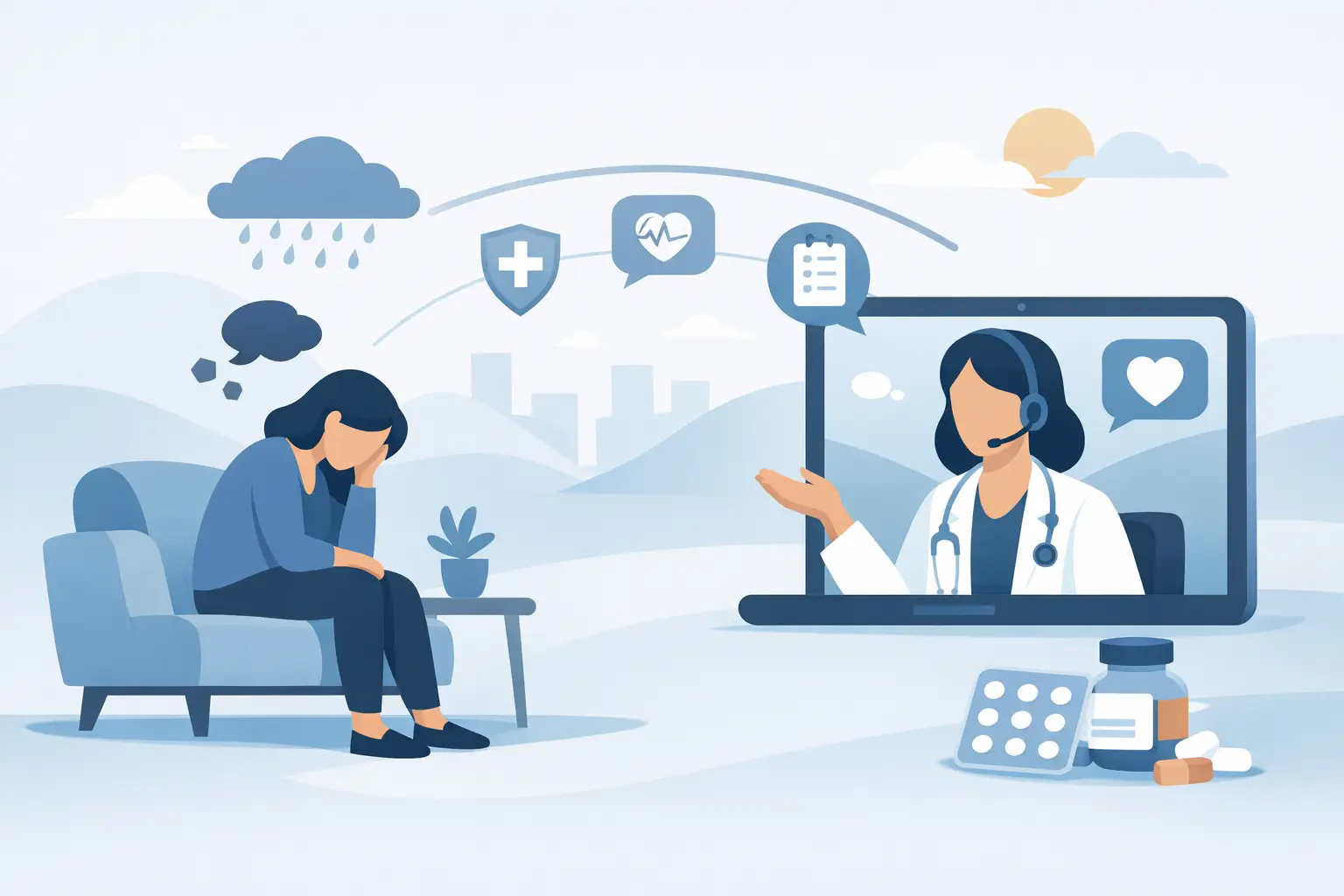
Depression can make ordinary tasks feel unusually hard: answering a text, getting through work, making dinner, or booking an appointment you have been putting off. This guide to telehealth depression care can help you understand a simpler path to support, including what online treatment looks like, who it may help, and how to know when you need immediate care instead.
You do not have to prove that you are struggling “enough” before asking for help. If low mood, loss of interest, exhaustion, sleep changes, guilt, or trouble focusing are affecting your life, speaking with a licensed provider can be a meaningful next step.
Table of Contents
What Telehealth Depression Care Looks Like
Telehealth depression care brings licensed mental health treatment to a secure online setting. Rather than commuting to a clinic or sitting in a waiting room, you complete an online intake and connect with a provider remotely. Depending on the service and your needs, care may include an evaluation, a personalized treatment plan, prescription medication when clinically appropriate, follow-up visits, and secure provider messaging.
The goal is not to make depression feel like a quick fix. It is to reduce the friction that can keep people from starting care. For a busy parent, that might mean checking in after the kids are asleep. For a working professional, it may mean avoiding time away from work for an office visit. For someone who values privacy, it can mean receiving care from a space that feels familiar and comfortable.
A good telehealth experience should still feel personal. Your provider should ask about your symptoms, health history, current medications, stressors, sleep, and treatment goals. They may also screen for conditions that can overlap with depression, such as anxiety, trauma-related symptoms, or sleep concerns.
When Online Care May Be a Good Fit
Online depression care can be a practical option for adults dealing with mild to moderate depression, persistent sadness, low motivation, changes in sleep or appetite, emotional distress after a major life change, or depression that has returned after a previous episode.
It can also work well for people who have delayed care because traditional appointments feel inconvenient, intimidating, or difficult to schedule. Depression often makes it harder to take action. A digital process with clear steps, private communication, and timely access can make starting feel more manageable.
That said, telehealth is not identical to in-person care, and the right setting depends on your symptoms. Some people benefit most from a combination of online medication management, therapy, community support, and lifestyle changes. Others may need in-person assessment, more intensive treatment, or urgent intervention. A responsible provider will help determine what level of care makes sense for you.
Telehealth is not for emergencies
If you are thinking about hurting yourself, feel unable to stay safe, have a plan to end your life, or are experiencing a mental health emergency, call or text 988 in the United States for the Suicide & Crisis Lifeline. If there is immediate danger, call 911 or go to the nearest emergency room. Online routine care is not a substitute for emergency support.
How to Prepare for Your First Online Visit
You do not need to have the perfect words ready. Still, a little preparation can help your provider understand what has been going on and make the conversation more productive.
Before your appointment, consider when your symptoms began and how they have changed. Think about the moments when depression is most noticeable. Maybe mornings are especially difficult, you have stopped enjoying things you used to like, or your sleep has become unpredictable. It can also help to write down any medications, supplements, prior mental health treatment, medical conditions, and family history you know about.
Be direct about alcohol use, cannabis, other substances, and medication side effects. This information is not about judgment. It helps your provider recommend care safely. The same is true for sharing whether you have ever had periods of unusually high energy, little need for sleep, impulsive behavior, or racing thoughts. Those details can affect which treatments are appropriate.
Find a private place for your visit if possible, use headphones if you share your space, and make sure you have a reliable internet connection. If privacy is difficult at home, consider sitting in a parked car or arranging a time when others are out. Your comfort matters, but so does being able to speak honestly.
Questions to Ask About Your Treatment Plan
Depression treatment is most effective when you understand the plan and feel able to follow it. If medication is recommended, ask what it is intended to help with, when you might notice changes, what common side effects to watch for, and how follow-up will work.
Many antidepressants take time to have their full effect. Some people notice changes in sleep, appetite, or physical anxiety before mood improves. Others need an adjustment in dose or a different medication. That does not mean treatment has failed. Depression care often involves careful monitoring and gradual refinement.
Ask your provider how to contact them between appointments, what to do if symptoms worsen, and when you should schedule your next check-in. Services such as My Healing 365 can make ongoing care feel more accessible with online treatment plans and messaging with licensed providers, so you are not left wondering what to do after the first visit.
It is also reasonable to ask whether therapy could strengthen your care plan. Medication can be helpful for many people, while therapy can offer practical support for thought patterns, grief, relationships, burnout, and major life transitions. The best approach is not one-size-fits-all.
Making Telehealth Care Work in Real Life
Starting treatment is one step. Staying connected to your plan is another, especially when depression lowers energy and motivation. Keep your follow-up appointments even if you are unsure whether you have improved enough to “deserve” one. Those visits are where you can discuss what is working, what is not, and what needs to change.
Elevate Your Health for Just $29.99/Month
Join the Precision Wellness Subscription at My Healing 365 and get discounted services, priority coaching access, virtual care, and exclusive wellness resources to support your physical, emotional, and hormonal health.
Join for $29.99/MonthTry to track a few practical signals between check-ins: sleep quality, mood, energy, concentration, appetite, and your ability to do everyday tasks. You do not need a detailed journal. A few notes on your phone can give your provider a clearer picture than trying to remember several weeks at once.
Small routines can support clinical treatment, too. Regular meals, a consistent sleep schedule, a short walk, daylight exposure, and contact with one trusted person may not cure depression, but they can create helpful structure. Be realistic. The goal is not to transform your life overnight. It is to make the next day a little more manageable.
If a medication causes concerning side effects or you feel worse after starting it, contact your prescribing provider promptly. Do not stop a prescribed antidepressant suddenly without medical guidance unless you are having a severe reaction and have been directed to seek urgent care. Your provider can help you make a safer plan.
Choosing a Telehealth Depression Provider
Convenience matters, but quality and safety matter just as much. Look for a service that uses licensed providers, explains how treatment decisions are made, protects your health information, and offers clear next steps after your evaluation. You should understand what care costs, whether ongoing treatment is included, and how prescription refills and follow-ups are handled.
It is also worth considering communication style. Depression care can feel vulnerable. You deserve a provider who listens without minimizing your experience, explains options in plain language, and gives you space to ask questions. Fast access is valuable, but you should never feel rushed through a decision about your mental health.
Depression can make the future feel smaller than it really is. Taking one private, practical step toward care can help widen that view again. Whether you choose online treatment, in-person support, or a combination of both, you do not have to carry the weight alone.