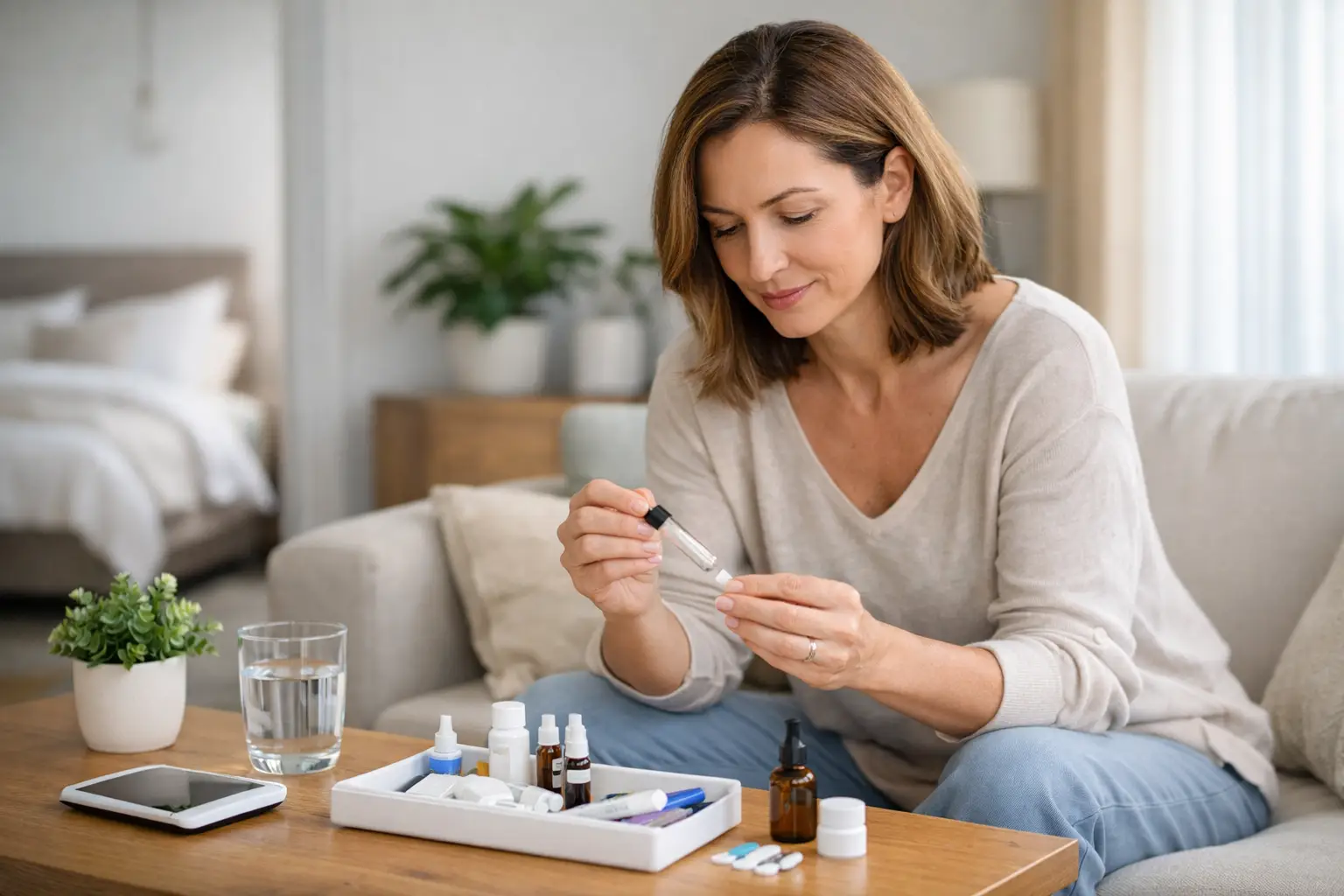
Feeling unlike yourself can be hard to explain. You may be sleeping poorly, watching your energy disappear by midafternoon, feeling disconnected from your partner, or frustrated by body changes that do not respond to the habits that once worked. At home hormone therapy gives eligible adults a more convenient way to explore whether hormones may be part of the picture – with medical guidance, personalized treatment, and ongoing support from home.
Hormone changes are not a personal failure or something you simply have to push through. For many women, menopause and perimenopause can bring hot flashes, mood shifts, vaginal dryness, lower libido, headaches, sleep disruption, and changes in skin, hair, or weight. Men may notice low energy, reduced drive, changes in strength, low libido, or mood changes associated with testosterone concerns. These symptoms can overlap with stress, thyroid conditions, medication effects, poor sleep, and other health issues, which is why thoughtful clinical care matters.
Table of Contents
What At Home Hormone Therapy Really Means
At home hormone therapy does not mean managing prescription hormones on your own. It means much of the care process can happen remotely: you share your health history, meet with a licensed clinician through telehealth, complete appropriate testing, receive a personalized plan if treatment is medically appropriate, and stay connected for follow-up care and refills.
The goal is not to chase a perfect number on a lab report. It is to understand your symptoms, health history, goals, and risks, then make decisions that support your quality of life. The right plan may involve hormone replacement therapy, lifestyle guidance, monitoring, or a referral for additional evaluation. Sometimes, the most valuable outcome of an appointment is learning that another cause needs attention first.
This model can be especially helpful for people who have delayed care because fitting appointments into a demanding schedule feels impossible. Instead of spending weeks navigating office calls and waiting rooms, you can begin the conversation in a private, familiar setting.
Who May Benefit From Virtual Hormone Care?
Hormonal care is highly individual, but telehealth can be a practical option for adults whose symptoms are affecting everyday life. Women navigating perimenopause or menopause may seek care for temperature changes, disrupted sleep, emotional ups and downs, intimacy concerns, or a persistent sense that their body no longer feels predictable. Estrogen-based therapies may be considered for certain menopausal symptoms, depending on a person’s medical history and treatment goals.
Men seeking testosterone-related care often want answers about declining energy, libido, recovery, motivation, or changes in body composition. A clinician should evaluate symptoms alongside lab work and a full health history, rather than treating a single testosterone reading in isolation. Testosterone levels naturally vary, and symptoms alone do not always point to low testosterone.
Hormone therapy may also be part of a broader wellness conversation for adults focused on sleep, weight management, mood, sexual wellness, and long-term vitality. That does not mean hormones are a shortcut. Meaningful improvement often comes from combining appropriate medical care with consistent nutrition, movement, stress management, and sleep habits.
The At-Home Process, Step by Step
A quality virtual care experience begins with a detailed health intake. Your clinician needs to know what symptoms you are experiencing, when they started, what medications and supplements you take, your personal and family medical history, and what you hope will change. Be candid about sleep, stress, alcohol use, sexual health, mental health, and past treatment experiences. The details help shape safer, more relevant recommendations.
Next comes clinical evaluation. Depending on your needs, this may include laboratory testing and sometimes a physical evaluation or referral. Not every person needs the same testing, and results require context. For example, hormone levels can fluctuate based on timing, medications, age, and other health factors.
If hormone treatment is appropriate, your clinician can discuss available options, expected benefits, possible side effects, and how treatment will be monitored. Some therapies are delivered through creams, gels, patches, injections, pills, or other forms. The best route depends on the medication, your preferences, your health history, and how your body responds.
Follow-up is where personalized care becomes more than a one-time prescription. You may review symptom changes, medication tolerance, lab results when needed, and whether your plan should stay the course or be adjusted. A patient portal and refill support can make the practical side of care easier, but access should never replace ongoing clinical oversight.
Why Personalization Matters More Than a One-Size Plan
Two people can have the same complaint and need very different care. Night sweats may be related to menopause for one person and medication, thyroid changes, infection, or another issue for someone else. Low libido can involve hormonal shifts, but relationship stress, pain, anxiety, sleep loss, and certain medications can contribute as well.
That is why a responsible hormone plan begins with questions, not assumptions. A clinician should explain what your symptoms may mean, what remains uncertain, and what options fit your needs. They should also be clear about what hormone therapy can and cannot do. Many patients experience meaningful relief when the treatment is well matched, but response times vary and no therapy can guarantee a particular result.
Elevate Your Health for Just $29.99/Month
Join the Precision Wellness Subscription at My Healing 365 and get discounted services, priority coaching access, virtual care, and exclusive wellness resources to support your physical, emotional, and hormonal health.
Join for $29.99/MonthAt My Healing 365, hormone care can fit into a broader approach to feeling well, including support for related lifestyle and wellness goals. For someone struggling with fatigue and weight changes, for instance, the conversation may need to address nutrition, sleep, metabolic health, and stress alongside hormones. When care looks at the whole person, it is easier to build progress that feels sustainable.
Safety Questions to Ask Before You Start
Convenience should not come at the cost of careful screening. Hormone therapy is not right for everyone, and certain health histories can change what treatments are appropriate. Your clinician may need to consider factors such as a history of blood clots, stroke, heart disease, certain cancers, liver disease, unexplained vaginal bleeding, pregnancy potential, prostate concerns, sleep apnea, or fertility goals.
Ask how your treatment will be monitored, what side effects should prompt a call, and when you should seek urgent in-person care. For menopausal hormone therapy, discuss the form of treatment and whether systemic or localized options make sense for your symptoms. For testosterone care, ask how the diagnosis is confirmed, how levels and potential side effects will be followed, and how treatment may affect fertility.
Be cautious of programs that promise dramatic transformation without a medical evaluation, sell the same dose to everyone, or discourage questions about risks. Good care should leave you feeling informed, respected, and comfortable speaking up if something does not feel right.
Setting Realistic Expectations for Your Results
Some changes may be noticeable within weeks, while others can take longer. Better sleep, fewer hot flashes, improved mood, restored sexual comfort, or more consistent energy may develop gradually. It can help to track the symptoms that matter most to you before treatment begins, such as how often you wake at night, your hot flash frequency, your energy level, or your interest in intimacy.
Your plan may need adjustments along the way. That is not a sign that treatment has failed. Hormonal health is dynamic, and effective care accounts for your response, changing life circumstances, and evolving goals. Regular follow-up also creates space to discuss symptoms that are easy to minimize but deeply affect well-being.
You deserve care that takes your concerns seriously without making promises it cannot keep. If you are tired of adapting your life around symptoms, a private conversation with a qualified clinician can be a practical first step toward feeling more balanced, confident, and connected to yourself again.

























