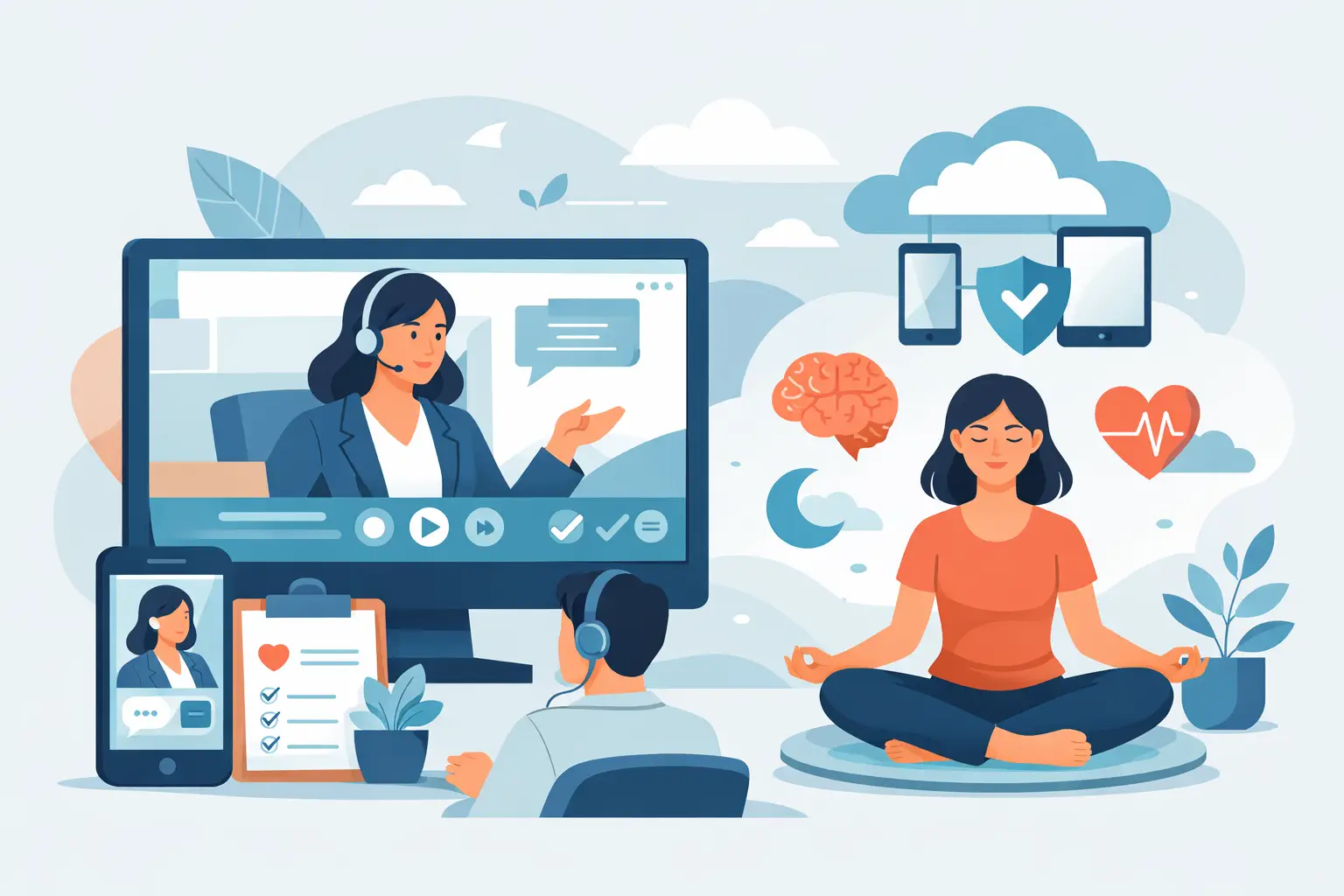
When people search for the best online mental health services, they usually are not looking for a lecture. They want help that feels private, fast, and real. Maybe anxiety is making it hard to focus at work. Maybe low mood is stretching into weeks. Maybe sleep is off, stress is building, or a major life change has left everything feeling heavier than usual. The right online service should make the next step feel easier, not more complicated.
Table of Contents
What makes the best online mental health services worth using?
The best online mental health services do more than move appointments onto a screen. They reduce friction. That means fewer delays, less time spent commuting or sitting in waiting rooms, and more ways to get support when life is already full.
For many adults, convenience is not a luxury. It is the reason care happens at all. If you are balancing work, parenting, travel, or a packed schedule, online treatment can remove one of the biggest barriers to getting help. You can complete an intake, connect with a licensed provider, and begin a treatment plan from home.
Privacy matters too. A lot of people want support but feel uneasy about being seen in a clinic or discussing symptoms in a public setting. Online care offers a more discreet path. That can make it easier to be honest about what is going on, which is often the first step toward feeling better.
Still, convenience alone is not enough. A service should also be clinically credible. That means licensed providers, secure communication, individualized treatment, and evidence-based options rather than generic wellness advice.
How to judge online mental health care without getting overwhelmed
Not every platform offers the same level of care. Some focus on talk therapy. Some are built around medication management. Others combine both, along with digital tools that help you stay consistent between check-ins. What works best depends on your symptoms, your goals, and how you prefer to communicate.
If your symptoms include persistent anxiety, depression, emotional distress, or sleep disruption, look for a service that clearly states it treats those concerns. Broad promises can sound appealing, but symptom-specific care is usually more helpful. It shows the platform is designed around common mental health needs rather than trying to be everything for everyone.
It also helps to look at responsiveness. Some people do well with a weekly session and little contact in between. Others want the reassurance of ongoing messaging, guided check-ins, or treatment resources they can use on demand. If you know you need regular touchpoints, choose a service that supports that kind of communication.
Cost is another part of the decision. Lower monthly pricing can be appealing, but it is worth asking what is actually included. A platform that offers access to licensed providers, personalized treatment, messaging support, and medication oversight may deliver more value than a cheaper service with limited interaction.
Best online mental health services for common concerns
Anxiety and chronic stress
If worry is constant, your mind feels stuck in overdrive, or physical symptoms like tension and racing thoughts keep showing up, online mental health care can be a practical starting point. The strongest options for anxiety pair clinical evaluation with a treatment plan that fits your symptoms and daily life.
That may include medication when appropriate, provider guidance, and structured tools to help you manage anxious patterns between visits. The trade-off is that online care works best when you are willing to engage consistently. Fast access helps, but progress still comes from following the plan.
Depression and low motivation
Depression can make even simple tasks feel hard. That is one reason online care can be so useful. When motivation is low, having to find a local provider, wait weeks for an opening, and drive to appointments can become enough of a barrier to stop care before it starts.
A good online service makes treatment feel manageable. Clear onboarding, direct communication, and a simple care plan can reduce that sense of overwhelm. If medication is part of treatment, it should be prescribed and monitored by a licensed provider, with follow-up built into the experience.
Sleep-related mental health concerns
Poor sleep can be a symptom, a trigger, or both. If stress, anxiety, or low mood is affecting your ability to fall asleep or stay asleep, it helps to work with a provider who sees the full picture. The best online mental health services for sleep-related concerns do not treat insomnia as an isolated inconvenience. They look at how mood, stress, and behavior may be connected.
This matters because treating the surface issue alone may not be enough. Better sleep often comes from addressing the emotional and clinical factors underneath it.
Elevate Your Health for Just $29.99/Month
Join the Precision Wellness Subscription at My Healing 365 and get discounted services, priority coaching access, virtual care, and exclusive wellness resources to support your physical, emotional, and hormonal health.
Join for $29.99/MonthMajor life transitions and emotional distress
Divorce, grief, burnout, job changes, caregiving stress, and other major life events do not always fit into a neat diagnosis. But they can still take a real toll on mental health. Online support can be especially helpful here because it offers timely access when you need steadiness, perspective, and a plan.
In these moments, many people do not want a complicated system. They want to talk to a licensed professional, feel heard, and understand what support options make sense now.
What to expect from a strong digital care model
A well-designed online mental health service should feel simple without feeling superficial. The process usually starts with an online assessment that reviews symptoms, history, and goals. From there, a licensed provider evaluates your needs and recommends a treatment plan.
The best platforms keep that plan active, not static. Mental health is not one-size-fits-all, and it is not fixed after a single intake. You may need medication support, educational treatment guides, follow-up adjustments, or direct messaging when questions come up. Ongoing access can make care feel more supportive and more realistic for everyday life.
That is one reason many people prefer digital-first care. Instead of treatment existing only during an appointment, support can continue between visits. For someone managing anxiety before a work presentation or depression during a hard week, that continuity matters.
When online treatment is a smart fit and when it may not be
Online care is a strong option for many common mental health concerns, especially when you want privacy, speed, and a more flexible way to connect with licensed professionals. It can be an excellent fit if you are dealing with mild to moderate symptoms, want medication evaluation or ongoing support, and feel comfortable using a phone or computer for care.
But there are limits. If you are in immediate danger, experiencing a psychiatric emergency, or need a higher level of in-person support, online services are not the right setting. The best providers are clear about that. Good telehealth care is accessible, but it should also be responsible.
It also depends on your communication style. Some people thrive with messaging and digital check-ins. Others strongly prefer face-to-face sessions in a physical office. Neither preference is wrong. The goal is to choose the format you are most likely to use consistently.
What sets better platforms apart
In practice, the best online mental health services tend to share a few traits. They make it easy to get started. They connect you with licensed providers. They offer individualized care rather than generic advice. They protect your privacy. And they give you enough support between appointments that treatment feels active instead of distant.
For many adults, affordability matters just as much as quality. A service with a clear starting price can make mental health care feel possible again, especially if traditional in-person treatment has felt too expensive or too hard to schedule. If the platform also includes provider messaging, treatment-specific guidance, and evidence-based medication when appropriate, it can offer a level of support that feels both efficient and personal.
This is where an integrated telehealth model can be especially useful. Mental health does not exist in a vacuum. Stress, sleep, physical health, hormones, and life habits often overlap. A platform like My Healing 365 reflects that reality by offering accessible online care within a broader wellness experience, while still keeping mental health treatment focused, private, and clinically grounded.
Choosing the right service for you
If you have been putting off care because the process feels intimidating, expensive, or hard to fit into your life, that hesitation makes sense. The right online service should lower those barriers. It should help you move from wondering whether you need support to actually receiving it.
Look for care that feels responsive, clear, and built around your symptoms. Look for licensed professionals, secure communication, and treatment plans that do not leave you on your own after one visit. Most of all, choose a service that makes it easier to follow through.
You do not have to have everything figured out before you start. If something feels off – your mood, your sleep, your stress level, your ability to cope – that is reason enough to reach out. The best care is often the care you can access, trust, and continue using when you need it most.