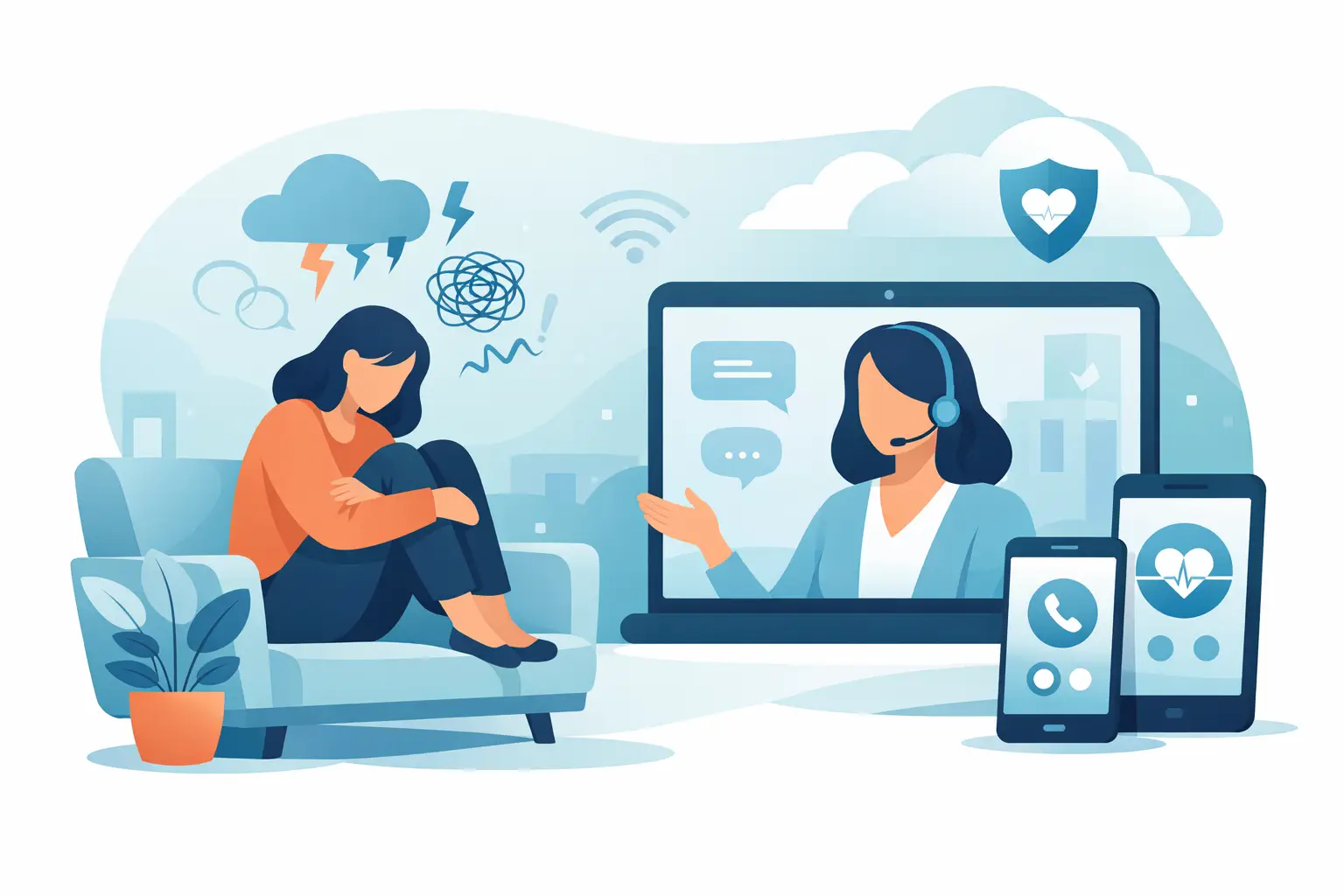
When anxiety starts running the day, even finding help can feel like one more thing you do not have the bandwidth for. That is exactly why many people start looking for the best telehealth options for anxiety – not because they want a shortcut, but because they want support that is private, practical, and easier to begin.
Online anxiety care has improved quickly over the last few years. It is no longer limited to one-off video calls or generic mental health apps. The strongest telehealth options now offer licensed providers, treatment plans built around your symptoms, medication when clinically appropriate, and ongoing follow-up that does not require rearranging your life.
The real question is not whether telehealth can help with anxiety. For many adults, it can. The better question is which kind of telehealth care fits your needs right now.
Table of Contents
What the best telehealth options for anxiety actually include
Not all online mental health services are built the same. Some are therapy marketplaces. Some focus mostly on medication management. Others combine assessment, provider support, education, and regular check-ins in one digital experience. If you are trying to choose well, that difference matters.
The best telehealth options for anxiety usually have a few things in common. They give you access to licensed medical or mental health professionals. They make the intake process simple enough that starting care does not feel overwhelming. They use secure communication, clear next steps, and treatment plans that match the severity and pattern of your symptoms.
Just as important, they do not treat anxiety like a one-size-fits-all issue. Someone dealing with panic symptoms, poor sleep, and constant physical tension may need a different plan than someone whose anxiety is tied to a breakup, job stress, or postpartum changes. Good online care recognizes that.
Therapy-only platforms can be a strong fit
If you know you want to talk through your anxiety, a therapy-centered telehealth service may be the best place to start. This option often works well for people dealing with racing thoughts, relationship stress, work burnout, or recurring worry patterns that benefit from regular counseling.
A therapy-only model can be especially helpful if you are not interested in medication, or if you want to start with behavioral strategies first. Cognitive behavioral therapy, mindfulness-based approaches, and supportive counseling can all be effective for anxiety, depending on the person and the trigger.
The trade-off is that therapy-only platforms may not be ideal if your symptoms feel intense, highly physical, or disruptive enough that you want a medical assessment too. If you are struggling with panic attacks, sleep disruption, or anxiety that is affecting your ability to function, having access to a medical provider can make care feel more complete.
Medication-focused telehealth can reduce delays
For some adults, anxiety has moved beyond occasional stress. It may show up as constant unease, irritability, restlessness, chest tightness, difficulty sleeping, or a sense that your nervous system never fully powers down. In those situations, a medication-focused telehealth service may be worth considering.
This kind of care usually includes an online assessment, a review by a licensed provider, and a treatment recommendation if medication is clinically appropriate. That can shorten the time between recognizing a problem and starting care, which matters when symptoms are making daily life harder.
Still, speed should not be the only selling point. Good medication management requires thoughtful screening, follow-up, and adjustments over time. Anxiety medications are not interchangeable, and the right choice depends on symptom type, health history, side effects, and personal preferences. A service that feels fast but offers little ongoing support may not be the best long-term option.
Combined care often gives people the most support
For many people, the most effective online anxiety treatment is not therapy alone or medication alone. It is a model that combines clinical oversight, personalized treatment, and easy communication with a provider. That is often where telehealth feels less like a stopgap and more like real care.
A combined-care platform is especially useful if you want structure. Instead of piecing together separate appointments, pharmacies, and follow-up plans, you have one place to start, ask questions, and adjust treatment as needed. That can lower the friction that causes many people to delay care in the first place.
This model also tends to fit real life better. Busy professionals, parents, and people managing major life changes often do not need more complexity. They need a clear next step, fast access, and support that does not disappear after one visit.
What to look for before you choose
The most helpful way to compare online anxiety care is to focus less on marketing language and more on how the service actually works. You want to know who is treating you, how treatment decisions are made, and what happens after the first appointment.
Start with provider credentials. Anxiety care should involve licensed professionals with experience assessing mental health symptoms, not vague wellness coaching presented as clinical treatment. Coaching can be supportive, but it is not the same as diagnosis or medication management.
Next, look at the care model. Will you have scheduled follow-ups, unlimited messaging, or both? Can your plan be adjusted if symptoms change? Is there access to educational tools or treatment guides that help you understand what is happening and what to expect? Those details can make the difference between feeling supported and feeling like you are on your own.
Price matters too, but it should be viewed in context. A lower starting price can be valuable, especially if it removes barriers to care. What matters is whether that price includes meaningful support. Affordable care is helpful. Affordable care that also includes licensed-provider oversight and ongoing communication is much stronger.
Best telehealth options for anxiety depend on your symptoms
There is no single winner for everyone because anxiety is not one single experience. If your symptoms are mild and tied to a current stressor, therapy may be enough. If your anxiety feels persistent, physical, or difficult to control, a medical evaluation may make more sense. If you want both convenience and continuity, a more integrated platform will likely serve you better.
It also depends on how you prefer to communicate. Some people want live video sessions. Others are more likely to stay engaged with care if they can message a provider between check-ins. If a platform matches your communication style, you are more likely to follow through.
Privacy can be another deciding factor. Many adults avoid care because they do not want to sit in a waiting room, explain repeated absences from work, or navigate the discomfort of seeking mental health support in person. Telehealth removes a lot of that friction. For people who value discretion, that is not a small benefit. It is often the reason treatment finally feels possible.
Where a digital-first anxiety platform stands out
A digital-first service becomes especially appealing when it offers more than a single appointment. The strongest platforms are built around continuity – assessment, treatment planning, provider access, symptom monitoring, and support that continues after you start.
That is where a service like My Healing 365 fits naturally for many adults seeking anxiety treatment online. Instead of leaving you to coordinate everything yourself, the model centers on licensed providers, individualized plans, clinically backed medication when appropriate, and ongoing messaging support in one place. For someone who wants care to feel both credible and manageable, that combination can be a real advantage.
It also reflects what people often need when anxiety is affecting daily life. Not just reassurance, and not just a prescription, but a treatment path that feels clear, responsive, and private. When care is easier to access, people are more likely to begin early instead of waiting until symptoms get worse.
Elevate Your Health for Just $29.99/Month
Join the Precision Wellness Subscription at My Healing 365 and get discounted services, priority coaching access, virtual care, and exclusive wellness resources to support your physical, emotional, and hormonal health.
Join for $29.99/MonthA few signs you may want to start sooner rather than later
If anxiety is interfering with sleep, concentration, relationships, work, or your ability to relax, it is worth paying attention. The same is true if you are feeling stuck in cycles of overthinking, panic, dread, or constant physical tension. You do not need to wait until things feel unmanageable to seek treatment.
Early support can be easier than trying to recover after months of pushing through. And because telehealth reduces common barriers like scheduling, commuting, and stigma, it can make that first step feel less heavy.
You do not have to go through it alone, and you do not need a perfect plan before you ask for help. The best telehealth option for anxiety is the one that gives you real clinical support in a format you can actually use – so care feels possible, not complicated.

























