When Maria looked at herself in the mirror for the first time after her mastectomy, she stood very still.
One hand rested on the bathroom counter. The other hovered near the flat space where her breast had been. The scar was raw and angry. The loss was quiet but enormous. Her body felt foreign.
In moments like these, people are often urged to be resilient – which can feel like being told to show no weakness, to push through no matter what. Or they imagine resilience as bouncing back: returning somehow unscathed to be the person you were before.
But standing in that bathroom, Maria knew there was no going back. And toughness wouldn’t change what had happened. The real question was how she could move forward, carrying this experience into her new reality.
Maria’s story, one I came to know personally, is far from unique. Loss, trauma and illness often bring the same wrenching questions of identity and the painful uncertainty of what comes next.
I’ve spent more than two decades studying resilience, particularly among individuals and families navigating these kinds of life-changing events. I am also a four-time cancer survivor and author of a new book, “Falling Forward: The New Science of Resilience and Personal Transformation.” If there is one myth I wish society would retire, it’s the idea that resilience means “toughness” or “bouncing back.”

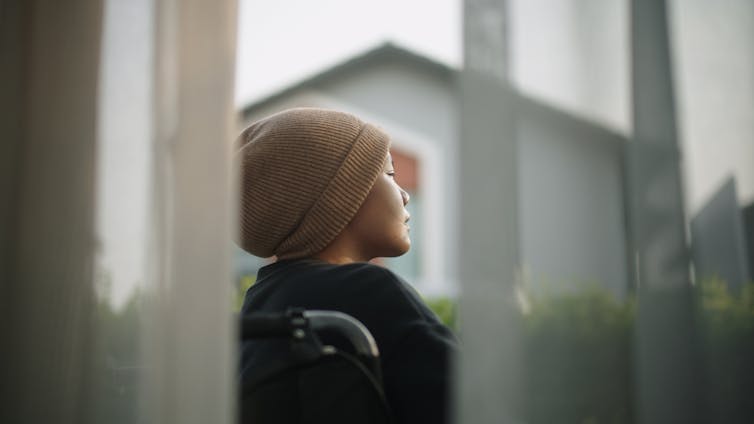
pocketlight/iStock via Getty Images Plus
Table of Contents
Rethinking resilience based on research
Moments like Maria’s reveal something important: The way people tend to talk about resilience often doesn’t match how people actually live through adversity.
In popular culture, resilience is often equated with grit, toughness or relentless positivity. People celebrate the warrior, the fighter, the triumphant survivor.
But across research, clinical practice and lived experience, resilience is something far more nuanced, raw and human.
It’s not a personality trait that some people simply have and others lack. Decades of research show resilience is a dynamic process. It’s shaped by the small, everyday decisions and adjustments individuals make as they adapt to significant adversity while maintaining, or gradually regaining, their psychological and physical footing over time.
And importantly, resilience does not mean the absence of distress.
Research on people facing serious life disruptions shows that distress and resilience often coexist. For example, in my study of adolescent and young adult cancer survivors, participants reported being upset about finances, body image and disrupted life plans, while simultaneously highlighting positive changes, such as strengthened relationships and a greater sense of purpose.
Elevate Your Health for Just $29.99/Month
Join the Precision Wellness Subscription at My Healing 365 and get discounted services, priority coaching access, virtual care, and exclusive wellness resources to support your physical, emotional, and hormonal health.
Join for $29.99/MonthResilience, in other words, is not about erasing pain and suffering. It is about learning how to integrate difficult experiences into a life that continues forward.
How resilience really works
At one point, Maria told me she had started avoiding mirrors, intimacy, even conversations that made others uncomfortable.
“Well, you’re strong,” people would tell her. “Just stay positive. This too shall pass.”
But strength, she said, felt like a performance.
What ultimately shifted for Maria was not an increase in toughness. It was permission to grieve.
She began speaking openly about the loss of her breast; not just as a medical procedure but as a symbolic loss tied to identity, sexuality and womanhood. She joined a support group. She allowed herself to feel anger alongside gratitude for survival.
This kind of emotional processing turns out to be central to resilience.
My colleagues and I have found that people who actively process loss, rather than suppress it, demonstrate better long-term adjustment. Tamping down negative feelings may provide short-term relief, but over time it is associated with greater stress on your body and more difficulty adapting.
In other words, resilience is not about sealing the wound and pretending it no longer aches. It is about learning how to carry the wound without letting it consume your entire story.
Neuroscience supports this integration model. When people engage in meaning-making – reflecting on their experiences and incorporating them into a coherent life narrative – brain networks associated with emotional regulation and cognitive flexibility become more active. The brain, quite literally, reorganizes as you adapt to new realities.
Maria described the change simply.
“I don’t like what happened,” she told me. “But I’m not at war with my body anymore.”
That is resilience.

Grace Cary/Moment via Getty Images
Practices that help build resilience
If resilience is about integration rather than toughness and bouncing back, how can you cultivate it? Research across psychology, neuroscience and chronic illness points to several evidence-based strategies:
-
Allow emotional complexity: Resilient people are not relentlessly positive. They allow space for the full range of emotions, such as gratitude and grief, hope and fear. Paying attention to your feelings through strategies such as reflective writing or psychotherapy have been linked to improved psychological adaptation.
-
Build a coherent narrative: Human beings are storytellers. Trauma can shatter one’s sense of self, but constructing a narrative that acknowledges loss while identifying continuity and growth supports adaptation. The goal is not to spin suffering into silver linings, but to situate it within a broader life story. For example, someone might say, “Cancer derailed my plans and changed my body, but it also clarified what matters to me and how I want to move forward.”
-
Lean into connection: Isolation magnifies suffering. Social support is one of the strongest predictors of how well people are able to cope and move forward after illness or trauma. For Maria, connection with other women who had had mastectomies normalized her experience and reduced shame.
-
Practice deliberate pauses: Intentionally give yourself some time to breathe. Mindfulness and contemplative solitude can strengthen your ability to regulate emotions and recover from stress. Pausing allows experience to be processed rather than avoided.
-
Expand identity: Illness, loss and trauma reshape how you think of yourself. Rather than clinging to who you were, resilience often involves expanding who you are becoming. Research on post-traumatic growth shows that people often report deeper relationships, clarified priorities and renewed purpose – not because trauma was good, but because it forced reevaluation. Maria no longer describes herself simply as a breast cancer patient. She is a survivor, yes, but also an advocate, a mentor, a woman whose sense of femininity is self-defined rather than dictated by her anatomy.
Moving forward
We are living in a time of widespread burnout and rising mental health challenges, where cultural pressure to appear strong often leaves people silently struggling. An insistence on grit and relentless optimism can backfire, making people feel inadequate when they inevitably feel pain.
Resilience is not about returning to who you were before illness, loss or trauma. It is about becoming someone new: someone who carries the scar, remembers the loss and still chooses to engage with life.
Maria still pauses when she sees her reflection. But she no longer turns away.
“This is my body,” she told me recently. “This is my story.”
Resilience is not forged in the denial of vulnerability, but in its acceptance. Not in bouncing back, but in integrating what has happened into who you are becoming.
And that, I believe, is where real strength lives.

























