Medically Reviewed
Dr. Jose Rossello, MD, PhD, MHCM
Preventive Medicine & Public Health Specialist
Last Reviewed: April 19, 2026
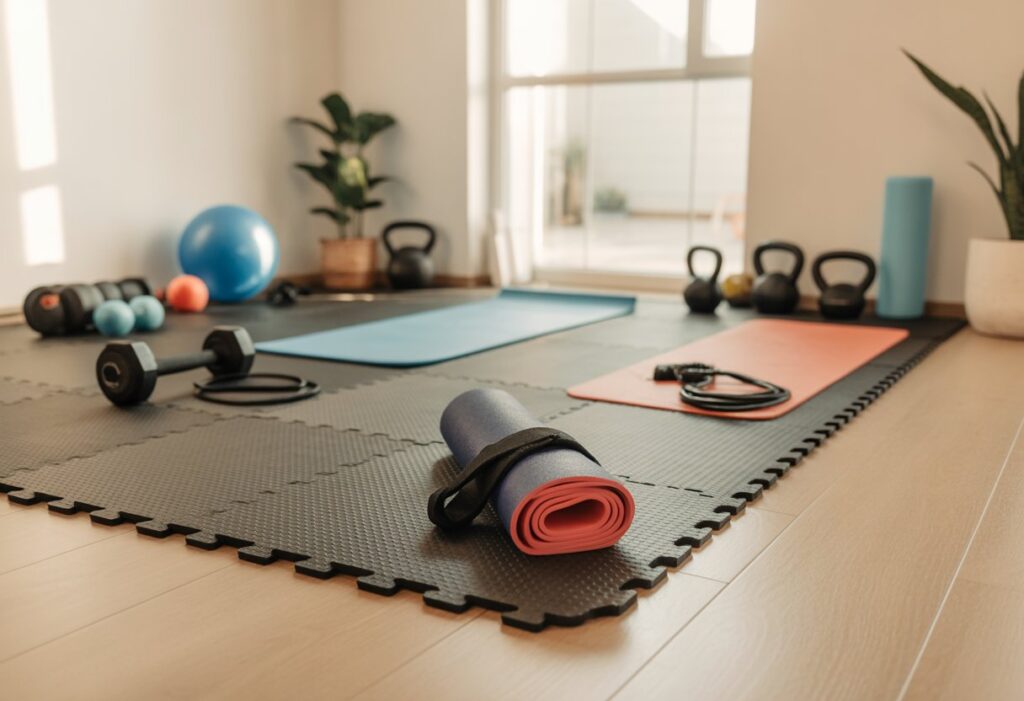
Building a home gym lets anyone create a dedicated workout space without paying monthly membership fees or dealing with crowded facilities. You can set up an effective home gym in almost any available space, from a spare bedroom to a garage, by choosing the right equipment that matches your fitness goals and budget. The key is understanding what you actually need versus what looks impressive but collects dust.
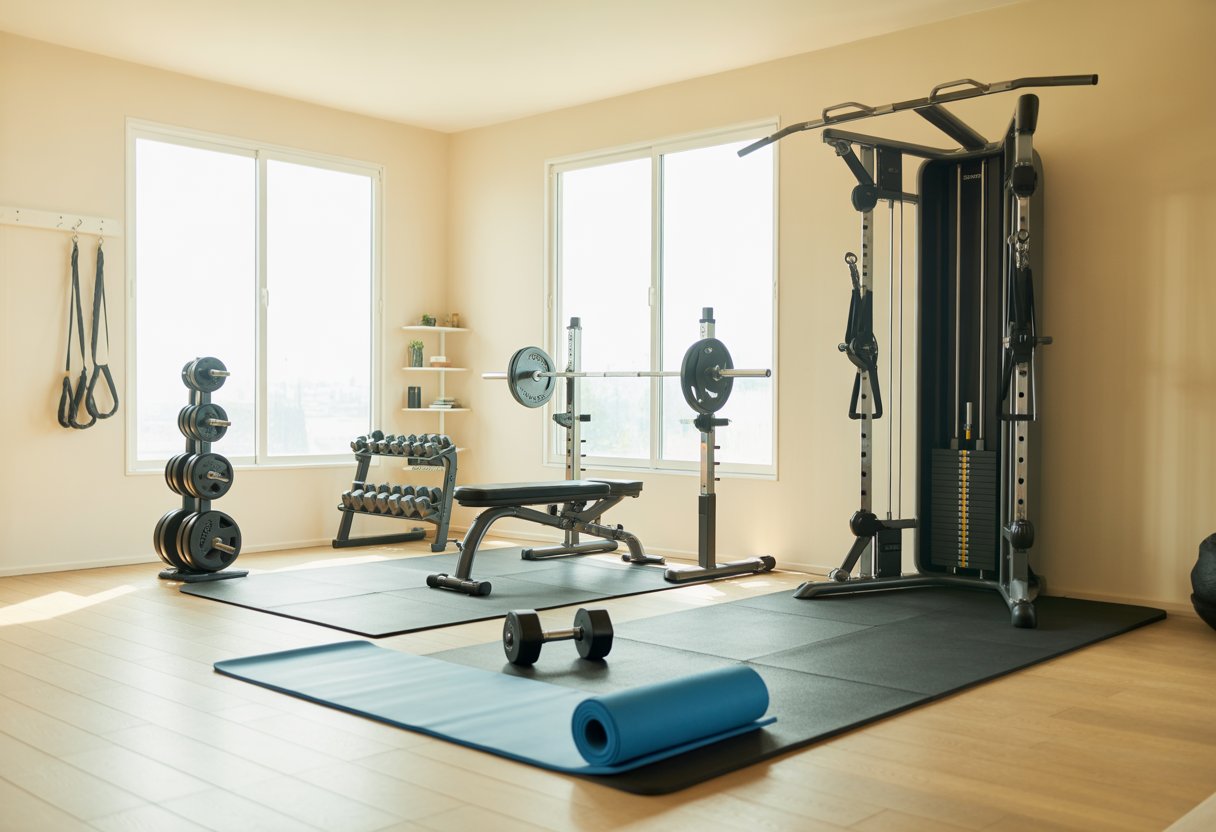
Many people think they need thousands of dollars and a massive area to get started. The truth is that a functional home gym can begin with just a few hundred dollars and less than 100 square feet. With smart planning and the right approach to selecting home gym equipment[1], anyone can create a space that supports their training needs.
This guide walks through every step of building a home gym that works. From measuring ceiling height to choosing between cardio machines and strength training gear, readers will learn how to make informed decisions that fit their space and goals.
Table of Contents
Key Takeaways
- Start by defining your fitness goals and measuring your available space before buying any equipment
- Begin with basic equipment like resistance bands and a pull-up bar, then gradually add advanced pieces like squat racks or cardio machines
- Invest in proper flooring and organize your layout to maximize safety and efficiency in your workout area
Clarifying Your Fitness Goals
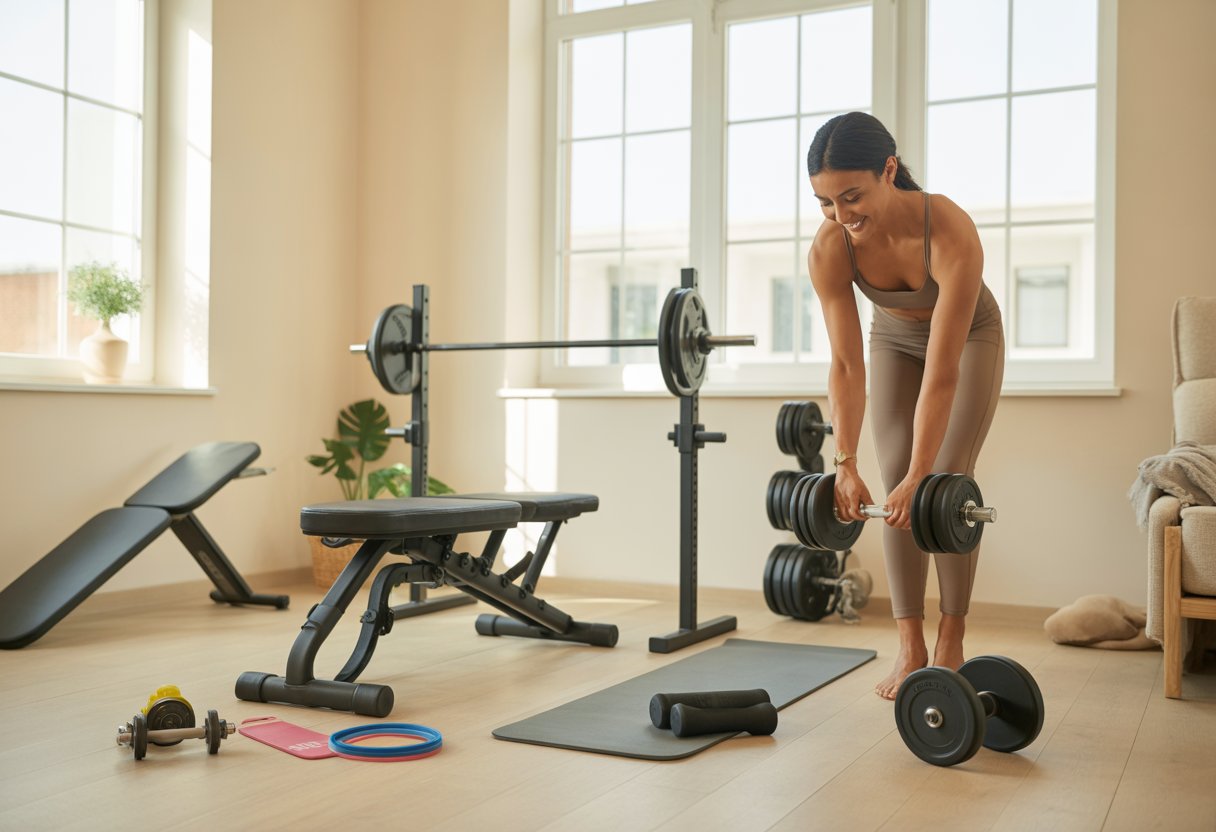
Different fitness goals require different equipment and training approaches. Someone building strength needs barbells and weight plates, while someone focused on endurance needs cardio machines or space for high-intensity circuits.
Strength Training Versus Cardio
Strength training requires equipment that supports progressive overload, which means gradually increasing weight over time. A basic setup includes a barbell, weight plates, and a bench. These items allow for compound movements like squats, deadlifts, and bench presses that build muscle mass.
Power racks provide safety and versatility for heavy lifting. They support pull-up bars, dip attachments, and safety catches for solo training sessions.
Cardio equipment takes a different approach. Treadmills, rowing machines, and stationary bikes provide steady-state or interval training options. Jump ropes and resistance bands offer low-cost cardio alternatives that require minimal space.
Many people need both strength and cardio in their routine. A balanced setup might include adjustable dumbbells, a bench, and a jump rope. This combination covers resistance training and cardiovascular fitness without filling an entire room.
Mobility and Flexibility Needs
Mobility work prevents injury and improves performance in all types of training. Foam rollers release tight muscles and improve blood flow. Resistance bands provide assisted stretching and light resistance for rehabilitation exercises.
Yoga mats create a dedicated space for stretching routines and bodyweight exercises. They protect joints during floor work and define workout boundaries in shared spaces.
Fitness apps often include mobility routines that require no equipment beyond a mat. These programs guide users through proper form for stretches and warm-up sequences. Regular mobility work takes 10-15 minutes and fits easily into any training schedule.
Functional Fitness and Athletic Training
Functional fitness builds strength for real-world movements rather than isolated muscles. A functional trainer offers cable-based exercises that mimic daily activities like lifting, pulling, and rotating. Kettlebells develop power through dynamic movements like swings and snatches.
Athletic training requires explosive movements and varied resistance. Plyometric boxes support jump training. Medicine balls add resistance to rotational exercises. Battle ropes build conditioning and grip strength simultaneously.
Home gym essentials for functional training[2] include items that allow movement in multiple planes. Unlike fixed machines, these tools challenge stability and coordination. They prepare the body for sports performance and everyday physical demands.
Evaluating and Optimizing Available Space
The right workout space depends on accurate measurements, understanding location-specific challenges, and addressing practical concerns like sound and airflow. A 10×10 foot area can work for basic training, while larger setups need more room for equipment and movement.
Measuring Room Dimensions and Ceilings
Accurate measurements prevent costly mistakes when building a home gym space. A person should measure the length, width, and height of their intended workout area before purchasing any equipment.
Most strength training exercises require at least 8 feet of ceiling height. Pull-ups, overhead presses, and jump training need this clearance to perform safely. Spaces with lower ceilings work better for floor-based exercises, yoga, or equipment like stationary bikes and rowing machines.
The minimum functional area for a small home gym is 10×10 feet. This allows room for basic equipment like dumbbells, a mat, and resistance bands. A garage gym or basement gym with 12×12 feet or more accommodates larger items like a power rack, bench, and cardio machines.
When measuring, a person should account for equipment dimensions plus movement space. A treadmill needs 2-3 feet of clearance on each side for safe entry and exit. Free weight exercises require roughly 6 feet of open space in all directions.
Garage, Basement, and Apartment Considerations
Each location presents unique advantages and limitations for home gym design[3]. A garage gym offers ample space and easy equipment access but may lack climate control. Extreme temperatures affect workout comfort and equipment durability. Adding insulation and a fan or heater improves year-round usability.
A basement gym provides privacy and stable temperatures but may have moisture issues. Water damage ruins flooring and rusts metal equipment. Installing a dehumidifier protects investments and maintains air quality. Lower ceilings in basements limit overhead exercises, so measuring height before setup is critical.
A small apartment gym requires creative space management. Foldable equipment, wall-mounted racks, and vertical storage maximize limited square footage. Adjustable dumbbells replace entire weight sets, and resistance bands offer variety without bulk. Placing equipment on rubber mats protects floors from damage and reduces noise transmission to neighbors below.
Noise Reduction and Ventilation
Noise reduction matters most in shared living spaces. Rubber flooring absorbs impact from dropped weights and reduces vibration. Interlocking foam tiles offer a quieter, budget-friendly option for light training. Wall-mounted acoustic panels dampen sound further in an apartment gym setting.
Proper airflow prevents overheating and maintains air quality during intense workouts. Opening windows provides natural ventilation in a garage gym or basement gym when weather permits. Installing a ceiling fan or portable air circulator keeps air moving in enclosed spaces.
Homes with central HVAC systems should ensure vents reach the workout area. Adding a standalone fan improves comfort without major renovations. A person training in a poorly ventilated space faces reduced performance and potential health risks from inadequate oxygen circulation.
Setting a Realistic Budget
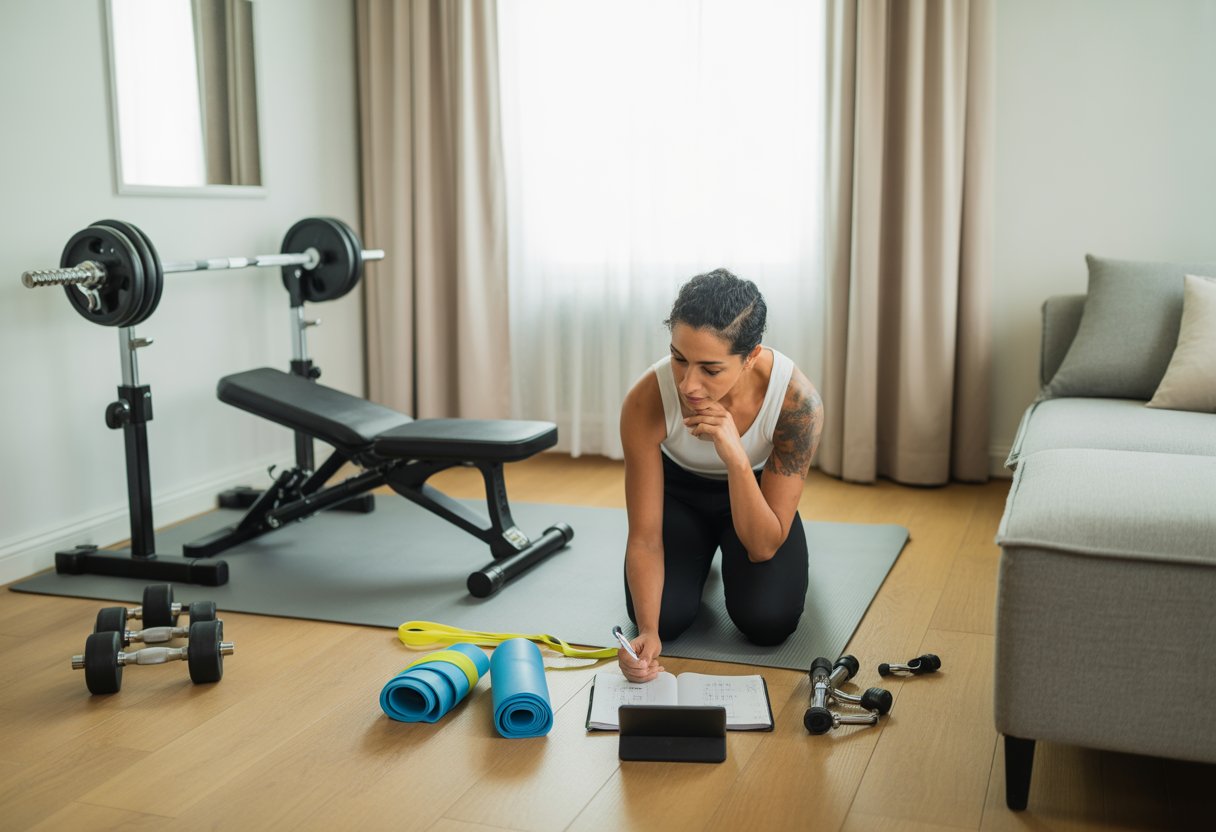
A home gym can cost anywhere from $300 to several thousand dollars depending on goals and space. Most people can build a functional setup for $500 to $1,500 by focusing on essential equipment first and expanding over time.
Prioritizing Equipment Purchases
The most important purchases for any home gym are a quality barbell and a sturdy rack. These two items form the foundation of strength training and should receive the largest portion of the budget. A decent barbell costs $150 to $300, while a basic power rack ranges from $300 to $600.
Weight plates come next in priority. Iron plates cost less than bumper plates but work well for most lifters. A starting set of 300 pounds typically costs $200 to $400. A flat bench is the fourth essential item, with solid options available for $100 to $200.
Everything else can wait. Dumbbells, specialty bars, and cable attachments are nice additions but not required to start training. Building a home gym on a budget[4] means buying only what gets used regularly.
Finding Deals and Secondhand Options
Craigslist and Facebook Marketplace offer significant savings on used equipment. Weight plates, dumbbells, and benches hold their value well and function the same whether new or used. Many sellers list equipment after losing interest in training, often at 50% off retail prices.
Black Friday and holiday sales provide the best deals on new equipment. Major brands discount racks, barbells, and plates by 15% to 30% during these periods. Signing up for email lists from fitness equipment companies alerts buyers to flash sales throughout the year.
Used barbells require careful inspection. Check for bent sleeves, damaged knurling, and excessive rust. Bumper plates and iron plates rarely have issues unless cracked or warped.
Phased Approach to Building
Starting with basic equipment prevents overspending on items that rarely get used. Phase one includes a barbell, plates, rack, and bench. This covers squats, deadlifts, bench press, and rows for $800 to $1,200.
Phase two adds dumbbells or adjustable dumbbells after three to six months. This expansion costs $200 to $500 depending on the weight range needed. Phase three introduces specialty items like resistance bands, a pull-up bar, or additional plates based on specific training needs.
The best home gym equipment[1] for one person differs from another based on training style. Powerlifters need different tools than bodybuilders. Spacing purchases over six to twelve months allows time to identify what actually matters for individual goals rather than buying everything at once.
Essential Strength Training Equipment
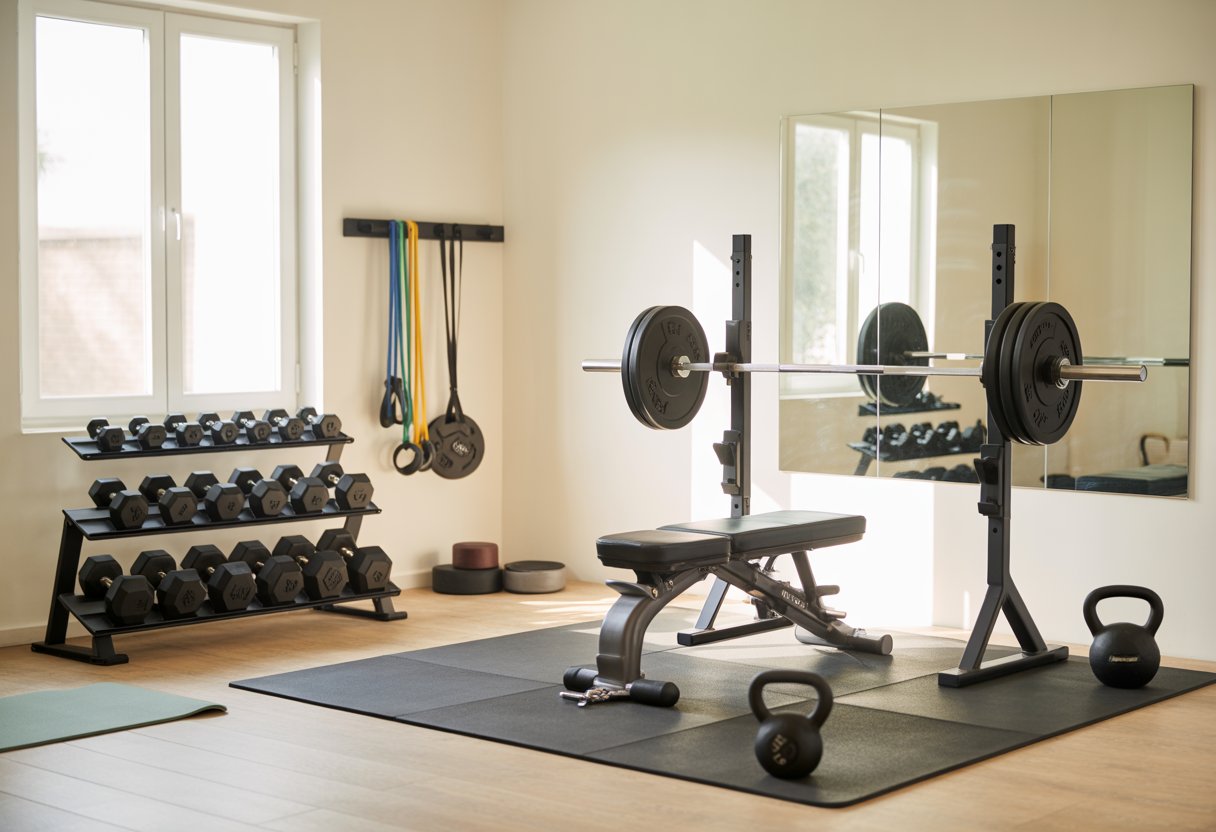
The right strength training gear transforms any space into a functional workout area. Quality free weights, a sturdy lifting platform, and versatile resistance tools form the foundation of an effective home setup.
Choosing Dumbbells and Adjustable Dumbbells
Dumbbells serve as the most versatile pieces of equipment for home strength training. They work for exercises targeting every major muscle group, from chest presses to shoulder raises to lunges.
Traditional fixed-weight dumbbells provide excellent durability and feel natural during lifts. However, they require significant storage space and become expensive when building a full set. A complete range from 5 to 50 pounds can cost hundreds of dollars and take up an entire wall rack.
Adjustable dumbbells solve the space and cost problems by replacing multiple pairs with a single set. Modern designs use dial mechanisms or pin systems to change weights quickly between exercises. Popular models adjust from 5 to 52.5 pounds or even higher, fitting the equivalent of 15 pairs into a compact footprint.
The main drawback of adjustable dumbbells involves their bulkier shape compared to fixed weights. Some exercises feel awkward due to the wider profile. Athletes who train heavily may also find the maximum weight limiting as they progress.
Selecting a Power Rack or Squat Stand
A power rack or squat rack serves as the centerpiece[5] of any serious strength training space. These structures provide safety bars that catch the barbell if a lifter fails during heavy squats or bench presses.
Full power racks offer four vertical posts with adjustable safety pins and J-hooks. They typically include pull-up bars mounted on top and allow for the widest range of exercises. The enclosed design provides maximum safety but requires at least a 6-foot by 6-foot footprint and 8-foot ceilings.
Squat stands take up less room with just two vertical posts. They cost less and work well in tighter spaces or lower ceiling areas. The trade-off comes in reduced stability and fewer exercise options compared to full racks.
Half racks split the difference with two posts mounted to a wide base. They offer better stability than basic squat stands while using less floor space than full cages. Many include pull-up bars and plate storage pegs.
Barbell and Weight Plates Options
An olympic barbell measures 7 feet long and weighs 45 pounds. The sleeves rotate independently from the center shaft, reducing wrist and elbow strain during cleans and snatches. Standard barbells cost less but have fixed sleeves and shorter lengths that limit exercise variety.
Weight plates come in two main types. Bumper plates use dense rubber construction that allows them to be dropped safely from overhead. They all share the same diameter regardless of weight, which keeps the barbell at a consistent height off the floor. Iron plates cost significantly less per pound but crack floors if dropped and vary in diameter across weights.
Most home gyms benefit from starting with bumper plates in common sizes: a pair each of 45, 25, 15, and 10-pound plates. This combination allows progression up to 275 pounds on the bar. Iron plates work well as add-ons for smaller weight jumps once the basic set is established.
Incorporating Kettlebells and Resistance Bands
Kettlebells add dynamic movement patterns that dumbbells cannot replicate. The off-center weight distribution forces core stabilization during swings, cleans, and Turkish get-ups. A single 35-pound kettlebell for men or 18-pound for women covers most foundational movements.
Resistance bands provide variable tension that increases as they stretch. They work well for warm-ups, mobility drills, and accessory exercises. Bands also assist with pull-ups or add resistance to bodyweight movements.
Loop bands and tube bands with handles serve different purposes. Loop bands excel at lower body work like banded squats and glute bridges. Tube bands with handles feel more natural for upper body pressing and rowing patterns. A set of both types in light, medium, and heavy resistance costs under $50 and stores in a small bag.
Home Cardio Equipment Selection
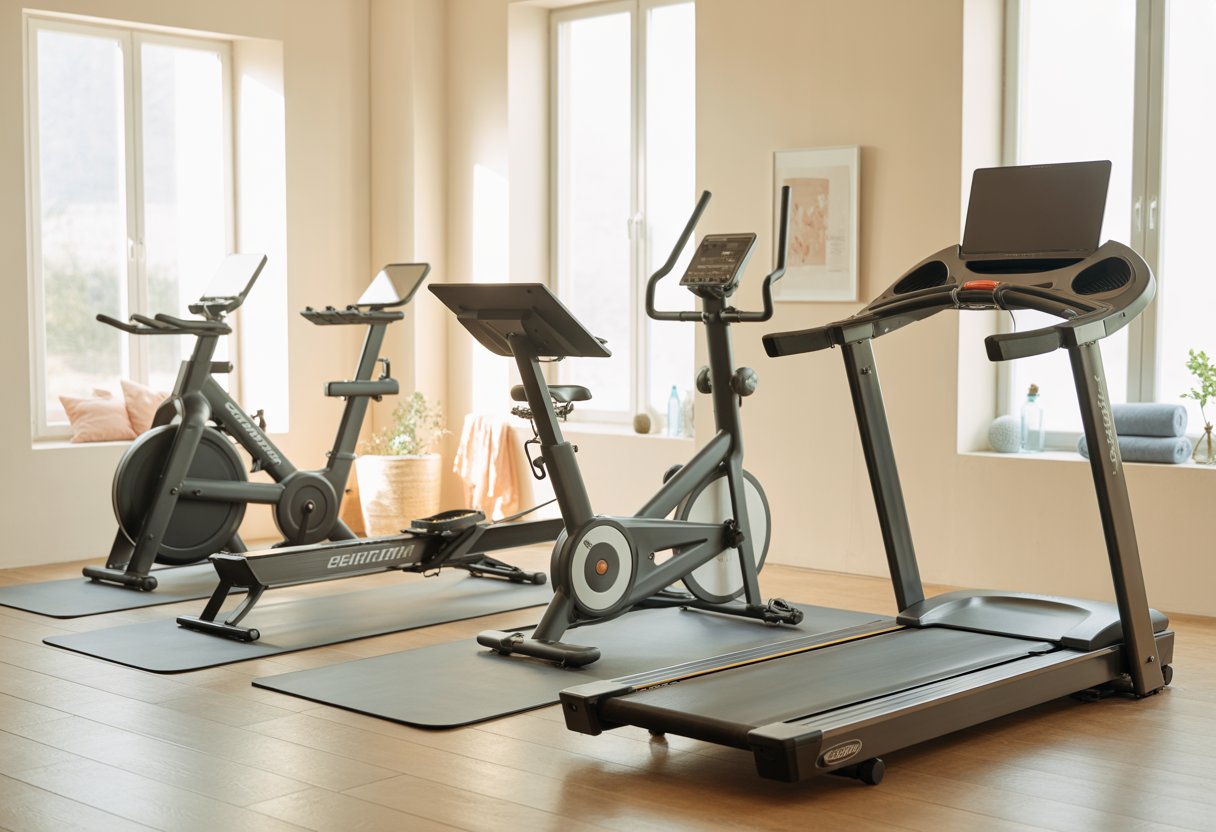
Cardiovascular equipment forms the foundation of endurance training at home. The right machine depends on space constraints, fitness goals, and joint health considerations.
Treadmills and Folding Treadmills
A treadmill remains one of the most popular cardio machines for home gyms because it mimics natural running or walking patterns. Standard treadmills require significant floor space, typically ranging from 70 to 80 inches in length and 30 to 40 inches in width.
A folding treadmill solves space problems by allowing the deck to fold vertically against the console. These models work well in apartments or multipurpose rooms where floor space needs to serve multiple functions. The folding mechanism should lock securely in both positions to prevent accidents.
Motor power matters for treadmill performance. Continuous-duty horsepower ratings of 2.5 to 3.0 work for walking and jogging, while serious runners need 3.5 horsepower or higher. The running belt should measure at least 55 inches long and 20 inches wide for comfortable stride patterns.
Stationary Bikes and Air Bikes
An exercise bike provides low-impact cardio that protects knee and hip joints. A stationary bike comes in two main styles: upright and recumbent. Upright bikes position the rider similar to a road bicycle, while recumbent bikes feature a reclined seat with back support.
An air bike uses fan resistance that increases with pedaling speed. These machines include moving handlebars that engage upper body muscles during workouts. Air bikes create significant wind and noise but deliver intense full-body conditioning.
Magnetic resistance systems on stationary bikes operate quietly and require less maintenance than friction-based models. Adjustable seats and handlebars accommodate different body sizes and riding preferences. Many modern exercise bikes include performance tracking displays and preset workout programs.
Rowing Machines and Rowers
A rowing machine engages approximately 85 percent of the body’s muscles in each stroke. A rower builds both cardiovascular endurance and muscular strength through a fluid pushing and pulling motion.
Water resistance rowers use paddles in an enclosed water tank to create realistic rowing feel. Air resistance models adjust automatically based on stroke intensity. Magnetic resistance rowers operate most quietly but may lack the natural feel of water or air systems.
Storage becomes simpler with rowers that separate into two pieces or stand vertically. Quality machines feature comfortable seats that glide smoothly on aluminum or steel rails. The handle should feel secure during the pulling phase, and foot straps need to hold feet firmly in place.
Ellipticals and Other Cardio Machines
An elliptical trainer delivers low-impact cardio by combining elements of running, stair climbing, and cross-country skiing. The elliptical motion reduces stress on knees and ankles while maintaining effective calorie burn. Stride length should measure 18 to 22 inches for natural movement patterns.
Stair climbers and step mills replicate climbing movements that target glutes and leg muscles intensely. These machines occupy less floor space than treadmills but require ceiling clearance of at least 8 feet. Cardio equipment options[6] vary widely in features and price points depending on construction quality and technology integration.
Building a Versatile Training Foundation
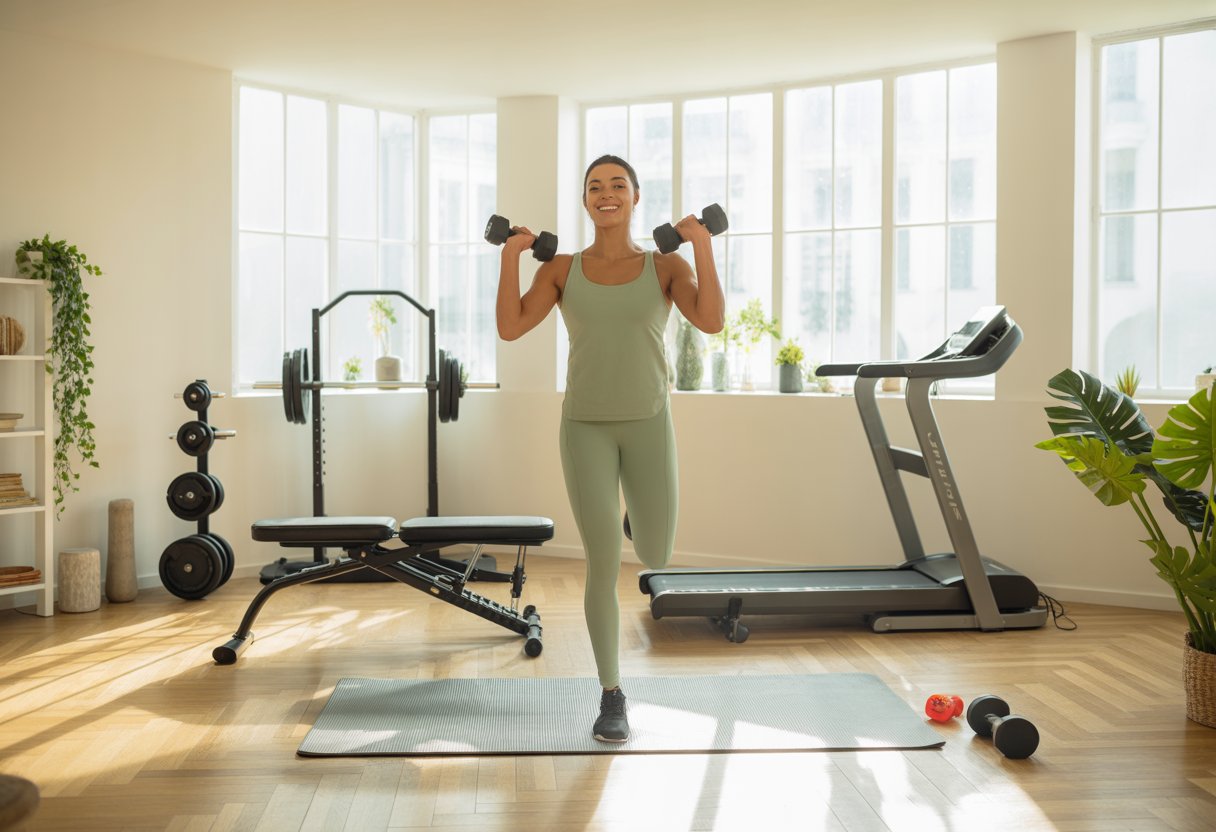
A strong equipment foundation enables dozens of exercises without cluttering limited space. The right bench, overhead training tools, cable systems, and functional accessories transform basic movements into comprehensive workouts.
Selecting an Adjustable Bench or Flat Bench
An adjustable weight bench serves as the centerpiece for chest, shoulder, and arm training. The adjustable bench allows users to perform incline presses, decline movements, and seated exercises by changing the backrest angle. Most quality models adjust from flat to 90 degrees, offering five to seven position settings.
A flat bench costs less and takes up minimal space while still supporting bench press movements, dumbbell rows, and step-ups. This option works well for lifters who focus primarily on horizontal pressing and don’t need incline variations.
The weight capacity matters significantly. Benches should support at least 600 pounds when accounting for both body weight and loaded barbells. Look for models with wide bases that prevent tipping during single-arm exercises. Padding thickness affects comfort during longer training sessions, with 2 to 3 inches providing adequate support.
Pull-Up Bars and Suspension Trainers
A pull-up bar mounts to doorways, walls, or ceiling joists to enable vertical pulling movements. Doorway models require no drilling but limit grip positions. Wall-mounted or ceiling-mounted bars offer wider grips and allow for muscle-ups and hanging leg raises.
Suspension trainers like TRX systems attach to pull-up bars, door anchors, or exposed beams. These straps use body weight to create resistance for rows, chest presses, and core exercises. The instability challenges stabilizer muscles more than fixed equipment.
Both tools combine well since the pull-up bar serves as an anchor point for suspension straps. A single installation point provides access to dozens of upper body and core movements. These options work particularly well in apartments or rooms where floor space is limited.
Cable Machines and Lat Pulldowns
Cable machines provide constant tension throughout movement ranges that free weights cannot match. A functional trainer with dual weight stacks enables users to perform chest flies, cable crossovers, and tricep pushdowns from various angles. The adjustable pulleys move vertically to accommodate different exercise positions.
A lat pulldown attachment adds dedicated back training without needing a full cable station. These units mount to power racks or walls and include a weight stack or plate-loading system. The seated position isolates the lats better than pull-ups for those still building strength.
Home cable systems range from compact single-stack units to full dual-adjustable towers. Plate-loaded cable attachments offer a budget option that uses existing weight plates. Consider the weight stack size, as most exercises require 150 to 200 pounds of resistance for intermediate lifters.
Functional Accessories
A medicine ball adds rotational power training and partner exercises to standard lifting routines. Sizes range from 4 to 25 pounds, with 10 to 15 pounds suitable for most throwing and slamming movements. The textured rubber surface provides grip during sweaty workouts.
A barbell holder or vertical plate tree keeps weight plates organized and prevents floor damage. Wall-mounted holders save floor space while keeping barbells at waist height for easy loading. Plate trees with multiple pegs separate different plate sizes and denominations.
Resistance bands, gymnastics rings, and foam rollers fill remaining gaps in recovery and mobility work. These items store easily in bins or hang from wall hooks when not in use.
Compact and Space-Saving Equipment Ideas
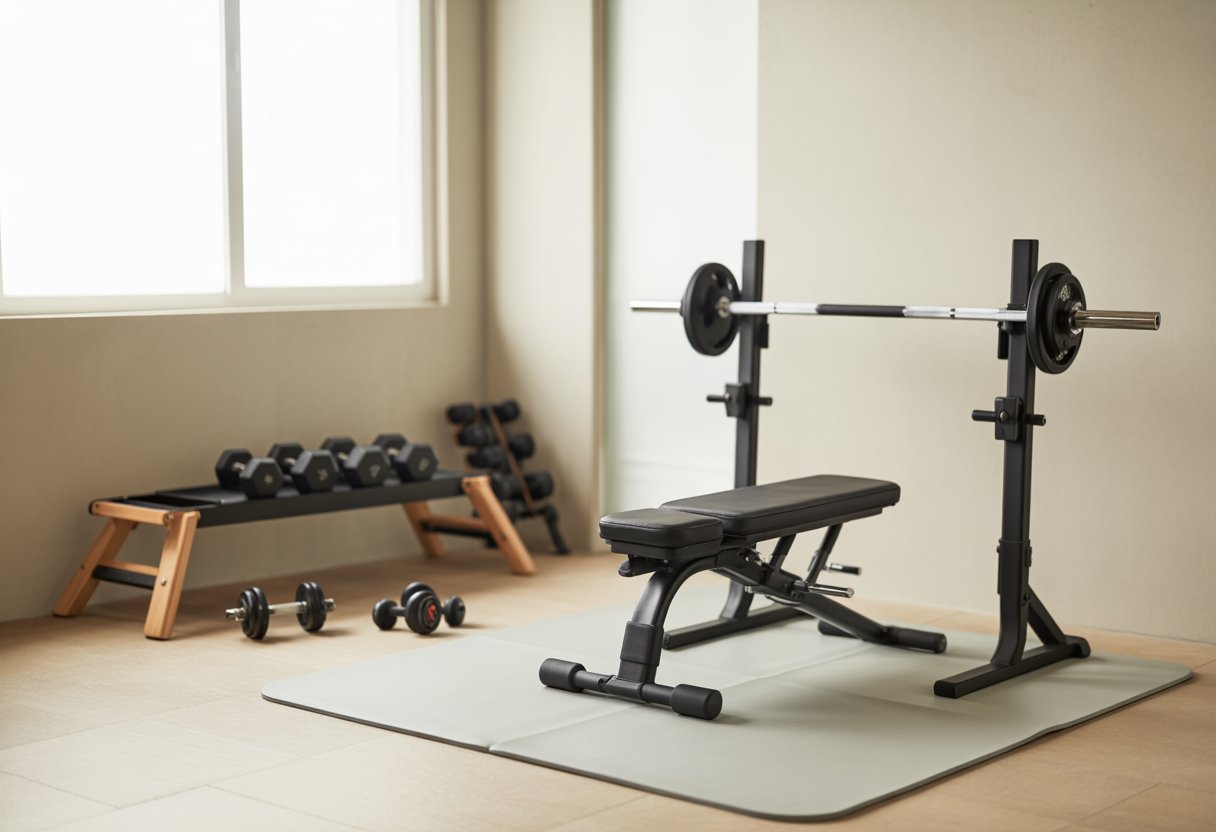
Smart equipment choices can transform even the smallest apartment into a functional workout space. Foldable machines, wall-mounted systems, and vertical storage solutions maximize every square foot while keeping essential gear accessible.
Choosing Foldable and Stackable Solutions
Foldable equipment offers flexibility for anyone building a compact home gym. Adjustable dumbbells like the Bowflex SelectTech 552[7] replace up to 15 pairs of traditional weights by adjusting from 5 to 52.5 pounds with a simple dial system.
Walking pads and folding treadmills store under beds or in closets when not in use. These machines typically fold to less than 6 inches thick. Some models reach speeds up to 6.2 mph, allowing both walking and light jogging.
Folding exercise bikes[7] collapse to fit in tight corners or closets. They maintain stability during workouts despite their compact design. Many feature eight resistance levels and LCD displays to track progress.
Stackable storage bins keep resistance bands, yoga blocks, and small accessories organized. Clear containers make it easy to find equipment quickly. These bins fit on shelves or slide under furniture between training sessions.
Wall-Mounted Racks and Pegboards
Wall-mounted storage keeps floors clear while making equipment easily accessible. Pegboards with hooks hold resistance bands, jump ropes, foam rollers, and weight plates without taking up floor space.
Folding wall racks mount directly to studs and fold flat when not in use. These racks support pull-up bars, dip stations, and resistance band anchors. They extend only 3-4 inches from the wall when folded.
Wall-mounted dumbbell racks hold multiple pairs of weights in vertical arrangements. These systems use less than one square foot of floor space while storing 200+ pounds of equipment. Heavy-duty brackets ensure safe weight capacity.
Pull-up bars that attach to door frames or walls provide upper body training options. Some models include multiple grip positions for varied exercises. They remove easily without damaging walls or frames.
Vertical Plate Trees and Storage
Vertical plate trees store Olympic and standard weight plates in compact footprints. These towers typically measure 12-18 inches in diameter but hold 300-500 pounds of plates. The vertical design prevents plates from cluttering workout areas.
Corner plate racks fit into unused spaces while keeping weights organized. They feature multiple pegs at different heights for easy loading and unloading. Rubber feet protect flooring from scratches and movement.
Barbell holders mount vertically on walls to store bars off the ground. Wall-mounted barbell storage can accommodate 2-6 bars depending on the model. This keeps expensive equipment protected and readily available.
Medicine ball racks stack balls vertically rather than horizontally. A vertical plate tree design allows quick access to different weights during circuit training. These racks prevent balls from rolling around the workout area.
Maximizing Small Spaces
A small apartment gym[8] requires careful planning to fit equipment and allow movement. Measuring the space before purchasing gear prevents costly mistakes. Most exercises need at least 6 feet by 6 feet of clear floor space.
Multifunctional equipment serves multiple purposes without requiring extra room. Power towers combine pull-up bars, dip stations, and knee raise stations in one frame. Adjustable benches switch between flat, incline, and decline positions.
Under-desk bikes and pedal exercisers add movement during work hours. These compact machines fit beneath standing desks without interfering with leg room. They track distance, calories, and time on small displays.
Mirrors mounted on walls make spaces feel larger while allowing form checks during exercises. They reflect light to brighten darker workout areas. Full-length mirrors require minimal depth but provide maximum benefit for technique improvement.
Flooring, Safety, and Recovery Essentials
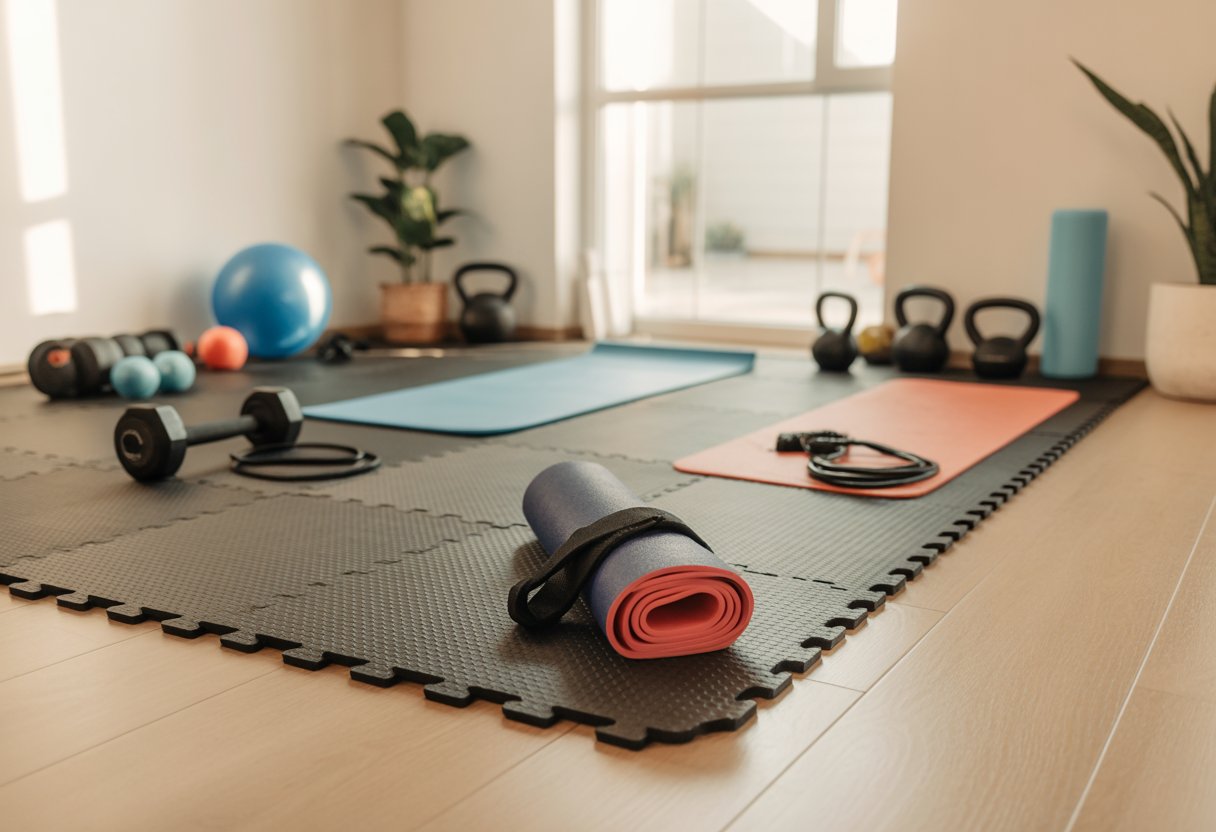
Proper flooring protects both equipment and the home’s foundation while reducing noise and injury risk. Safety equipment like boxes and arms prevents accidents during heavy lifts, and recovery tools help muscles repair faster between training sessions.
Rubber Flooring and Lifting Platforms
Rubber flooring protects floors from heavy equipment[9] and dropped weights while dampening noise that travels through walls and ceilings. The thickness matters for different training styles. For general fitness and bodyweight exercises, 6mm to 8mm works well. For powerlifting and Olympic weightlifting with frequent barbell drops, 12mm to 18mm provides better protection.
Rubber mats come in three main formats. Interlocking tiles install quickly and work well for small spaces. Rolls cover large areas with fewer seams but require cutting to fit. Pre-cut mats like 4×6 foot options offer a middle ground for moderate spaces.
A lifting platform protects concrete floors and reduces barbell bounce during Olympic lifts. Most platforms combine plywood layers topped with rubber mats. The raised surface also defines a dedicated lifting zone within a larger gym space. Athletes who perform cleans, snatches, or deadlifts benefit most from this setup.
Plyometric Boxes and Safety Arms
Plyometric boxes develop explosive power through jump training. They come in three types: wooden boxes with fixed heights, foam boxes that reduce shin impact, and adjustable metal boxes that change between multiple heights.
Elevate Your Health for Just $29.99/Month
Join the Precision Wellness Subscription at My Healing 365 and get discounted services, priority coaching access, virtual care, and exclusive wellness resources to support your physical, emotional, and hormonal health.
Join for $29.99/MonthStandard box heights include 12, 20, 24, and 30 inches. Beginners should start with lower boxes to master form before progressing. Some athletes stack multiple boxes, but this creates an unstable surface that increases fall risk.
Safety arms attach to power racks and catch the barbell if a lifter fails during squats or bench presses. They prevent the bar from crashing onto the lifter or floor. The arms adjust to different heights based on the exercise and the athlete’s size. J-hooks hold the bar at rest, while safety arms sit slightly lower to catch failed lifts. These become essential for anyone training alone without a spotter.
Yoga Mats and Exercise Mats
A yoga mat provides cushioning for floor exercises, stretching, and core work. Standard yoga mats measure 68 inches long and 24 inches wide with 3mm to 6mm thickness. Thicker mats around 6mm offer more joint protection for exercises like planks and push-ups.
Exercise mats differ from yoga mats in size and density. They’re often larger, measuring up to 72 inches long and 48 inches wide, with thickness ranging from 10mm to 20mm. This extra padding suits high-impact activities like burpees or mountain climbers.
Mat material affects grip and durability. PVC mats resist wear but may slip on certain surfaces. TPE and natural rubber options provide better traction and eco-friendly construction. Closed-cell foam prevents sweat and bacteria absorption, making cleaning easier.
Foam Rollers and Recovery Tools
A foam roller breaks up muscle adhesions and increases blood flow after training. Standard rollers measure 36 inches long and 6 inches in diameter. Shorter 12-inch versions target specific areas like calves or forearms.
Foam density determines pressure intensity. Soft foam works for beginners or sensitive areas. Firm and extra-firm rollers dig deeper into tissue but may feel uncomfortable at first. Some rollers feature textured surfaces with ridges or knobs that target trigger points more precisely.
Recovery extends beyond foam rollers. Massage balls reach areas like the glutes and upper back that rollers can’t access effectively. Resistance bands assist with stretching and mobility drills. Lacrosse balls provide pinpoint pressure for stubborn knots in shoulders or feet.
Organizing and Designing Your Home Gym
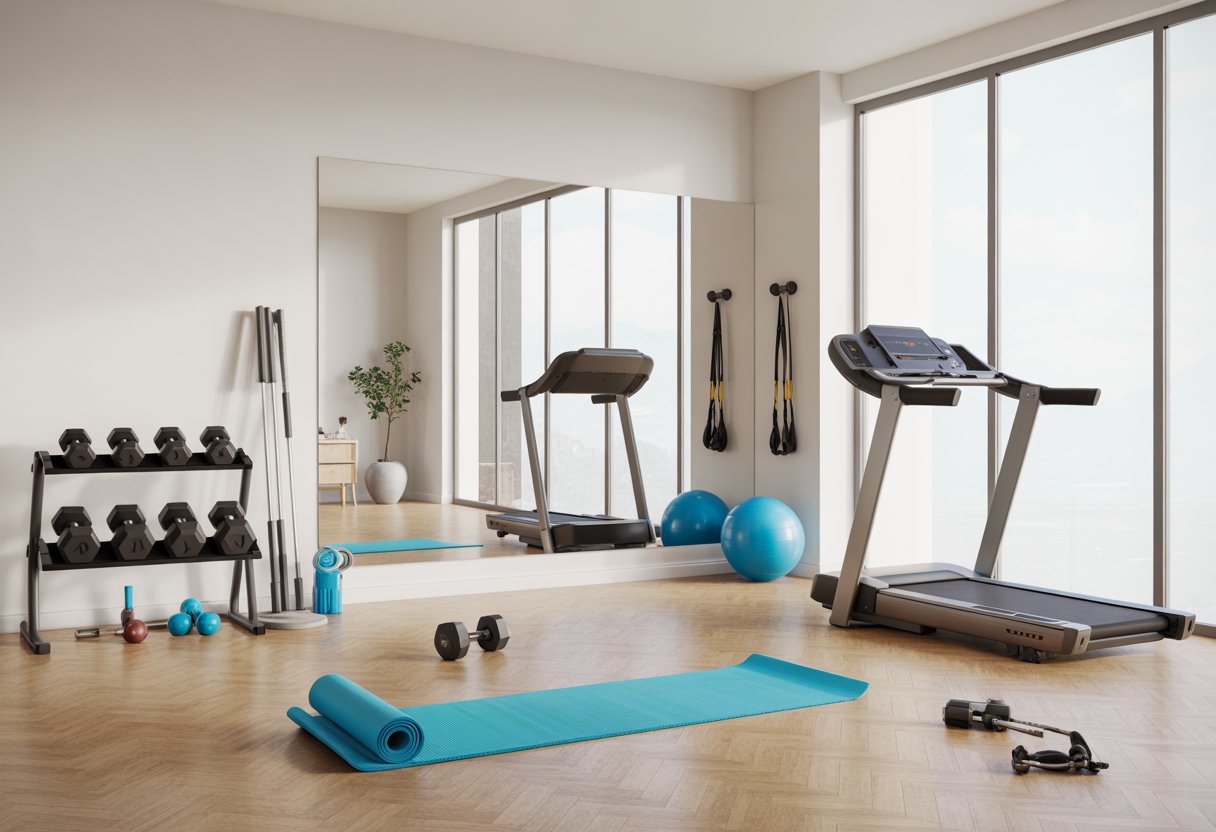
A smart layout keeps equipment accessible while maximizing floor space for movement. The right storage solutions, traffic patterns, and atmosphere turn any room into a functional training zone.
Storage Racks and Dumbbell Racks
Wall-mounted and vertical storage solutions free up valuable floor space in smaller rooms. A dumbbell rack keeps weights organized and prevents them from rolling around or creating trip hazards during workouts.
Vertical dumbbell racks measure about 20 inches by 72 inches and fit against most walls. These racks hold multiple weight pairs in a compact footprint. Wall-hugging storage works especially well in tight spaces like spare bedrooms or garage corners.
Kettlebell shelves typically need 20 to 36 inches of width. Positioning these shelves near the main workout space[2] allows quick transitions between exercises. Barbell storage requires either wall hooks or a simple rack that keeps bars off the floor.
Heavy weights should stay low and against walls for safety. This placement also prevents the room from feeling cluttered. Foldable equipment like benches and squat stands can store upright when not in use.
Creating Workout Flow and Layout
Equipment placement determines how easily someone moves through different exercises. Home gym design[10] works best when bulky items line the perimeter and the center stays open for floor work.
A 4-foot by 6-foot mat zone in the middle provides enough room for stretching, core exercises, and bodyweight movements. Cardio machines need 24 inches of clearance on each side for safe mounting and dismounting. Strength equipment like squat racks requires a 4-foot by 4-foot working area.
Doorways need at least 36 inches of clear space. This prevents bumping into equipment while carrying weights or moving between stations. Multi-use zones work well in smaller rooms where one area serves multiple purposes like deadlifts, bench press, and barbell rows.
Lighting, Mirrors, and Ambiance
Bright overhead lighting prevents eye strain and helps with form checks during lifts. Recessed lights or low-profile fixtures work better than hanging fixtures that might interfere with overhead movements.
Full-length mirrors along one wall serve two purposes. They allow form checks during exercises and make the room feel larger and brighter. Positioning mirrors next to the dumbbell rack or across from the main lifting area gives the best sight lines.
Temperature control matters for comfort during intense workouts. A fan or portable air conditioning unit keeps the space cool. Rubber flooring or interlocking gym mats protect the floor and reduce noise from dropped weights.
Maintaining and Improving Your Home Gym
Regular care keeps home gym equipment safe and functional while strategic upgrades ensure the space continues to meet changing fitness needs. Simple maintenance routines prevent costly repairs and extend the life of barbells, racks, and other gear.
Cleaning and Upkeep
Equipment needs cleaning after each workout to prevent rust, corrosion, and bacterial buildup. Barbells should be wiped down with a dry cloth to remove sweat and chalk. Steel equipment benefits from occasional applications of 3-in-1 oil on the sleeves and exposed metal parts.
Rubber flooring and mats collect dust and need sweeping or vacuuming weekly. A damp mop with mild soap removes stuck-on debris from gym flooring. Weight plates require wiping with a cloth, while bumper plates may need scrubbing if chalk accumulates in their grooves.
Upholstered equipment like benches should be sprayed with disinfectant and wiped clean after use. Leather or vinyl surfaces last longer when treated with appropriate conditioners every few months. Kettlebells and dumbbells need similar attention, especially their handles where sweat concentrates.
Equipment Inspections and Repairs
Monthly inspections catch problems before they become dangerous. Users should check all bolts on squat racks and benches for tightness. J-hooks and safety arms need examination for cracks or excessive wear that could compromise their strength.
Barbells require inspection of the sleeve rotation and knurling condition. Bent bars need replacement since they create uneven lifting mechanics. Cable machines demand regular checks of fraying cables and pulley function.
Minor repairs like replacing worn J-hook liners or tightening loose hardware prevent bigger issues. Rusty equipment may need wire brushing and fresh protective coating. When repairs exceed simple fixes, professional service or replacement becomes necessary for safety.
Upgrading and Expanding Over Time
A well-planned home gym grows with fitness goals[1] rather than requiring complete overhauls. Starting with essential items like a barbell, rack, and plates allows for gradual additions as budget permits.
Common first upgrades include adjustable dumbbells, a flat bench, or resistance bands. Intermediate lifters often add specialty bars, more weight plates, or flooring expansion. Advanced setups may incorporate platforms, additional racks, or conditioning equipment.
Tracking workout limitations helps identify what equipment to add next. Someone hitting weight limits needs more plates before buying accessories. Users should sell or donate unused equipment to fund meaningful upgrades rather than accumulating items that gather dust.
Modern technology transforms basic workout spaces into engaging fitness environments. Digital tools track progress automatically, while entertainment options keep training sessions from becoming boring.
Smart Home Gym Systems
Smart home gym equipment[11] combines strength training with digital features like live classes and progress tracking. The Tonal 2 mounts to a wall and provides up to 250 pounds of digital resistance with AI coaching that adjusts workouts in real time. It takes up minimal floor space at just 21.5 inches wide.
Speediance Gym Monster offers a more affordable alternative at around $3,295 compared to Tonal’s $4,295 price tag. This freestanding unit folds for storage and includes no monthly subscription fees. The digital resistance reaches 220 pounds, which works well for beginners and intermediate lifters.
Budget-conscious buyers can consider the Tempo Move for basic smart features. Bowflex also offers connected strength equipment that syncs with their app. Most smart systems require dedicated space and professional installation, so renters should verify wall-mounting permissions before purchasing.
Fitness Apps and Tracking Progress
Fitness apps document workouts without expensive equipment. Free options like MyFitnessPal and Fitbit track exercises, calories, and body measurements. Premium apps such as Shred provide AI-powered training programs that adapt based on performance data.
Wearable devices enhance tracking accuracy. The Oura Ring Gen 4 monitors sleep quality, heart rate variability, and recovery metrics. This data helps users avoid overtraining and schedule rest days appropriately.
Most apps sync across multiple devices and create visual charts showing strength gains over time. Setting specific goals in these apps—like adding 10 pounds to a bench press or completing 20 workouts per month—increases accountability.
Music and Entertainment Options
A quality Bluetooth speaker or wireless headphones eliminate the need for tangled cords during workouts. Upbeat music with 120-140 beats per minute matches the pace of cardio sessions and makes them feel easier.
Mounting a tablet or TV creates options for streaming workout videos, virtual cycling routes, or regular entertainment during longer cardio sessions. Many people find that watching shows makes treadmill or bike sessions pass faster.
Creating themed playlists for different workout types helps establish routines. Heavy lifting sessions might use rock or hip-hop, while yoga flows pair better with calmer instrumental tracks.
Frequently Asked Questions
Space constraints and budget concerns are common barriers to building a home gym, but smart equipment choices and layout strategies can help anyone create an effective workout space. Training rules like 3-3-3 and 70/30 provide structure for consistent progress.
What are the most space-efficient pieces of equipment for a small home gym?
Adjustable dumbbells take up minimal floor space while replacing entire dumbbell racks. A single pair can replace 10 to 15 individual dumbbells.
Resistance bands attach to doors or walls and store in drawers. They work for strength training and stretching exercises.
A foldable weight bench can be stored vertically against a wall when not in use. Wall-mounted pull-up bars require zero floor space and support bodyweight exercises.
Kettlebells provide full-body workouts with just one or two pieces of equipment. A suspension trainer like TRX mounts to any door and packs into a small bag.
How can I set up a functional home gym on a tight budget?
Basic home gym equipment[12] including a barbell, squat rack, bumper plates, kettlebell, gymnastic rings, and jump rope costs around $1,300 for new items. Used equipment from resale sites like Craigslist offers significant savings.
A jump rope costs about $10 and provides effective cardio workouts. Resistance bands range from $15 to $40 for a complete set.
Bodyweight exercises require no equipment at all. Push-ups, squats, lunges, and planks build strength without spending money.
DIY options like filling milk jugs with sand or water create weights for under $5. A sturdy chair works for step-ups and tricep dips.
What is the best all-in-one home gym system for limited space?
Cable-based systems with adjustable weight stacks fit in corners and offer 50 to 100 different exercises. These machines typically measure 4 feet by 6 feet.
Power towers combine pull-up bars, dip stations, and push-up handles in one frame. They occupy about 4 square feet of floor space.
Functional trainers with dual cable systems allow for compound movements. Most models require 6 to 8 feet of ceiling height.
All-in-one systems cost between $500 and $3,000 depending on features and weight capacity. The trade-off is less equipment versatility compared to free weights.
How should I arrange equipment to maximize workout space in a small room or apartment?
Wall-mounted storage racks keep weights and accessories off the floor. Vertical plate storage saves 60% more space than horizontal racks.
Equipment should be arranged by frequency of use. The most-used items go in the center with occasional-use equipment against walls.
A 6-foot by 8-foot clear zone provides enough room for most exercises. Foldable equipment should be stored immediately after use.
Mirrors on walls create the illusion of more space and help with form checks. Corner placement of larger equipment leaves the center open for movement.
What flooring options work best for a home gym in a compact space?
Rubber horse stall mats measure 4 feet by 6 feet and cost about $40 each at farm supply stores. They protect floors from dropped weights and reduce noise.
Interlocking foam tiles work for yoga and bodyweight exercises but don’t handle heavy weights well. These tiles cost $1 to $2 per square foot.
Vinyl rolled flooring provides cushioning for cardio and costs $3 to $8 per square foot. It installs easily without permanent adhesive.
Plywood topped with rubber mats creates a budget platform for $100 or less. This setup handles Olympic lifts and heavy deadlifts safely.
What do the 3-3-3 rule and the 70/30 rule mean in gym training?
The 3-3-3 rule refers to three sets of three repetitions at three different weights. This approach builds strength through progressive overload.
Some trainers use 3-3-3 to mean three workouts per week with three exercises per session lasting three weeks before changing routines. The specific application varies by training program.
The 70/30 rule suggests spending 70% of workout time on compound movements and 30% on isolation exercises. Compound lifts like squats and deadlifts work multiple muscle groups.
Another interpretation of 70/30 applies to training intensity. Seventy percent of workouts should be moderate intensity with 30% at high intensity to prevent overtraining.
Post Views: 4
References
- How To Build A Home Gym For Any Budget [2026 Ultimate Guide]. https://stronghomegym.com/how-to-build-a-home-gym/ Accessed April 19, 2026
- Build Your Dream Home Gym: Equipment, Layout, and Setup Plan. https://www.ritfitsports.com/blogs/article/build-your-dream-home-gym-equipment-layout-and-setup-plan Accessed April 19, 2026
- Complete Home Gym Setup Guide: Build Your Perfect Gym- Mywowfit. https://mywowfit.com/blog/home-gym-setup-guide Accessed April 19, 2026
- Page Not Found. https://www.garagegymreviews.com/best-budget-home-gym-setups Accessed April 19, 2026
- Vercel Security Checkpoint. https://hydrow.com/blog/your-guide-to-the-best-strength-training-equipment-for-home/ Accessed April 19, 2026
- 429 Too Many Requests. https://garagegympro.com/best-cardio-equipment-for-home-gym/ Accessed April 19, 2026
- The Best Home Gym Equipment for Small Spaces in 2025. https://www.self.com/story/best-home-gym-equipment-for-small-spaces Accessed April 19, 2026
- How to Build an Amazing Home Gym in a Small Space. https://repfitness.com/blogs/inspiration/how-to-build-an-amazing-home-gym-in-a-small-space Accessed April 19, 2026
- Page Not Found. https://www.garagegymreviews.com/best-home-gym-flooring Accessed April 19, 2026
- Home Gym Layout Plans: Best Ways to Organize Cardio & Strength Zones. https://designingidea.com/home-gym-layout/ Accessed April 19, 2026
- Page Not Found. https://www.garagegymreviews.com/best-smart-home-gym-equipment Accessed April 19, 2026
- Page Not Found. https://www.garagegymreviews.com/ultimate-home-gym-guide Accessed April 19, 2026

























